
Cheese manju is a Japanese baked sweet made from an outer dough and a cheese center, and it is especially associated with Miyazaki. If you are looking for cheese manju in Japan—or trying to understand the name in English—this is the neutral starting point. It explains what the category is, how Miyazaki shops vary the shell and filling, how to taste it without rushing to a single favorite, and where each article in this collection fits.
Quick take: Start with plain dough-and-cheese styles, then move to variants. Watch two axes first—contrast vs blend, and cheese alone vs cheese plus extras. For choosing among eleven products by use case, open Best Miyazaki Cheese Manju. Personal preference notes sit at the end of this page.
What cheese manju is
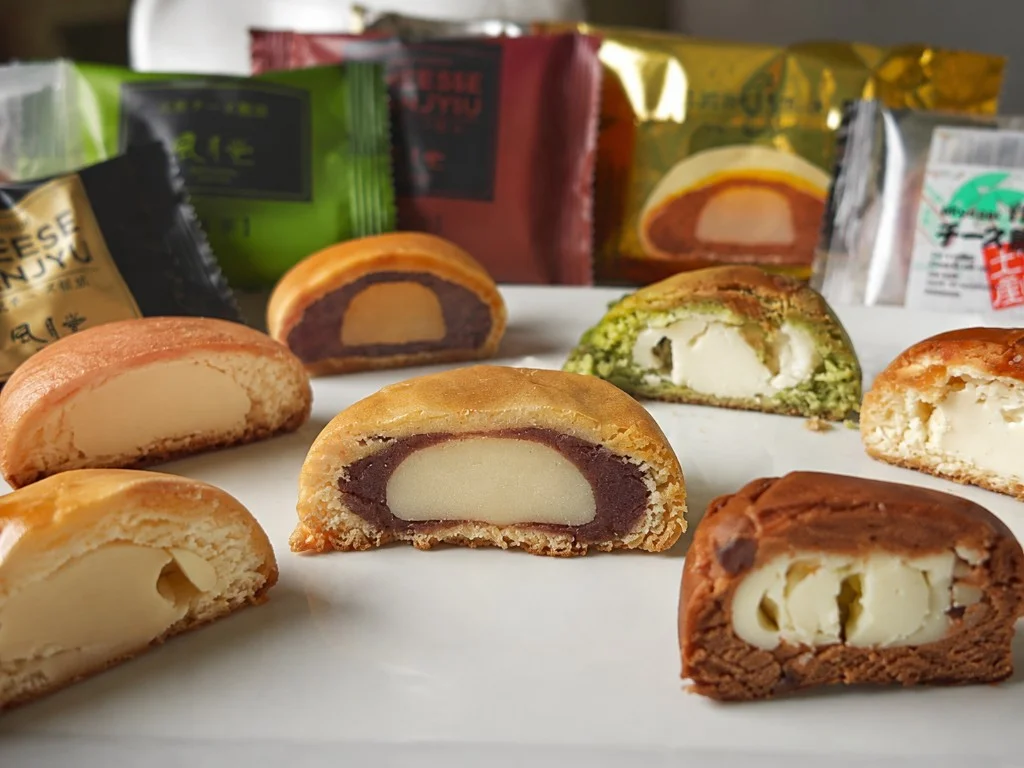
At its core, cheese manju pairs a baked outer dough with a cheese center. Some shells stay cookie-like and crisp (sakusaku). Others lean moist or cake-like. Some fillings feel creamy and quick to blend; others keep the outline of a firmer cream-cheese piece.
Miyazaki is closely associated with the style as a souvenir and local sweet. Several shops are linked to origin stories. This guide does not declare a single undisputed inventor—that belongs in a dedicated history page later. Here the useful fact is simpler: the category has breadth, not one template.
How to enjoy the genre
Two questions keep the tasting map readable:
- Contrast — Do dough and cheese stay apart for a while, or do they melt into one soft bite?
- Filling scope — Is the center cheese alone, or cheese plus something else?
Start with plain, then go weird
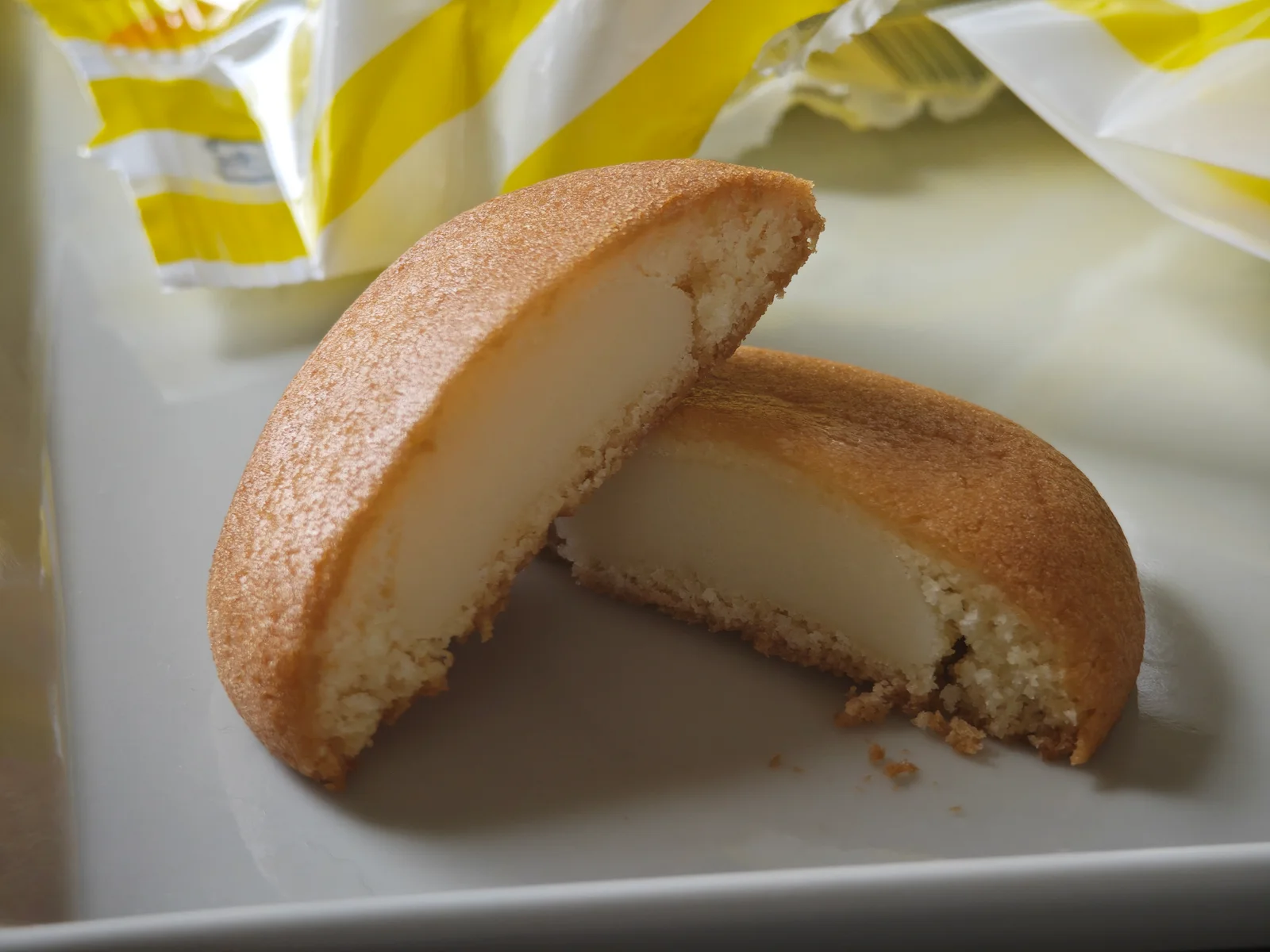
If you are comparing, hunt plain styles first—cheese and dough only—across makers. Walk the genre’s basic grammar. Then open the side doors into variants.
Why not start with the weird ones? Early variants can taste close to other Japanese traditional sweets you already know, and the brain shrugs: then those would be enough. If you first learn what cheese-plus-dough feels like in its orthodox form, the later detours feel like detours inside a genre, not replacements for the whole category.
Cheese manju is built from cheese + dough. Trace those two parts in plain form before you chase extras.
Dough: sakusaku or cake-like
Dough is half the personality. Some shells stay sakusaku and cookie-like, as in Fugetsudo Original. Others lean moist and cake-like, as in Hiroya or Hyuga Hogaya. Sueyama sits nearer a balanced moist-cookie baseline—useful as a calm reference point in the eleven-product comparison, although its full profile is not public yet.
Filling: cheese cream vs firmer cream cheese
On the filling side, texture splits hard. A cheese-cream center can feel smooth and quick to blend. A firmer cream-cheese piece can keep bite and outline. SEIKADO, with its more cube-like center, and Fugetsudo’s bite-size plain, with a shaped cheese piece, show how “cheese presence” is not only richness—it can be structure.
Hold that as a comparison axis. People argue about it for good reason.
After plain: the fun variants
Once plain comparison has a home in your mouth, the side paths get more interesting.
Fugetsudo’s bite-size pack is a neat flight: plain as baseline, then chocolate and matcha as mood changes in small pieces. Miyazaki Chee-Man goes further into hybrid territory—koshi-an or sweet-potato paste with cheese—so the question becomes less “which classic?” and more “do I want the wagashi-western boundary today?”
Those pages are where the genre flexes. They are richer after you already know the plain spine.
Tasting tips that keep options open
- Buy singles when you can. A full gift box is harder to use as a comparison set.
- Keep a little stomach room. Three or four pieces already feel surprisingly filling—dough weight plus cheese mass adds up on a sightseeing day.
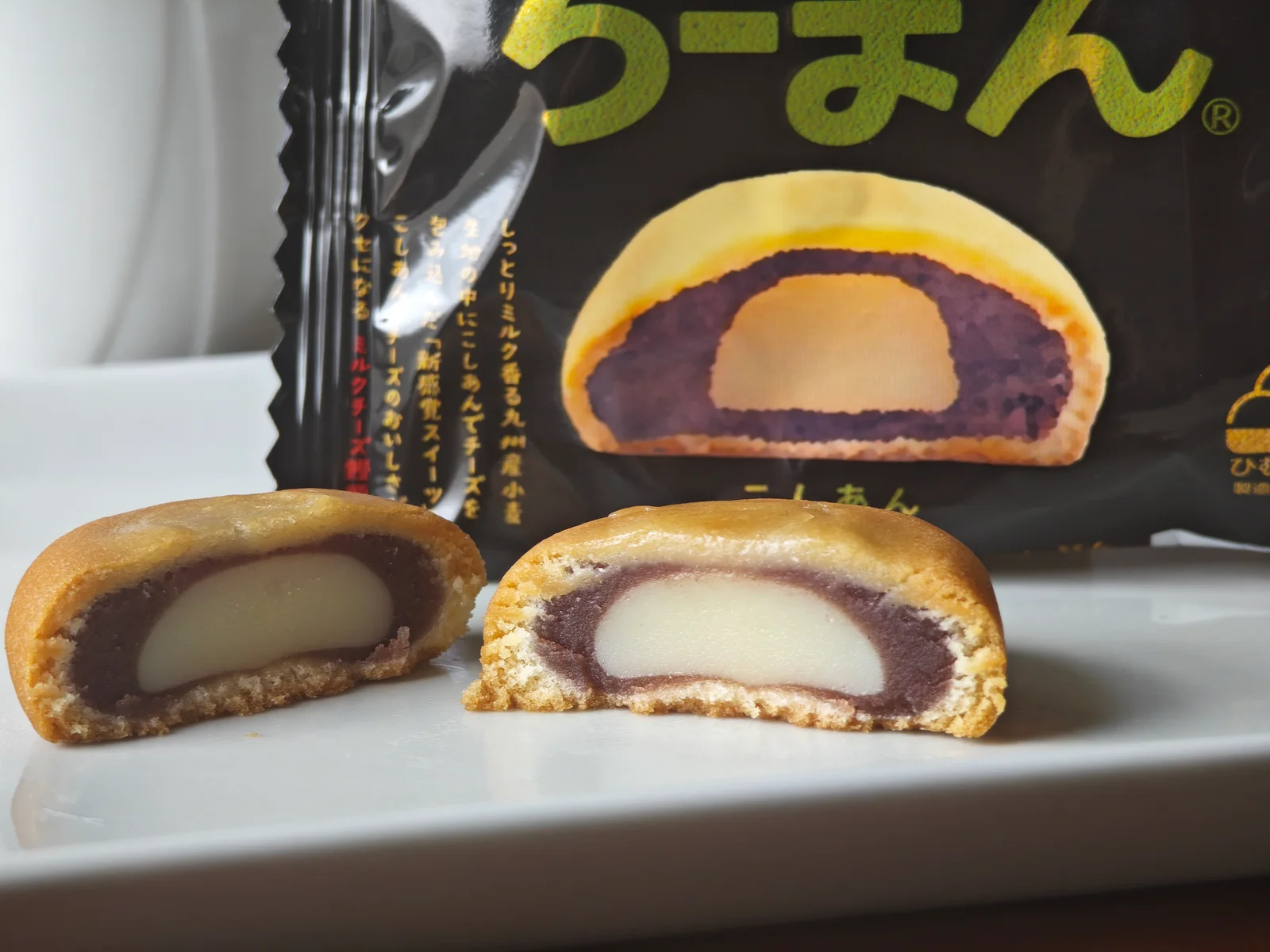
- Jot a short note and take a photo. Same angle helps later—package fronts and cross-sections especially.
- Do not treat one friend’s favorite as the genre’s only correct answer. The axes above are meant to widen choice, not close it.
Buying in Miyazaki: airport, singles, and local finds
Most souvenir cheese manju lines in this tasting set were available at Miyazaki Airport. Convenience matters on a travel day. Still, some shops stock only one brand. If you find a counter that carries several makers at once, remember that map pin—or buy the set then and there before the selection disappears into separate stores.
There is also a longer-term map beyond the airport wall: roadside stations (michi-no-eki) and small regional shops. Hidaka Cheese Manju (Okashi no Hidaka) is one example bought at a roadside station—moist dough, rich cheese, and raisin as a third voice. That kind of stop is where the map of cheese manju keeps growing after the famous names.

Miyazaki Street
Where to read next
Read in this order if you want the widest path first:
- Best Miyazaki Cheese Manju — use-case chooser across eleven products (not an absolute ranking)
- Product reviews — start with the contrast-forward Fugetsudo Original or the firmer-center SEIKADO
- Variant pages — Fugetsudo Bite-Size, Miyazaki Chee-Man flavors, Hidaka, Hiroya, SEIKADO, Hogaya
A dedicated history page will cover origin stories later. Until then, treat “who invented it” as unsettled and keep the tasting map in front.
Author field notes (optional)
This section is one person’s taste confession after the guide above. Skip it if you want to keep your own map clean.
From a tasting set of eleven products bought, photographed, and eaten in Miyazaki with the same package-and-cross-section habit, the personal favorite was Fugetsudo Original—for contrast between a sakusaku shell and cheese that keeps its own bite. Friends who prefer soft integration may land nearer Hiroya’s Western style or another cake-leaning bake. That is preference, not a universal score.
The use-case map across all eleven stays on Best Miyazaki Cheese Manju. The hope is still the same: you find the cheese manju that fits your own mouth—not someone else’s.
Miyazaki River Spot — a short rest by the water
Frequently asked questions
How should I start comparing cheese manju?
Buy plain styles first and compare dough plus cheese. After that, move into variants such as matcha, chocolate, bean paste, or sweet potato.
What should I notice in the filling?
Cheese cream and firmer cream-cheese styles feel very different. That texture axis splits preference as clearly as crisp versus cake-like dough.
Where should I go after this guide?
Open the use-case comparison, then the product reviews. Author field notes on this page are optional and come last.