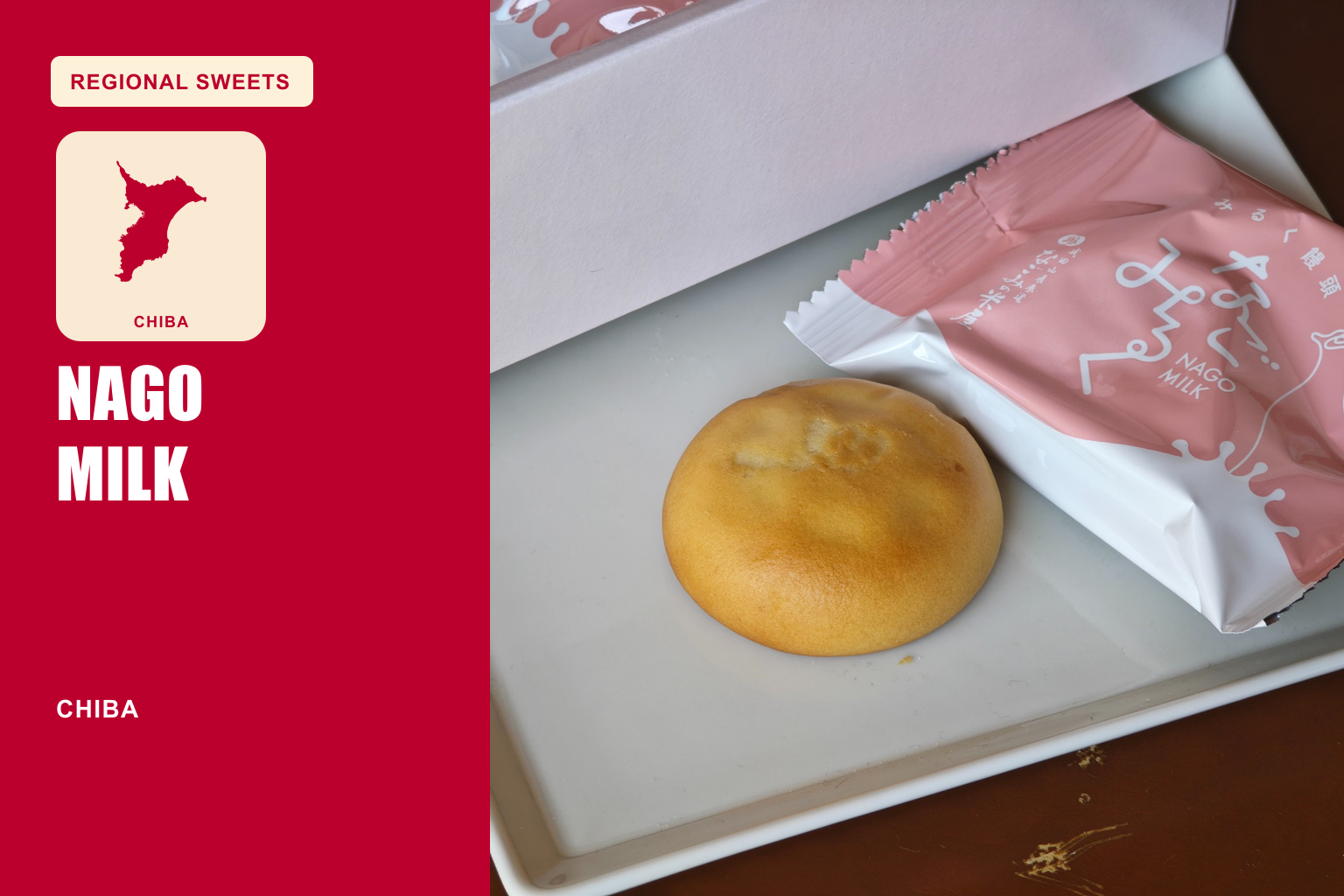
A pink box of milk sweets might not be the first thing you associate with Chiba. Yet Nagomilk offers a surprisingly good introduction to the prefecture: milk from Chiba, a confectioner from Narita, and a regional dairy story that reaches back to the time of the shoguns.
Made by Nagomi no Yoneya, Nagomilk (なごみるく) is a small baked manju, a Japanese filled sweet. Its soft milk filling is wrapped in butter-containing dough. The maker’s product description identifies Chiba-produced milk as an ingredient, as does the packaging photographed here.
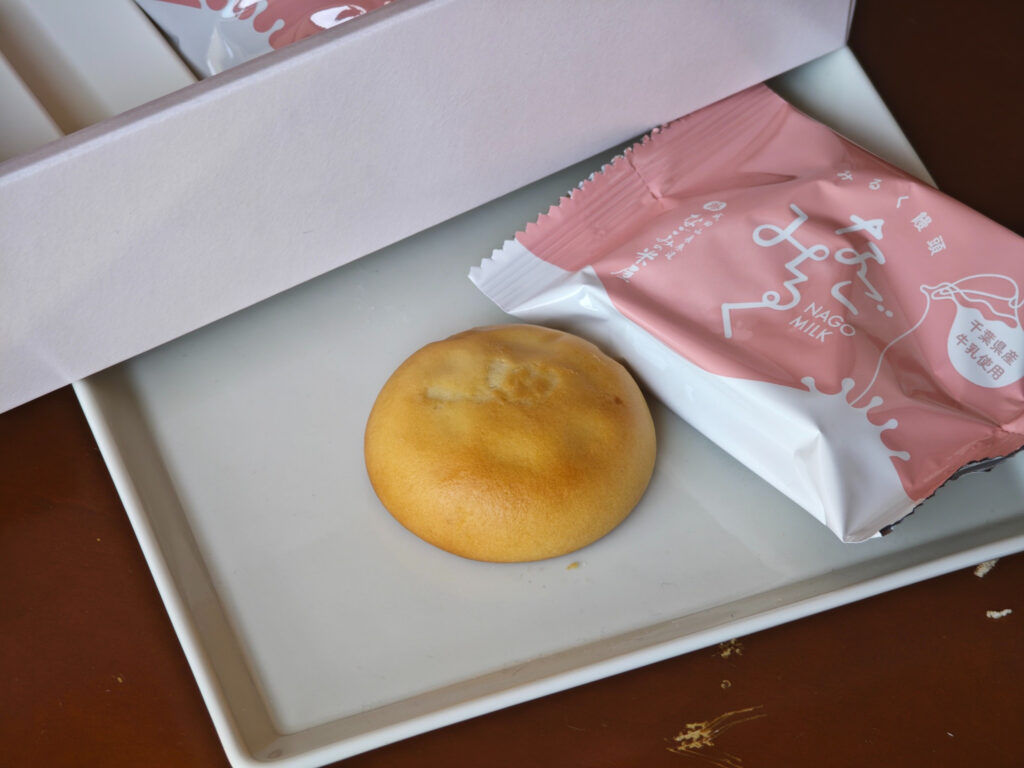
Opening the box: pink wrappers and a small introduction
The open box makes the presentation easier to understand. The individually wrapped sweets sit in rows, repeating the same soft pink seen on the lid. Beside them, the leaflet shows a whole sweet and a cut one, with the filling clearly pictured. The outside promises milk; the inside gives you a quick visual introduction to what is under that golden shell.
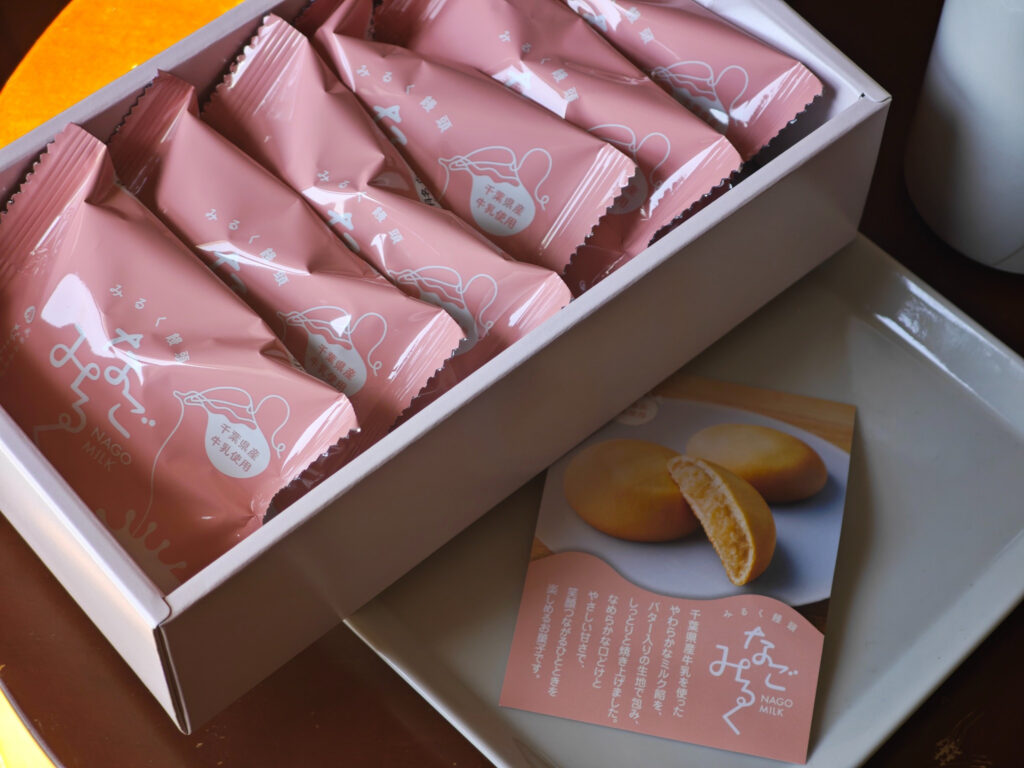
Individual wrapping also makes this a practical format for sharing a box a little at a time. You can offer someone a sweet without cutting into the others. The photographs show this particular box, rather than every assortment available, so check the current shop listing when choosing a size.
Why a milk sweet from Chiba?
Here is something to tell a friend while opening the box: southern Chiba has a historic site officially designated as the birthplace of Japanese dairy farming.
According to Chiba Prefecture’s historical account, three white cattle were introduced to Mineoka in 1728 under shogun Tokugawa Yoshimune. Their milk was used to make hakugyuraku, a butter-like dairy product. Mineoka is in today’s Minamiboso, in the south of the prefecture, rather than in Yoneya’s hometown of Narita.
Nagomilk is a modern creation, but its use of local milk offers a tasty way into that older regional story. These are two different connections: the maker identifies the milk as Chiba-produced, while Mineoka explains a part of the prefecture’s dairy history. Neither statement tells us that the milk in this sweet comes from Mineoka itself. The regional link is meaningful without turning it into a farm-origin claim.
A birthday sweet, dressed in pink
Yoneya introduced Nagomilk in April 2019 to celebrate its 120th anniversary. The brand’s own timeline records a further renewal in April 2020. The gentle pink design has its own explanation: the color was intended to suggest rosy cheeks, warmth, and a comforting mood. Once you know that, the wrapper feels quite fitting for the sweet inside.
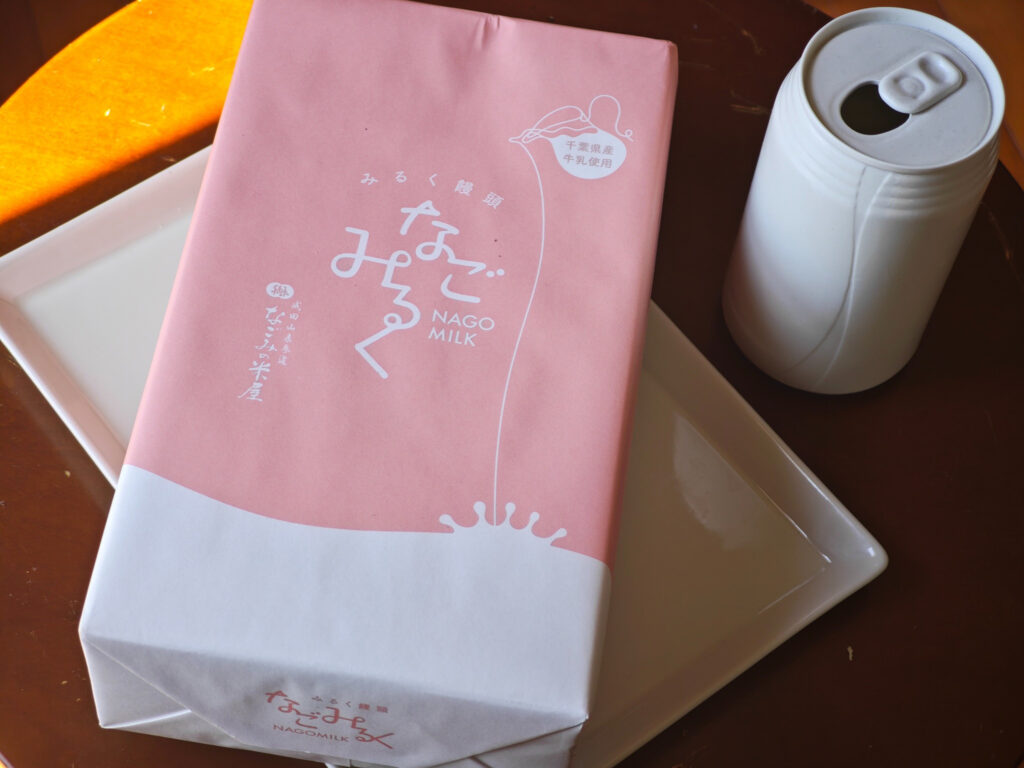
The official shop’s packaging explanation connects the pouring-milk illustration with the sweet’s milk flavor. It also gives the linked lettering a purpose: bringing people and hearts together, and connecting tradition with innovation. That is a lot of intention for a small wrapper, but it fits a sweet meant to be handed to someone.
The recipe has continued to evolve. Yoneya announced a filling reformulation from February 1, 2026, intended to emphasize the milk flavor and improve its harmony with the dough. This is the maker’s description of the renewal; I have not confirmed which formulation was in the photographed box.
My tasting notes: milk first, with a little texture
The filling is what stays with me. It has a deep milk flavor and a thick, lingering sweetness that reminds me of Milky, the Japanese milk candy. For me, it has that same concentrated, comforting milky sweetness.
The dough is gentle, while the filling occasionally gives a faint, sugary, almost grainy sensation. It is a small detail rather than a constant crunch. I cannot say what produces it, but that slight change in texture makes the filling more interesting to eat.
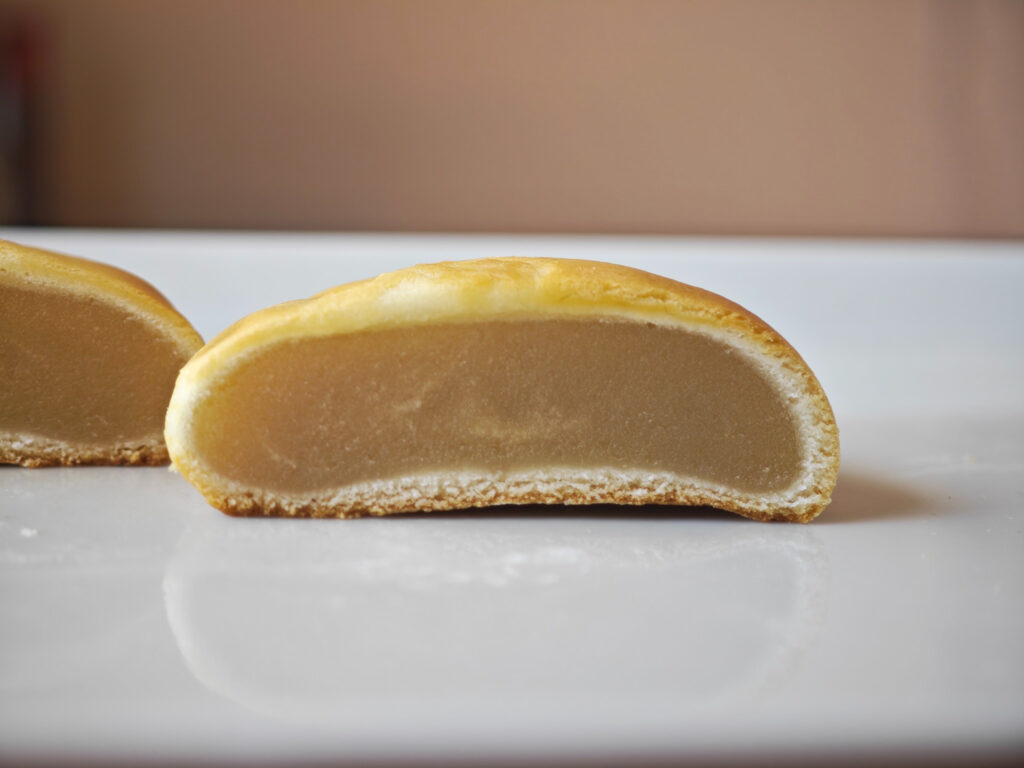
If you know Hakata Torimon, the famous sweet from Fukuoka, it makes a useful comparison. To my palate, Torimon leans more toward white bean paste, with the dough and filling melting in my mouth into a mellow, thick, rich whole. I do not experience it as chewy or as something with a firm bite. Nagomilk brings the milk forward and leaves a subtle contrast between the filling and its outer layer. I can enjoy how they come together without losing the sense of two different textures.
Follow the sweet into Narita’s temple town
Yoneya’s story also offers a reason to think of Narita as more than an airport. Founded in 1899, the company developed confectionery for visitors to Naritasan. Its company history describes the founder and his mother experimenting with yokan, a firm sweet bean confection, for the souvenir trade.
Nagomilk belongs to that continuing culture of bringing something sweet home from a visit, although it is a much newer product. If the connection interests you, the Narita Yokan Museum, attached to Yoneya’s main store on the approach to Naritasan, introduces the history of yokan and confectionery through tools and packaging.
Where to buy Nagomilk
The 6-pack and 12-pack Rakuten links below are affiliate links. If you buy through them, Nippon Snacks may earn a small commission at no extra cost to you.
The most direct online starting point is Nagomi no Yoneya’s official Nagomilk shop range. It lists the individual sweet and several pack and gift-box sizes, so choose by the number of people you want to share with rather than assuming every pink box contains the same quantity. Read the current product listing for contents and delivery details.
- Buy Nagomilk from the official online shop
- Buy Nagomilk 6-pack at Yoneya’s Rakuten Ichiba shop — affiliate link.
- Buy Nagomilk 12-pack at Yoneya’s Rakuten Ichiba shop — affiliate link.
These are Japanese shop pages. Check the seller’s delivery area, shipping cost and arrival date before ordering; the links do not establish that overseas shipping is available. If you are shopping during a Narita visit, confirm Nagomilk availability with the store rather than treating the company’s long local history as a guarantee of stock.
For current product information, check Yoneya’s official Nagomilk page. For allergens, storage, and the best-before date, follow the label on the pack you buy. And if you have tried both Nagomilk and Hakata Torimon, I would love to hear whether you notice the same contrast.