What if a familiar snack had a second texture hidden inside it?
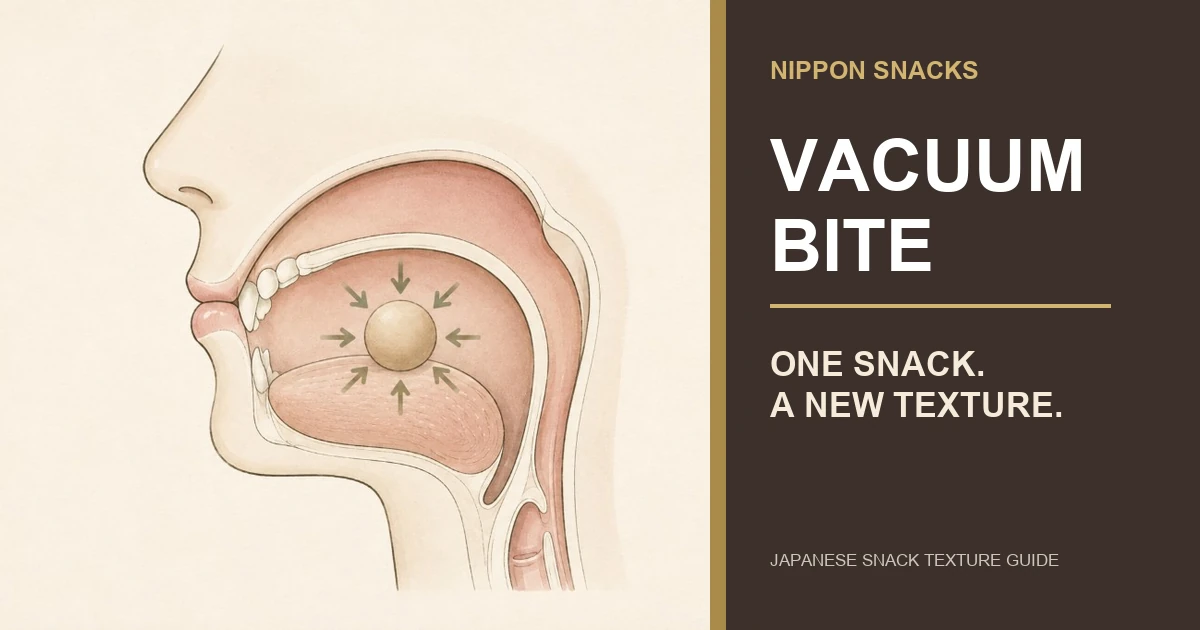
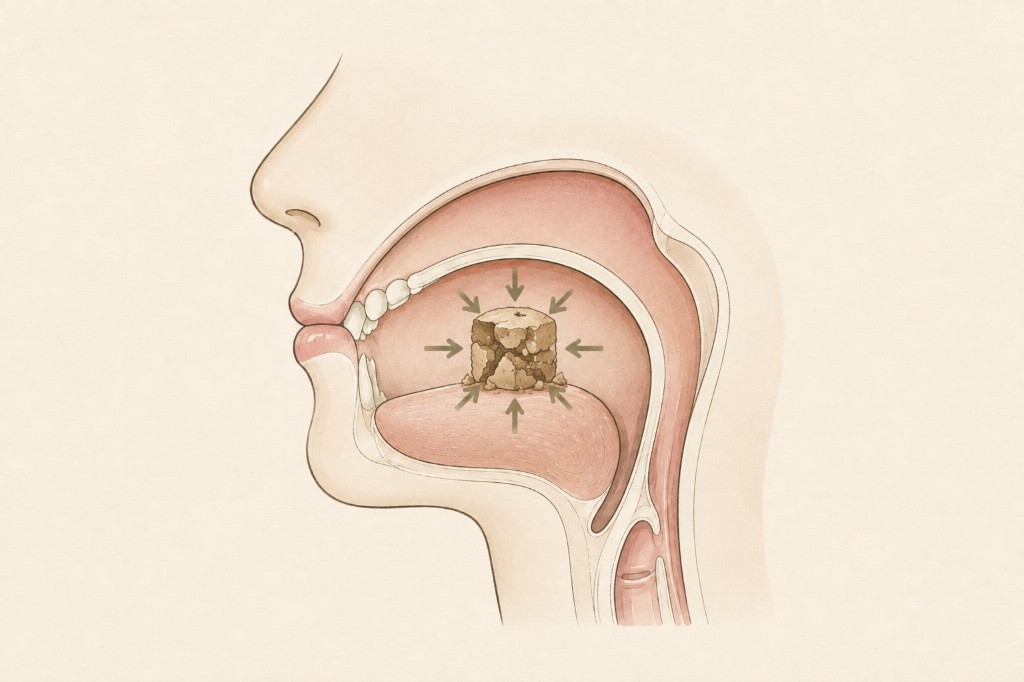
**Vacuum Bite** is the name I use for a strange little eating experiment I invented in elementary school. Instead of chewing immediately, I hold a manageable piece in my mouth and create **gentle suction**. Saliva, tongue pressure, and time begin to soften and compress its structure. Airy bread grows dense. A crisp shell gives way around its filling. Fine strands of chocolate seem to collapse layer by layer.
The snack has not changed—but the way you perceive it has.
This is not a traditional Japanese custom, a scientific technique, or the “correct” way to eat anything. It is my personal method for comparing Japanese snacks through texture. It may look a little impolite, but the experiment happens discreetly inside your closed mouth.
> **Quick answer:** Choose one small, controllable snack with a soft or layered structure. Hold it safely in your mouth, use only gentle suction—never inhale—and notice how its shell, crumb, and filling change. Then chew and swallow normally. Stop immediately if it feels painful, too dry, or difficult to control.
What is a Vacuum Bite?
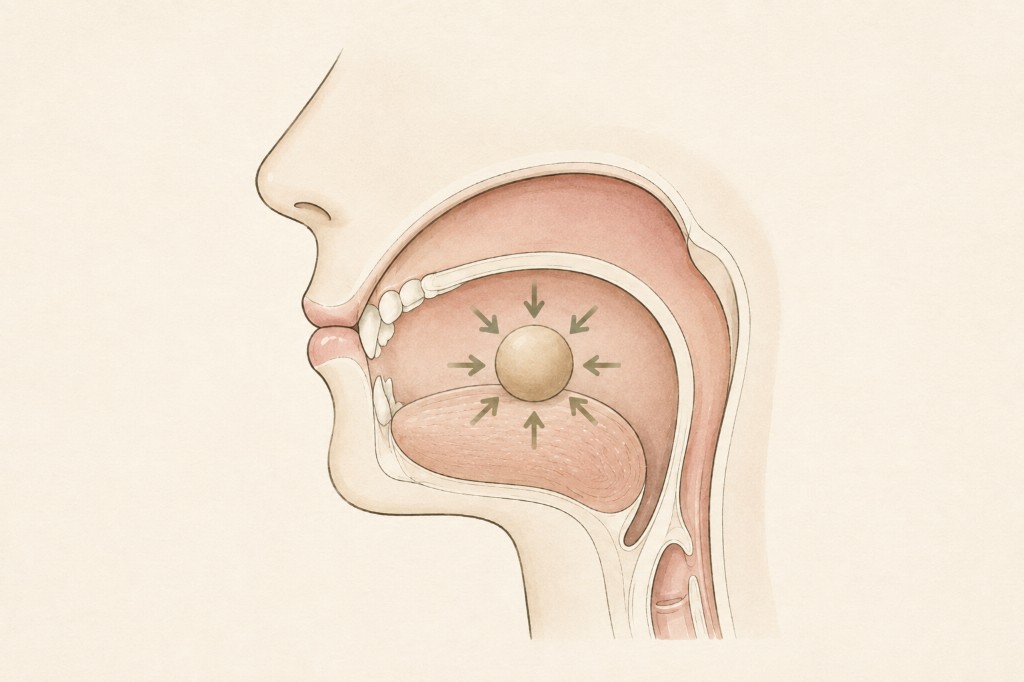
“Vacuum” is a playful name, not a laboratory claim. Your mouth does not become a perfect vacuum. The experience comes from lowering the pressure gently around the snack while saliva moistens it and the tongue helps keep it under control.
I used to call it *shinkū-tabe*—“vacuum eating.” For international readers, **Vacuum Bite** is shorter, easier to remember, and closer to what makes the technique interesting: one bite becomes a slow texture experiment.
The goal is not to swallow without chewing. The goal is to notice the transition:
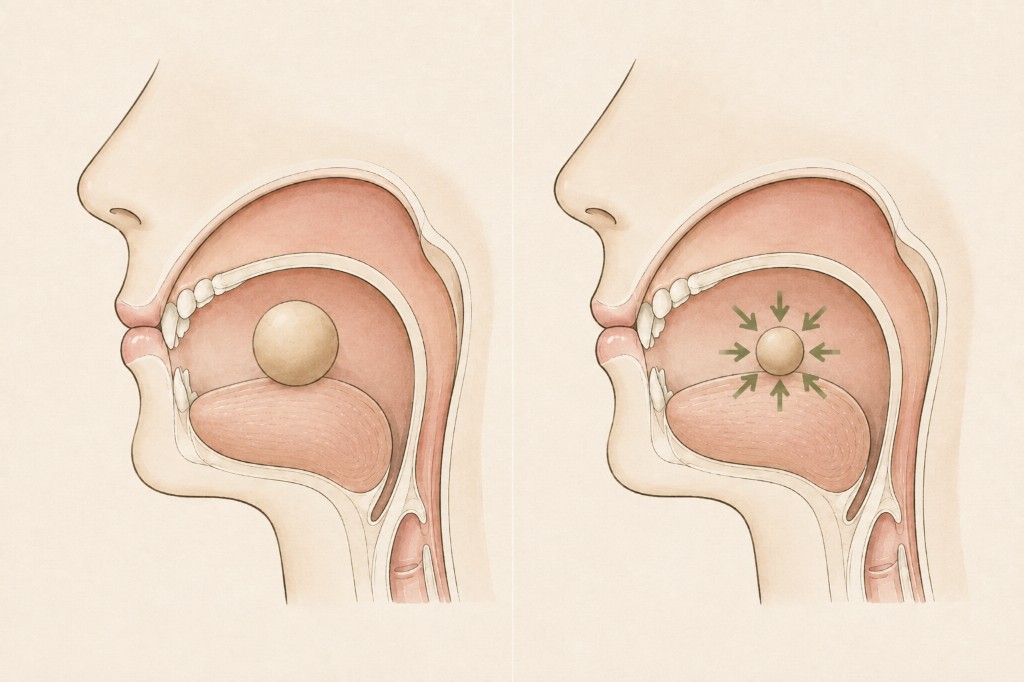
1. **Original structure** — airy, crisp, flaky, layered, or filled. 2. **Early compression** — edges soften and pockets of air begin to disappear. 3. **Texture split** — different components change at different speeds. 4. **Dense finish** — the remaining flavor and filling feel more concentrated. 5. **Normal chew** — finish by chewing thoroughly and swallowing as usual.
Why complex snacks are the most interesting
A plain piece of bread can become pleasantly dense, and a biscuit can soften into a compact crumb. But the most revealing Vacuum Bites contain **more than one structure**.
Imagine a snack with an airy shell, a brittle coating, and a smooth center. The outside does not disappear at the same speed as the inside. Each layer loses its original shape differently, so your tongue can follow the snack’s construction in reverse.
That is the pleasure for me: not simply making food soggy, but feeling a designed snack **deconstruct itself**.
How to try it
Only try this if you are an adult who can chew and swallow normally.
1. **Start with a small, manageable piece.** It must not be large, perfectly round, slippery, or easy to swallow whole. Breaking or biting it first is safer than experimenting with an intact piece. 2. **Sit still and close your lips.** Do not walk, talk, laugh, or lie down with food in your mouth. 3. **Keep the snack controlled with your tongue.** Never pull air sharply through your throat and never inhale the food. 4. **Create only mild suction.** Pause after a few seconds and observe what changed. 5. **Stop before discomfort.** If the food becomes sharp, painfully dry, too salty, difficult to control, or makes you cough, spit it out. 6. **Chew thoroughly and swallow normally.**
This is a texture exercise, not an endurance challenge. One careful piece teaches you more than forcing yourself through a handful.
Three Japanese snacks worth comparing
1. Bourbon Choco Anpan: airy bread versus dense chocolate
Bourbon Choco Anpan is my clearest introduction to Vacuum Bite. Its miniature bread shell gradually loses air and becomes denser, while the chocolate filling keeps a stronger presence in the center.
The pleasure comes from the contrast. At first, you have springy bread and chocolate. Later, the compressed bread feels almost like a new material, and the chocolate seems to wait behind it.
→ Read the full Bourbon Choco Anpan guide
2. Lotte Sasha: 1,350 fine chocolate lines
Lotte’s **Sasha** (*紗々*) is built for structural curiosity. According to the official Sasha brand page, each piece layers about **1,350 lines of chocolate**, each approximately **1.5 mm** wide. Bitter and white chocolate form a mesh with a delicate, crackling bite.
With Vacuum Bite, that lattice gives you many tiny points of collapse instead of one solid snap. It is a useful comparison with bread-based snacks because the transformation comes from woven chocolate rather than crumb and filling.
→ See Lotte’s official Sasha lineup
3. Koala’s March: biscuit shell versus chocolate center
**Koala’s March** combines a crisp printed biscuit with a chocolate center. That shell-and-filling contrast makes its breakdown easy to notice: the biscuit softens and compacts while the center begins to merge with it.
For safety, do not inhale or experiment with an intact piece that could slip toward your throat. Bite it first, keep it controlled with your tongue, and stop if the shell creates an uncomfortable edge.
→ See Lotte’s official Koala’s March information
The senbei lesson: curiosity needs limits
I learned the limit the unpleasant way.
When I was younger, I Vacuum-Bit **five senbei in a row**. The hard, salty rice crackers drew moisture from my mouth and kept rubbing the same area. The lining inside my mouth became sore and peeled. It healed, but for a while I could not comfortably eat snacks—which was a terrible price for a texture experiment.
So do not turn Vacuum Bite into a test of toughness.
**Avoid:**
- hard or sharp snacks, including firm senbei;
- heavily salted or strongly seasoned snacks;
- very dry foods that rapidly absorb moisture;
- large, slippery, sticky, or round pieces;
- repeated pieces without a break;
- anything that is already difficult for you to chew or swallow.
Never try it while moving, talking, laughing, or distracted. Do not offer the method to children. Anyone with swallowing difficulties, reduced oral sensation, dental problems, mouth injuries, or another relevant health concern should skip it. If something enters your airway or you cannot breathe normally, treat it as a choking emergency.
The more complicated a snack is, the more interesting its collapse can be—but no texture is worth an injury.
Build your own texture comparison
Try comparing categories instead of chasing intensity:
- **Bread-like snack:** How quickly does the crumb lose its air?
- **Cookie or biscuit:** Does it soften evenly or remain grainy?
- **Filled snack:** Which survives longer, the shell or the center?
- **Layered chocolate:** Do the fine structures snap, soften, or merge?
- **Two flavors of one brand:** Does a different filling change the order of collapse?
Keep each test short. Notice the beginning, middle, and finish. If you want, write down three words for each stage. That small ritual turns snacking into a form of texture tasting.
What would you deconstruct first?
Try the three starting snacks
- Bourbon Choco Anpan article — bread and dense chocolate
- Amazon Japan: Choco Anpan
- Lotte Sasha official page — fine woven chocolate
- Amazon Japan: search for Lotte Sasha
- Lotte Koala’s March official page
- Amazon Japan: Koala’s March Chocolate
Availability, package size, and formulation can change. Check the current product label, allergen information, seller, and shipping conditions before buying.
*Affiliate disclosure: links above may be affiliate links. If you buy through them, I may earn a commission at no extra cost to you.*
Frequently asked questions
Is Vacuum Bite a Japanese tradition?
No. I developed it as a child and use it as my own way to compare snack textures. It should not be presented as Japanese etiquette or a recognized culinary practice.
Do I suck the snack into my throat?
No. Never inhale the food. Keep it controlled in the front or middle of the mouth with the tongue, use only gentle suction, and finish by chewing normally.
What should I try first?
For a soft starting point, try a small, safely controlled piece of Choco Anpan. Sasha offers a more delicate chocolate structure, while a bitten Koala’s March makes the shell-and-filling contrast easy to understand.
Why not senbei?
Hard edges, salt, dryness, and repeated friction can hurt the inside of the mouth. My five-senbei experiment left my mouth sore enough that I had to stop eating snacks for a while. Curiosity is good; repetition and pain are warning signs.