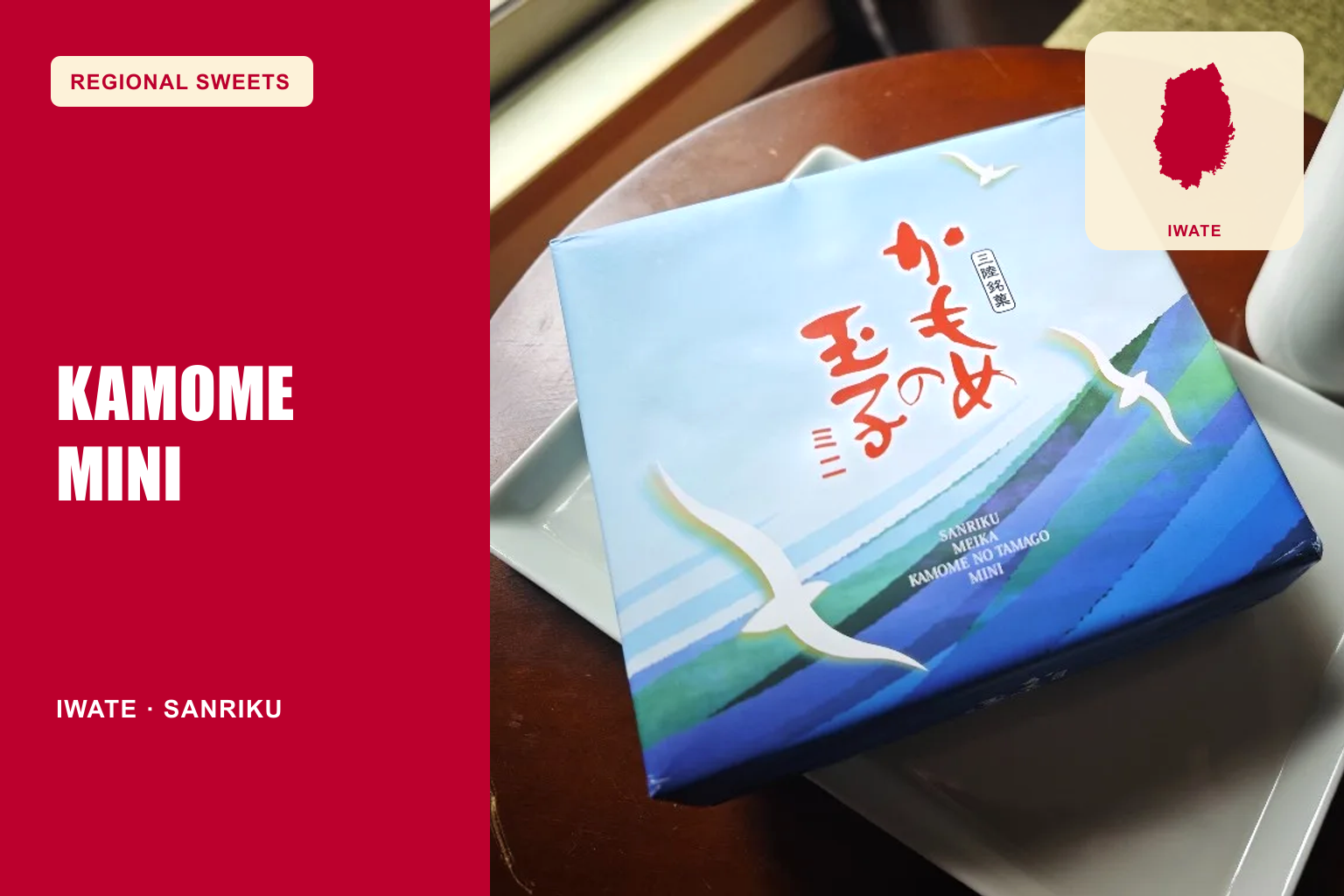
On a white plate, the Mini box looks like a pocket Sanriku seascape: blues, flying gulls, and the red calligraphy for かもめの玉子. Open it and the fantasy turns edible—an egg-shaped sweet built from white chocolate, castella, and a yolk-colored bean paste.
That is Kamome no Tamago Mini from Saito Seika (さいとう製菓) in Ofunato, Iwate. This article stays with the Mini box photographed here. The larger standard size appears only at the end, as the parent format Mini was made to make more shareable.
Quick guide: Read the three-layer diagram before your first bite if you want a spoilery map. For a first Mini, try eating one piece whole so the thin coating breaks and the “yolk” arrives in one motion. Chill briefly if you like a firmer shell. If sweetness stacks across eight pieces, a pinch of black pepper is a playful home-region accent—not an official rule.
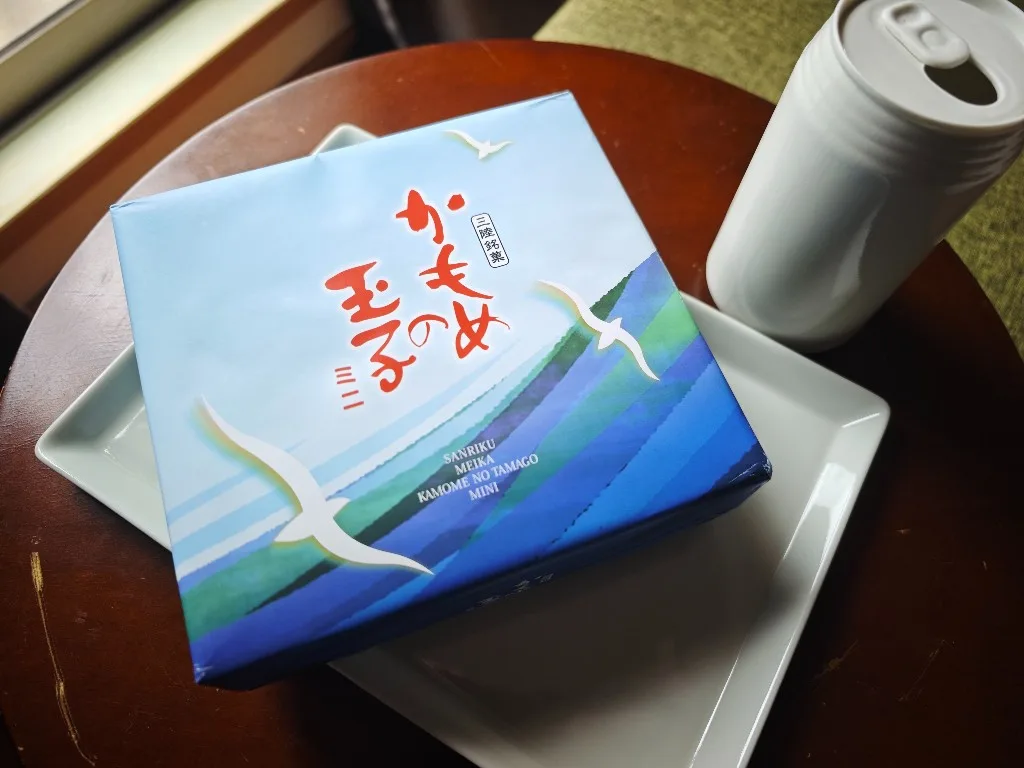
What is Kamome no Tamago Mini?
Kamome no Tamago (seagull’s egg) is a Sanriku meika—三陸銘菓—associated with Ofunato and Saito Seika. Mini keeps the egg silhouette and three-layer construction in a smaller piece. Saito Seika’s product pages present Mini as the easy-to-eat, most popular size, and Kamome Terrace notes an Honorary President’s Prize at the 28th All-Japan Confectionery Exposition.
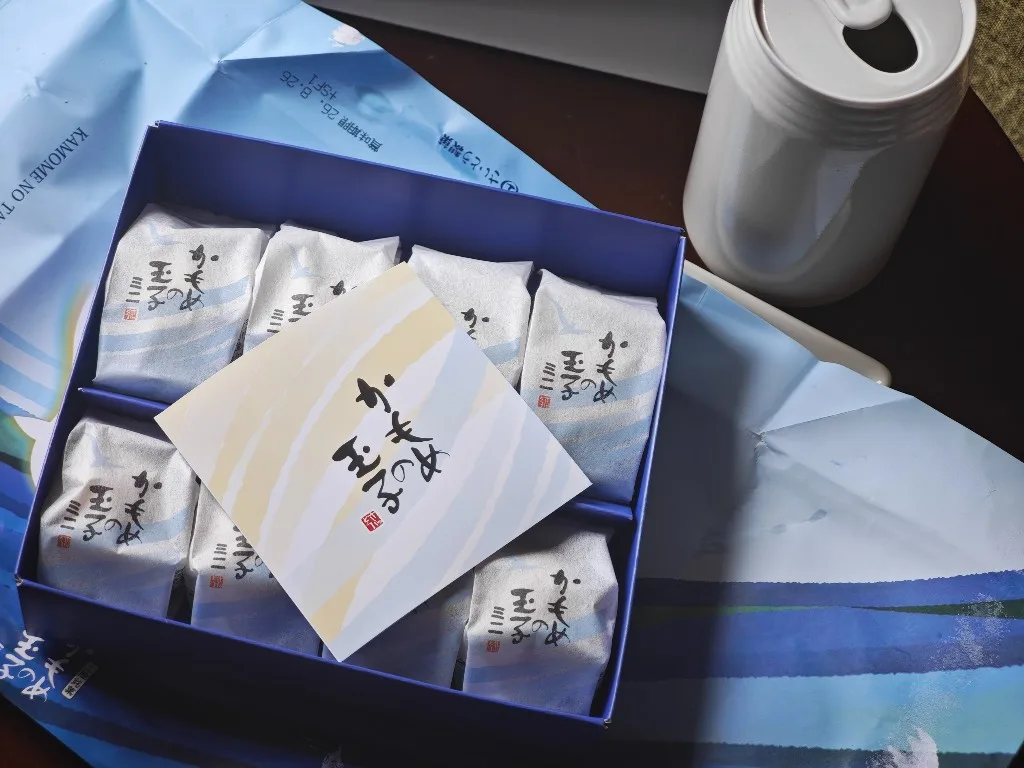
The photographed pack holds eight individually wrapped Minis.
Label cues from the package back
The outer package back is the practical field guide: confectionery category, ingredients, contents, storage, maker, and nutrition.
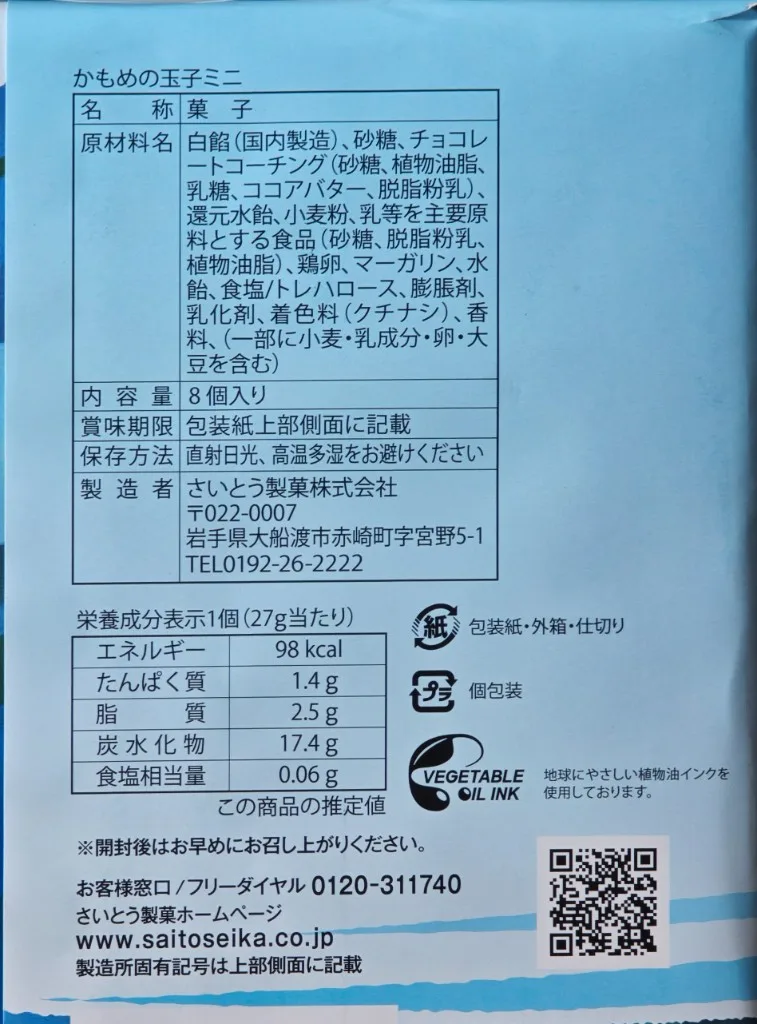
On this pack, the label lists white bean paste, sugar, chocolate coating components (including vegetable oil, lactose, cocoa butter, skim milk powder), reduced starch syrup, wheat flour, egg, and margarine, with allergens wheat, milk, egg, and soybean. Contents: 8 pieces. Nutrition for one 27 g piece includes about 98 kcal. Storage guidance warns against direct sun, high heat, and humidity. Always trust the label on the box you buy—formulas can change.
Opening the box: eight Minis and a pamphlet
Lift the lid and the box divides into two nests of four. A square pamphlet sits on top—part souvenir booklet, part usage note.
Pamphlet outer: title, handling, allergy
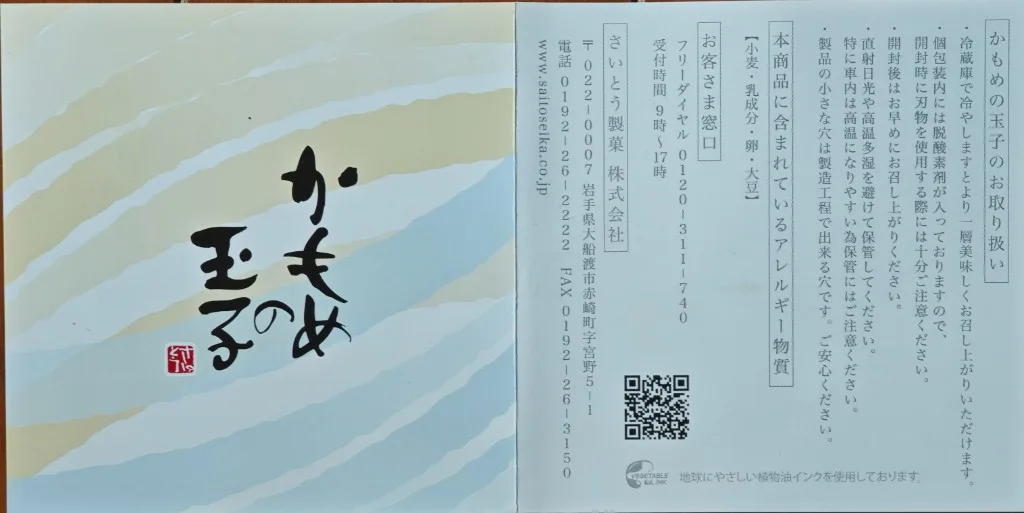
The pamphlet cover carries the same wave-and-calligraphy identity as the wrappers. The reverse side turns practical: chill for better eating, watch for oxygen absorbers when opening, finish soon after opening, avoid car heat, and note that tiny holes can be a normal manufacturing mark. Allergy materials are repeated in a clear box: wheat, milk, egg, soy.
Pamphlet inner: three layers and a 1952 beginning
Open the pamphlet and you get the structure map first.
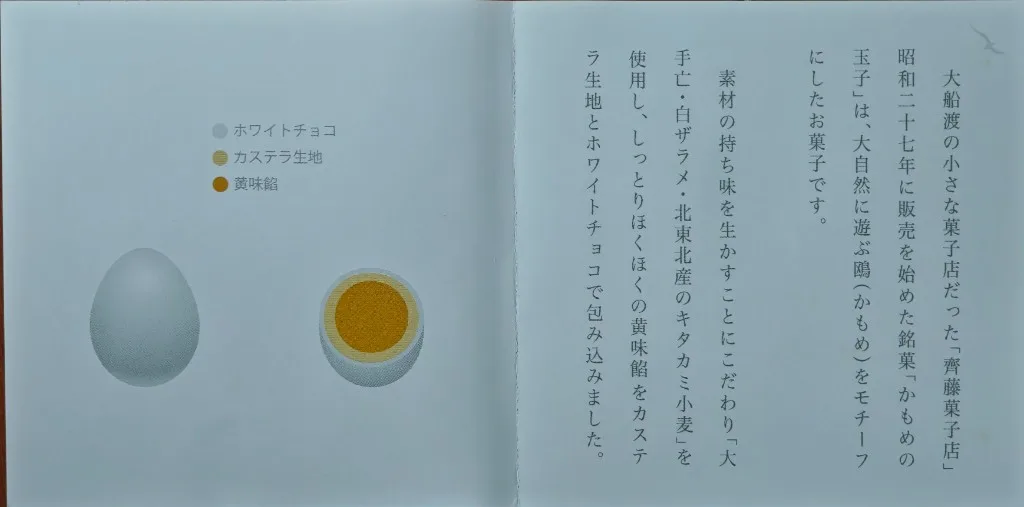
The diagram names three layers:
- White chocolate — outer shell
- Castella sponge — thin middle cushion
- Kimi-an (黄味餡, yellow yolk bean paste) — dense center
Beside it, Saito Seika’s story (also mirrored on official pages) places the sweet’s beginnings with a small Ofunato shop, Saito Kashiten, and sales of Kamome no Tamago from Showa 27 (1952). The motif is a seagull at play in nature. Materials highlighted include otemobo white beans, shiro-zarame sugar, and Kitakami wheat from northern Tohoku.
Source notes: Saito Seika — About Kamome no Tamago; Kamome Terrace product page; photographed pamphlet 04/05.
One wrapped Mini, then the whole egg
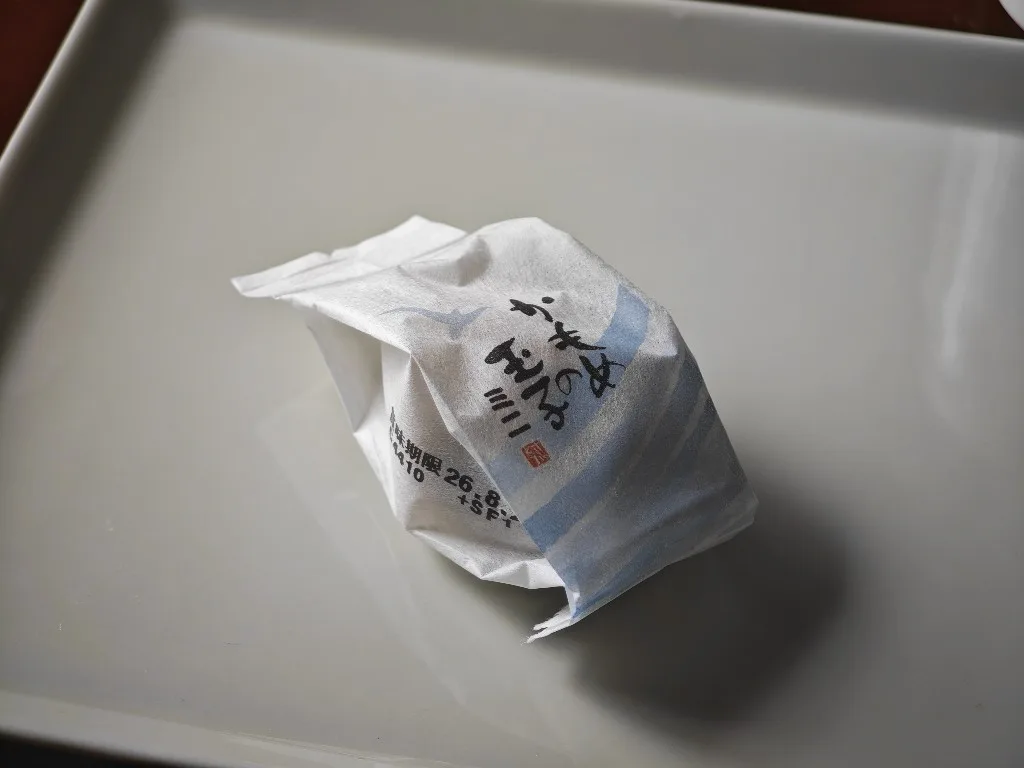
Each piece arrives in its own white wrapper with blue wave marks and a small red ミニ label.
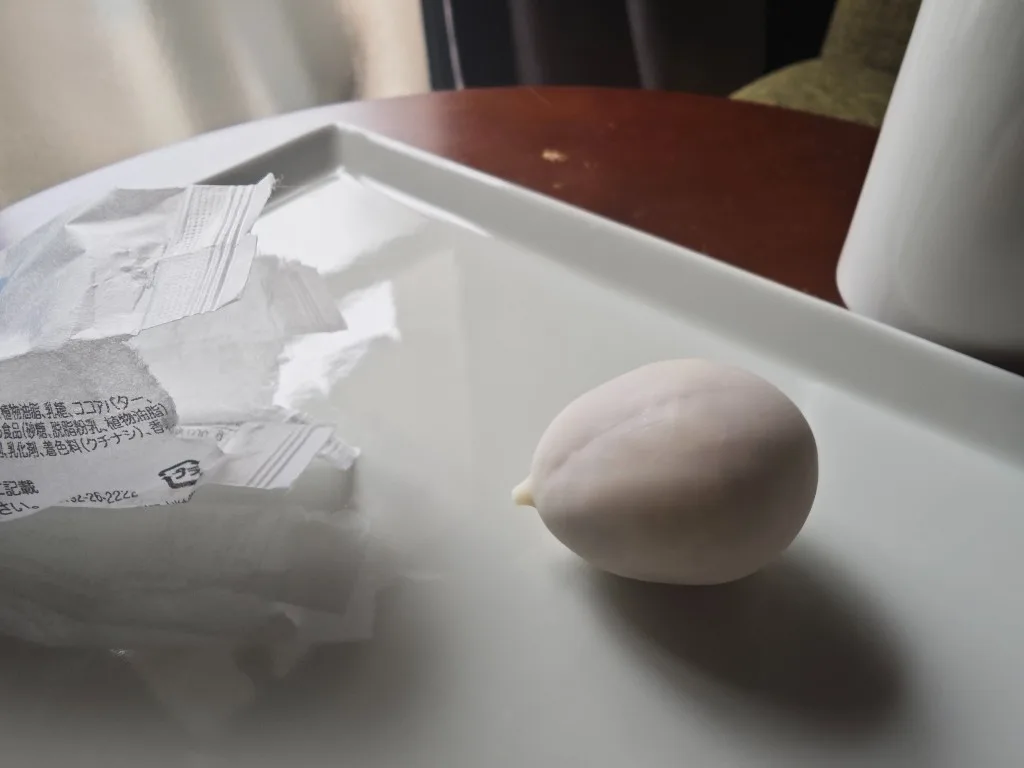
Unwrap it and the egg shape becomes literal: a matte off-white chocolate shell with a small tip where the coating finished.
Texture first: piercing the shell into the yolk
This is where Mini earns its review.
The outer coating is thin. In my tasting it felt almost like a soft rubber membrane—not thick chocolate armor. Teeth push through that film, cross a brief sponge cushion, and land in the yolk-like center. That arrival is the pleasure.
Flavor-wise, this is not a bitter chocolate story. White chocolate and the bean-paste center stay in a gentle, milky-sweet lane. The drama is contrast: the chocolate softens and mixes in the mouth almost like butter, while the paste leaves a fine sandy grain on the tongue. Soft shell, soft sponge, denser center—three textures in a bite small enough to finish cleanly.
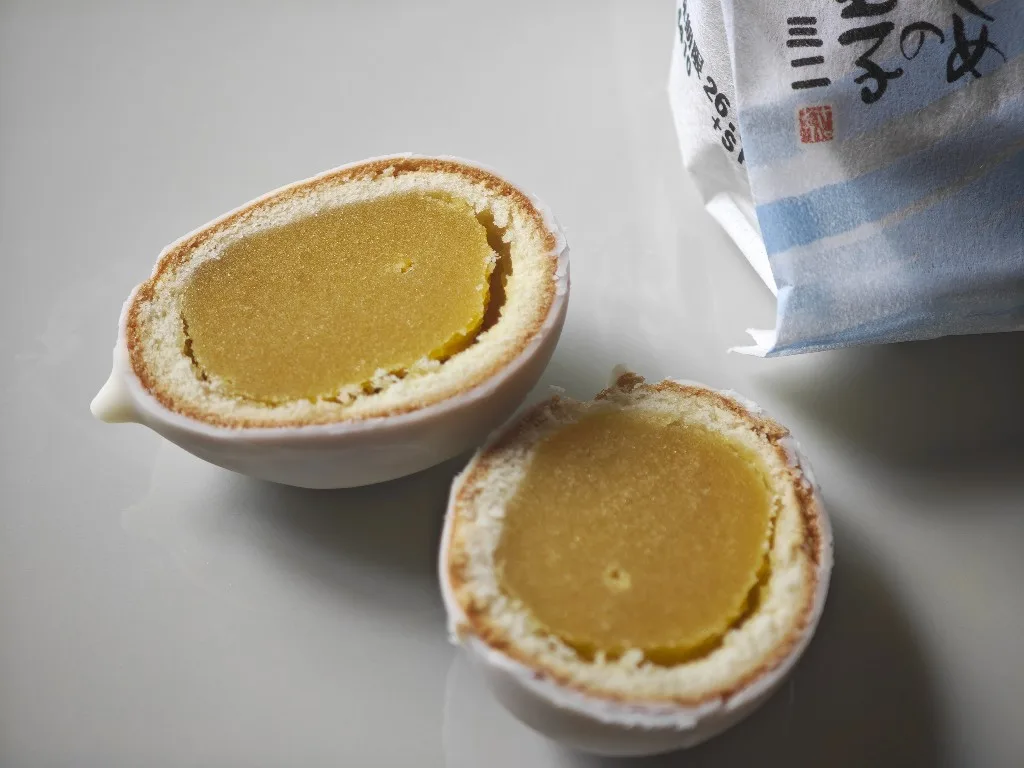
I understand the urge to cut one open immediately. Seeing the yellow core is satisfying. Still, if this is your first Mini, try one whole piece while imagining the layers. The cross-sections below are an intentional spoiler. Cutting in half—or taking a clean bite—is also fine. There is no single correct ceremony.
Cross-section (spoiler)
Two halves make the construction obvious:
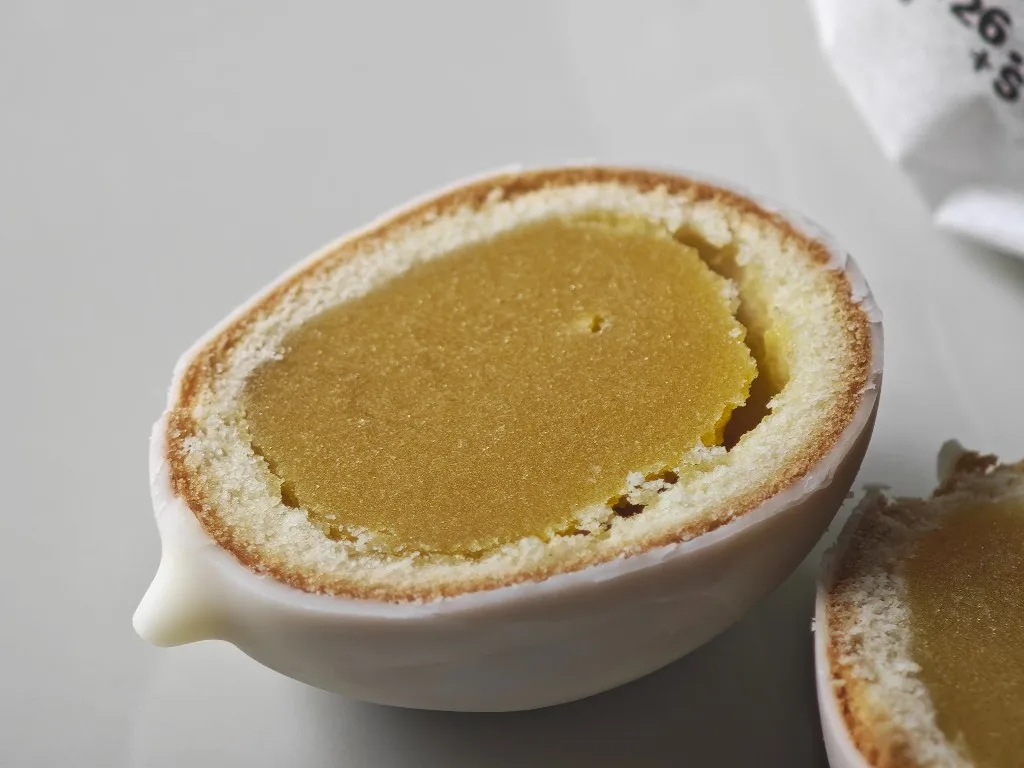
Closer still, the thin white shell, pale sponge rim, and bright kimi-an core separate cleanly:
Black pepper accent: a home-region tip
Across eight sweet, mild pieces, your palate can get used to the white-chocolate and bean-paste lane. A friend from Kamome no Tamago’s home region in Iwate’s Sanriku area taught me an optional accent online: grind a little black pepper over a cut face.
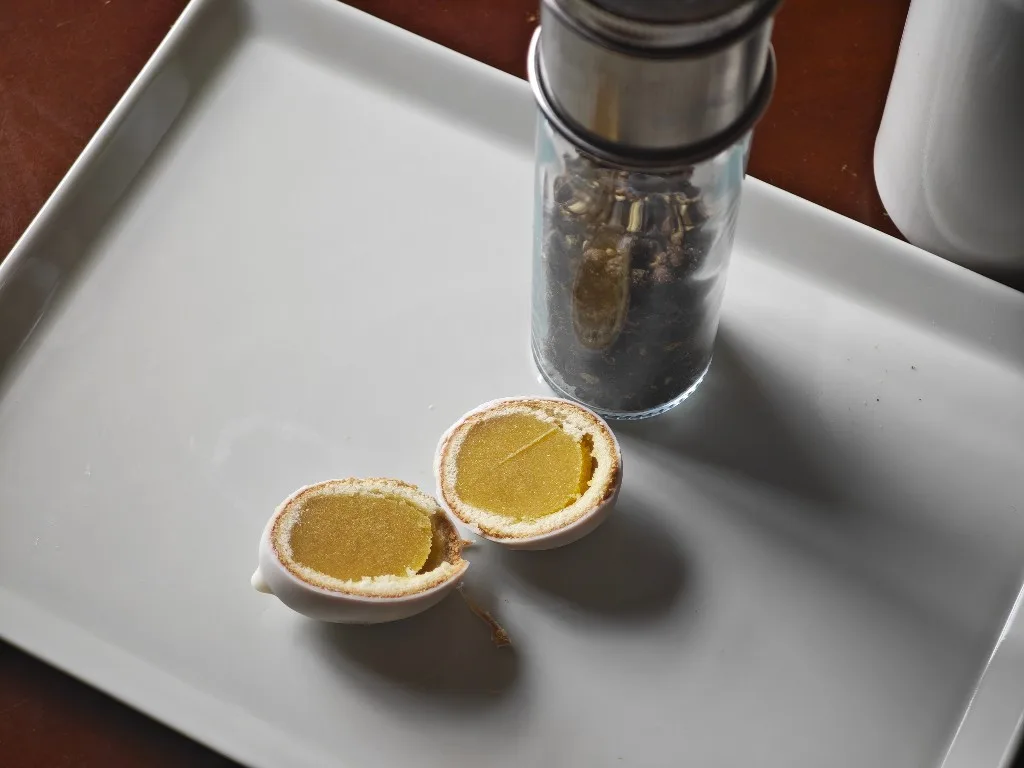
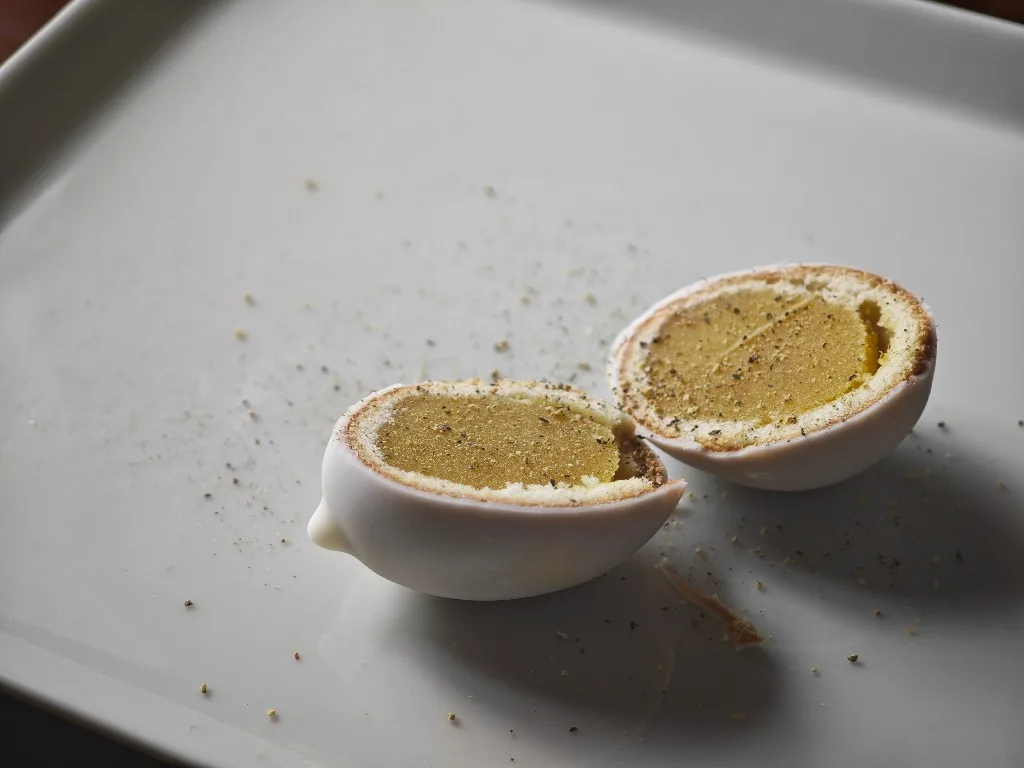
The pepper does not rewrite the sweet. It nicks the sweetness so the next bite feels awake again. Treat it as a playful alternate—not a maker instruction, and not required for enjoying Mini as designed.
Ofunato, Sanriku, and the main store
Kamome no Tamago is widely treated as a Sanriku / Iwate souvenir, not a generic nationwide convenience-store snack. Ofunato’s coastal identity sits in the packaging: gulls, blues, and the Sanriku meika mark.
Visitor-facing main store:
- Kamome Terrace / Sanriku Kashisho Saito Main Store (かもめテラス/三陸菓匠さいとう総本店)
- Address: 7-31 Chayamae, Ofunato-cho, Ofunato-shi, Iwate Prefecture
- Hours listed on Saito Seika’s shop page: 9:00–19:00 (confirm before travel)
- Shop site: kamometerrace.com
- Map: Open in Google Maps
Saito Seika also lists other direct shops (for example Morioka locations, Kitakami, Kamaishi, Rikuzentakata). The package back’s Akasaki manufacturing address is useful for maker identification; for a visit, prefer Kamome Terrace.
Flavor variants beyond classic Mini
If you like the classic white-chocolate / kimi-an Mini, Saito Seika’s current lineup map is wider. Regular and related formats include the larger standard egg, chocolate-forward Chocoran, apple, golden chestnut, and red-and-white celebration packs. Special and seasonal versions rotate—examples from official pages include banana, tea, tiramisu-style cheese, sweet potato, strawberry, blueberry, chestnut, and mikan. Collabs and gift boxes also appear. Availability is store- and season-dependent; check saitoseika.co.jp/kamomenotamago or Kamome Terrace’s Kamome list before you travel.
If you want the larger “standard” Kamome no Tamago
Mini is enough for understanding the construction and the texture punch. The standard Kamome no Tamago keeps the original larger size Saito Seika describes as the long-running format. Choose Standard when you want a bigger souvenir presence or a slower, more substantial piece; choose Mini when you want the same idea in a shareable, easier rhythm—especially an eight-piece box like the one photographed here.
Where to buy
In Japan, look for Saito Seika direct shops (starting with Kamome Terrace in Ofunato), Tohoku souvenir counters, and online makers’ channels. Station and gift kiosks also carry Mini packs.
For US readers, an August 15, 2026 check found no stable exact Amazon.com listing and no exact food result under Amazon Japan’s international-shipping filter. Use a specialist importer that states its US delivery terms, then confirm freshness, heat handling, and delivered cost.
- Official: About Kamome no Tamago (Saito Seika)
- Official shop / main store: Kamome Terrace
- US-facing importer: Kamome no Tamago Mini at Easygo Japan
- Rakuten Ichiba (Japan): Kamome no Tamago Mini 8-piece gift
Confirm Mini versus Standard on the listing, and read the label on the box you receive.
Affiliate disclosure: links above may be affiliate links. If you buy through them, I may earn a commission at no extra cost to you.
Frequently asked questions
What does Mini taste like?
In my tasting, gentle white-chocolate sweetness met a yolk-like bean paste without bitterness. The memorable part was texture: a thin membrane-like shell, soft sponge, and a denser, slightly sandy center.
Should I refrigerate it?
The pamphlet suggests it tastes better chilled. Follow your own package for storage limits and finish pieces soon after opening.
Is black pepper traditional?
No. It is an optional accent tip from a home-region friend. Try it only if you want contrast after several sweet pieces.