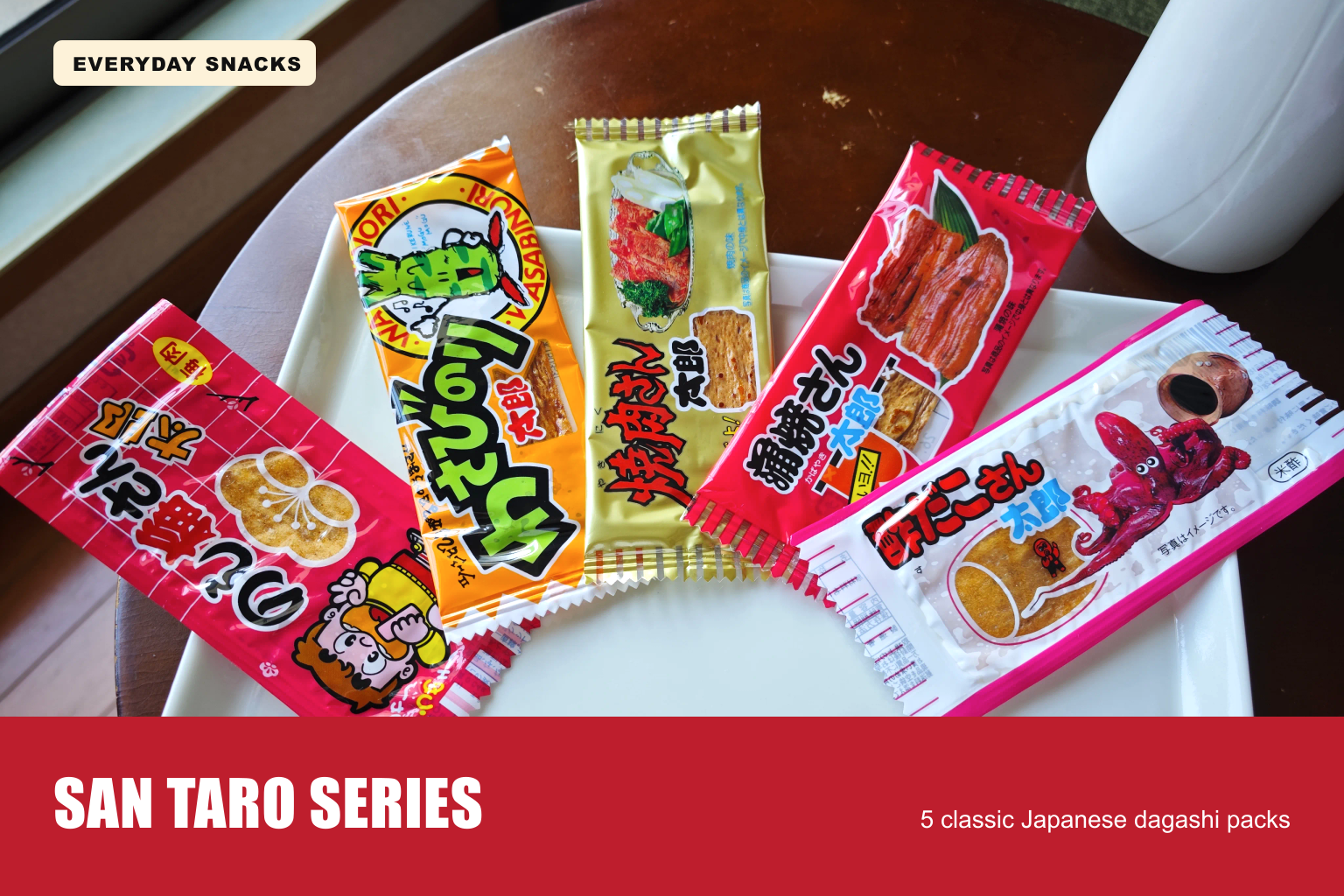
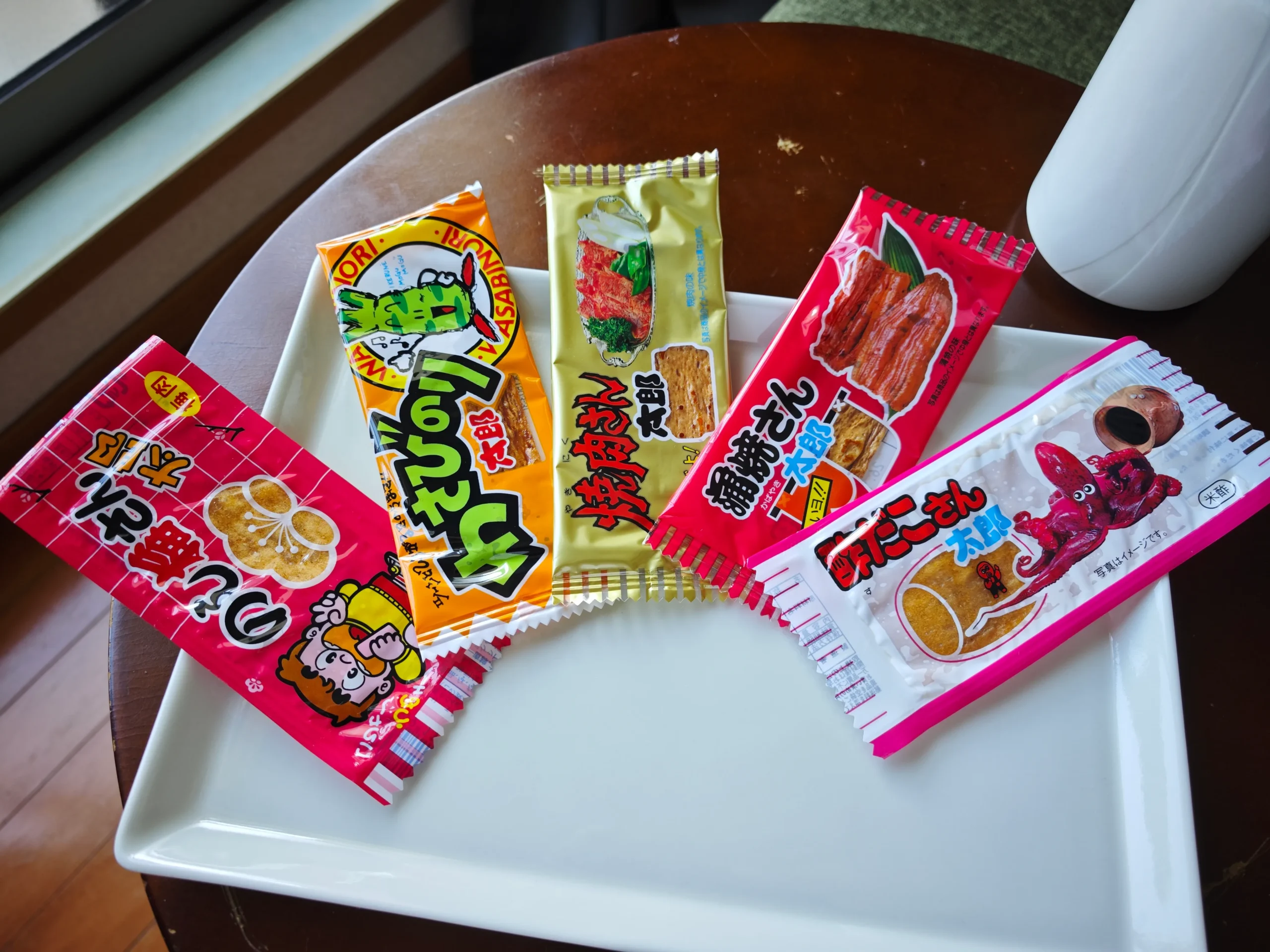
Five bright packs on one plate look like a children’s card game. Open them and you find the same idea wearing five costumes: a thin fish-paste sheet, a loud Japanese package, and a seasoning story strong enough to sell the fantasy before the first bite.
That is the San Taro world from Kado (菓道), a long-running Japanese dagashi maker. You will often meet these packs through convenience stores, supermarket snack hooks, dagashi shops, and distributors such as Yaokin. The photographed set here is the five-flavor plate many people mean when they say “San Taro”: Sudako-san Taro, Noshiume-san Taro, Yakiniku-san Taro, Kabayaki-san Taro, and Wasabinori Taro.
Quick guide: Split the set into two sheet families first—soft/juicy versus hard/jerky-like—then chase flavors. Soft packs invite a leftover-juice ritual. Hard packs invite tearing sounds and, if you want, a rolled molar chew.
What you are actually eating
Despite the eel, octopus, plum, yakiniku, and wasabi packaging, the base is a dried fish-paste sheet—a compact dagashi format rather than a restaurant dish. Labels typically classify the product as a dried seafood item. Exact ingredients differ by flavor; the photographed packs’ labels are shown later so you can read allergens and seasonings from the real packaging.
Kabayaki-san Taro is often treated as the face of the family and is commonly dated to the early 1980s (secondary sources often say 1982). Treat that as the series’ historical center of gravity, not a claim that every sibling launched on the same day.
Retail price has always lived in the classic dagashi band. Older memory says roughly ¥10; recent single packs are often closer to ¥15–20, and bulk trays or assortments are common online. Check the shelf in front of you.
Two sheet families matter more than five logos
Before flavor opinions, notice the sheets.
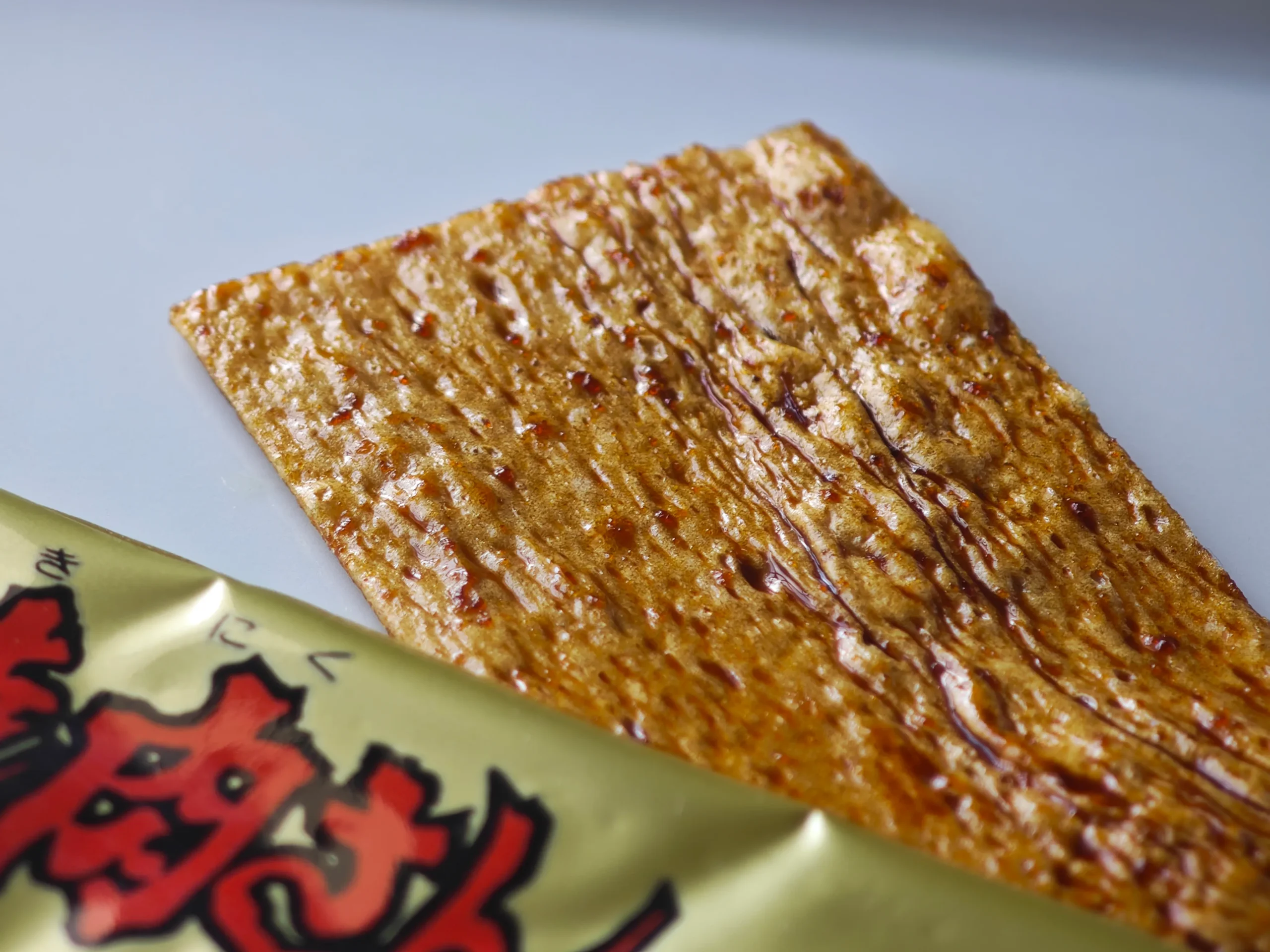
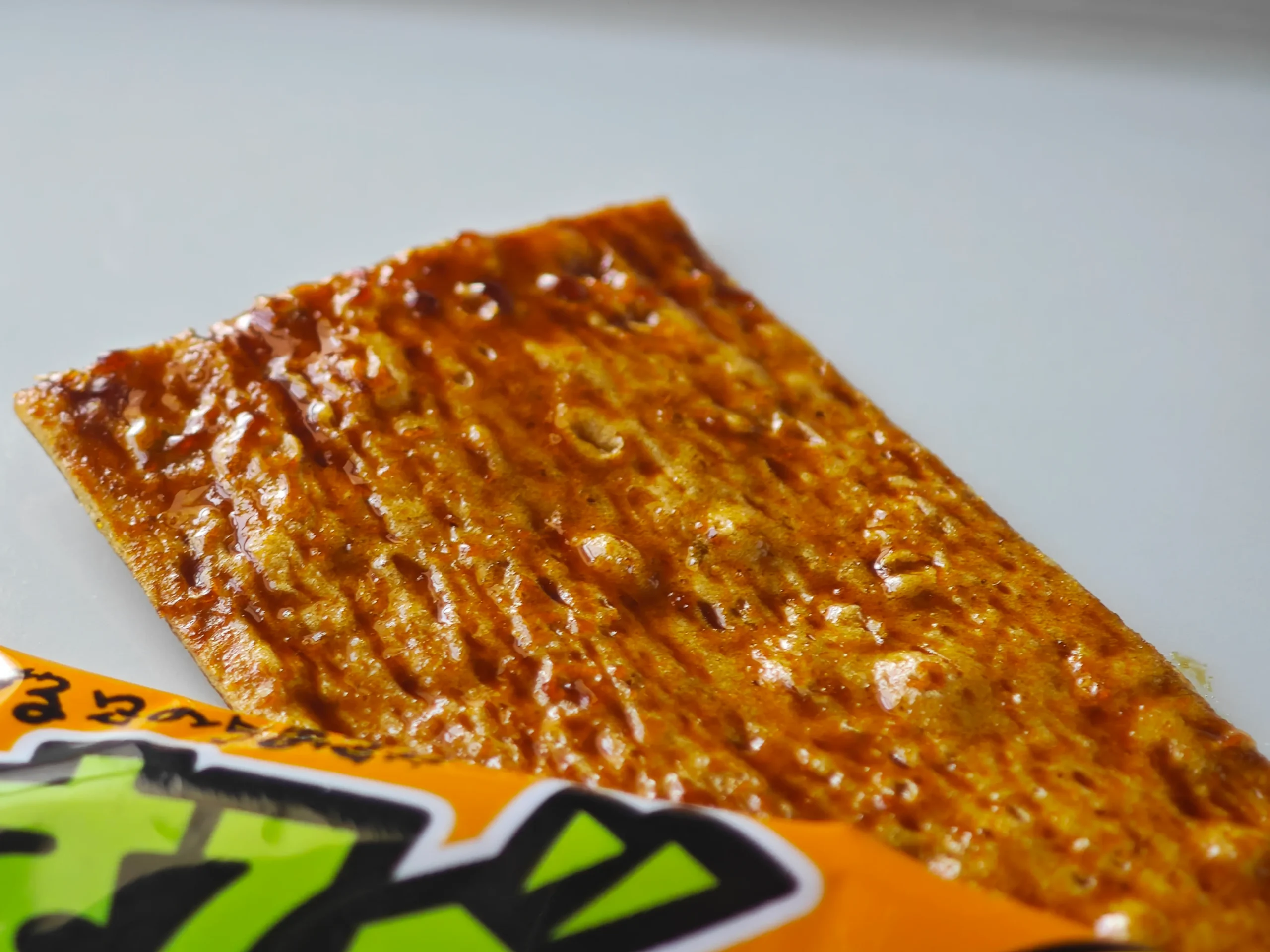
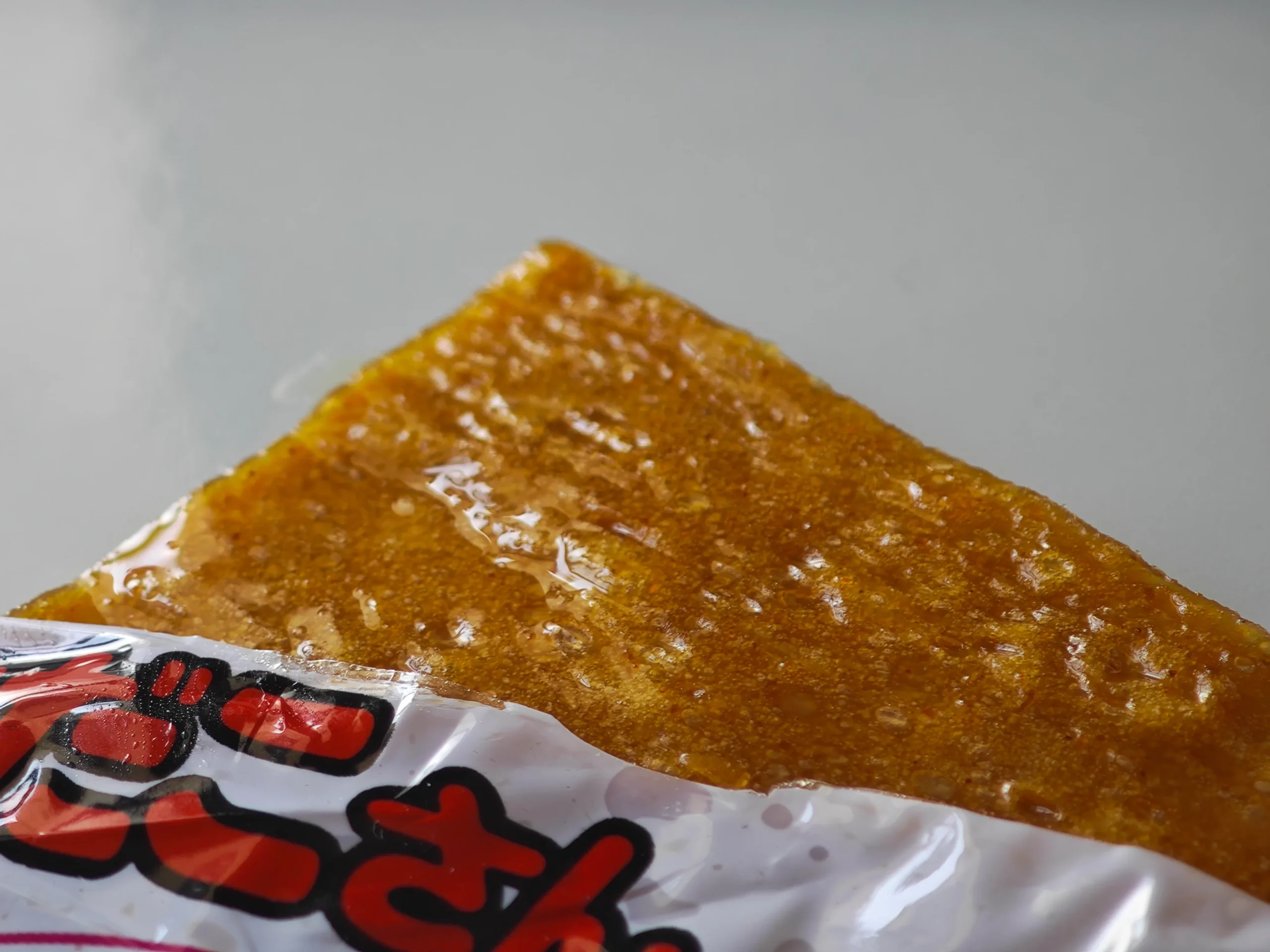
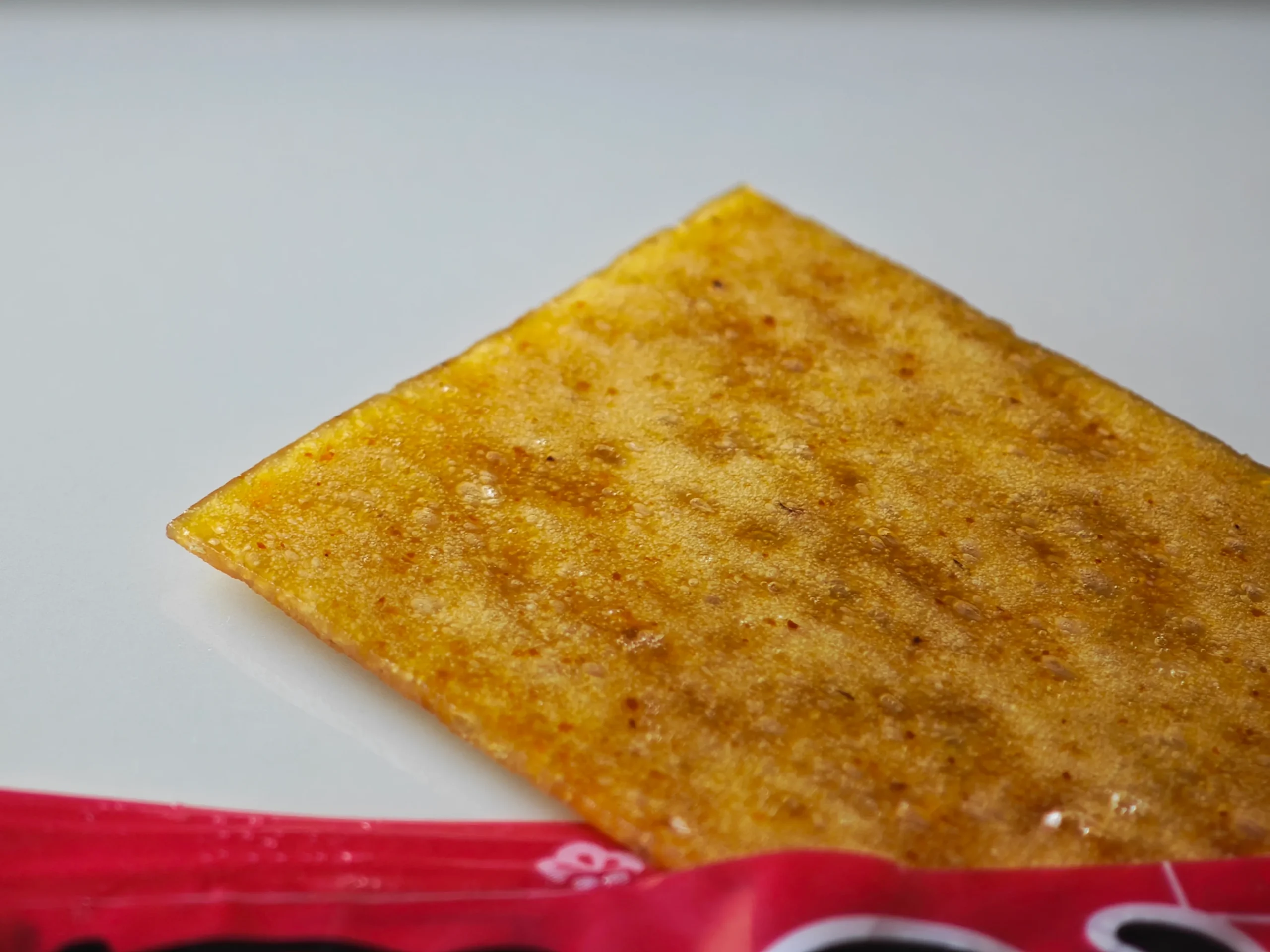
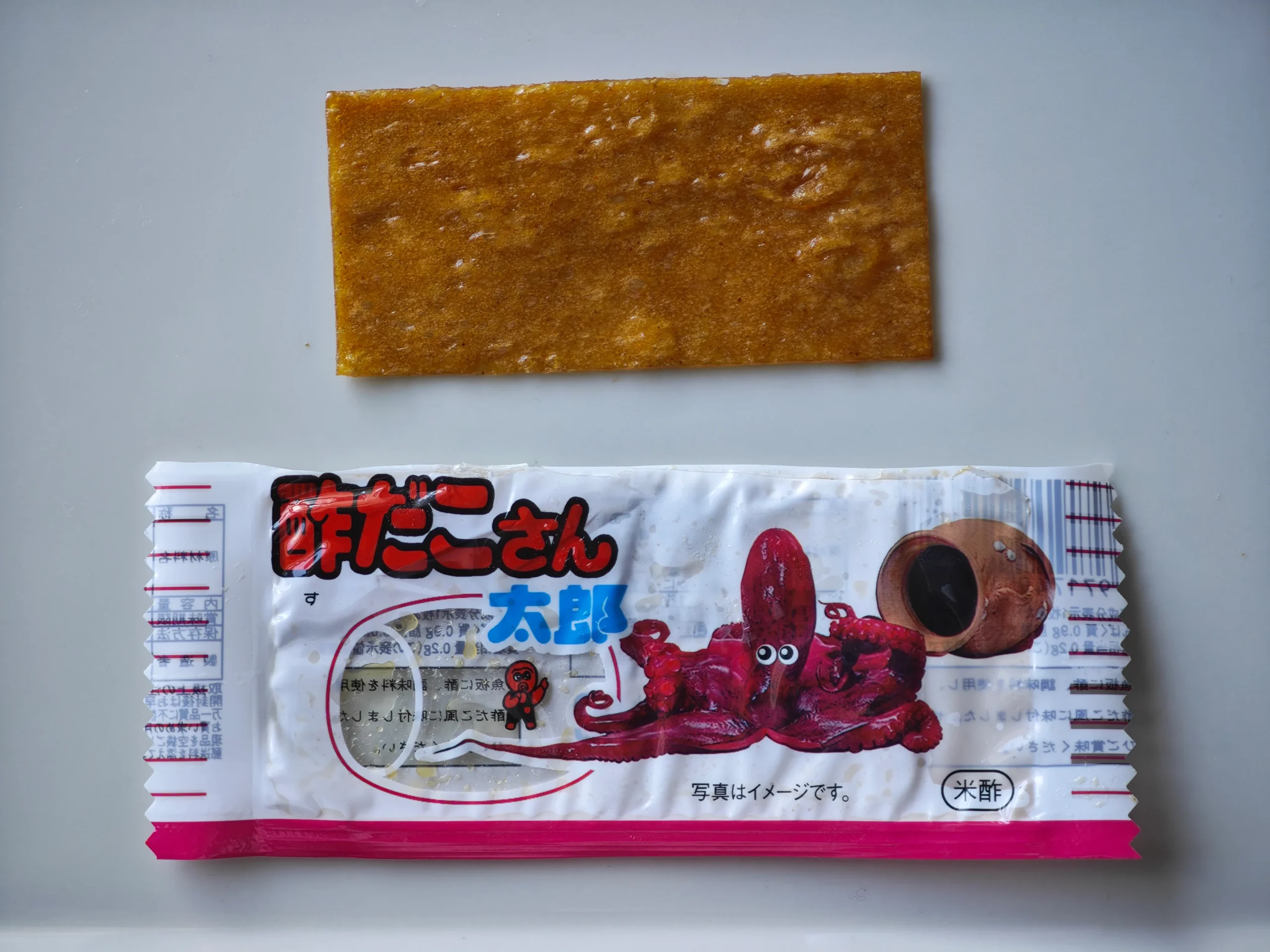
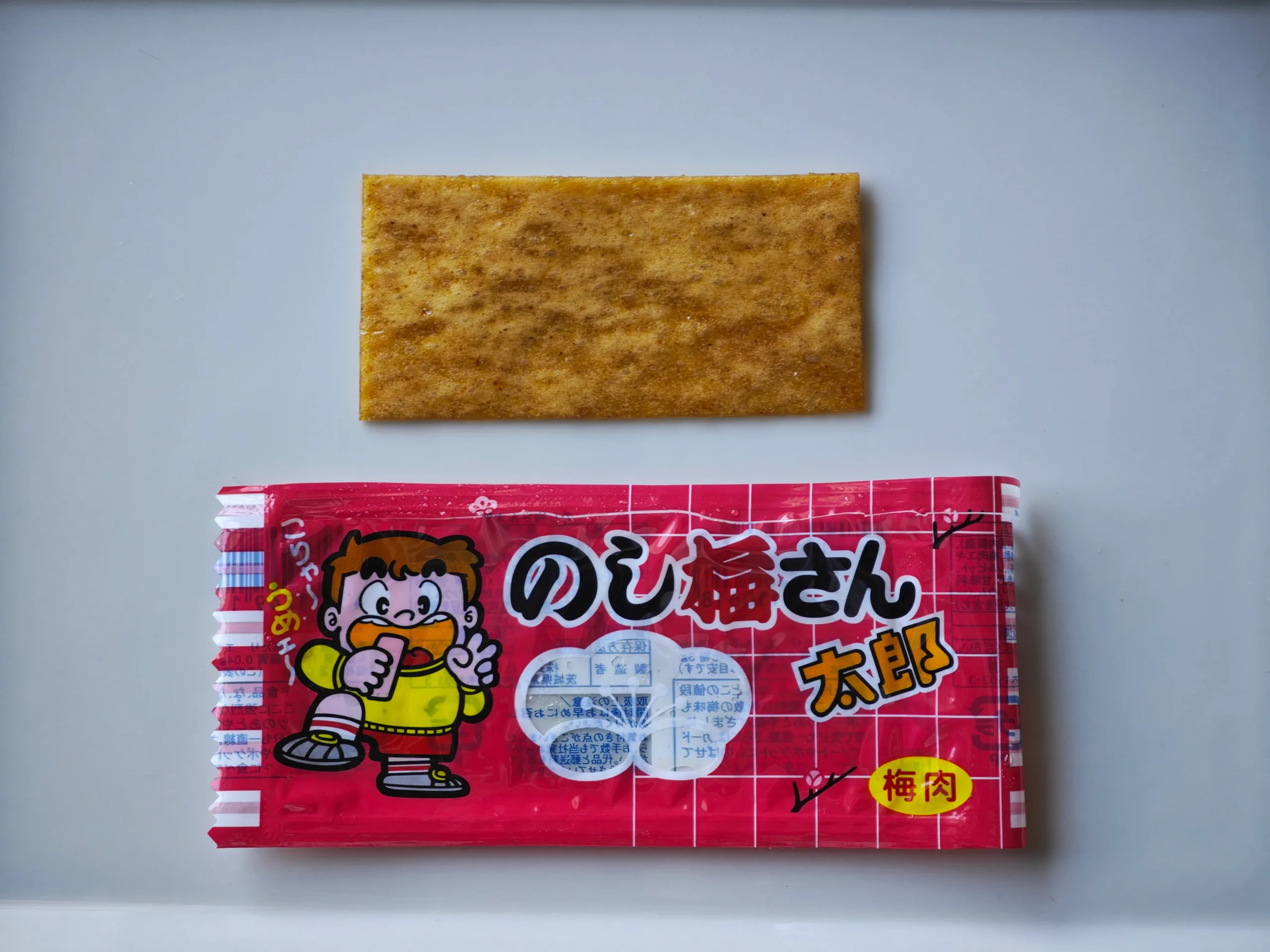
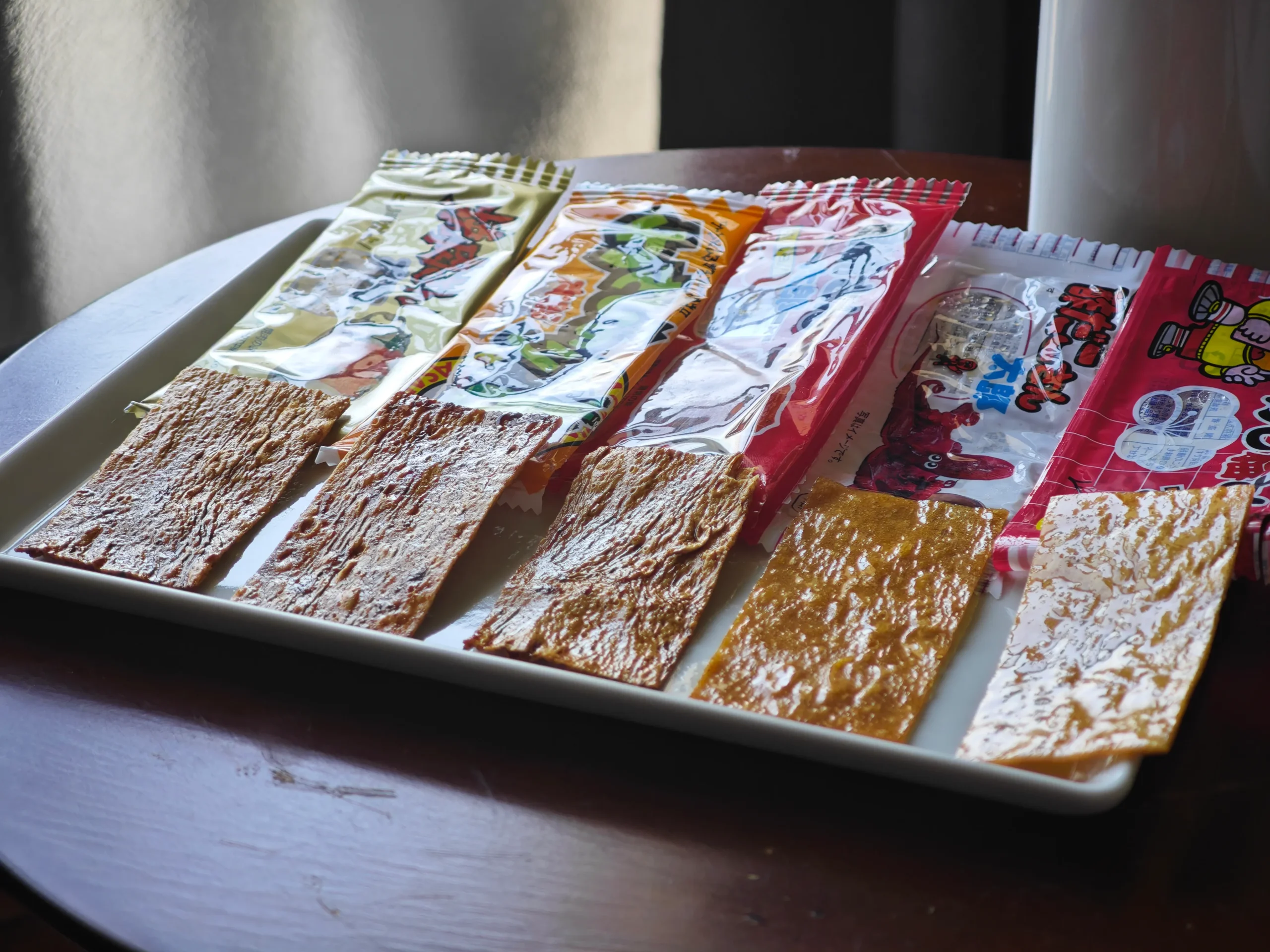
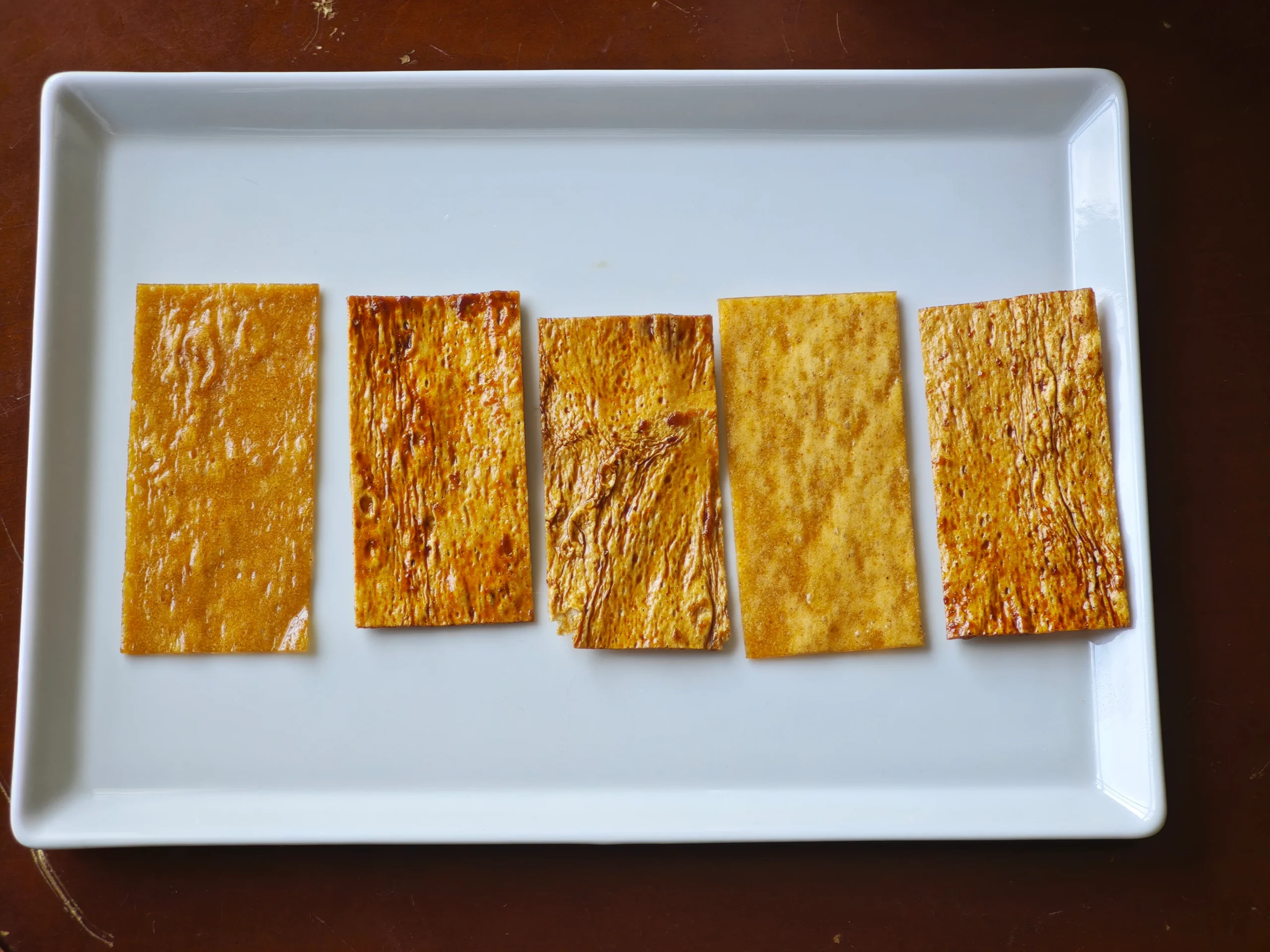
In this shoot, Sudako and Noshiume share one softer sheet. Kabayaki, Yakiniku, and Wasabinori share one harder sheet. Side by side, the thickness and chew change as much as the sauce.
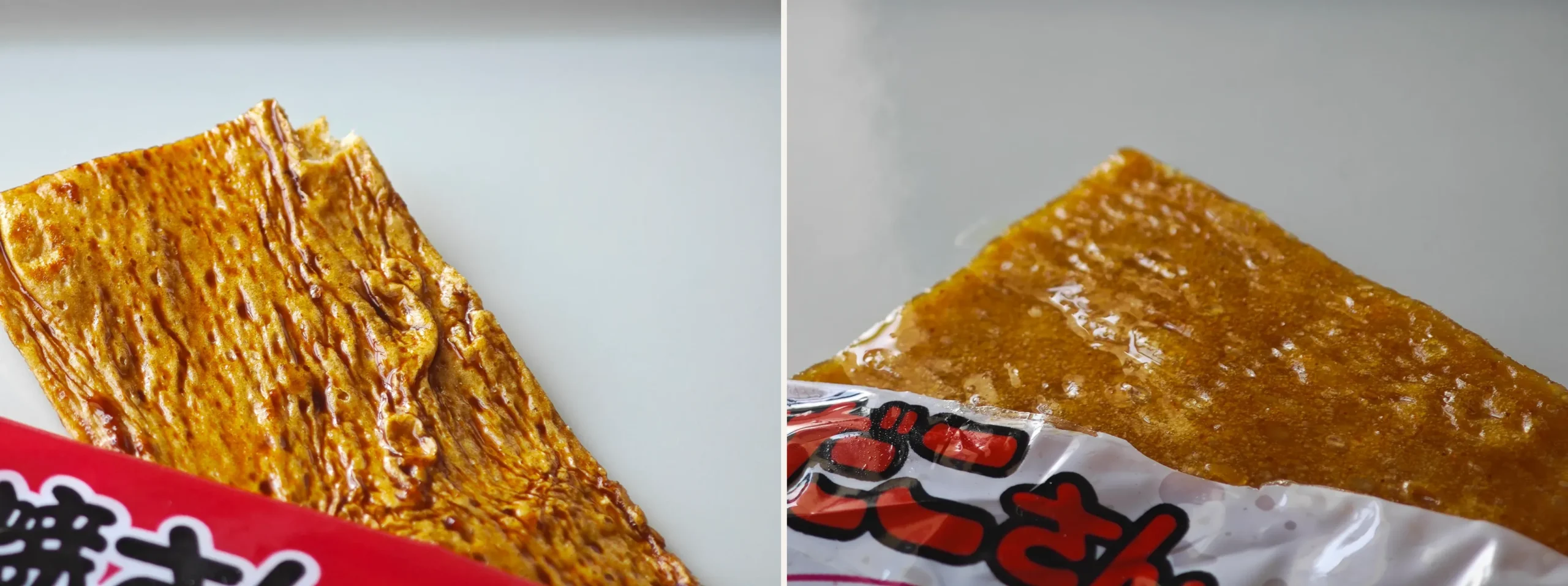
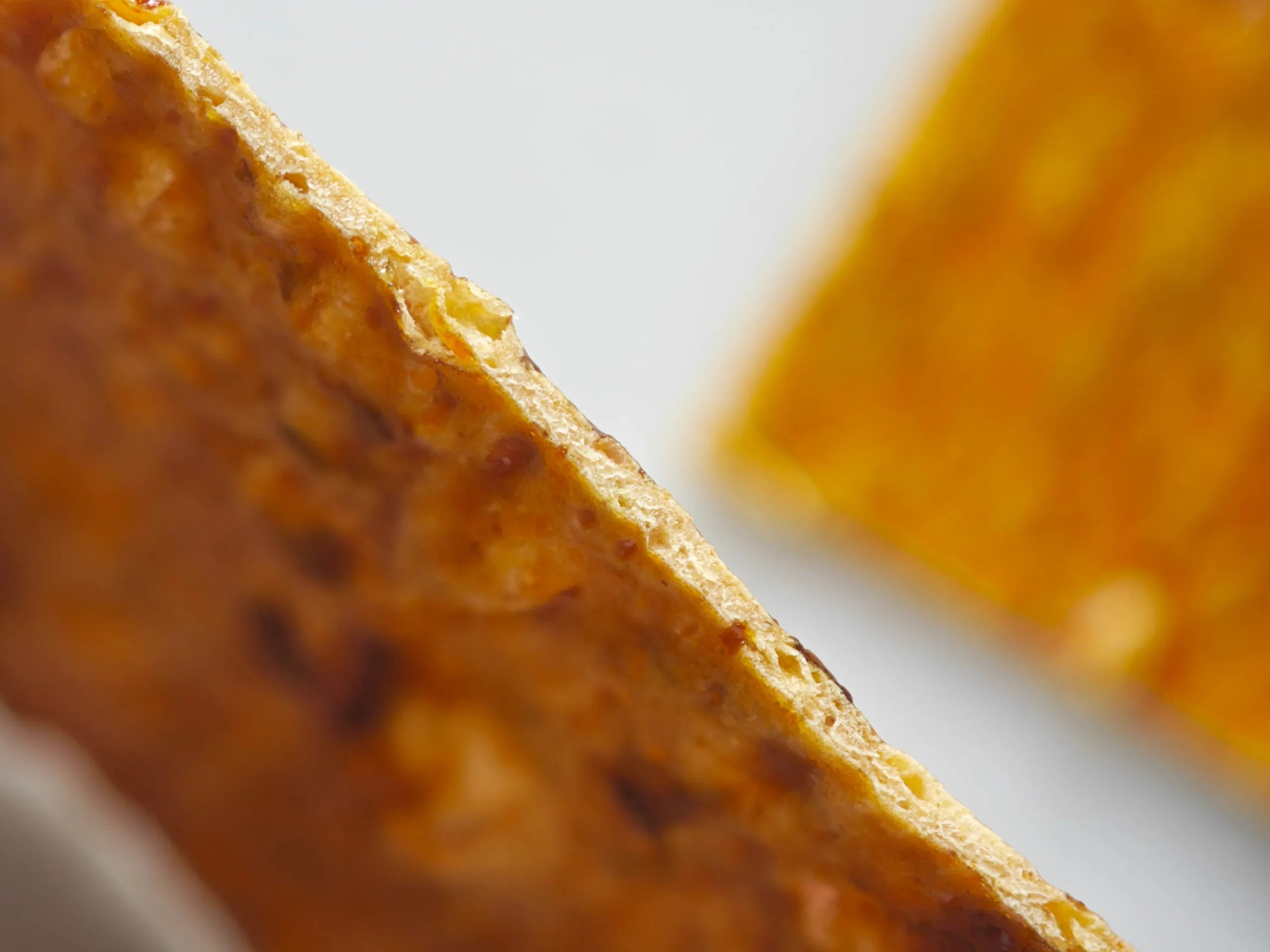
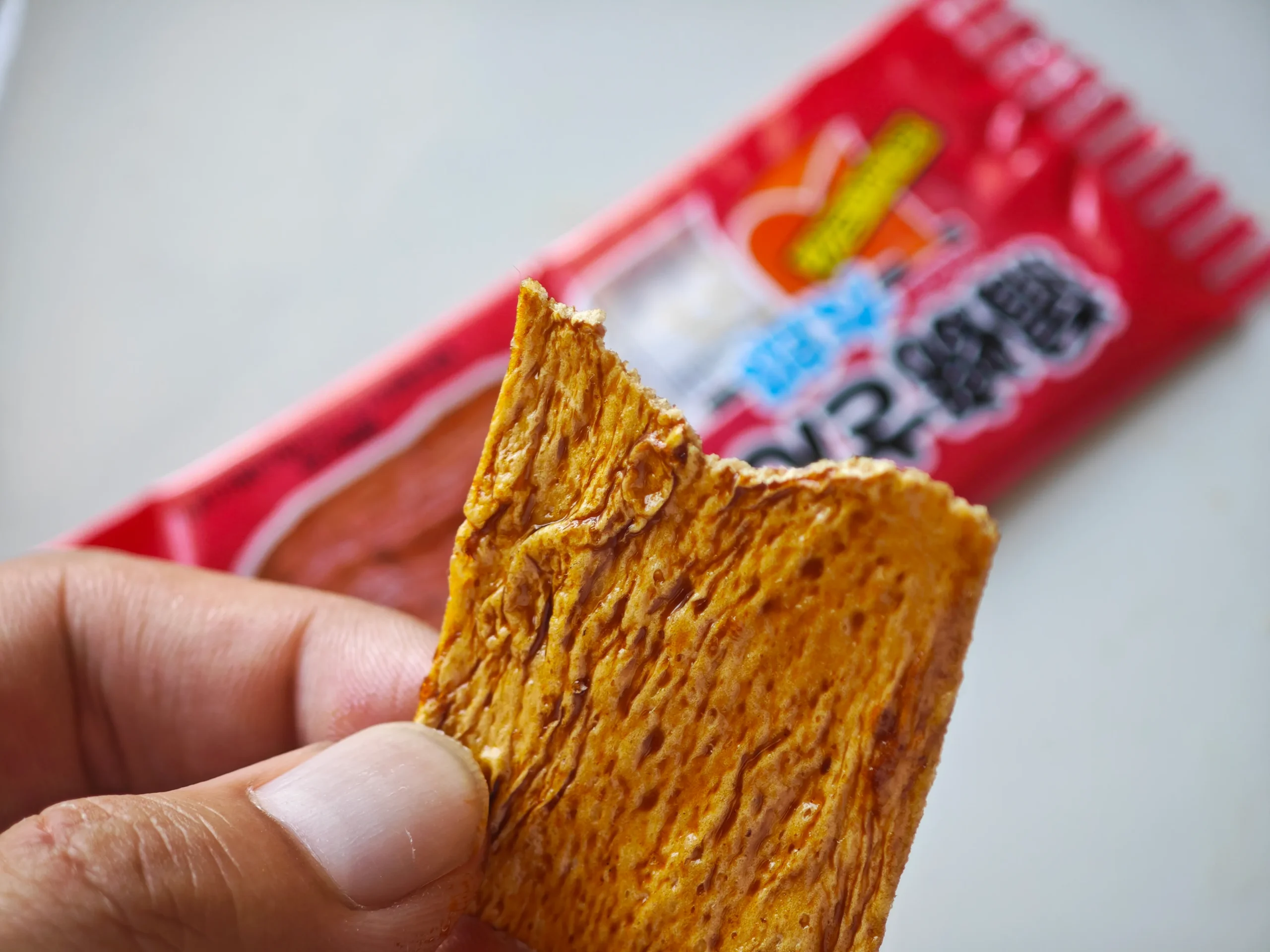
Hard-sheet close-ups make the structure obvious:
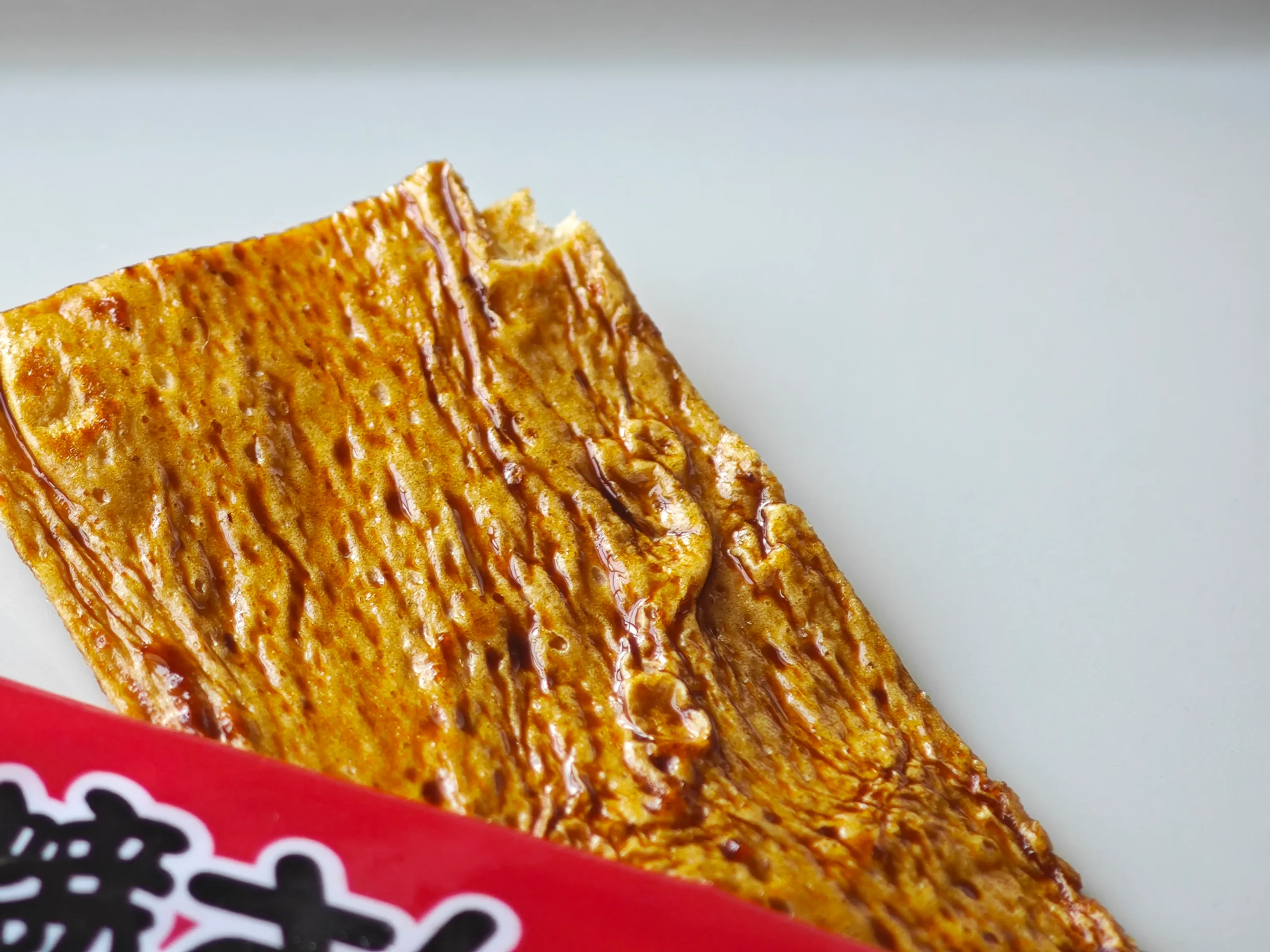
Soft-sheet close-ups show the juicier family:
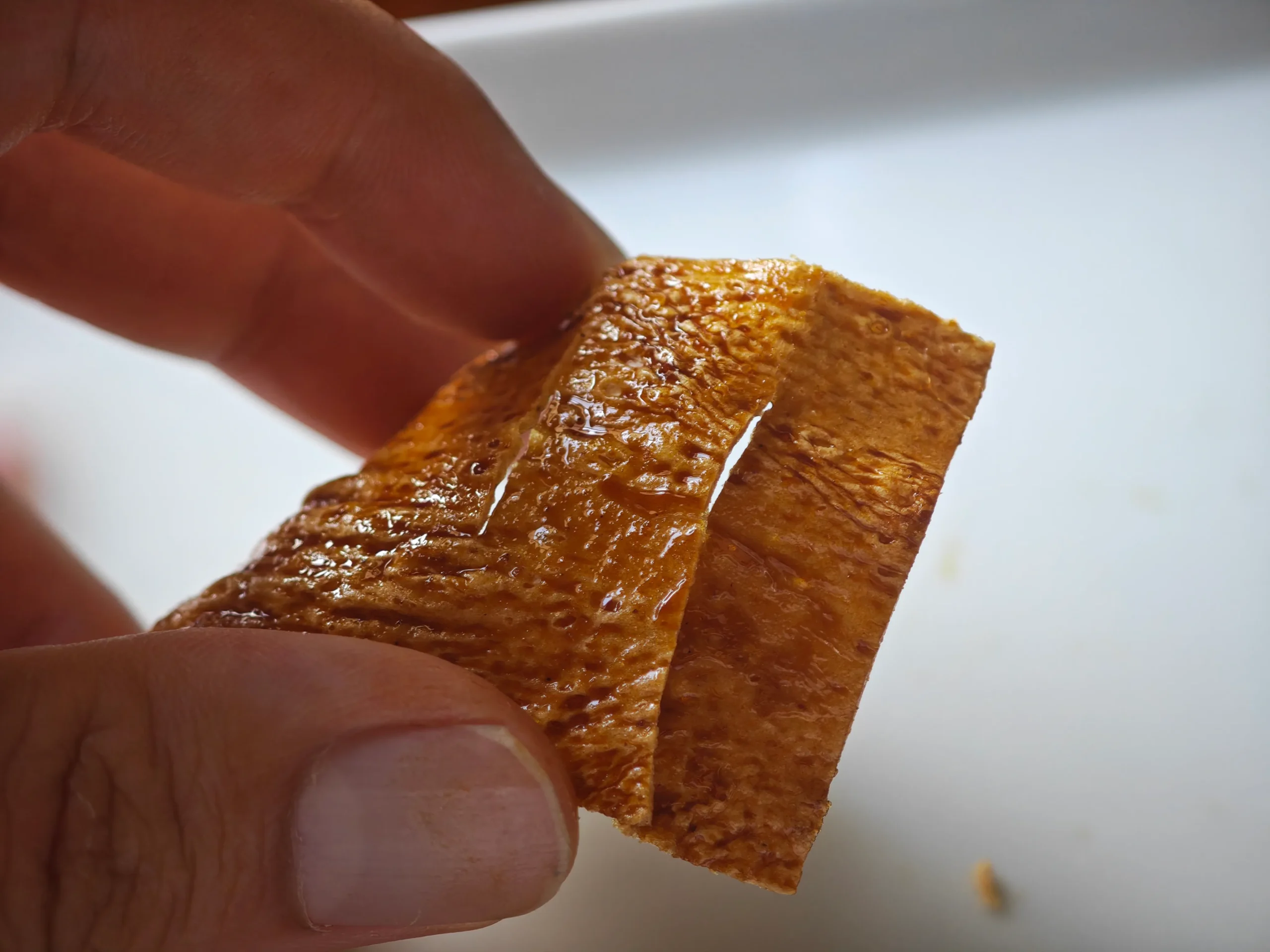
A hard sheet can also crack when cold. If your pack arrives brittle or breaks into panes, that is part of the hard family’s physical reality—not necessarily a defective flavor.
Meet the five packs
Package theater is half the product. Sheet-over-pack shots help overseas readers connect the character art to the food in one glance:
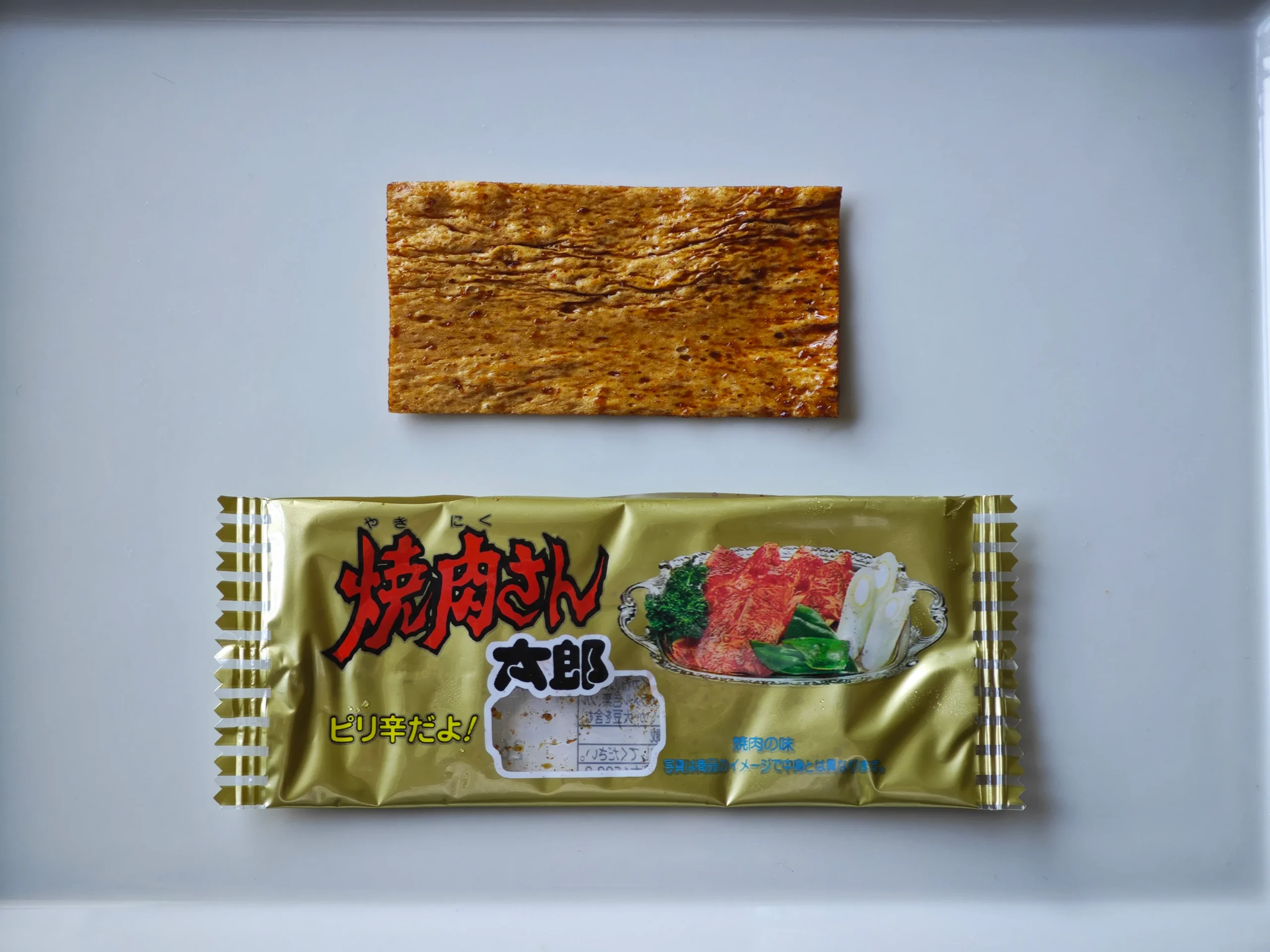
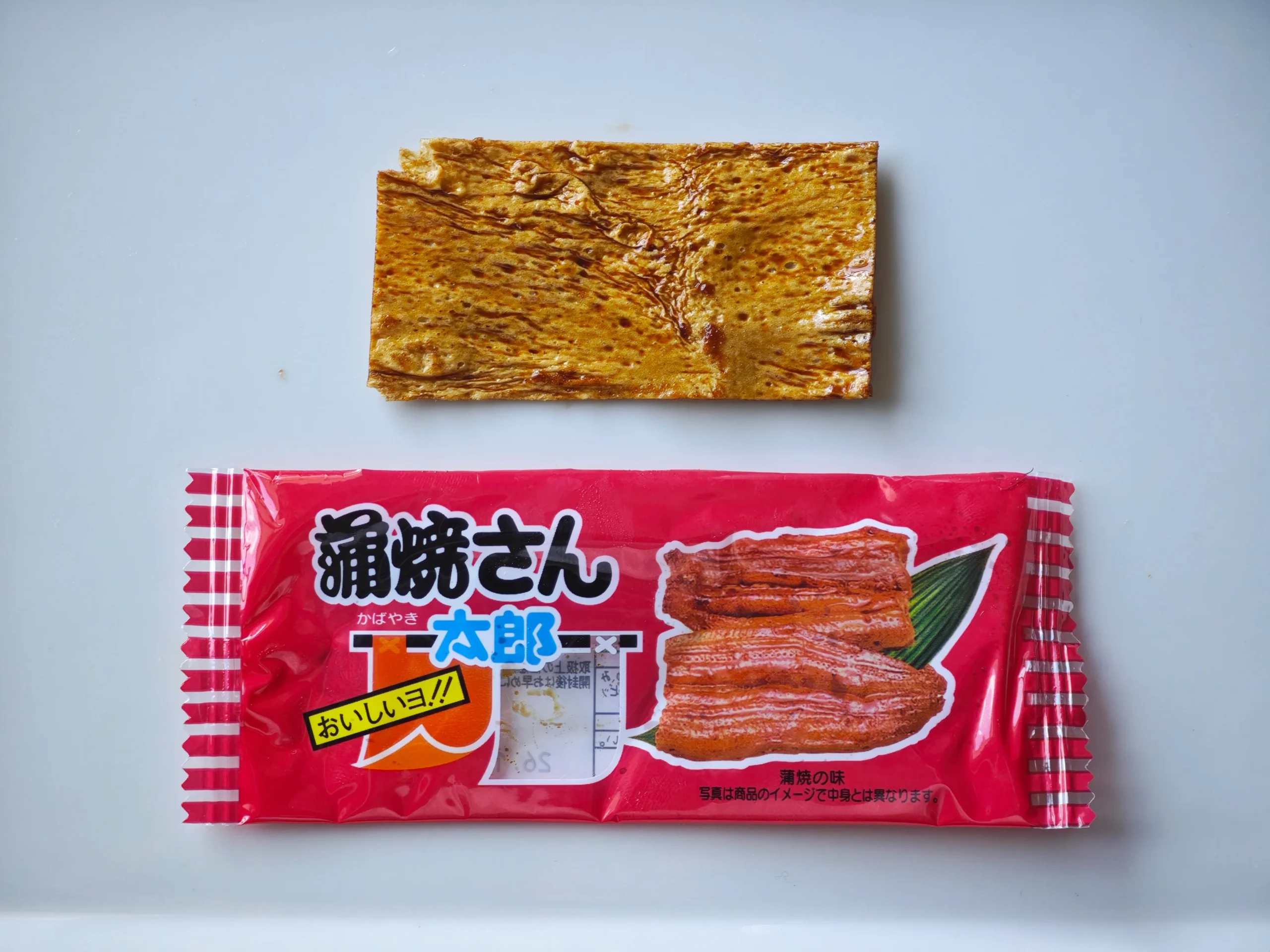
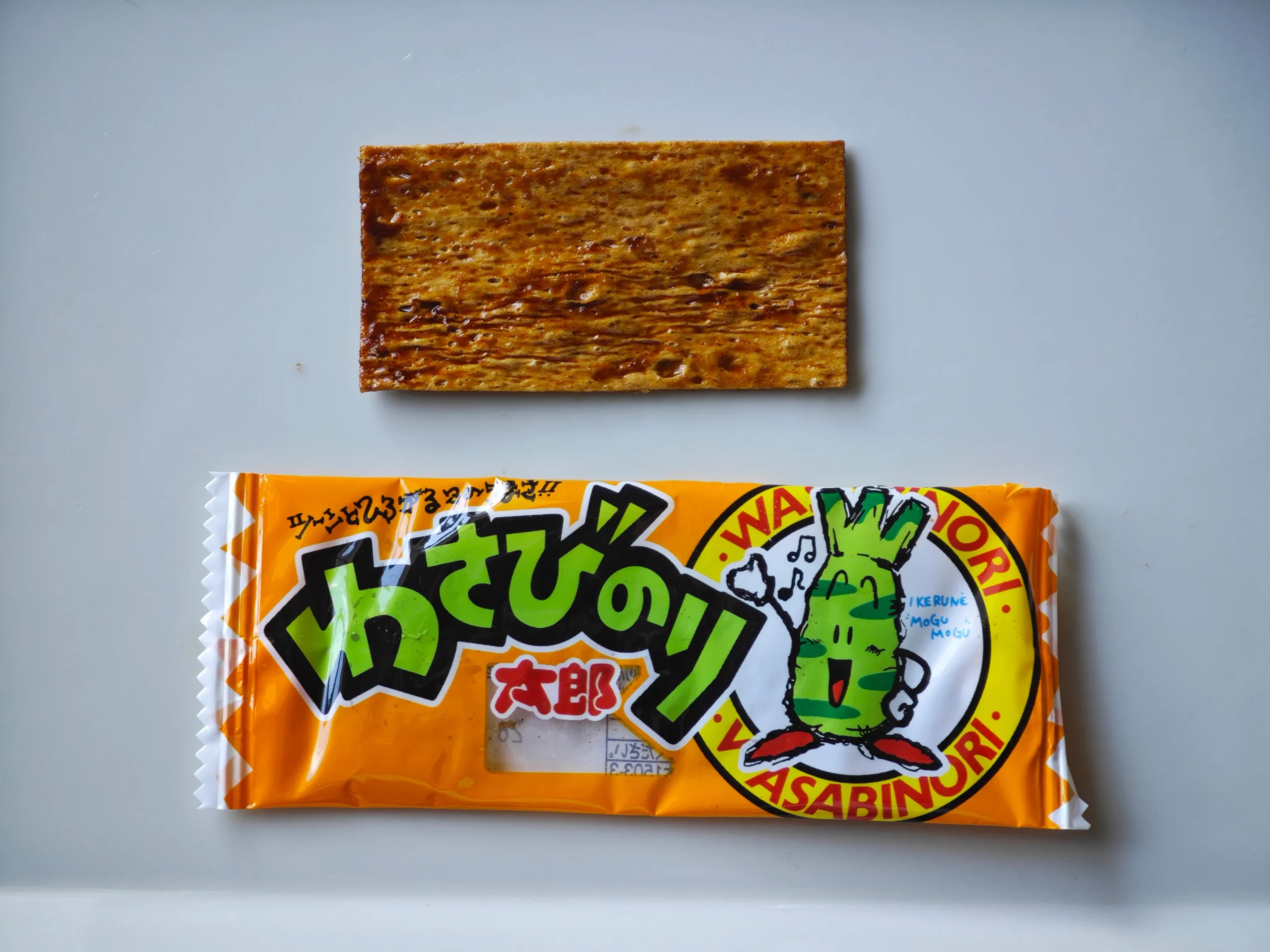
All five sheets together show how far seasoning can push one format:
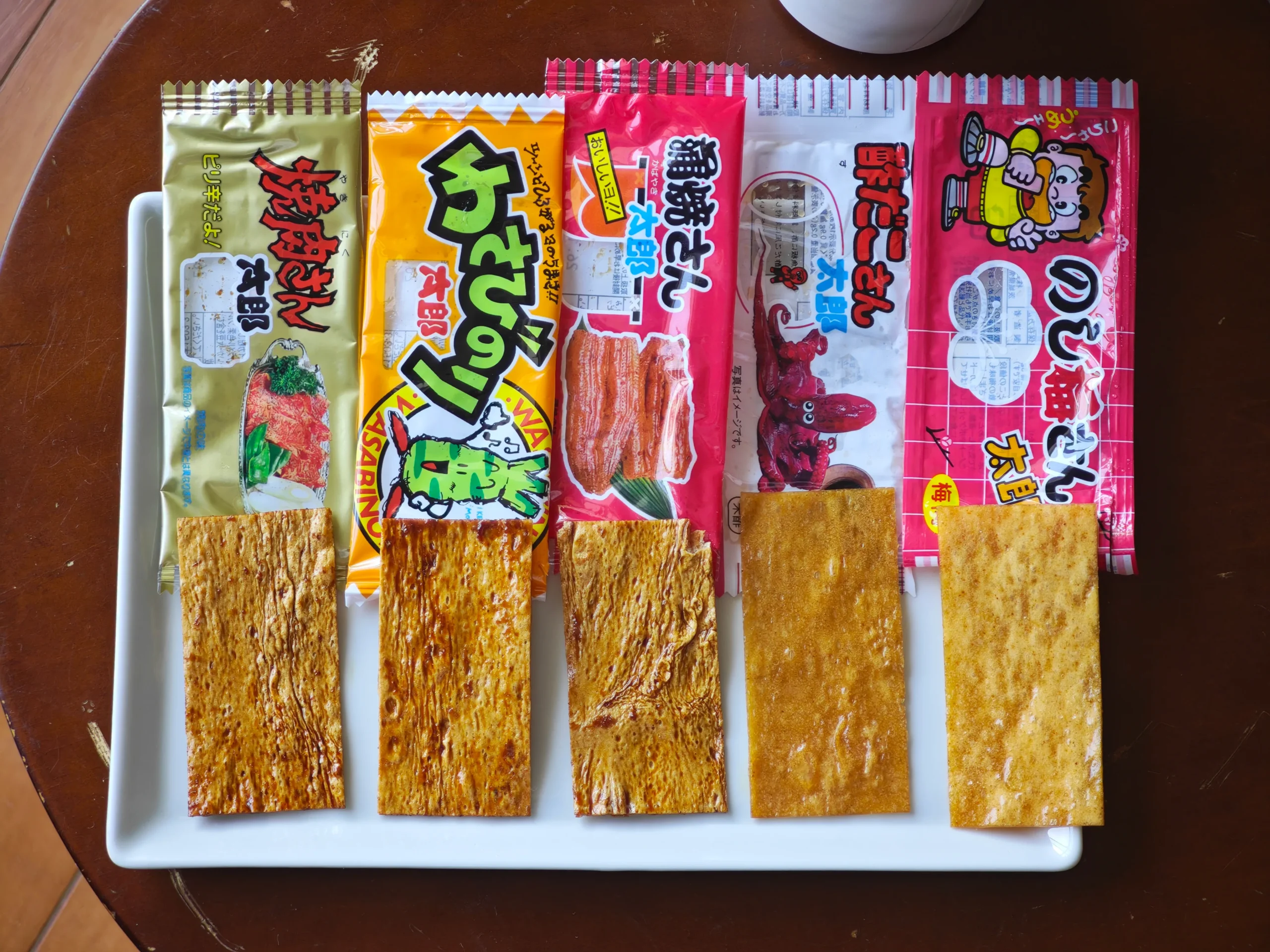
Soft family: Sudako-san Taro
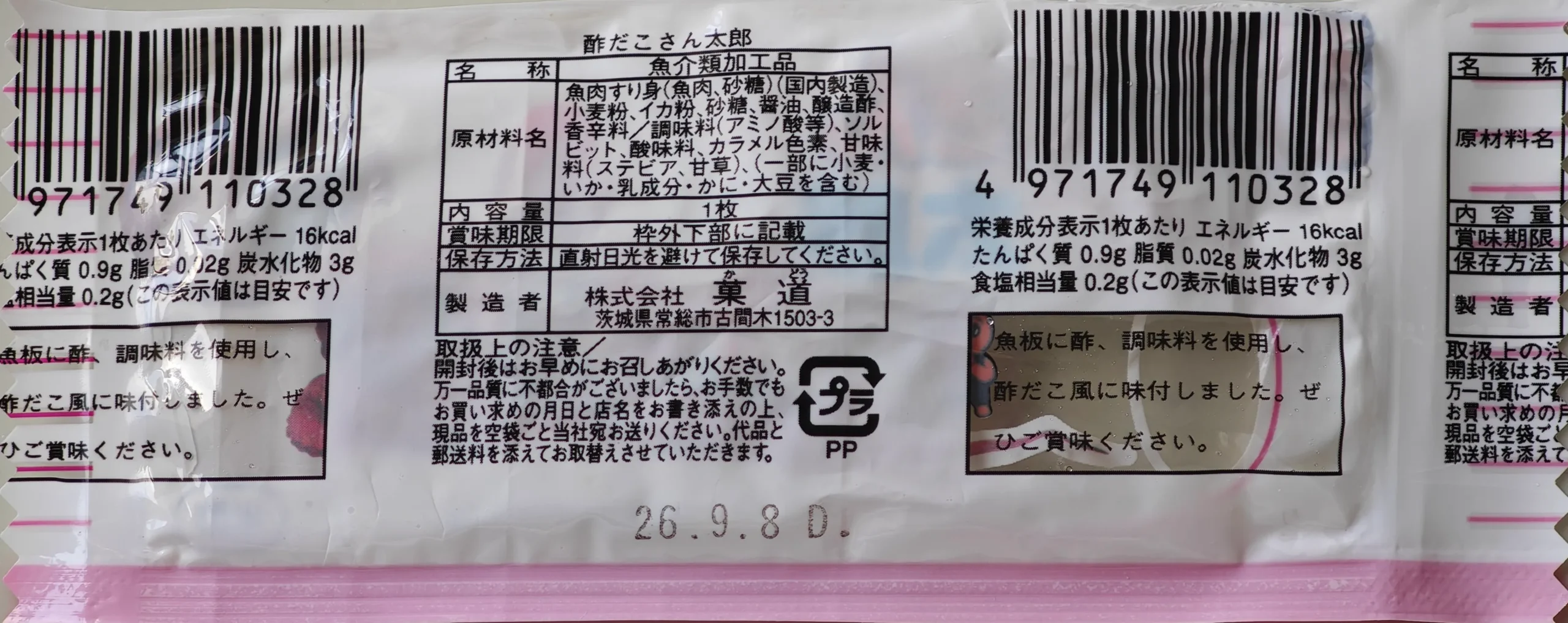
Sweet-tart and juicy. The mood recalls Japanese sweet-vinegar octopus dishes even though you are eating a fish-paste sheet with octopus packaging fantasy. Easy to chain—and easy to leave your mouth feeling sour if you do not pause.
Soft family: Noshiume-san Taro
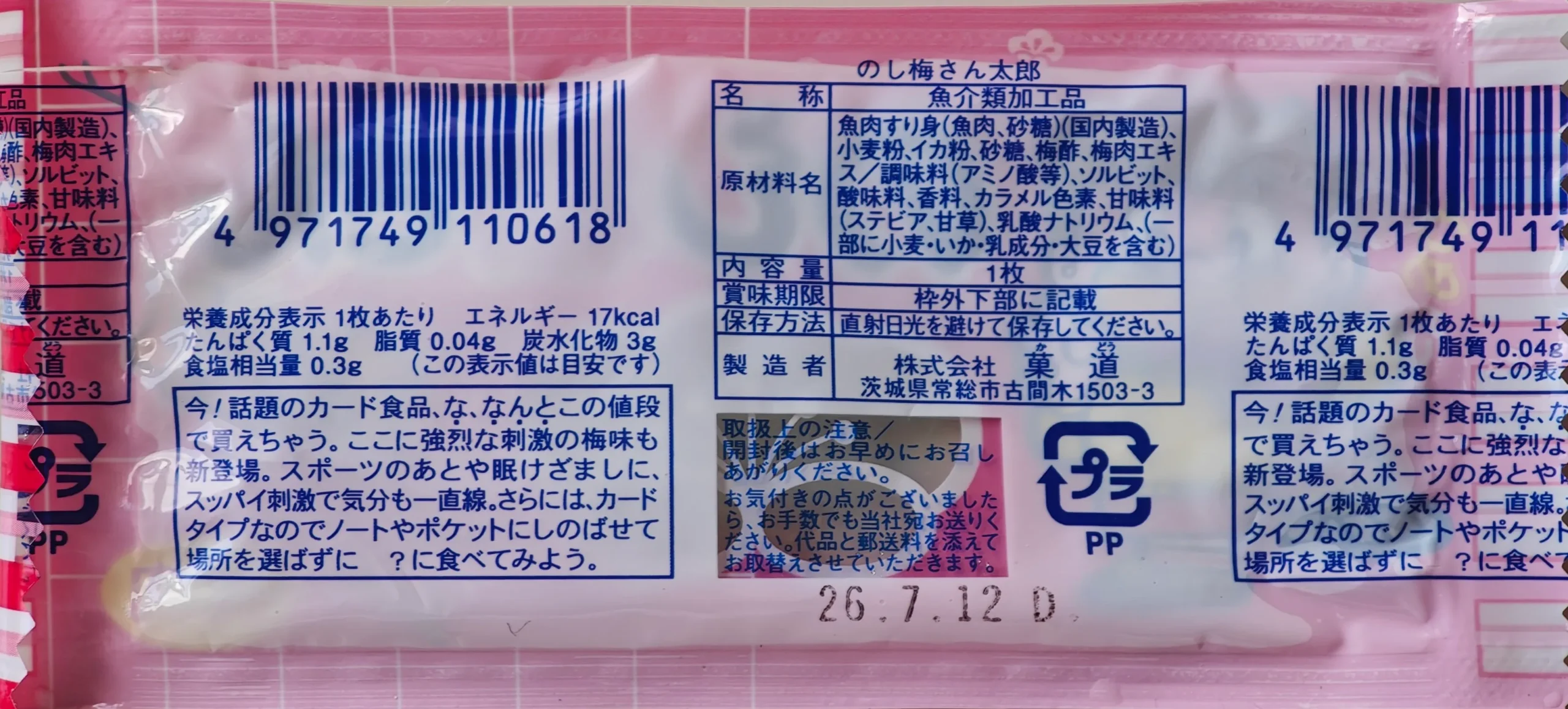
Same soft sheet, cleaner plum freshness. Easier to eat in a row than Sudako. As a child I reached for Sudako more often; as an adult, Noshiume’s brighter complexity sometimes wins.
Hard family: Kabayaki-san Taro
Sweet-salty glaze plus eel-kabayaki packaging. Part of the pleasure is eating the story the bag sells. The hard sheet keeps you chewing, and the glaze stays friendly enough that another piece feels natural.
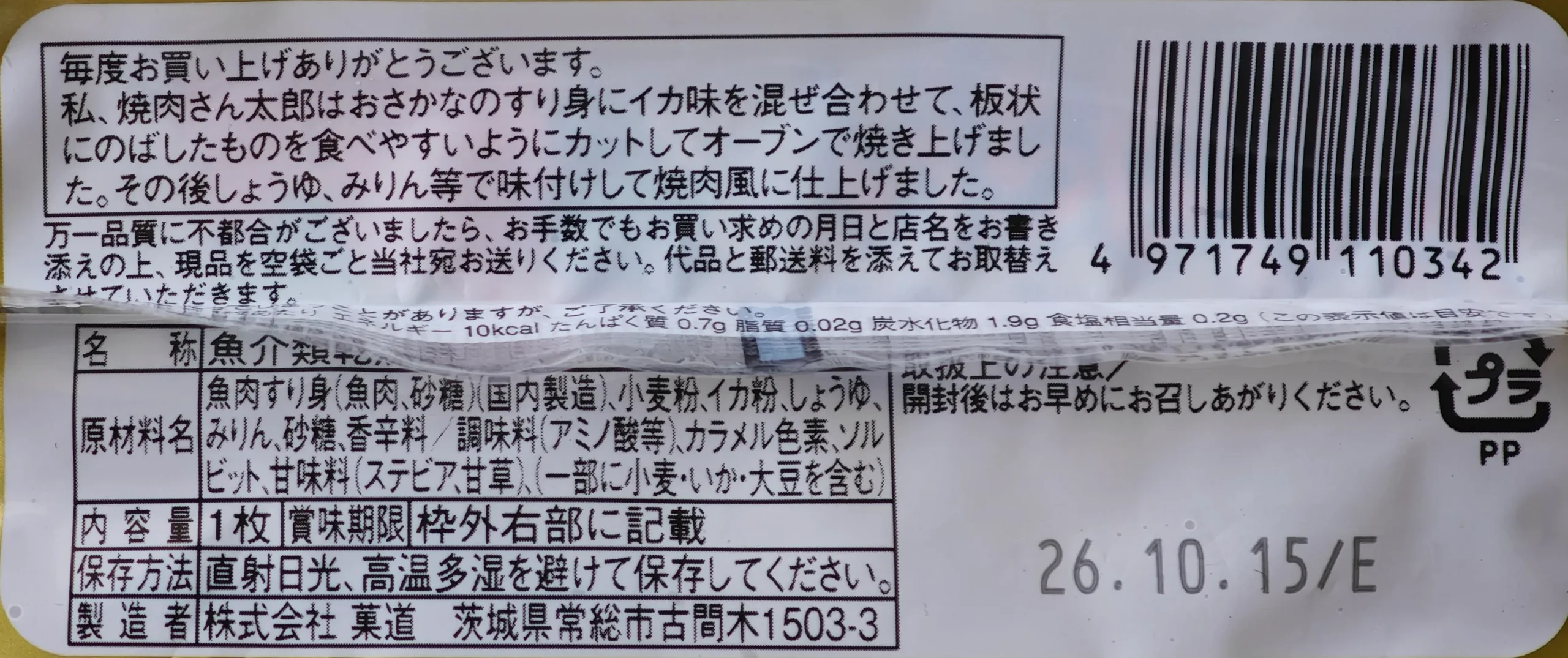
Hard family: Yakiniku-san Taro
The hard sheet’s tearing sound and resistance are the star. The pack says spicy; what I get is mild spice over sweet-salty glaze—more playful heat than a chili challenge. Alternating with Kabayaki keeps the hard family from tasting identical.
Hard family: Wasabinori Taro
Same hard sheet, different nose. Wasabi aroma lands clearly over a sweet-salty base. Overseas readers who like wasabi snacks often react strongly here. Occasional hotter pieces feel like hits.
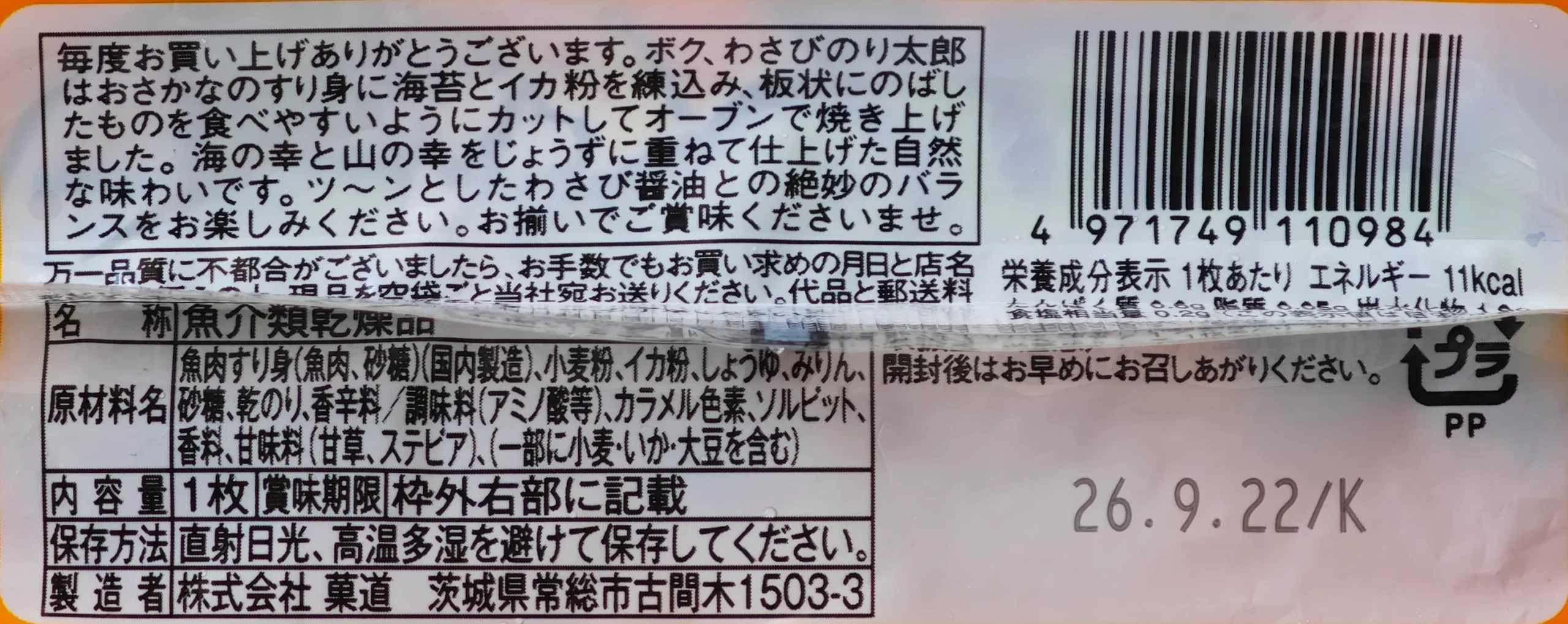
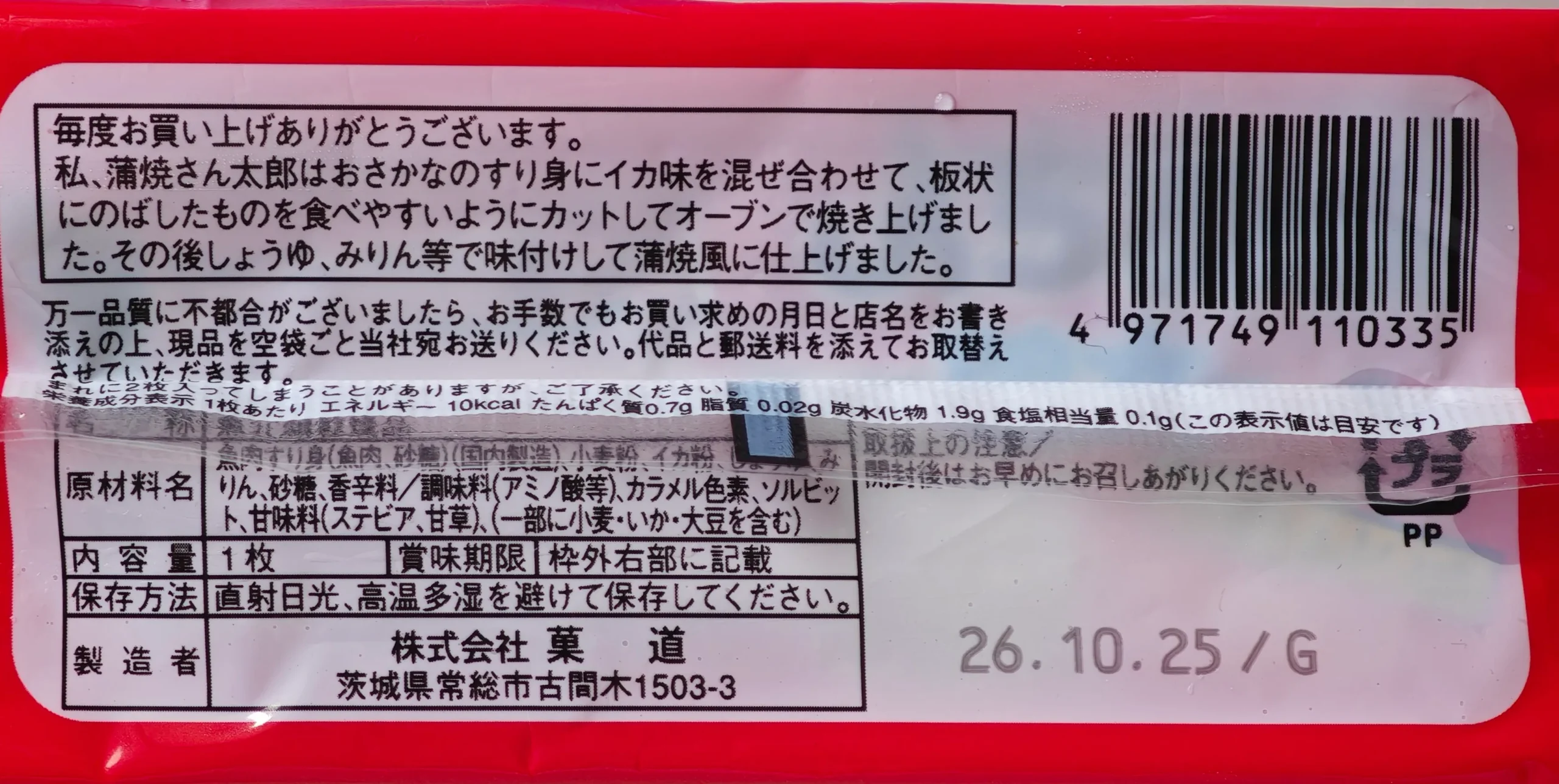
Labels: read the pack you hold
Formulas change. Use the photographed labels as evidence for this set:
Soft-pack tip: do not waste the juice
On Sudako and Noshiume, opening the bag often reveals seasoning liquid left behind.
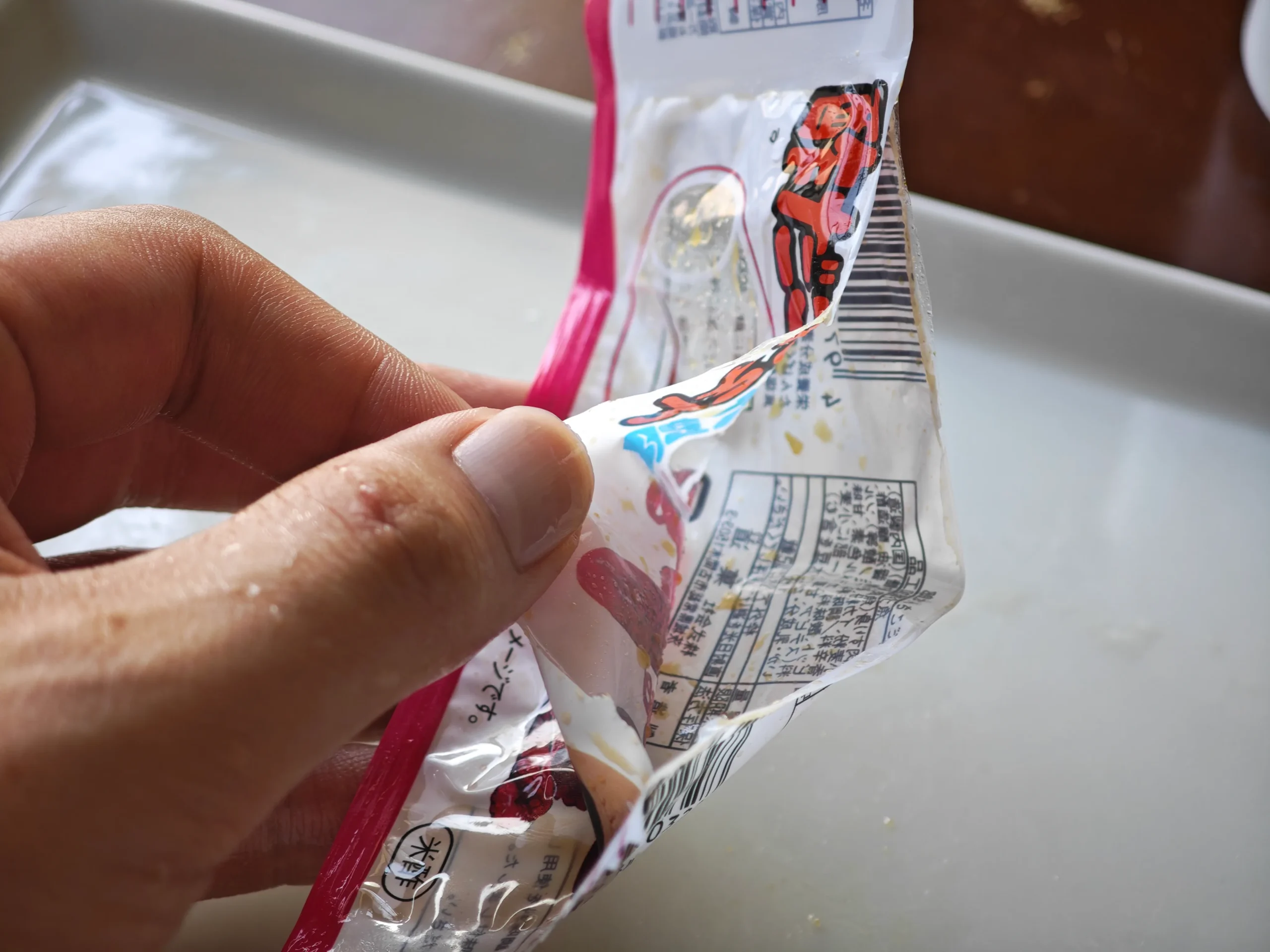
A childhood habit—still useful—is to roll the emptied pack into a tube and sip what remains. I remember a children’s TV segment connected with voice actor Koichi Yamadera (also widely known for Eddie Murphy dubbing in Japan) treating a similar pack trick as a small legendary technique. Whether or not every child learned it the same way, the move survives because it works: the soft packs hide a second sip after the sheet is gone.
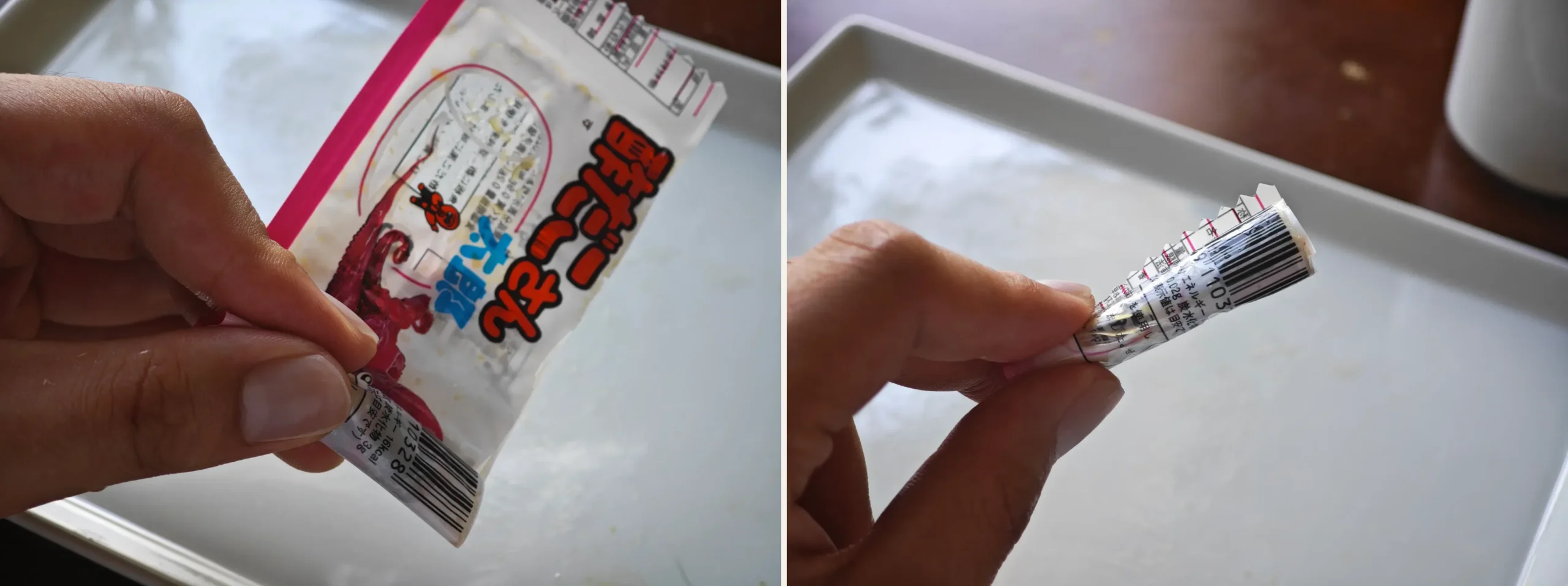
This soft-pack juice ritual deserves its own tip page later, the way Vacuum Bite grew from one eating habit into a reusable lens.
Wasabinori: looking for “hits”
Unit variation exists even inside one flavor. Four Wasabinori pieces side by side look similar front and back:
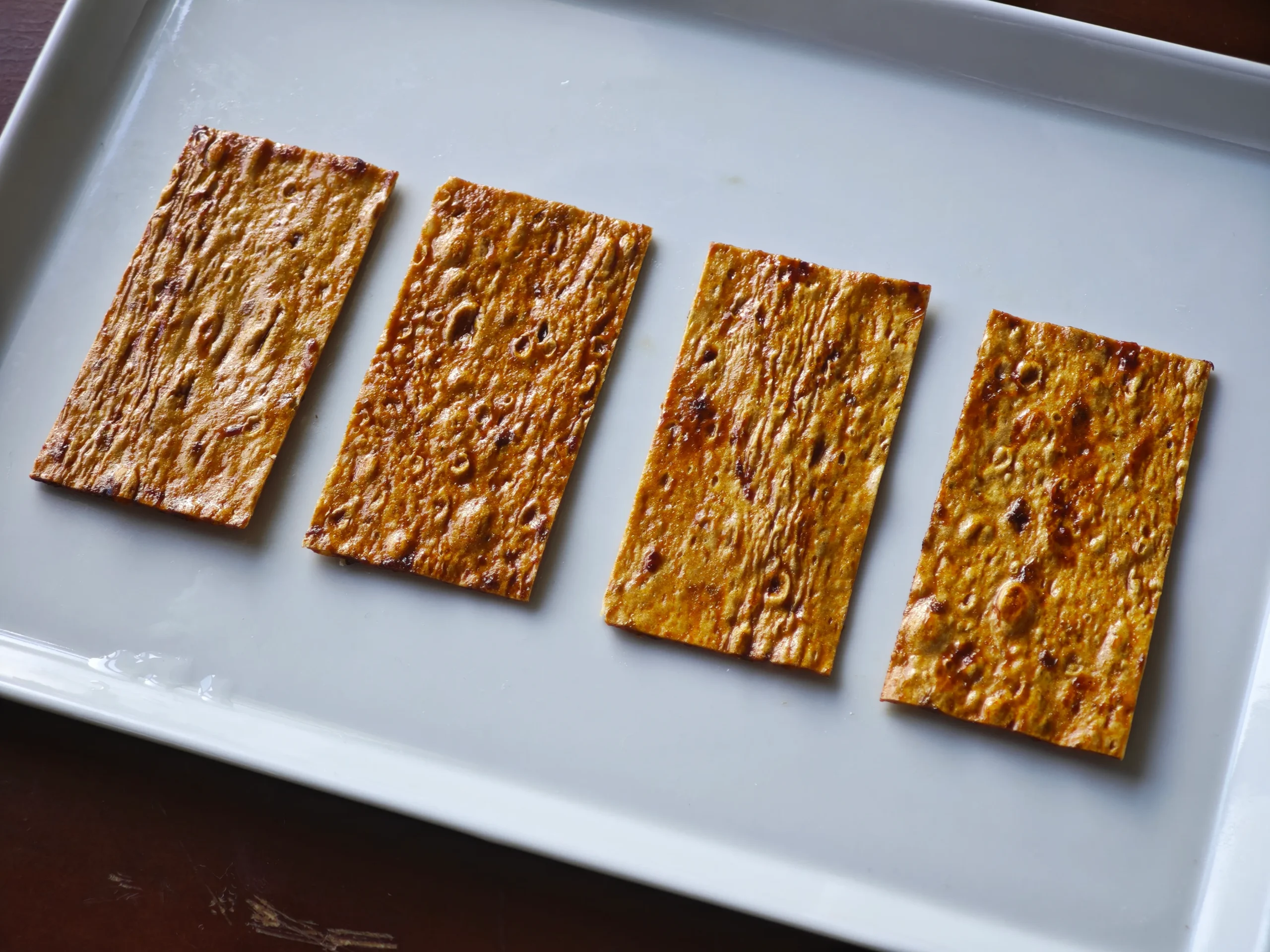
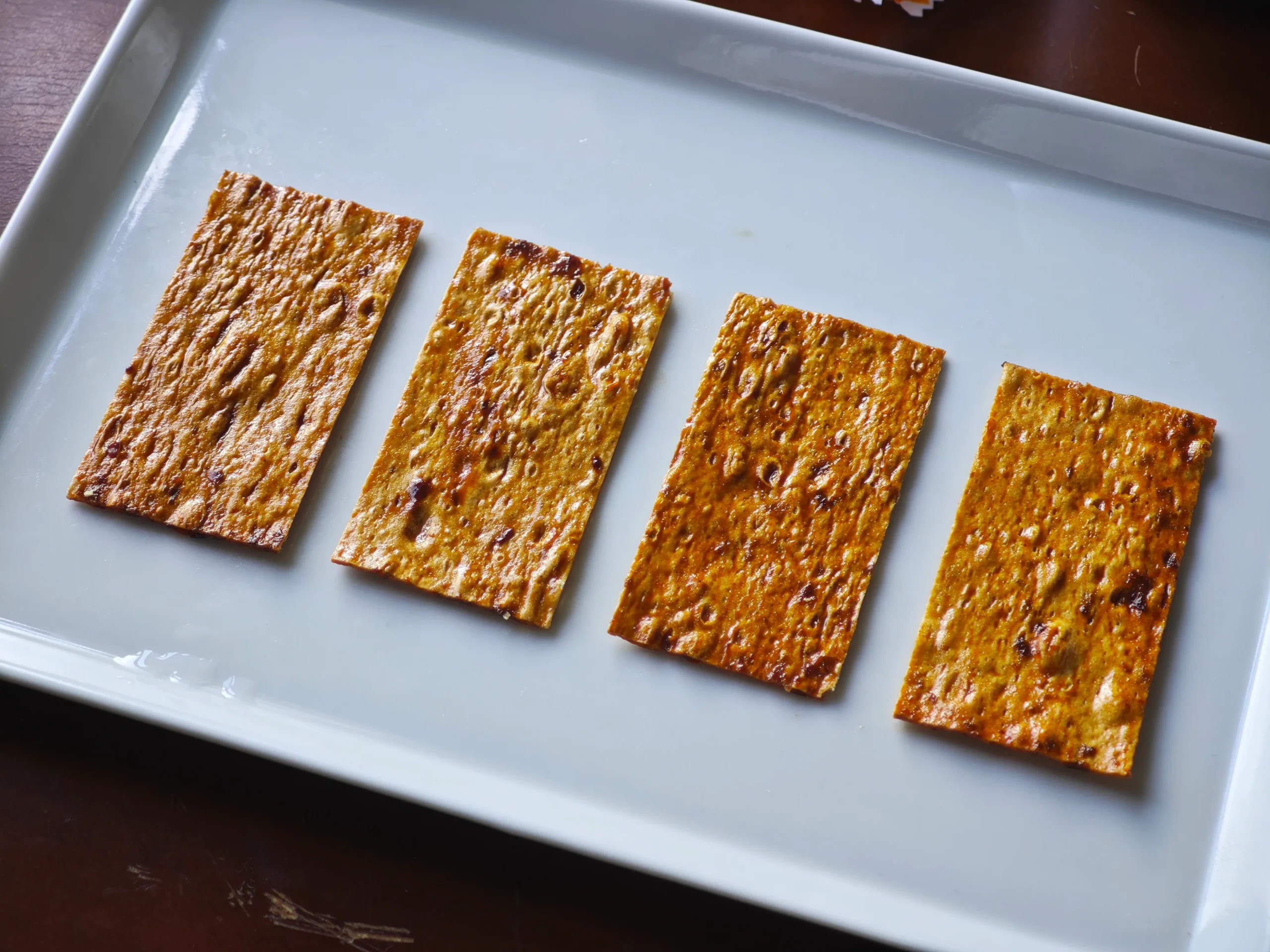
The more interesting difference is structural. Air pockets and dents in the sheet can catch sauce:
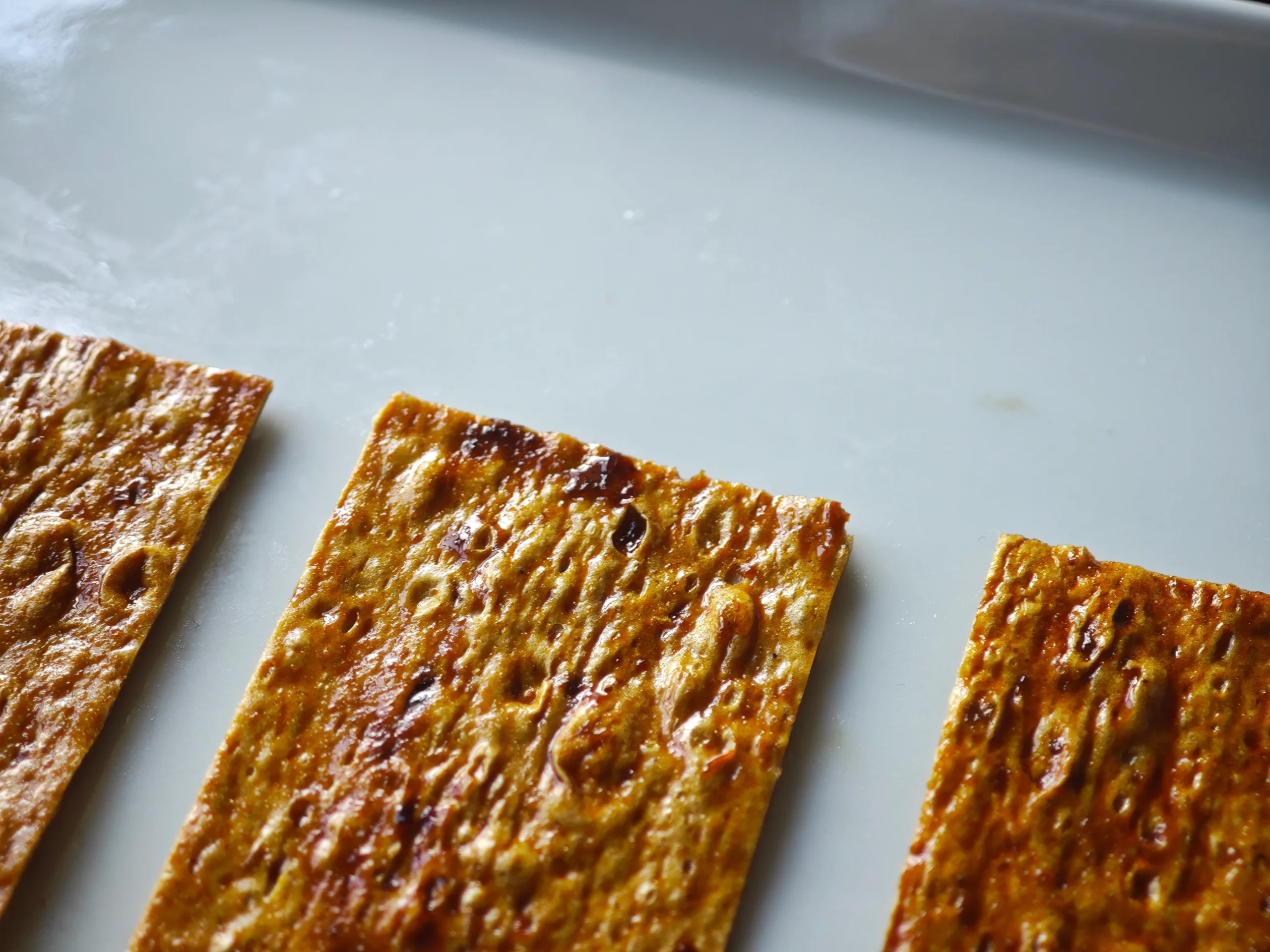
I treat pieces that trap more glaze in those pockets as hits. The chew shifts only a little; the sauce catch shifts more. If you buy a handful, hunting that pocketed glaze is part of the game—and a useful bridge to Japan’s wider snack-unit-variation culture.
Author method: roll the hard sheet
I like hard snacks that ask the jaw to take command—the pleasure of overpowering a resistant sheet with the molars. For Kabayaki and Yakiniku especially, I sometimes roll the sheet first, then bite. The chew turns denser and closer to jerky.
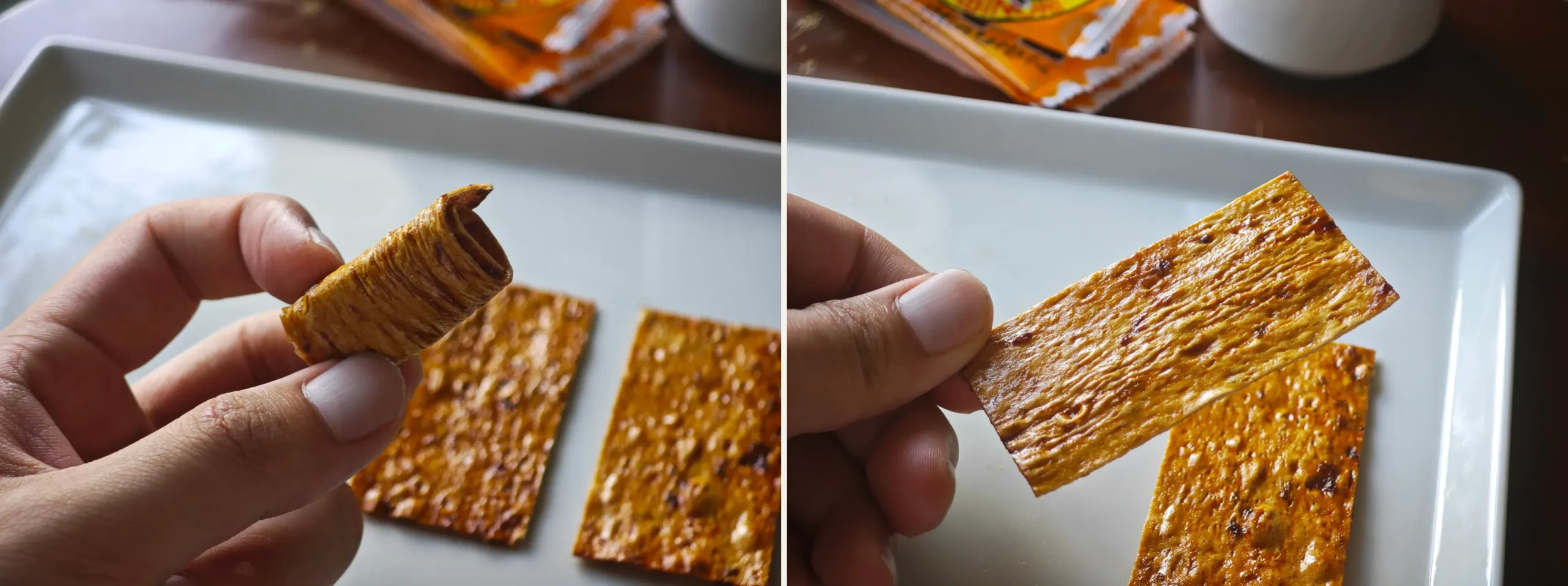
It is a little theatrical. It is also an honest way to amplify what the hard family already offers.
Quiz: match the sheet to the pack
Sheets only, left to right:
Same order, packs revealed:
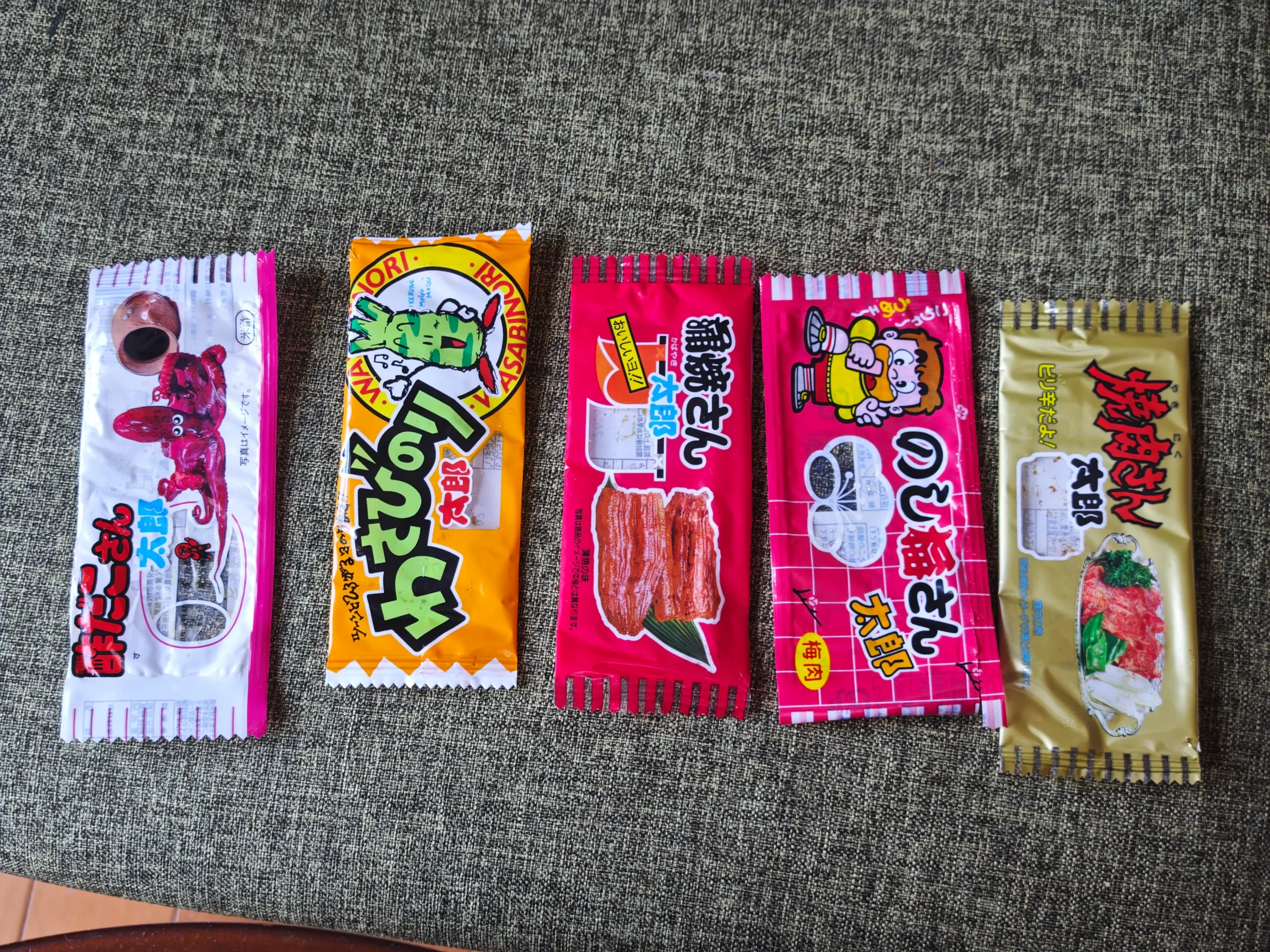
If you missed a few, that is the point of the series: seasoning changes the fantasy faster than the eye expects.
Why complete the set
San Taro is efficient collecting. One manufacturer idea, two sheet engines, five package theaters, and several ways to play after opening—juice sip, hit hunting, molar roll. Kabayaki carries the nostalgic center; Sudako and Noshiume keep the soft juicy lane alive; Yakiniku and Wasabinori prove the hard sheet can still change character.
If you are building a Japanese dagashi shelf from abroad, this is a rare five-pack lesson that teaches texture families as clearly as flavors.
Author field notes
I still like the hard family’s tearing sound best—the feeling of commanding a jerky-like sheet. Among soft packs, adult me often prefers Noshiume’s freshness over endless Sudako sourness, even though childhood me bought the octopus bag. Wasabinori is the one I hand to curious overseas friends first: familiar heat, tiny package, immediate reaction.
The juice sip and the rolled molar chew are personal habits, not official instructions. Try them only if you want the playful half of dagashi culture, not just the snack itself.
Where to buy
In Japan, San Taro packs are widely sold through convenience stores, supermarket snack hooks, dagashi shops, and online retailers. Assortments rotate by store.
The links below are Japan-marketplace routes, not proof of international delivery. Overseas readers should first compare a local Japanese grocer or importer, then use Amazon Japan or Rakuten only after confirming that the exact seller can deliver food to the destination.
- Official: Kabayaki-san Taro (Yaokin listing)
- Amazon Japan: Kabayaki-san Taro listings
- Amazon Japan: Sudako-san Taro listings
- Rakuten Ichiba (Japan): Kabayaki-san Taro multipack
Check the label on the item you receive. Flavor mixes and box counts change often.
Affiliate disclosure: links above may be affiliate links. If you buy through them, I may earn a commission at no extra cost to you.