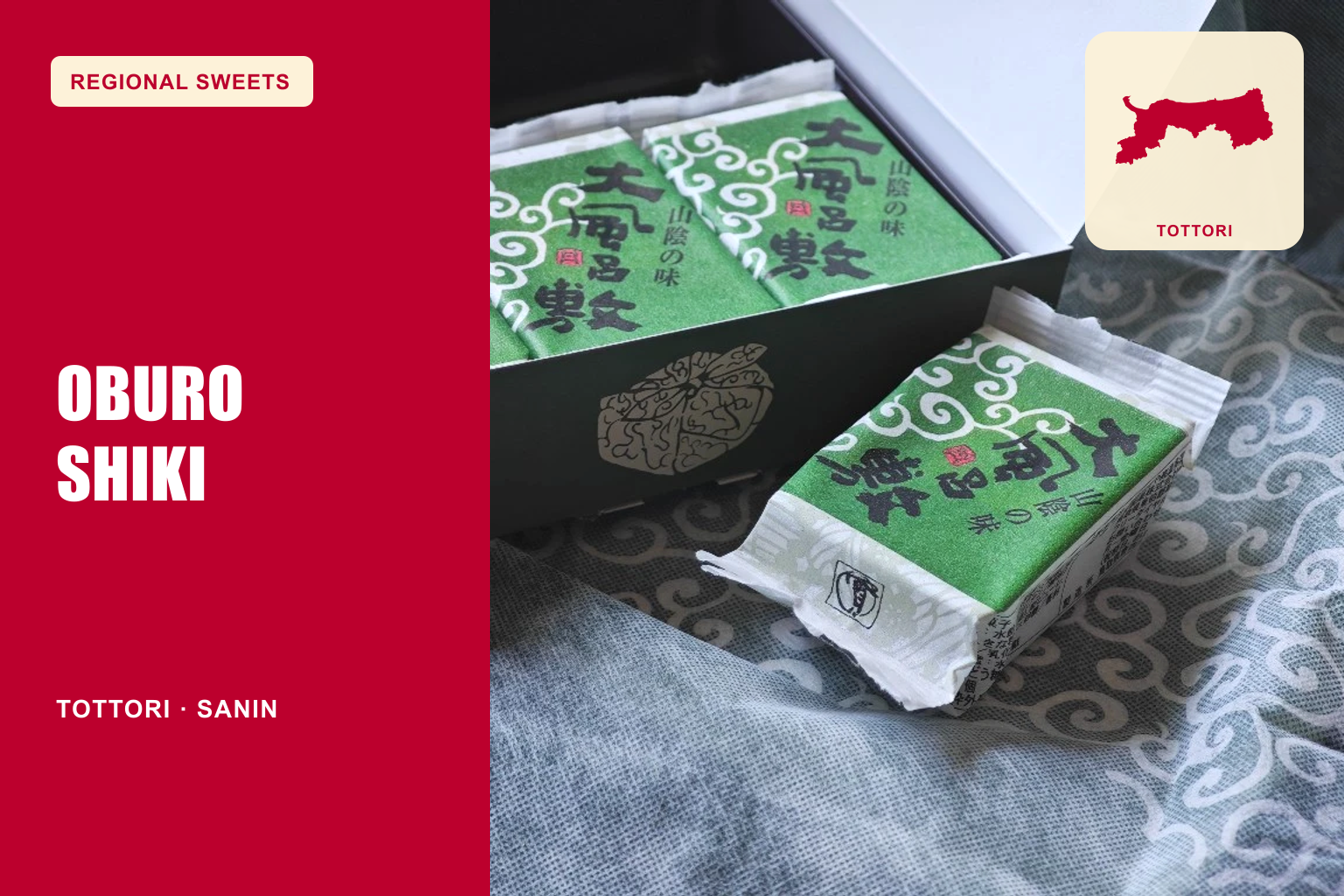
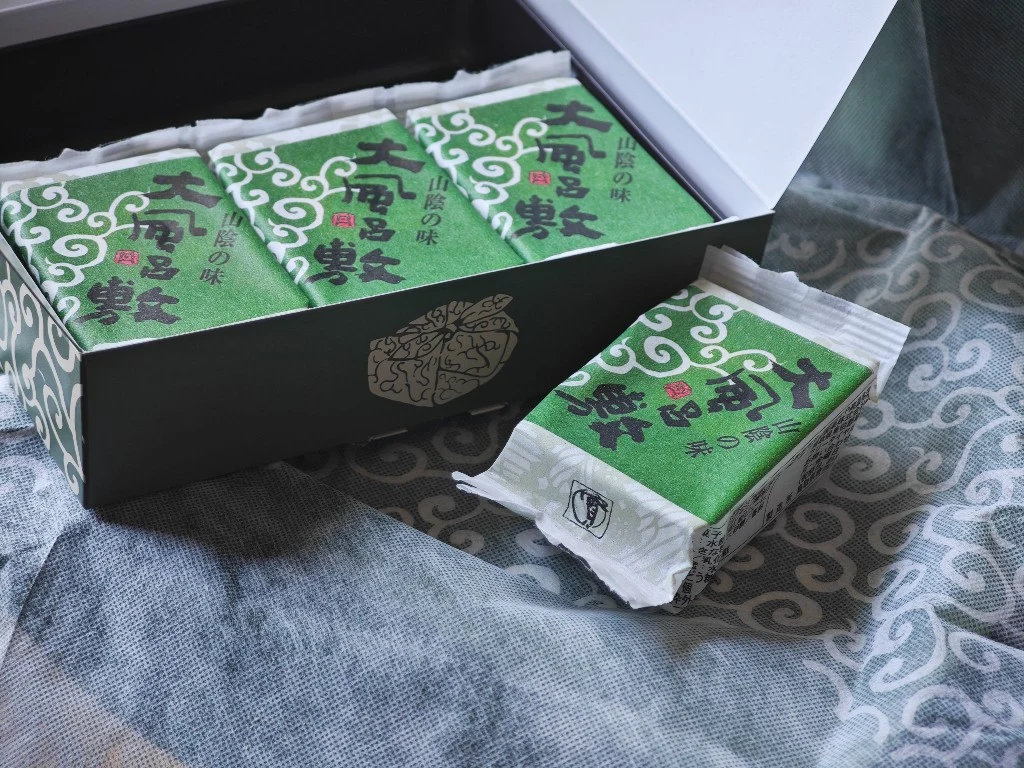
Oburoshiki arrives dressed for a celebration. A green furoshiki-style cloth surrounds a formal gift box; inside, small trays hold kinako mochi, a wooden pick, and pale syrup made with Tottori’s 20th Century pear.
The presentation reaches back to an old Sanin gift custom, while the flavor is surprisingly modern. Local miso is kneaded into the mochi, and the fruit-forward pear syrup replaces the heavier sweetness many travelers may expect beside kinako.
Created by Takara Seika in 1973, Oburoshiki is now a long-running Tottori souvenir. This guide covers the name, wrapping tradition, ingredients, serving design, taste, traveler buying options, and one useful way to make the syrup reach every last patch of kinako.
Quick take: Oburoshiki (大風呂敷) is a Tottori and Sanin souvenir created by Takara Seika in 1973. Each serving contains soft kinako mochi, a small pick, and Tottori 20th Century pear syrup. The pear’s refreshing acidity, the mochi’s elasticity, and a subtle miso-backed saltiness make it more distinctive than its familiar kinako-mochi appearance suggests.
What is Oburoshiki?
Sanin no Aji Oburoshiki (山陰の味 大風呂敷) is a regional mochi confection from Takara Seika, a Tottori company established in 1947. The name literally evokes a large furoshiki, the reusable cloth traditionally used in Japan to wrap and carry objects.
Inside the gift presentation are individual trays of bite-size mochi covered generously with kinako, or roasted soybean flour. A small packet contains nashi-mitsu (梨みつ), a syrup made with Tottori’s famous Nijisseiki—20th Century—pear.
It is important to call this pear syrup, not pear jam. The photographed ingredient label lists pear puree in the syrup, and its consistency is fluid enough to run between the mochi pieces. My “fruit-jam” impression came from the noticeable pear acidity, not from the product being a jam.
Why is a mochi sweet named after a wrapping cloth?
The outer presentation is not decorative camouflage. It carries the product’s history.
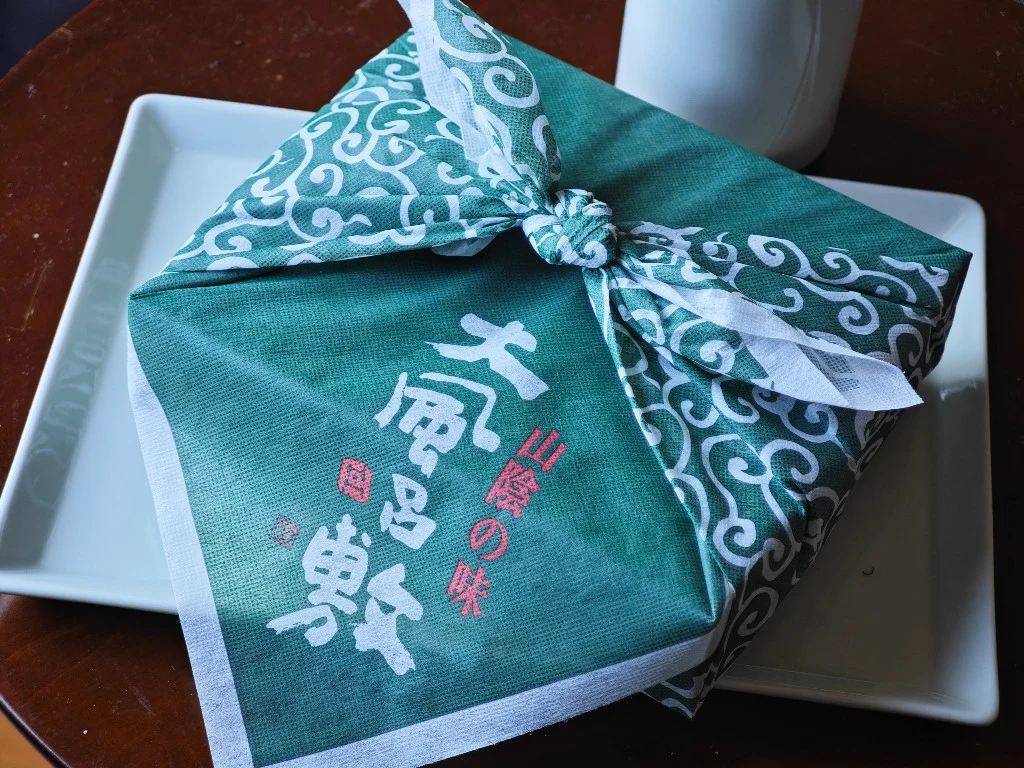
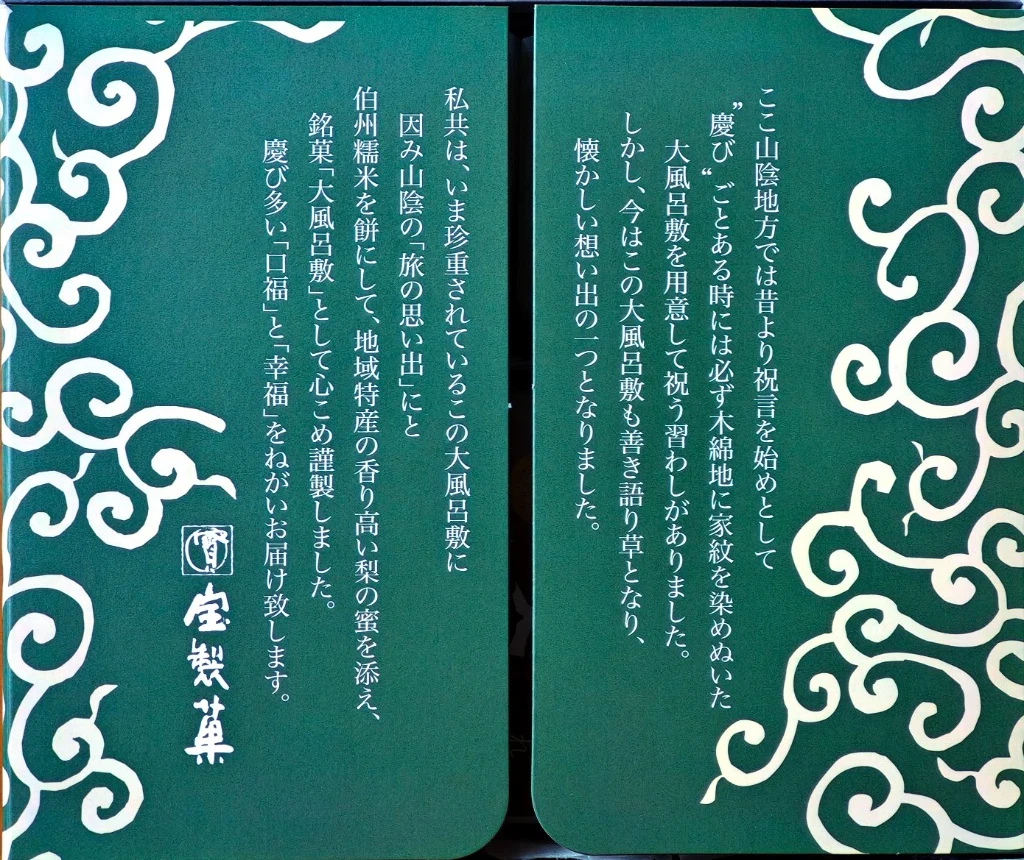
Takara Seika says that Sanin families traditionally prepared large cotton furoshiki dyed with their family crests for weddings and other celebrations. The company named the sweet after that custom so it could serve as both a memory of travel in Sanin and a gift for someone important.
Oburoshiki was launched in 1973. More than half a century later, the maker still frames it through two related Japanese words: kōfuku as happiness and kōfuku as the pleasure of eating. That play on “good fortune” and “good food” is difficult to preserve perfectly in translation, but the physical package makes the intention clear before you read any Japanese.
The green cloth, curling karakusa pattern, box, wrappers, and portions turn opening the sweet into a sequence rather than a single tear of plastic.
Unwrapping the gift
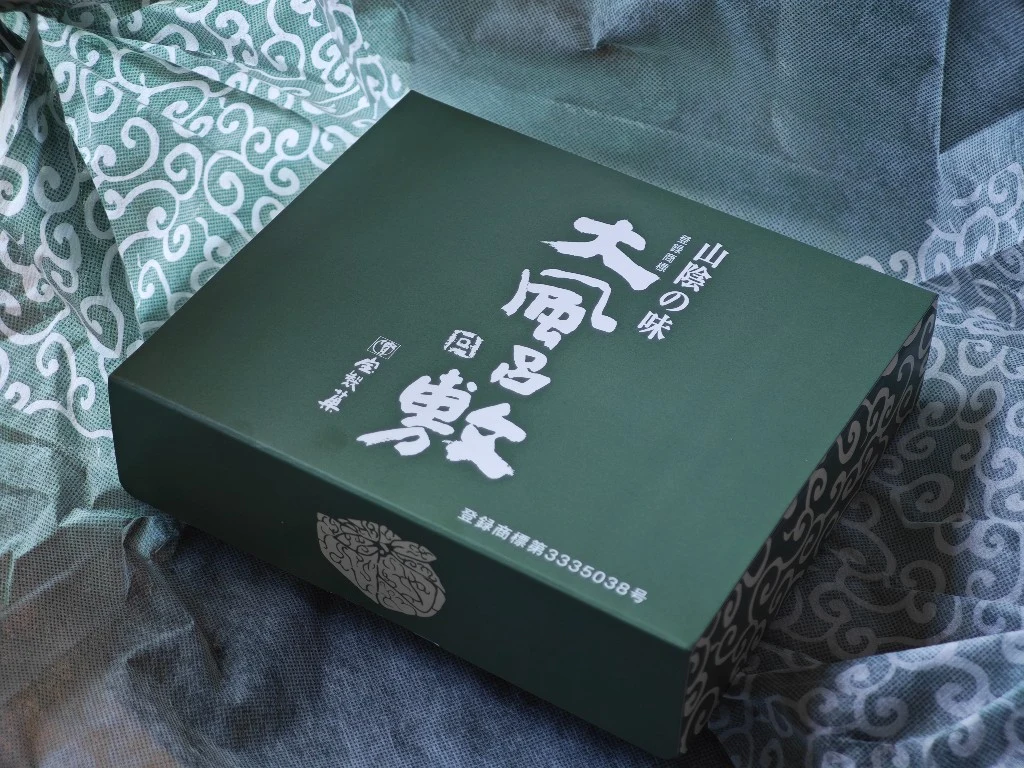
Remove the cloth and a dark green box appears. The restrained inner box feels more formal than the playful powdery mochi waiting inside.
The writing printed inside the lid continues the story of the Sanin wrapping custom and the wish to carry regional flavor to someone else.
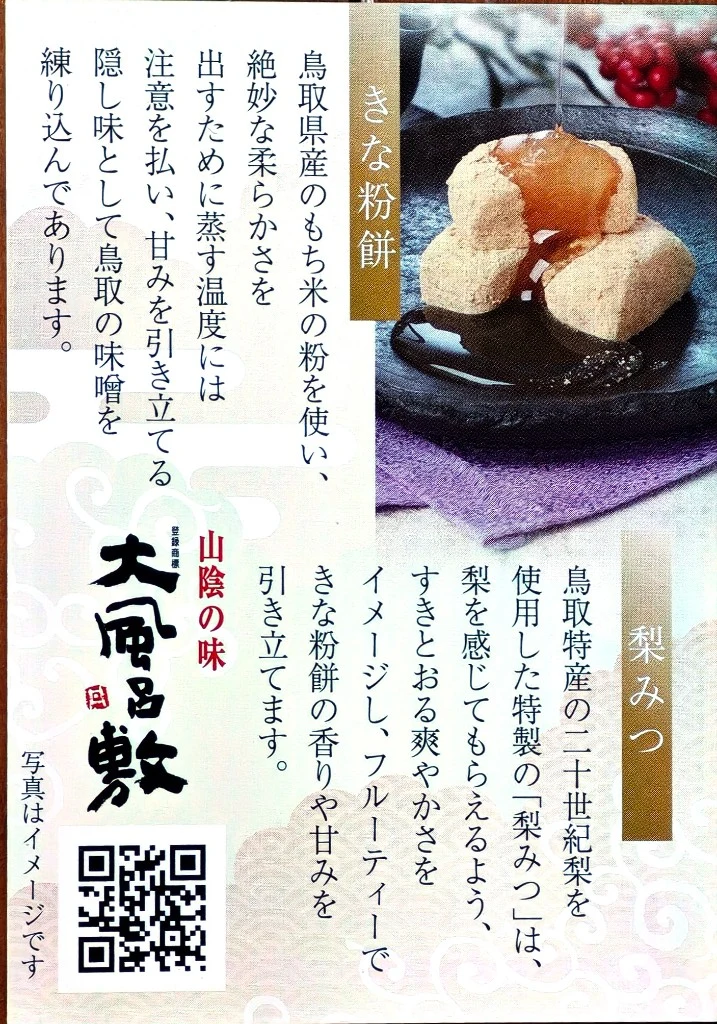
The included pamphlet explains the sweet through its two local anchors: Tottori rice for the mochi and pear syrup made with Nijisseiki pear.
My photographed box held five individually packed servings. Package sizes can change, so treat that as a description of this box rather than a permanent rule.
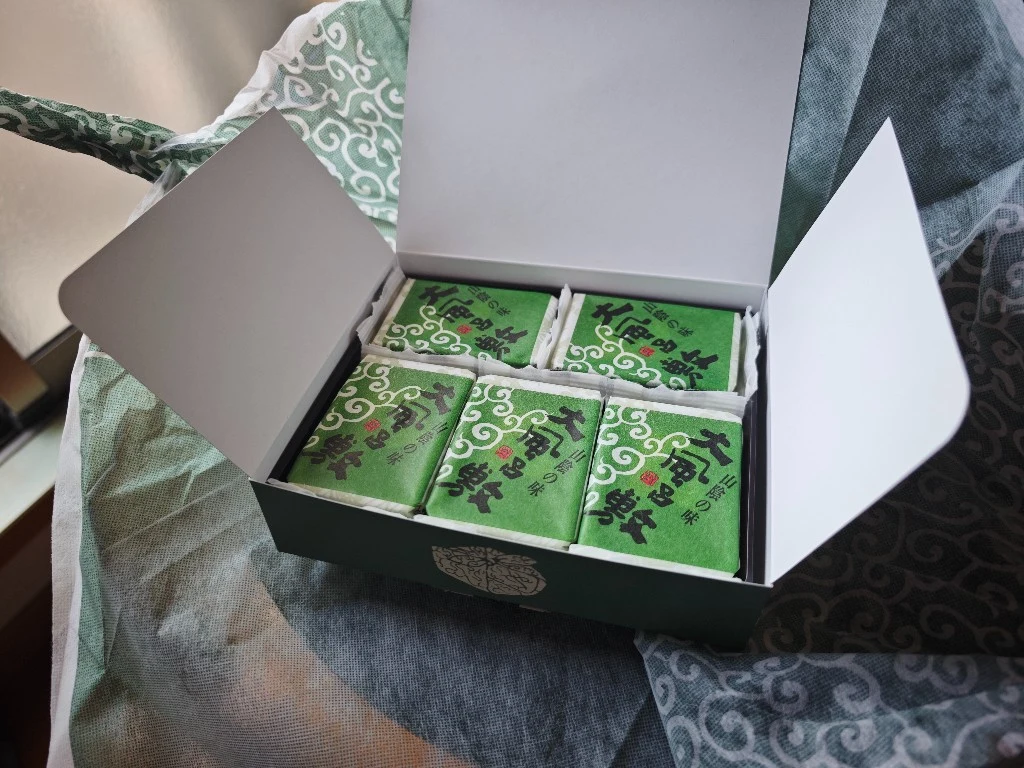
One serving is a miniature ceremony
Open one wrapper and you get three practical parts:
- a shallow tray of kinako-covered mochi
- a small packet of pear syrup
- a pick for separating and lifting the pieces
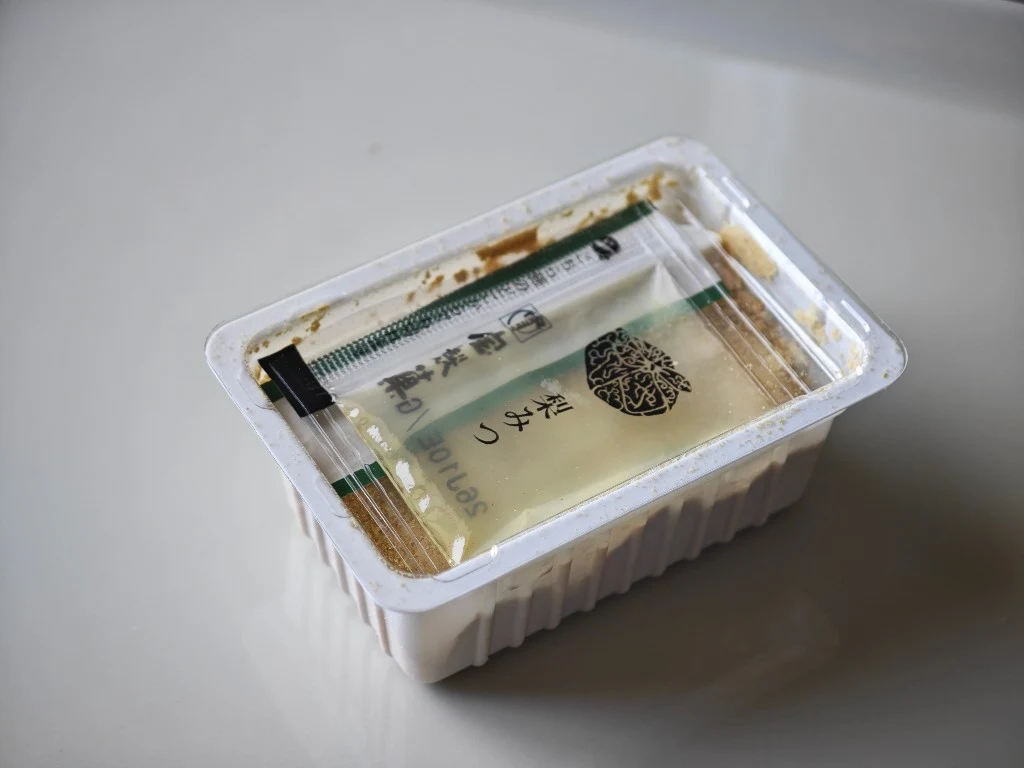
Laid out separately, the design looks almost like a compact assembly kit. You decide where the syrup goes and how much kinako joins each bite.
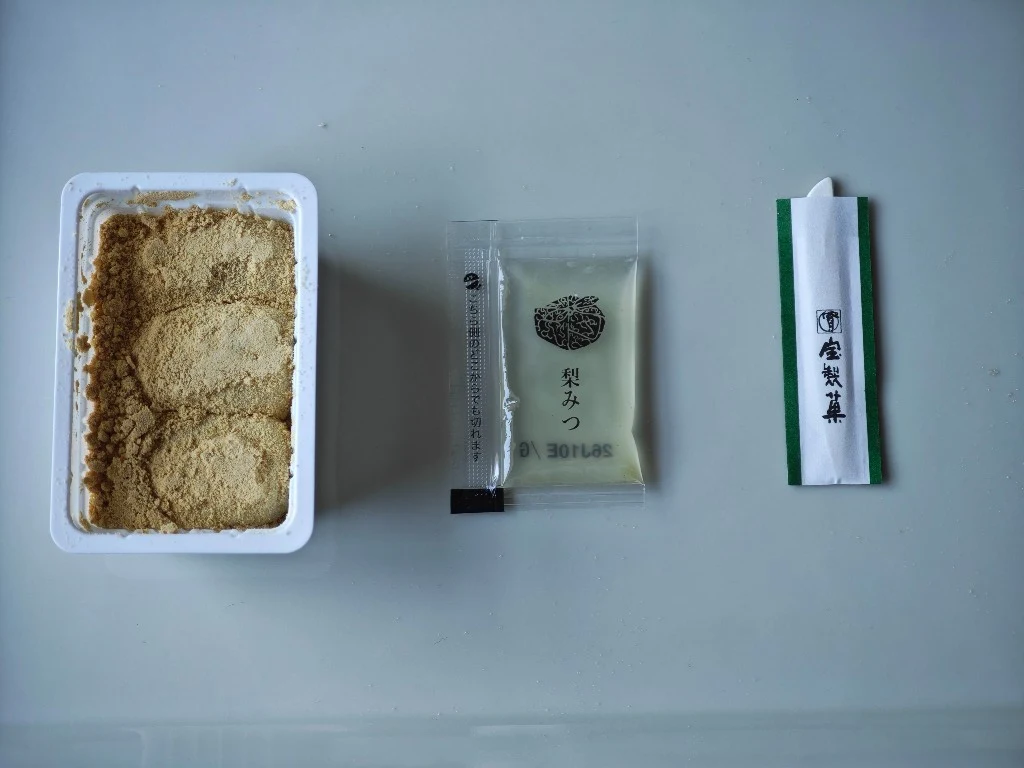
This participation matters. Oburoshiki is not simply a sealed sweet with one fixed texture. Dry kinako, sticky mochi, and flowing syrup meet in different proportions depending on how you pour and lift.
The pear syrup changes the flavor direction
The visual family resemblance to other portioned kinako-mochi souvenirs is obvious. The flavor direction is not.
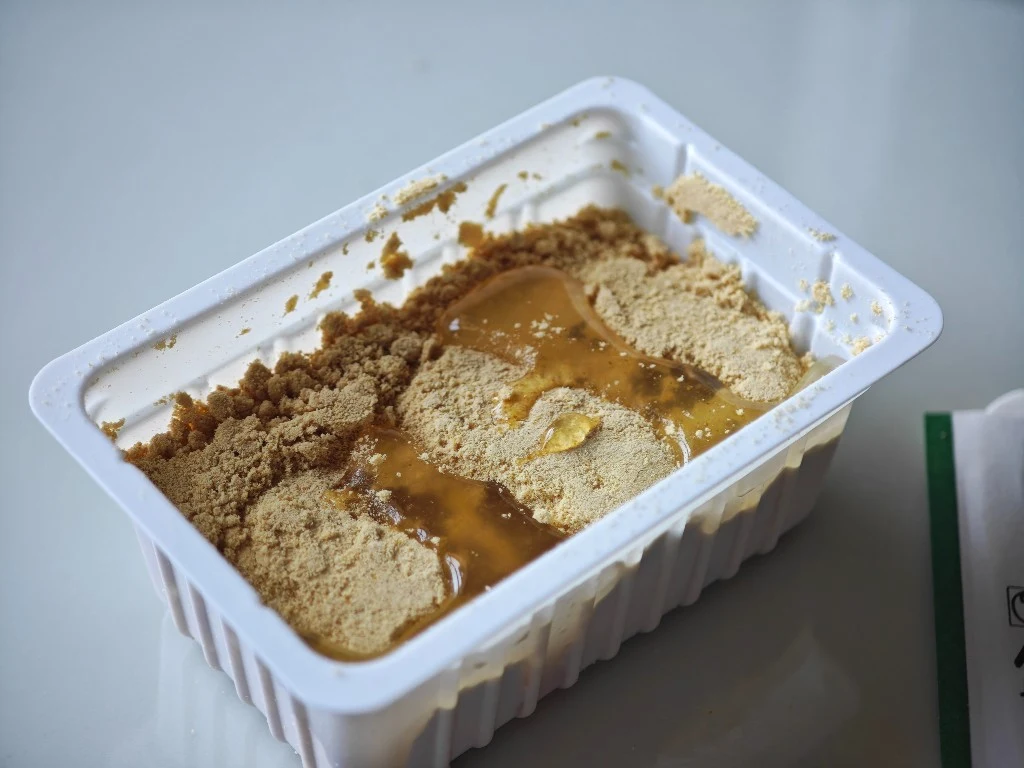
The pear syrup in my serving had a clear fruit acidity that I found remarkably effective. Kinako can be warm, roasted, and powdery; mochi can lean toward simple sweetness. The pear supplied a clean upper note that stopped both from feeling heavy.
This was the point where Oburoshiki stopped tasting like “another kinako mochi” to me. The combination of elastic mochi and pear brightness created a slightly strange experience—in a good way. It remained recognizably Japanese, yet the fruit finish made it feel less like the wagashi pattern I expected and more like a composed dessert.
The maker describes the syrup as refreshing and fruity. My stronger wording—the acidity is the best part—is a firsthand opinion.
A practical way to pour the syrup
If you pour everything over the closed row of mochi, much of the syrup can stay on top. Meanwhile, good kinako remains dry at the bottom of the tray.
After trying the included pick, I found a simple method that worked better:
- Use the included pick to separate the mochi pieces.
- Open a narrow channel between them.
- Pour some pear syrup directly into the gaps.
- Lift and turn a piece so the syrup meets the kinako underneath.
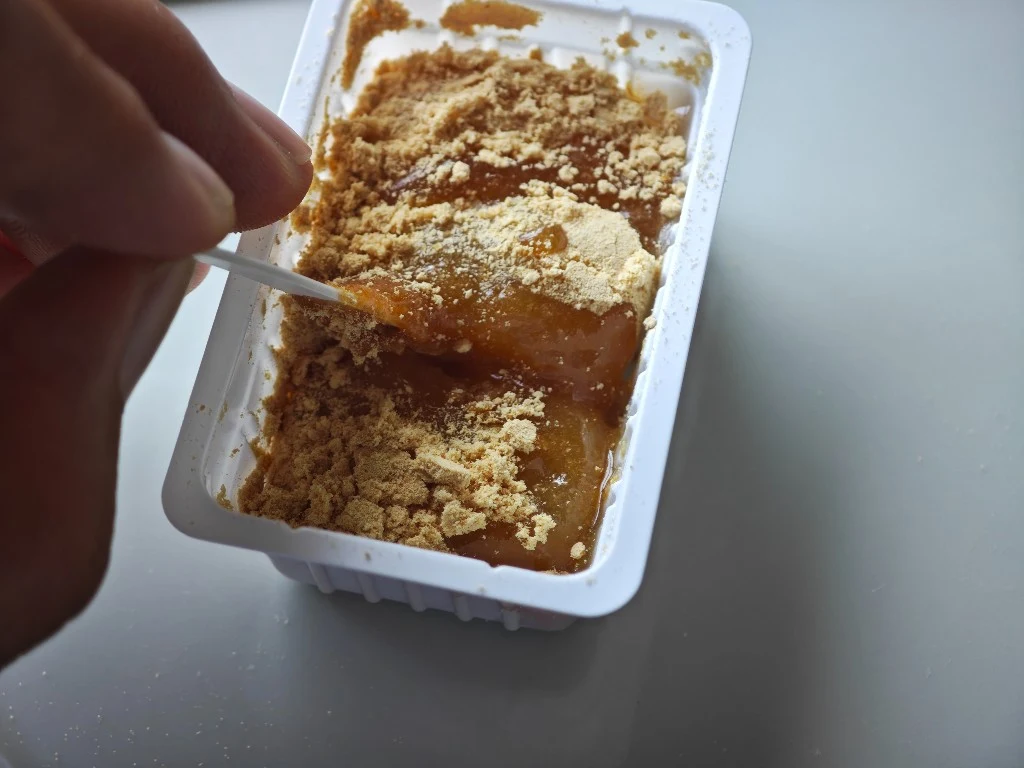
The syrup then spreads through the tray instead of coating only the upper surface. It also gathers the kinako that might otherwise be left behind. This is an owner-tested serving recommendation, not an official rule.
What the cross-section revealed
Cutting a tiny mochi in half—and washing the kinako from one side—felt like an excessive investigation for such a cooperative dessert. It also made the texture easier to understand.
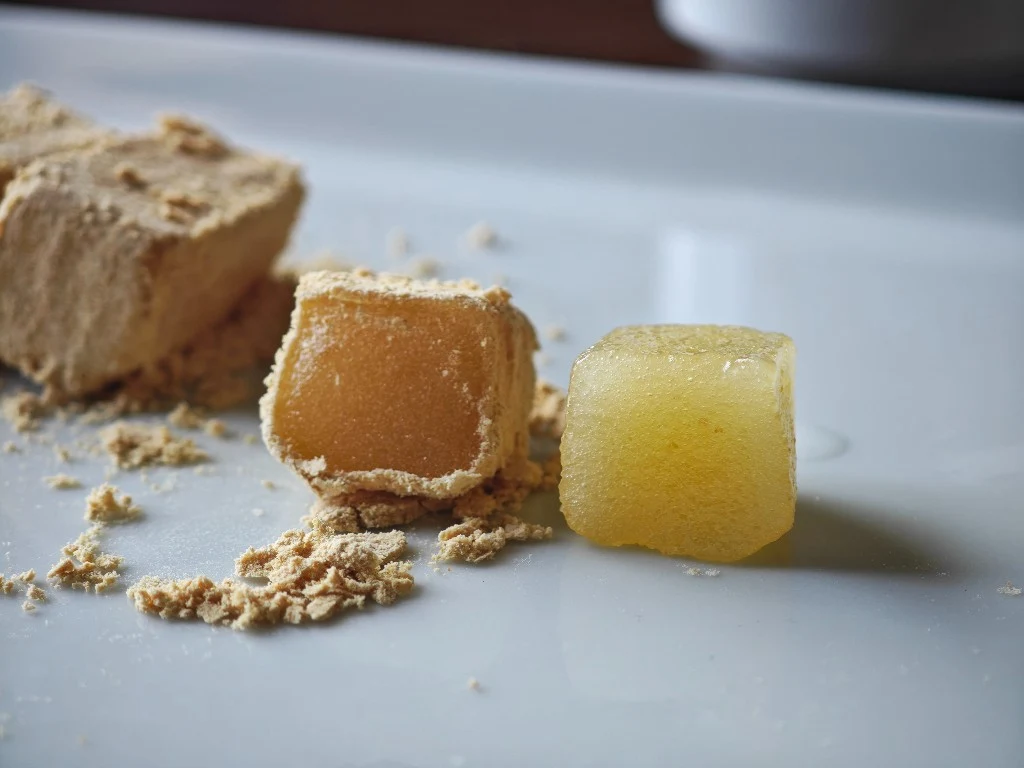
The exposed mochi looked pale yellow and slightly cloudy rather than bright white. I cannot prove from appearance that miso caused that color. What the label and maker do confirm is that miso is present in the mochi.
In the mouth, the miso did not announce itself like soup or a glaze. I noticed it as a faint saltiness and deeper background flavor. That small savory edge seemed to make both the mochi’s sweetness and the pear syrup’s acidity more vivid.
Texture was just as important. Of the Oburoshiki, Shingen Mochi, and Tsukushi Mochi samples I have personally eaten, this Oburoshiki felt the most elastic. That is not a laboratory ranking or a universal verdict; freshness and handling can change mochi. It is the comparison that stayed with me from these tastings.
Oburoshiki, Shingen Mochi, and Tsukushi Mochi
It is reasonable to place these sweets in the same conversation. All can present soft mochi under kinako with a separate syrup. But stopping at the silhouette would miss what makes Oburoshiki worth seeking out.
Oburoshiki’s identity rests on three choices:
- pear syrup tied to Tottori’s Nijisseiki pear
- miso kneaded into the mochi as a hidden seasoning
- furoshiki presentation tied to a Sanin celebration custom
In the owner’s tasting comparison, Oburoshiki’s combination of fruit acidity, elasticity, and faint saltiness was the favorite of the three. That is a personal preference rather than a national ranking, but it demonstrates why the products should not be treated as interchangeable.
That is one of the pleasures of regional travel in Japan: familiar categories keep changing when a prefecture builds them from its own agriculture, gift customs, and sense of balance.
Package facts: ingredients and allergens
The package in your hand is always the final authority because recipes and labeling can change.
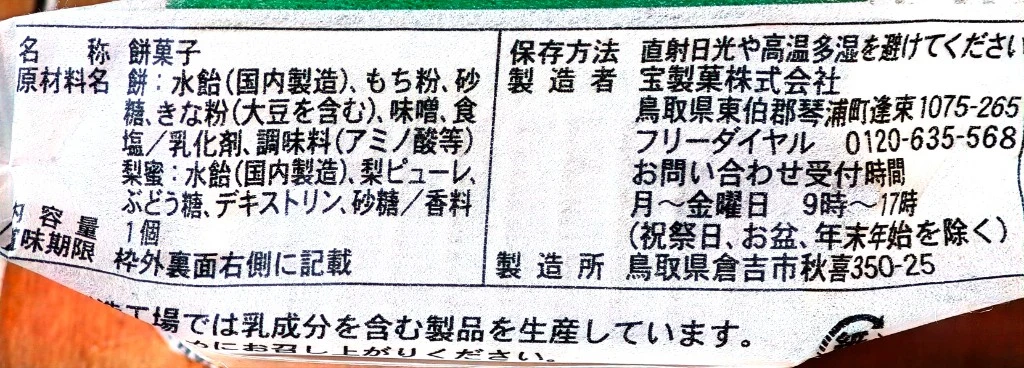
The photographed label lists the mochi ingredients as starch syrup made in Japan, glutinous-rice flour, sugar, kinako, miso, and salt, with an emulsifier and seasoning including amino acids. The pear syrup lists starch syrup, pear puree, glucose, dextrin, sugar, and flavoring.
Kinako and miso mean the product contains soy. The photographed label also says the manufacturing facility produces items containing milk. Travelers with allergies should check the current package rather than relying only on an online article or an older photograph.
The label advises avoiding direct sunlight, high temperatures, and humidity. Check the printed best-before date on the box you buy.
Where travelers can buy Oburoshiki
Oburoshiki is presented by Tottori Prefecture’s official tourism site as a regional souvenir, and Takara Seika sells through its official online shop. When traveling in Tottori or the wider Sanin region, look in established souvenir sections rather than expecting every convenience store to stock it.
Useful starting points:
- Takara Seika’s official Oburoshiki story
- Takara Seika’s official online shop
- Tottori Prefecture’s official souvenir guide
Current stock, prices, and package counts can change. If Oburoshiki is the reason for a special stop, verify availability before traveling.
Why Oburoshiki stands out
Oburoshiki connects several layers of Tottori and Sanin identity without turning them into a museum display:
- the celebratory furoshiki custom shapes the gift presentation
- Tottori rice forms the mochi
- local miso adds quiet savory depth
- Nijisseiki pear gives the separate syrup its regional signature
The product is traditional in format but inventive in balance. Its strongest argument is not that it is older or more famous than every similar sweet. It is that the packaging, ingredients, and serving ritual all point back to the same place.
Its regional recognition is not supported only by the maker. In a 2026 Jalan survey of 106 Tottori residents, Oburoshiki ranked fourth among local souvenir choices. Respondents described it as a classic with a dependable taste and gentle sweetness. That is a modest survey rather than a vote from every resident, but it gives useful independent evidence that the product is locally familiar.
The owner had not known Oburoshiki before this tasting and came away wanting to eat it again. That personal discovery sits alongside, rather than replaces, the product’s half-century history.
Frequently asked questions
What is Oburoshiki?
Oburoshiki is a Tottori and Sanin souvenir made by Takara Seika. It pairs bite-size kinako mochi with a separate syrup made using Tottori’s 20th Century pear. Miso is kneaded into the mochi as a hidden seasoning.
Is Oburoshiki the same as Shingen Mochi?
No. They share a recognizable serving format—kinako-covered mochi with syrup—but Oburoshiki has its own regional story and flavor design. Pear syrup and miso-seasoned mochi distinguish it.
Does it taste strongly of miso?
Not in my sample. I perceived a faint savory saltiness rather than an obvious miso flavor. It seemed to sharpen the mochi’s sweetness and pear syrup’s acidity.
What is the best way to add the pear syrup?
Use the included pick to open gaps between the mochi pieces, then pour syrup into those channels. This helps it reach the kinako at the bottom of the tray. It is my preferred method, not an official requirement.
Where can I buy Oburoshiki?
Look in Tottori and Sanin souvenir shops or check Takara Seika’s official online store. Confirm current stock, prices, and package sizes before making a special trip.
Affiliate disclosure: Some links above may be affiliate links. If you buy through them, I may earn a commission at no extra cost to you.