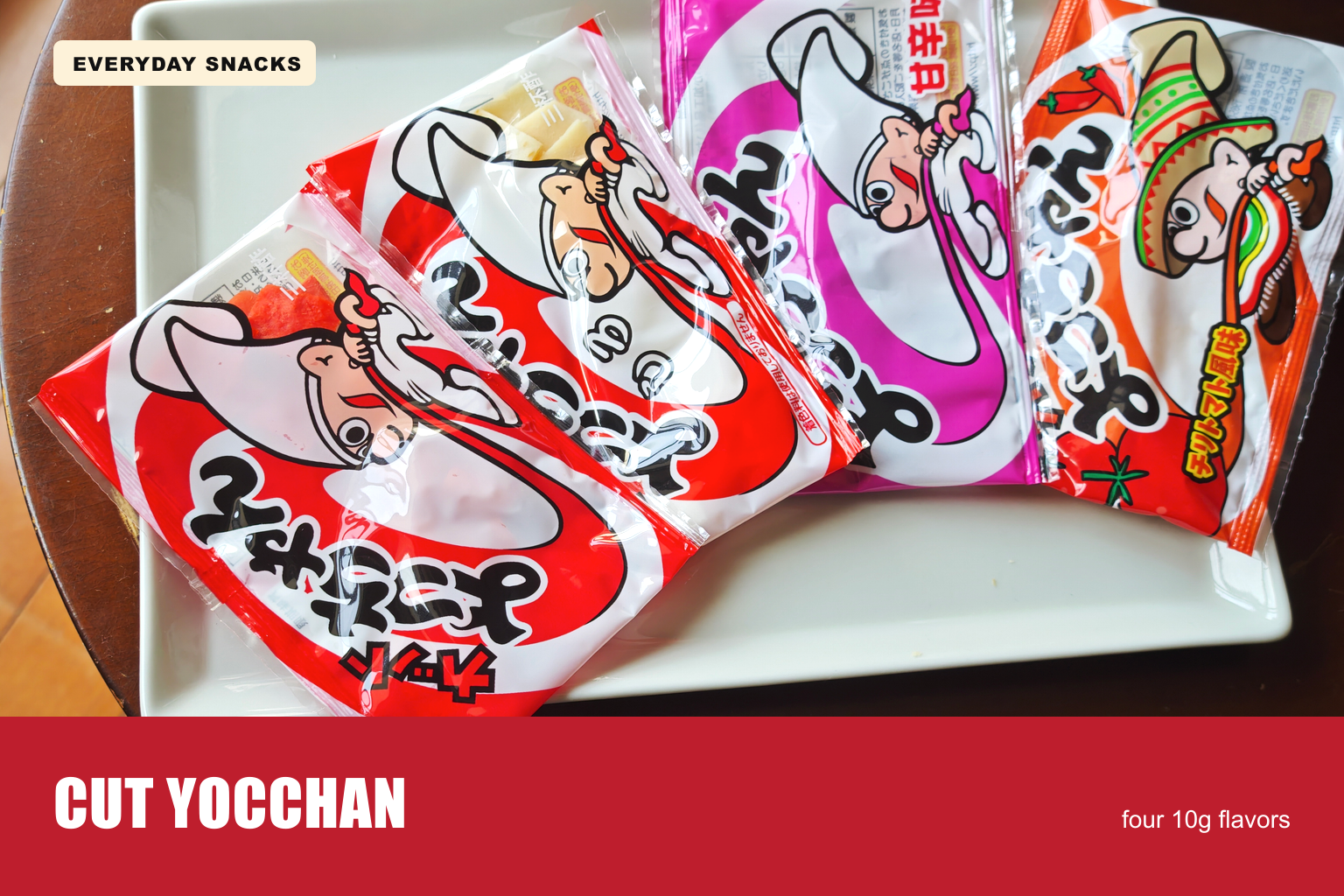
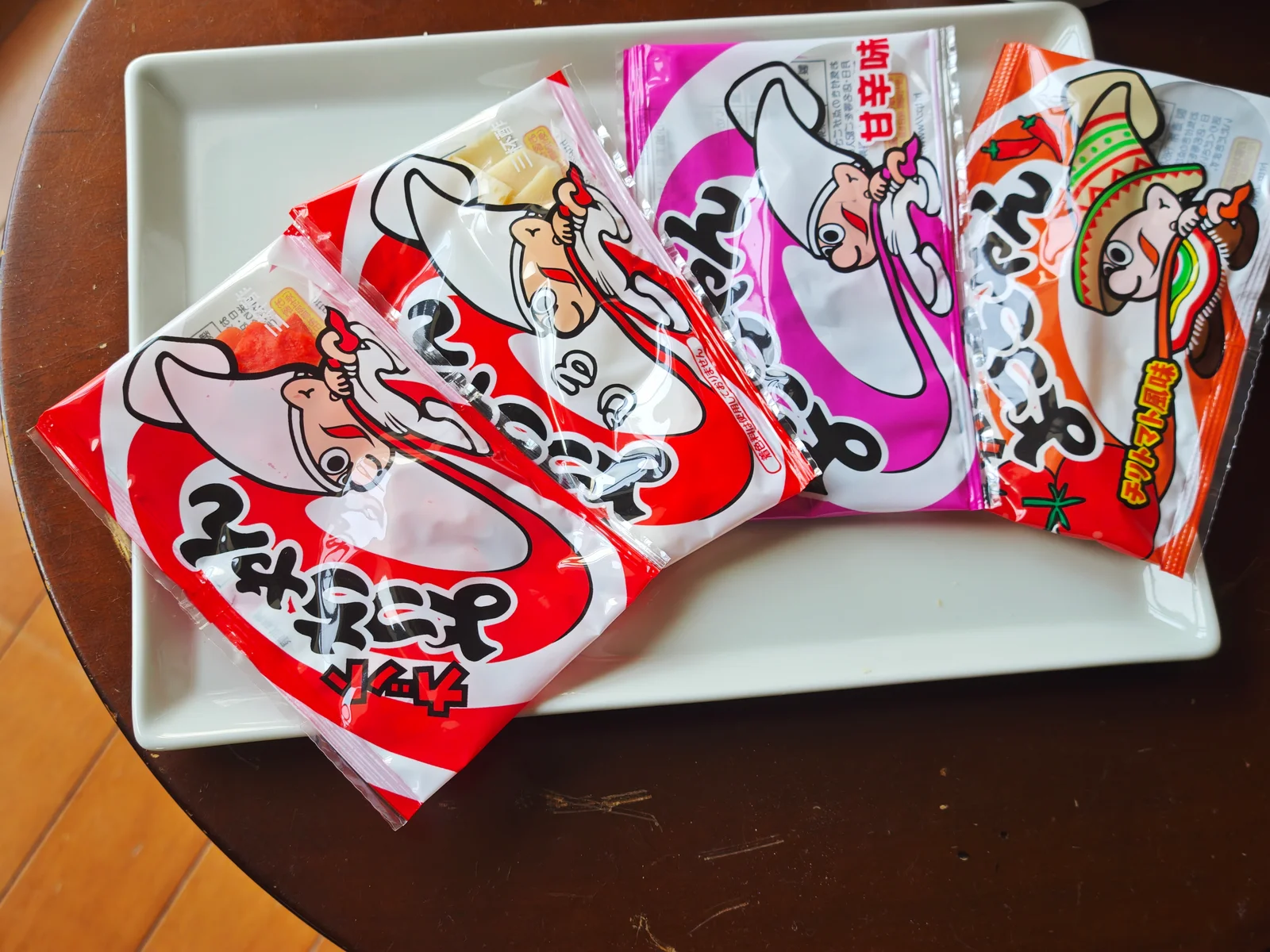
Four bright 10g packs on one plate can teach you more about Japanese dagashi than a supermarket aisle full of look-alike chips.
Classic red is the orthodox, high-impact sanbaizu bite people mean when they say Yocchan Ika. White stays in the same vinegar family but feels gentler. **Sweet-spicy (amakara) changes the shape of the sheet. Chili tomato** pushes the seasoning toward a saucier, soaked-in heat. Together they show why Yotchan Food Industry’s Cut Yocchan line keeps working as pocket snack, train-station treat, and late-night otsumami.
Quick guide: Formal name on many bags is カットよっちゃん (Cut Yocchan). Fans still search よっちゃんイカ (Yocchan Ika). Start with red for fluffy-juicy surimi + springy squid eaten together; white for gentler vinegar / uncolored packs; amakara for net-grill-style squid otsumami; chili tomato for spicy, Tabasco-like acid. Chew slowly—kaméba kamuhodo.
What is Yocchan Ika?
Yocchan Ika (よっちゃんイカ) is the nickname most travelers hear first. The product line printed on the bags is usually Cut Yocchan (カットよっちゃん): bite-size pieces of squid and fish-surimi sheet, soaked in seasoning and sold as inexpensive dagashi / seafood-style chinmi.
Japan has an unusually deep culture of **squid otsumami—dried, grilled, vinegar-soaked, and spicy packs that sit beside beer, highballs, and soft drinks as casually as chips do elsewhere. That lineage is part of everyday Japanese snack culture, not a side note. Yocchan Ika** is one friendly, nationally recognizable door into that world: small enough for a child’s dagashi spend, seasoned enough for an adult drinking table.
The maker is よっちゃん食品工業株式会社 (Yotchan Food Industry Co., Ltd.), headquartered in Chuo City, Yamanashi. Official company materials trace the business from dried-squid processing begun in 1959, with the company established in 1963. That long seafood-processing background matters: this is not a candy brand that later added a squid flavor. It is a marine-snack house whose most famous everyday face became a tiny, cheerful pack you can buy one at a time.
Official home: Yotchan Food Industry.
The mascot on the pack
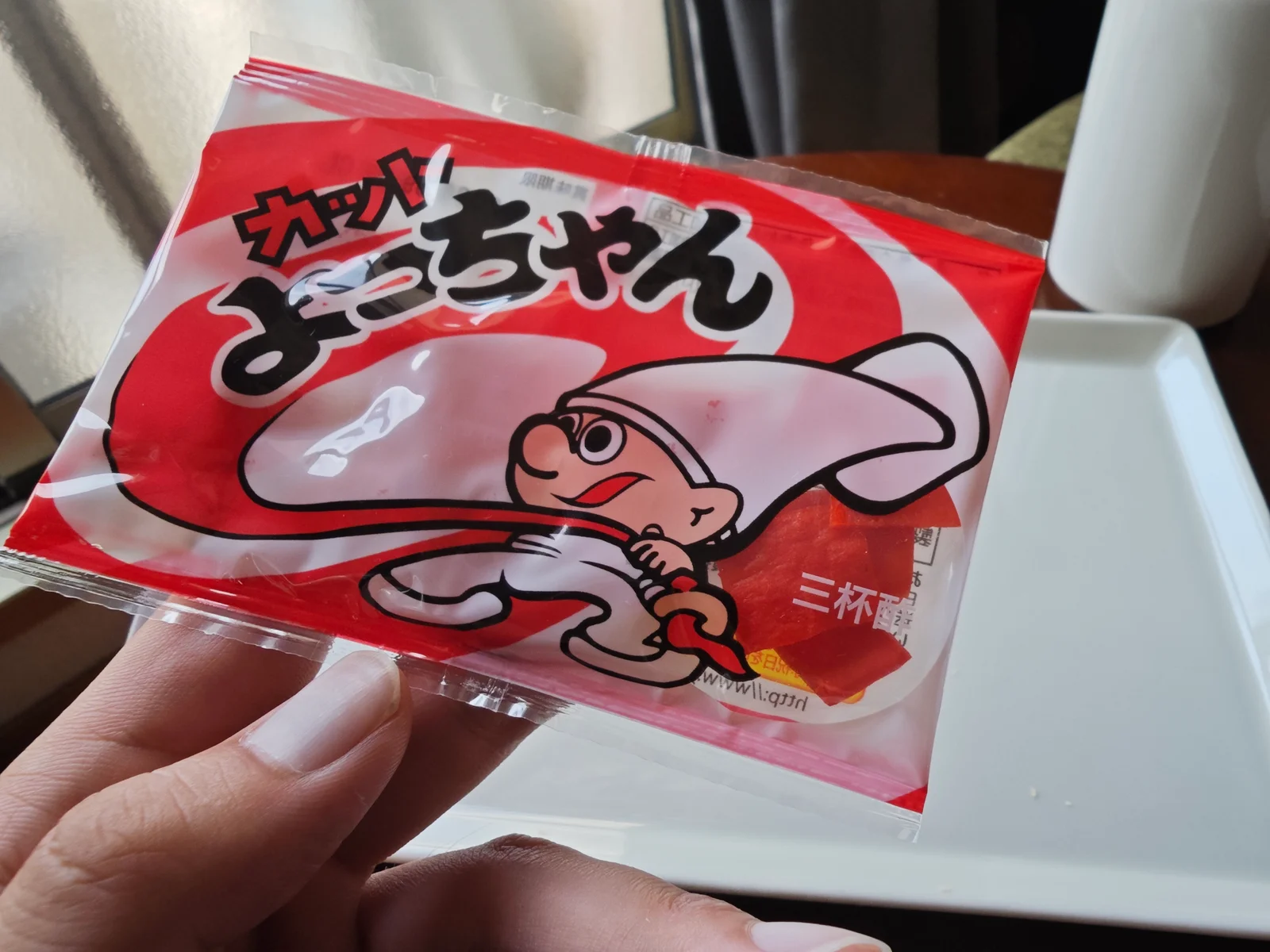
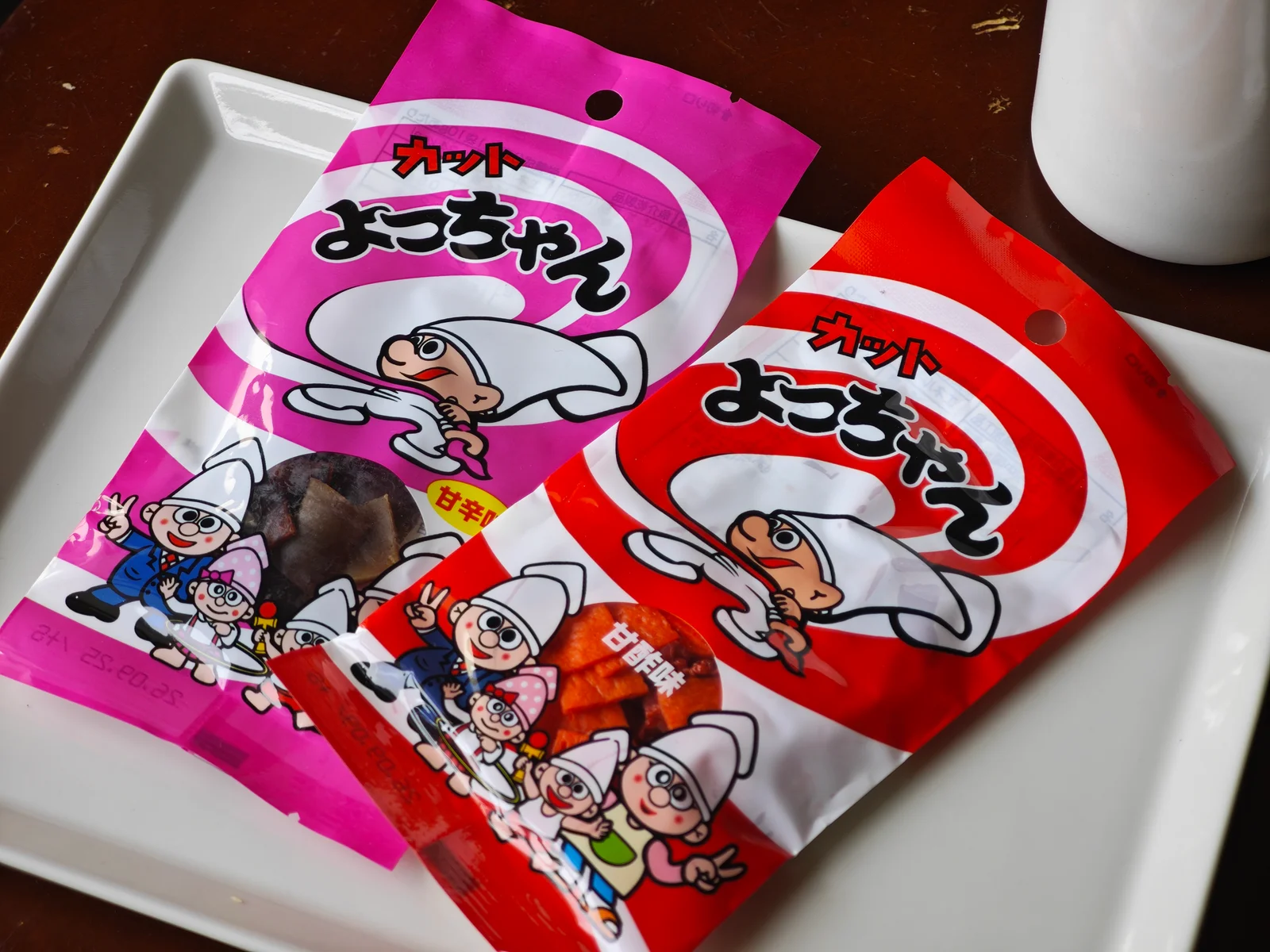
Hold a Cut Yocchan bag up to the light and the brand’s personality is immediate: a grinning cartoon figure in a white, squid-mantle hat, riding a curling piece of seasoned snack. The character is the visual handshake of the brand. Flavor variants keep the same friendly face while shifting color, props, and mood—classic red for the vinegar standard, white for the uncolored twin, pink for sweet-spicy, orange sombrero energy for chili tomato.
For travelers, that readability is half the product. You can hunt flavors by package color before you read a single Japanese character.
What’s inside a 10g pack
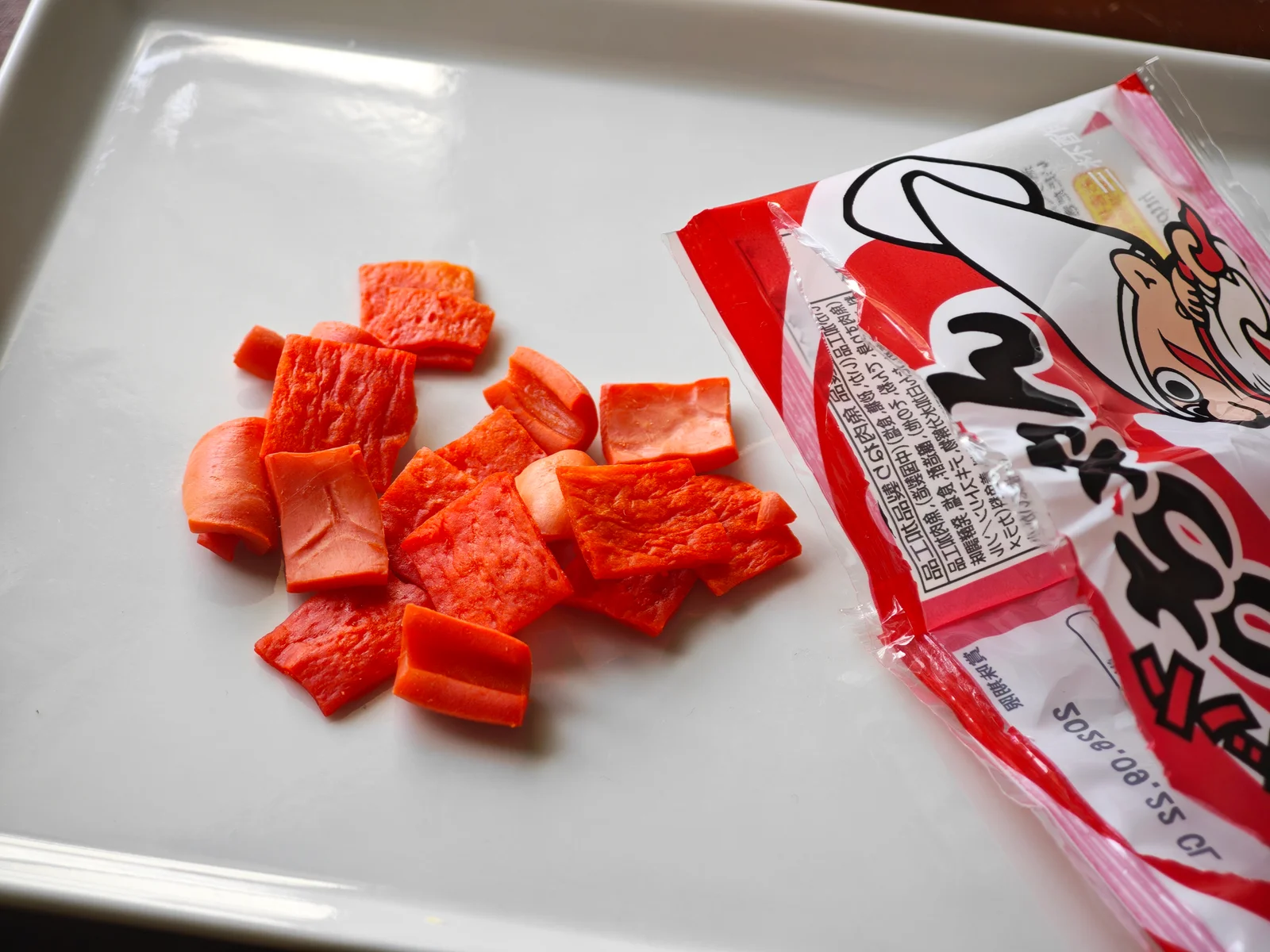
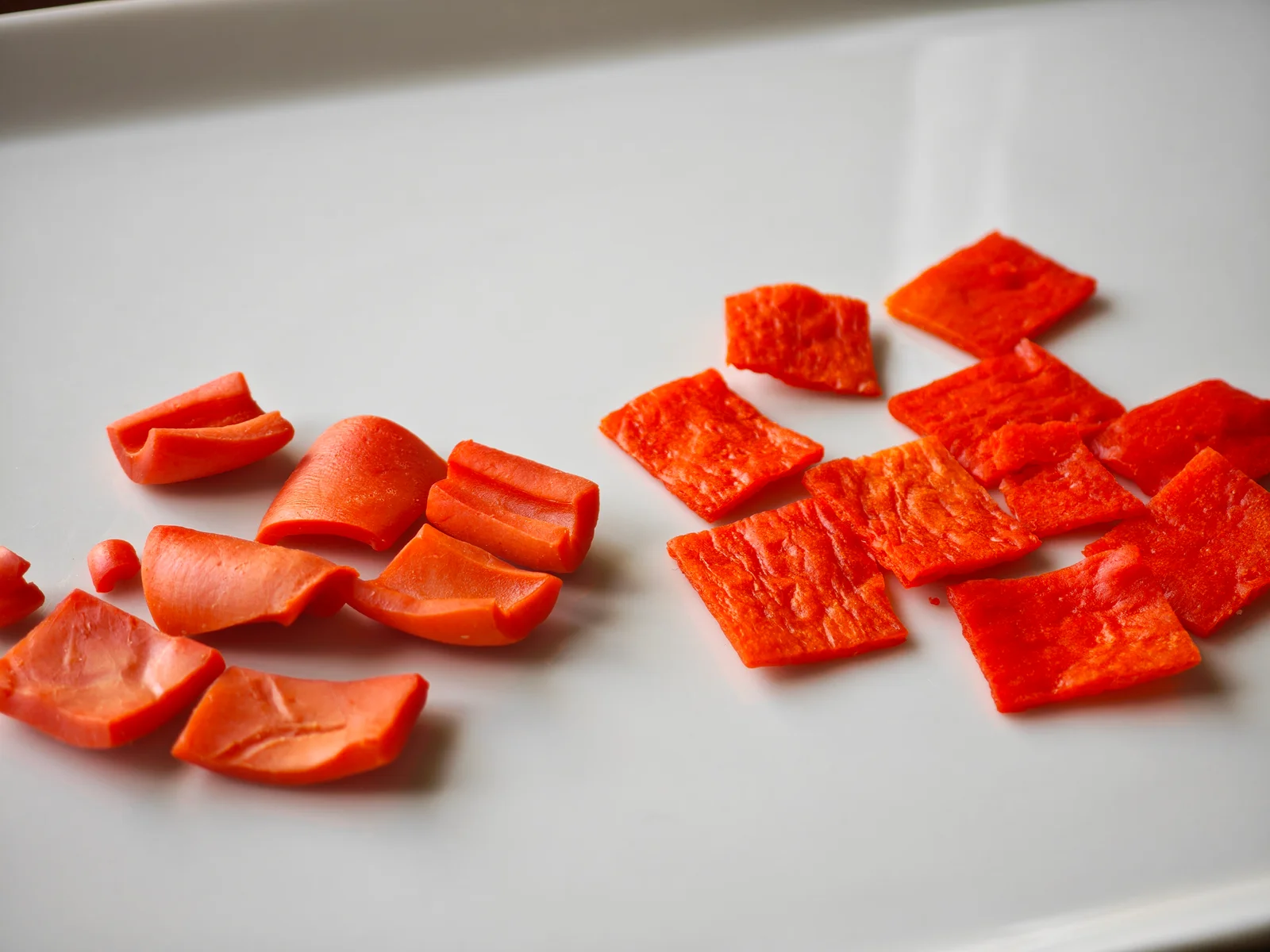
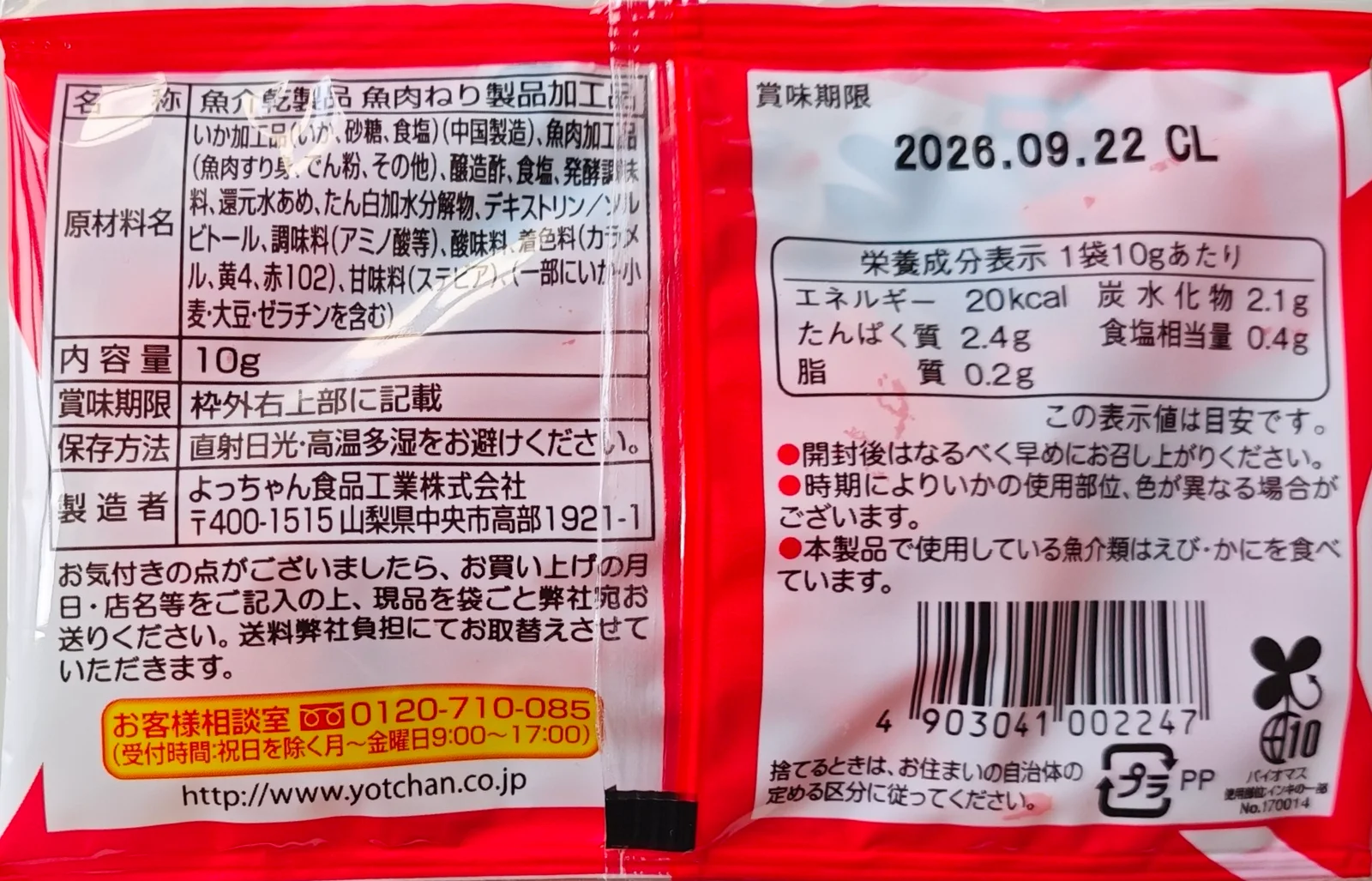
Open a classic pack and you do not get one uniform chip. You get two materials sharing the same seasoning bath:
- Squid pieces — more fibrous, more “ika” in the chew
- Fish-surimi sheets — softer, flatter, quick to pick up the sweet-tart soak
In the photographed 10g packs, the split reads as about half and half. That balance is the snack’s built-in accent: one bag, two textures, one seasoning story. On the classic pack especially, I recommend tasting each material once, then eating both together—the harmony is the point, and it is excellent as a drinking snack.
Four flavors, side by side
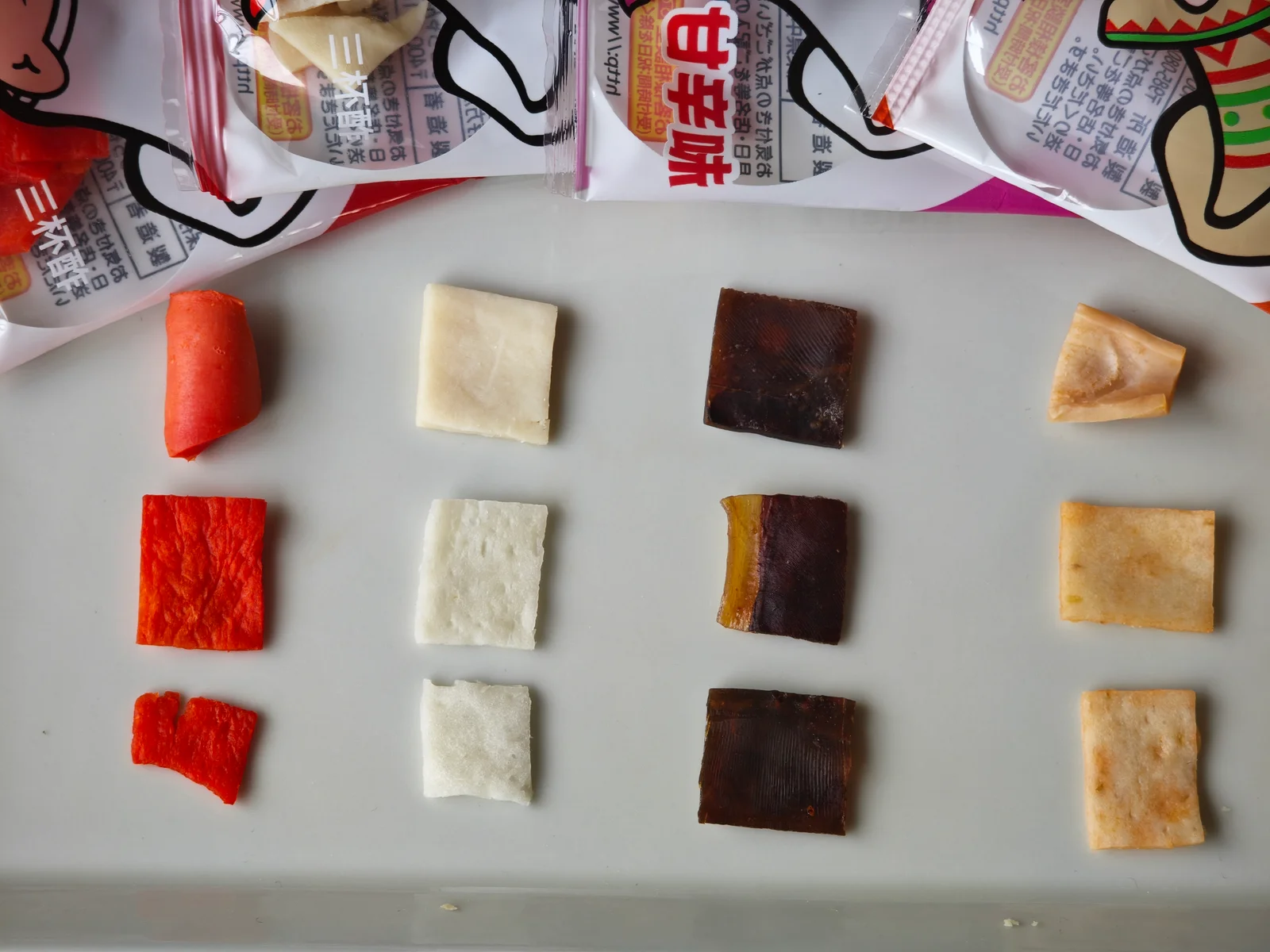
The hero plate in this article is the traveler’s tasting kit: four single-serve 10g directions you can finish in a few minutes or compare piece by piece.
Classic red — the orthodox Yocchan Ika
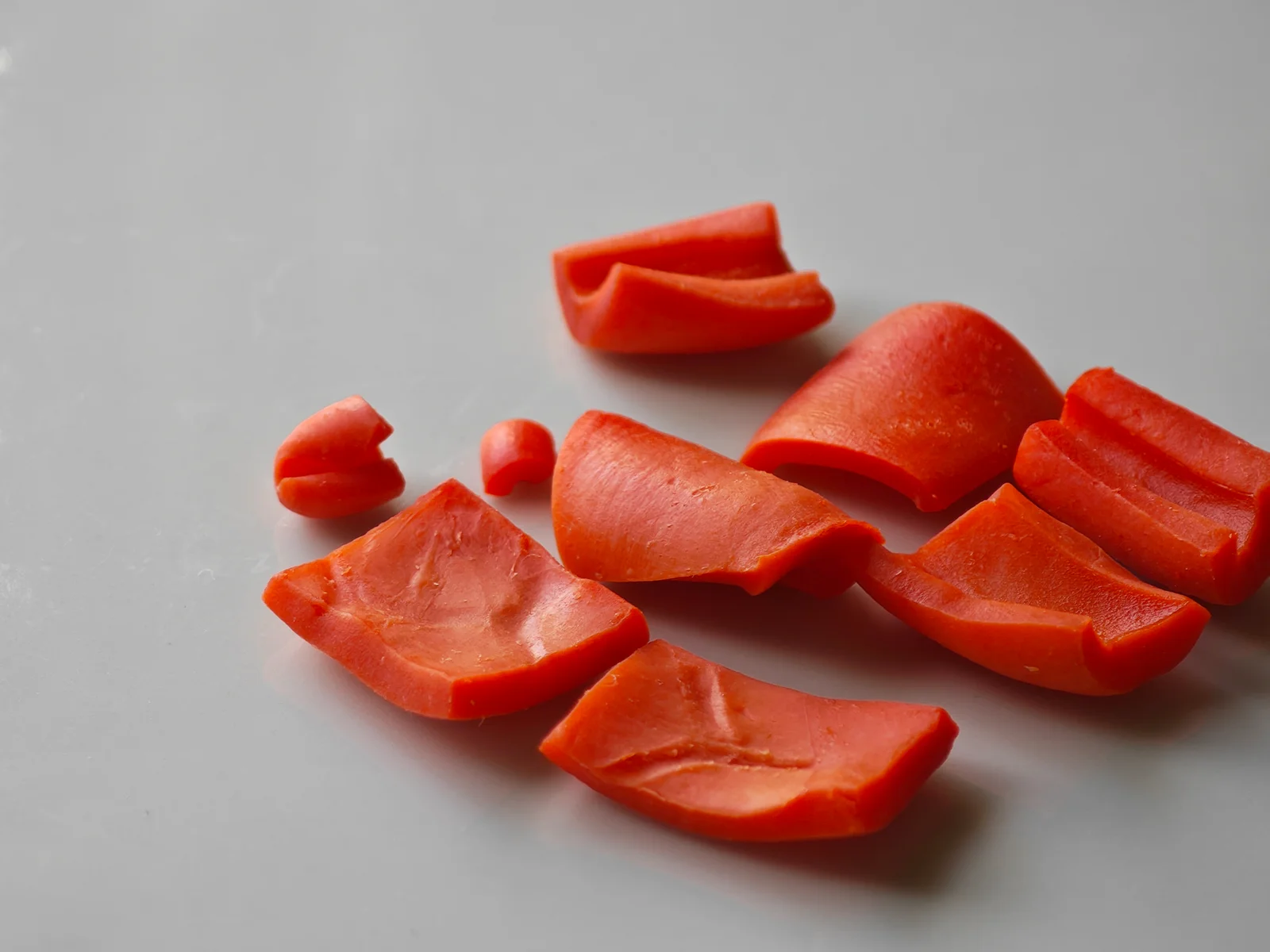
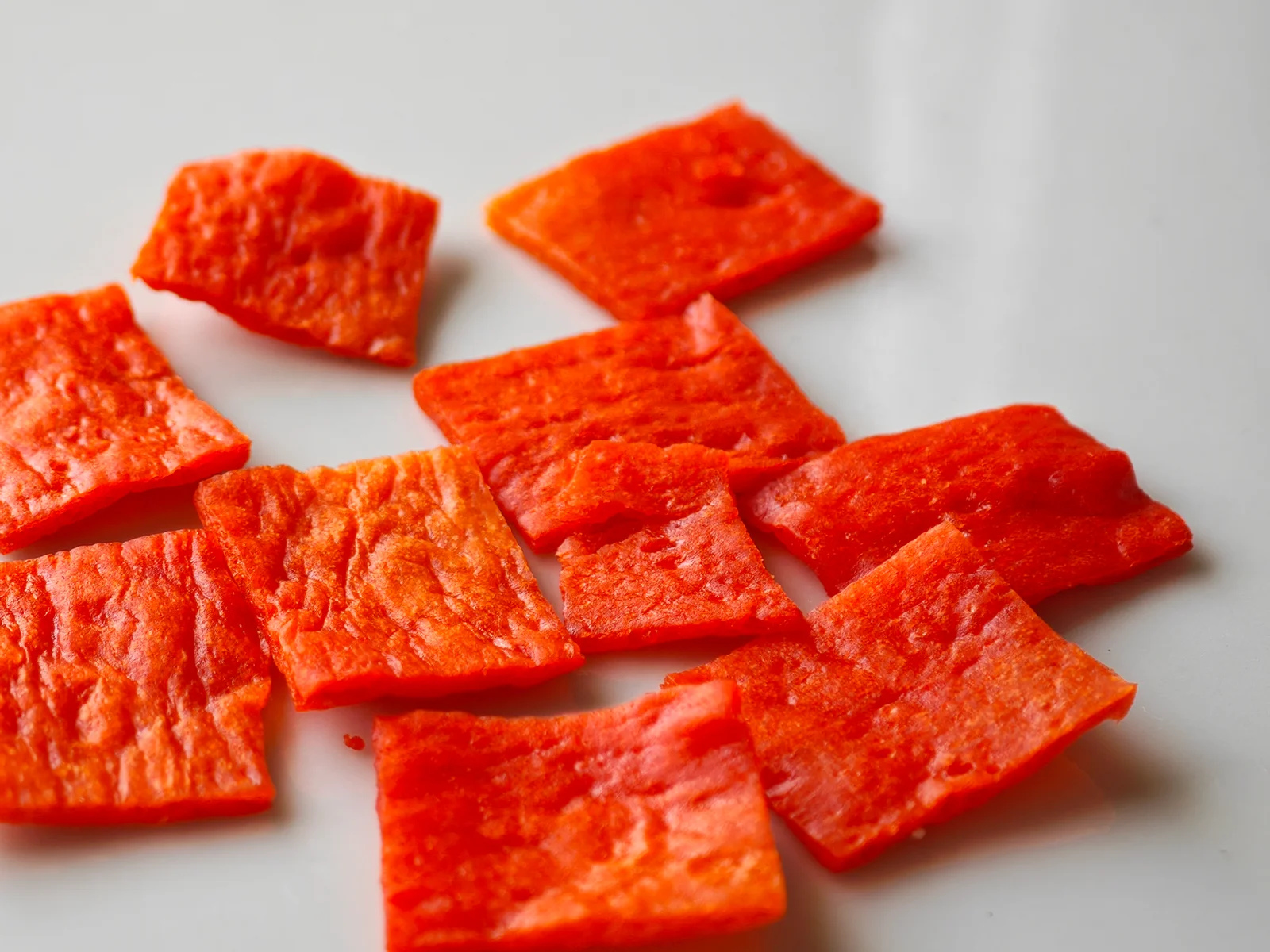
If Japan had to point to one “default” Yocchan Ika, it would be the red pack. On the front it reads 三杯酢 (sanbaizu—a sweet-tart vinegar seasoning family). This is the orthodox flavor.
In tasting, both the squid and the fish-surimi sheet are thoroughly seasoned and excellent. The surimi sheet feels fluffy and juicy; the squid has springy elasticity. As you chew, sweet vinegar keeps spreading in the mouth—kaméba kamuhodo in the most literal sense. Eat the two materials together and the texture harmony becomes the snack: soft-juicy against elastic chew. It is also one of the easiest packs to put beside a drink.
White — gentler vinegar, square-cut fun
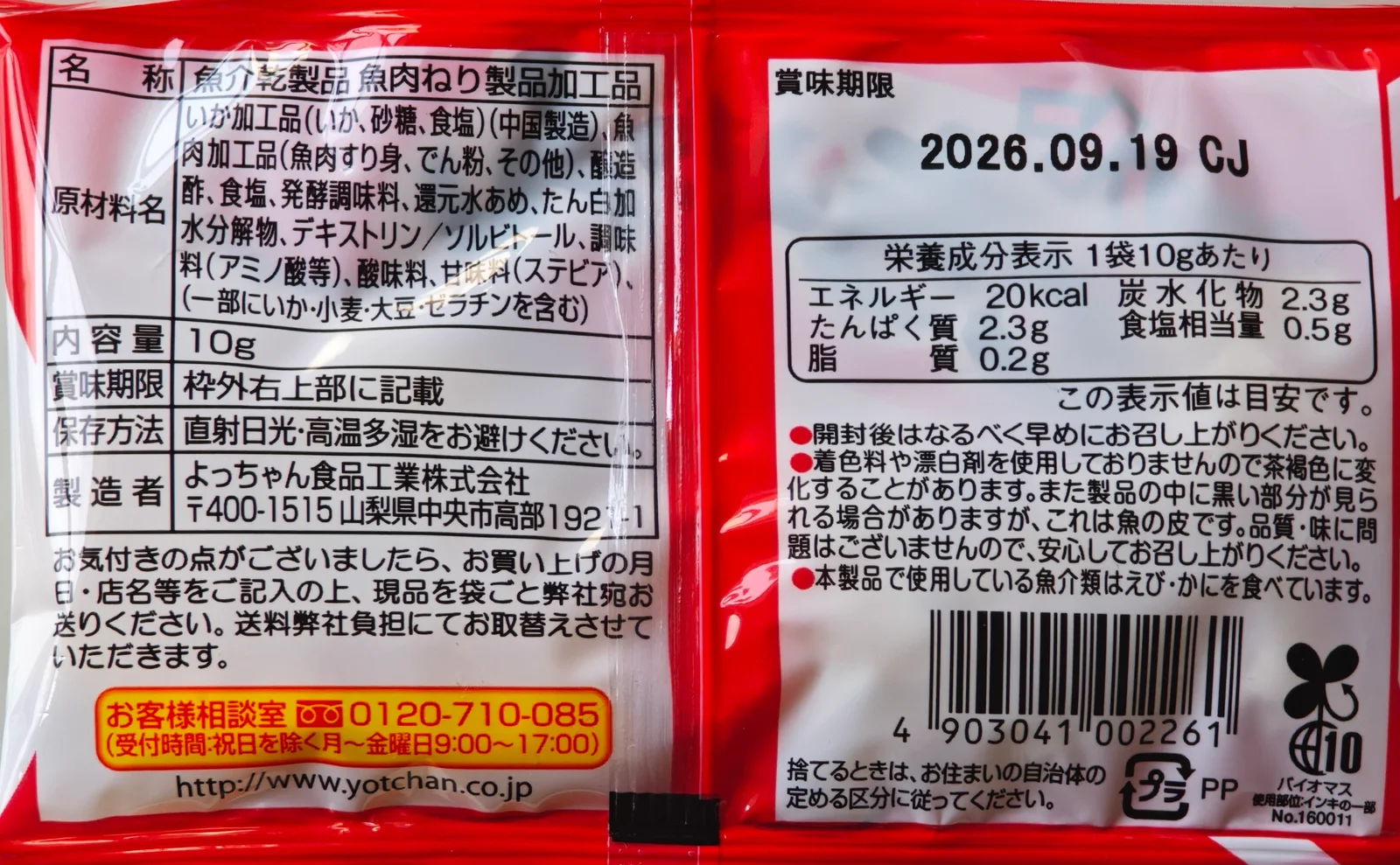
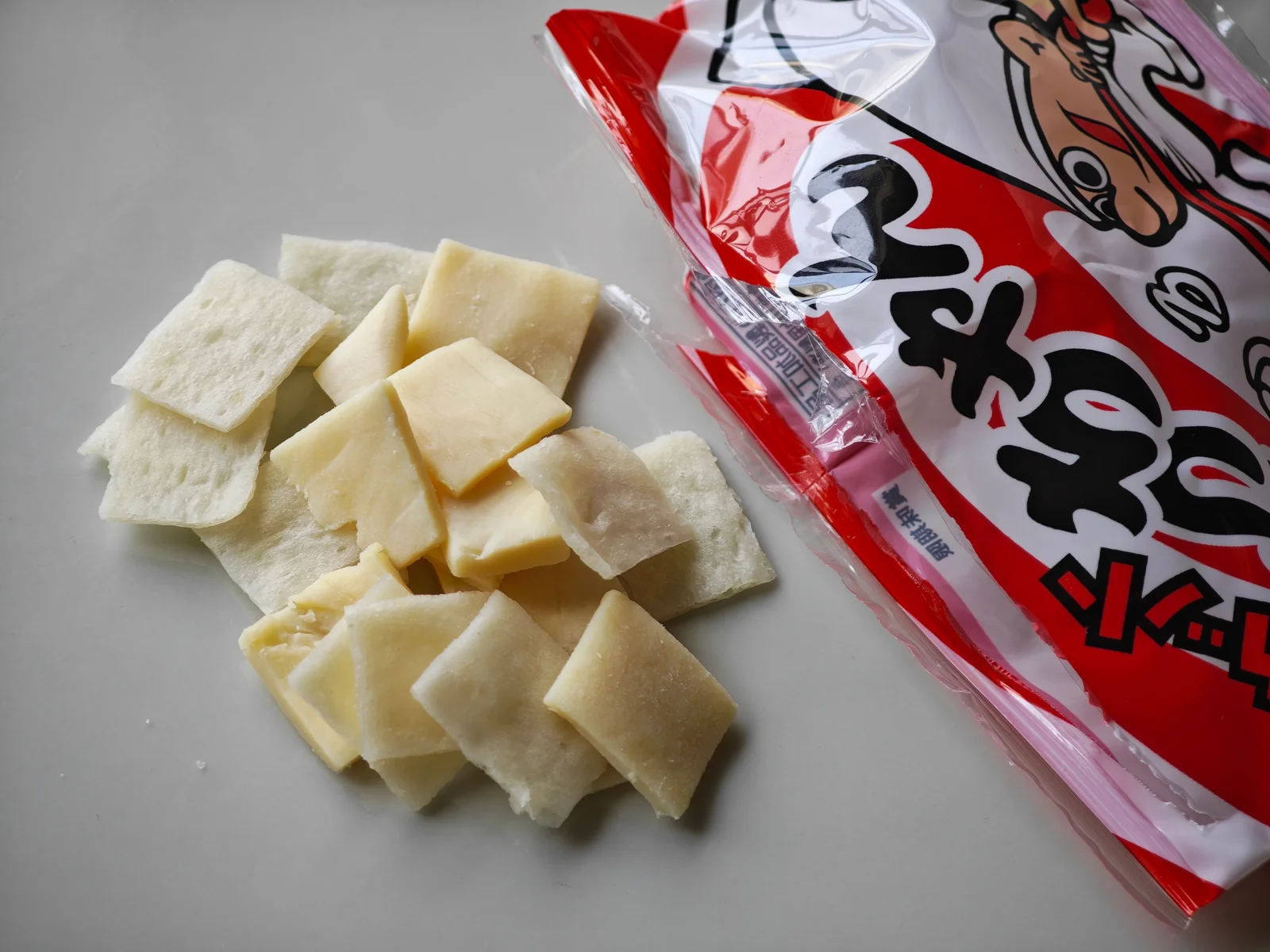
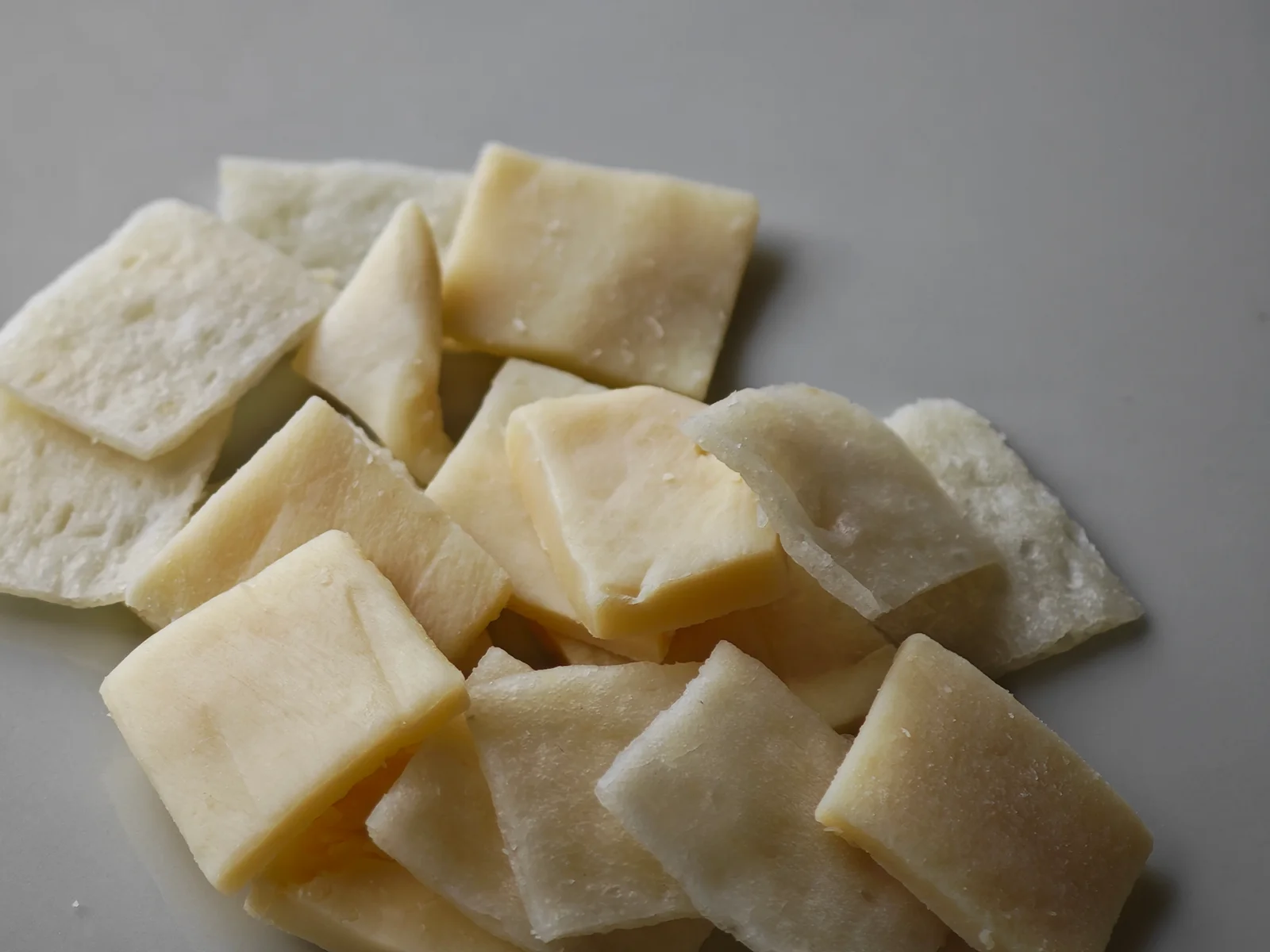
White (しろ) stays in the sanbaizu world but skips the red coloring path. The vinegar aroma feels gentler than classic red—partly seasoning, and perhaps partly the visual effect of an uncolored pack. If food coloring makes you hesitate, white is a practical choice.
There is also a quiet pleasure in the cut itself: true square-cut squid pieces like these are uncommon, and that geometry makes the chew feel playful even before flavor debates begin.
Sweet-spicy (amakara) — a different squid otsumami entirely
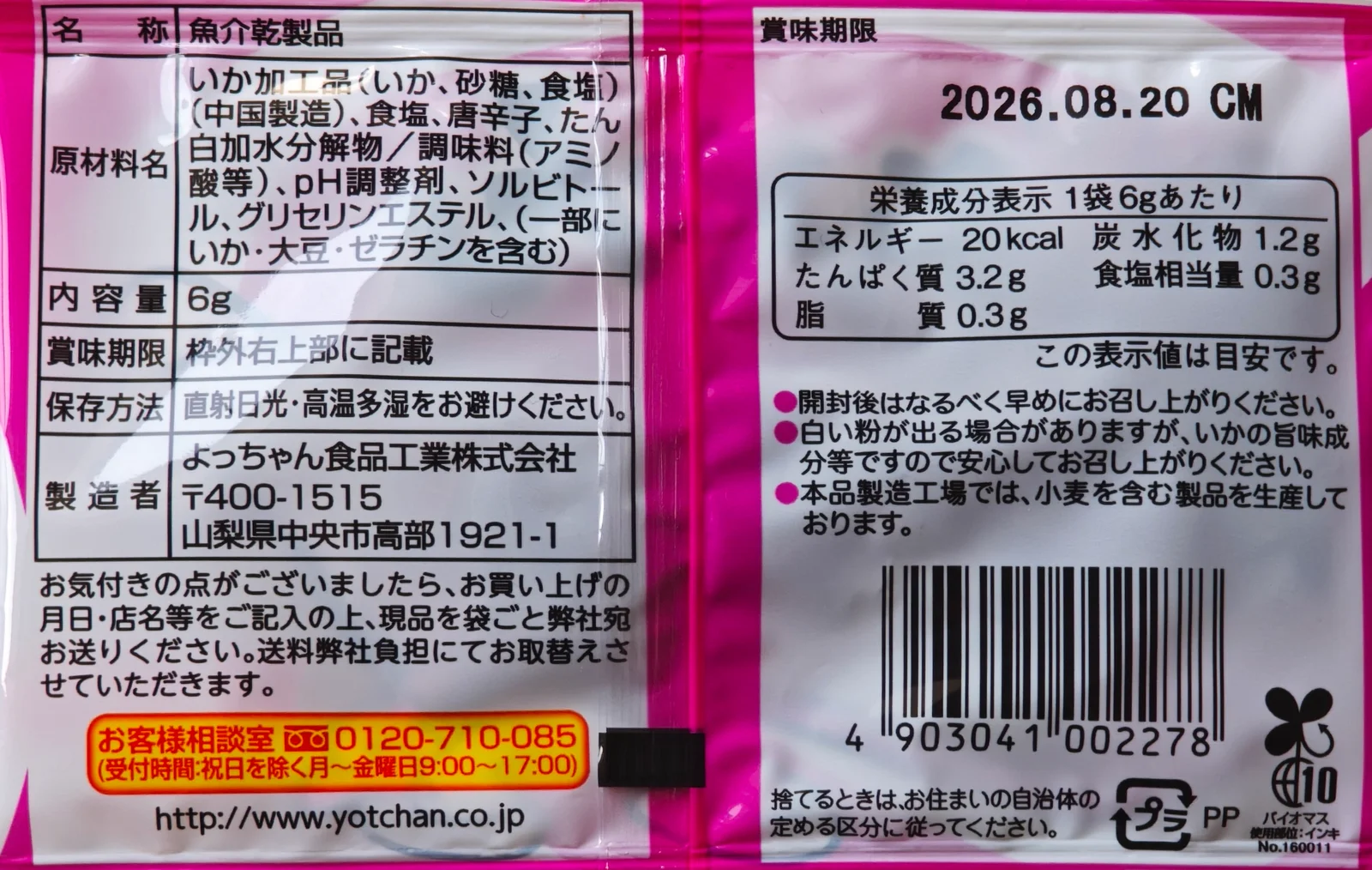
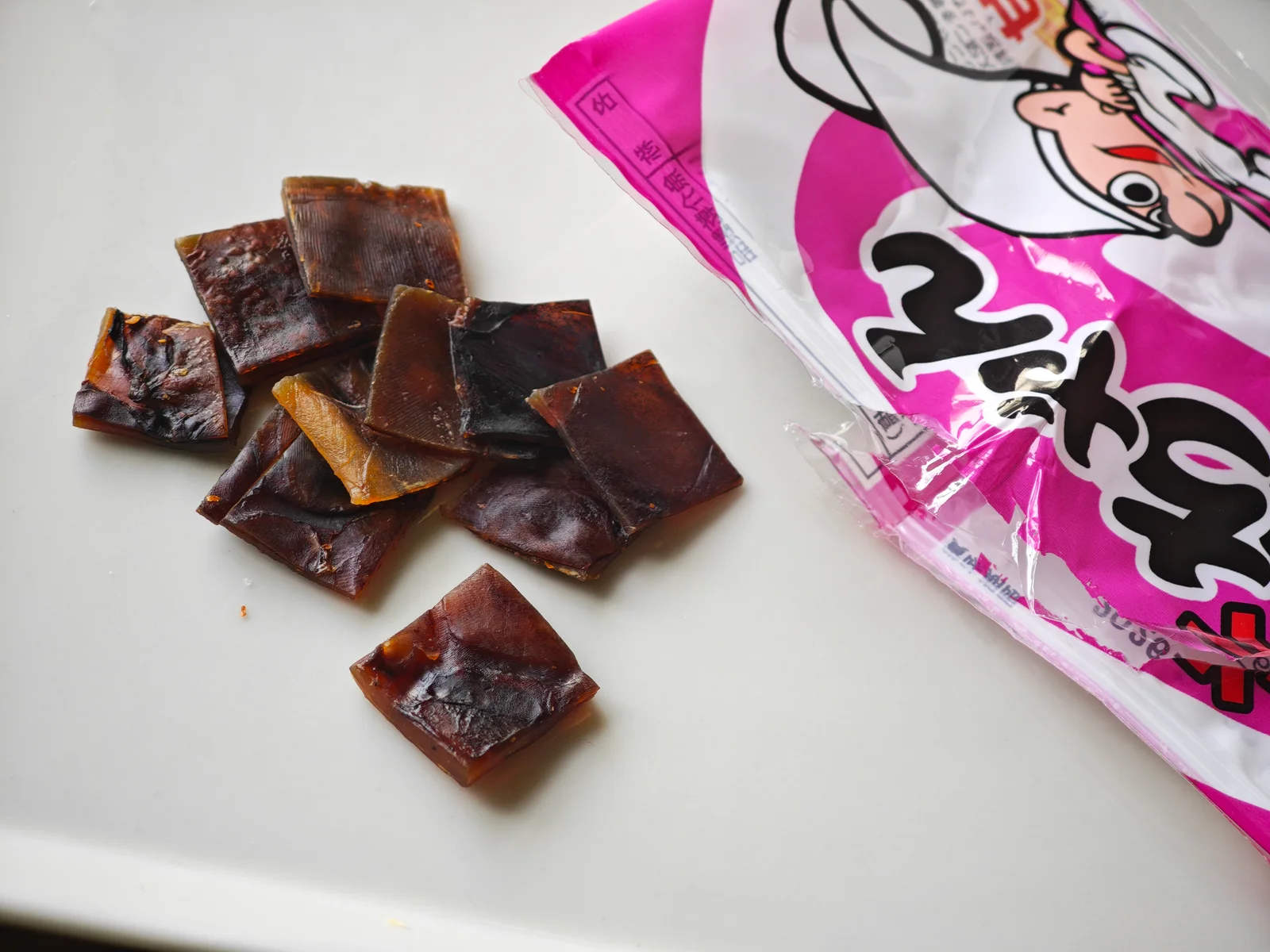
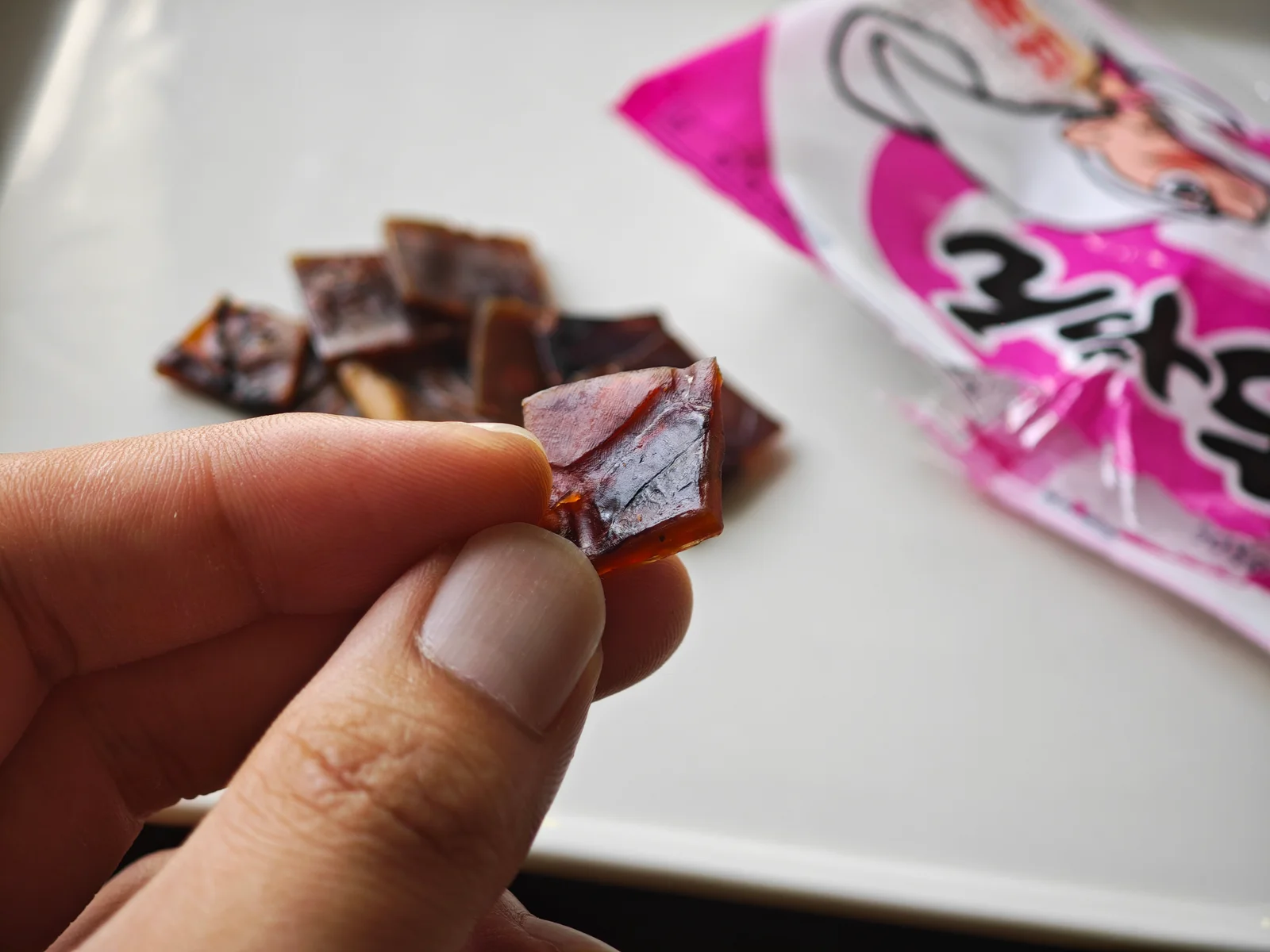
甘辛味 (amakara—sweet and spicy) is not a mild remix of red or white. It feels like a completely different product. The sheets read as if the squid were dried and net-grilled—closer to a favorite style of Japanese squid otsumami than to the fluffy-juicy classic Cut Yocchan mix.
That difference is useful for travelers. Japan sells an enormous range of squid drinking snacks; Yocchan Ika is one approachable lineage inside that wider map. Amakara shows how far the same brand can travel while still wearing the familiar mascot. For me, it is the pack that hits “my favorite kind of squid otsumami” hardest.
Chili tomato — polarizing, Mexican-leaning heat
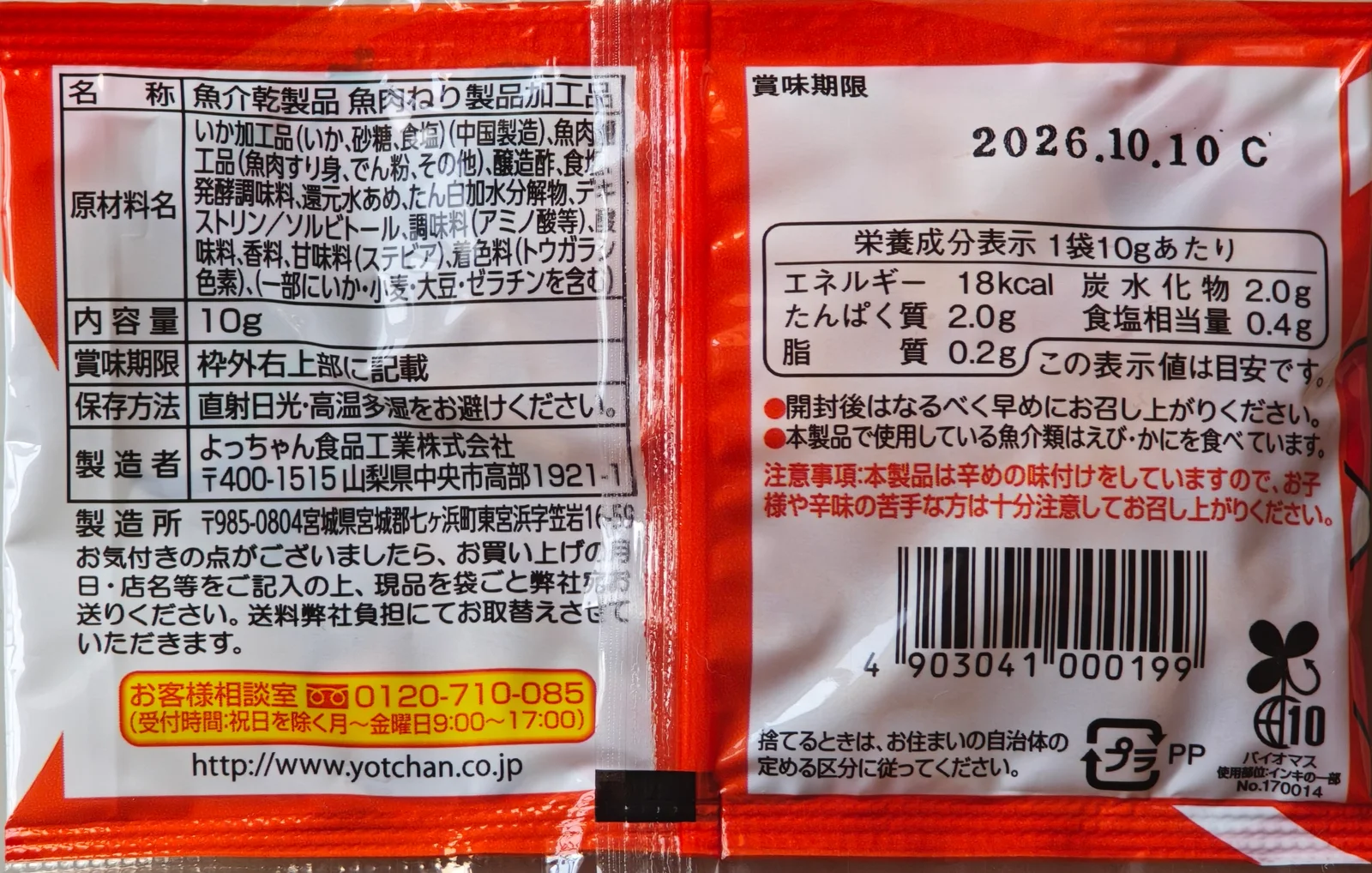
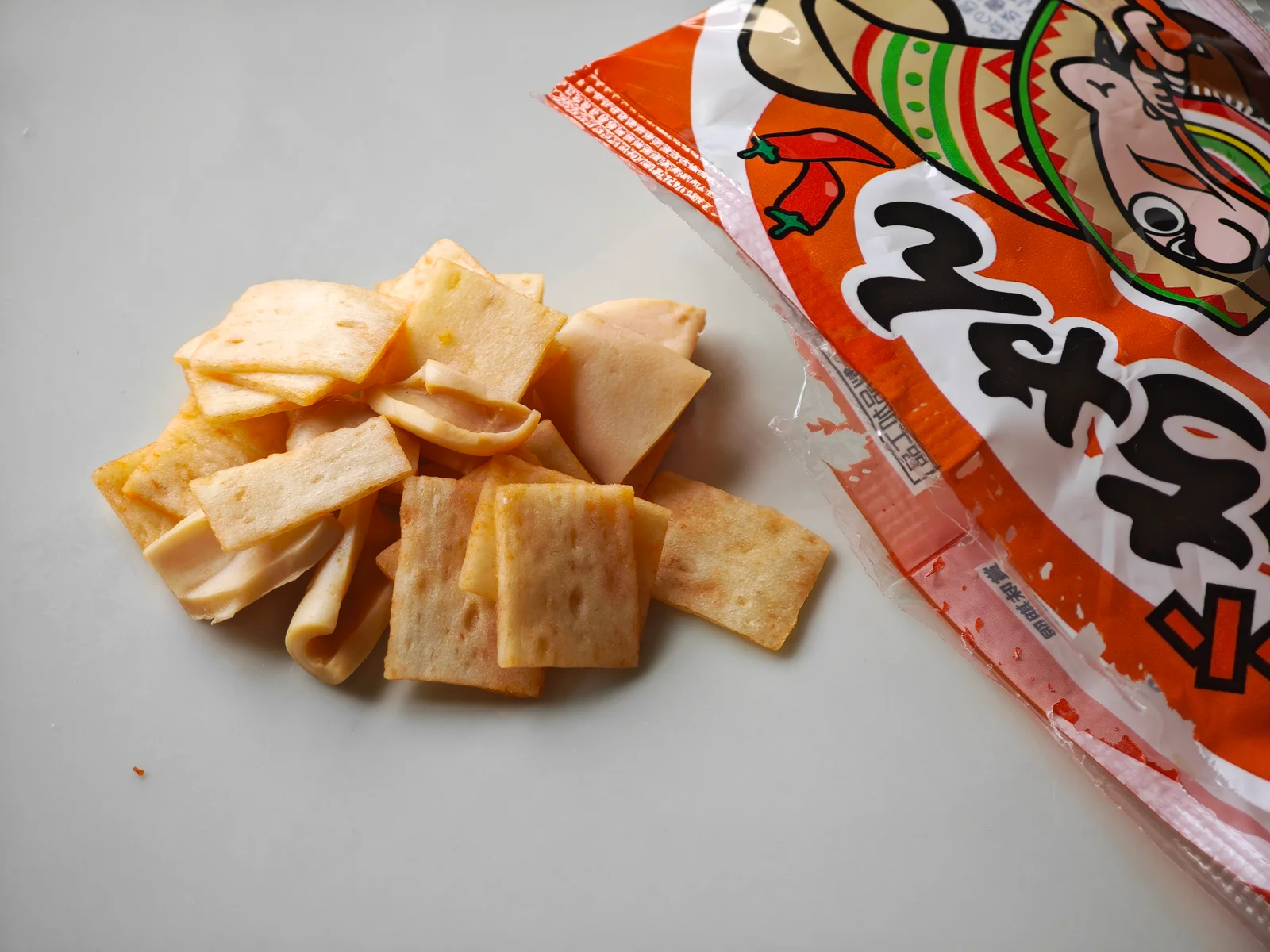
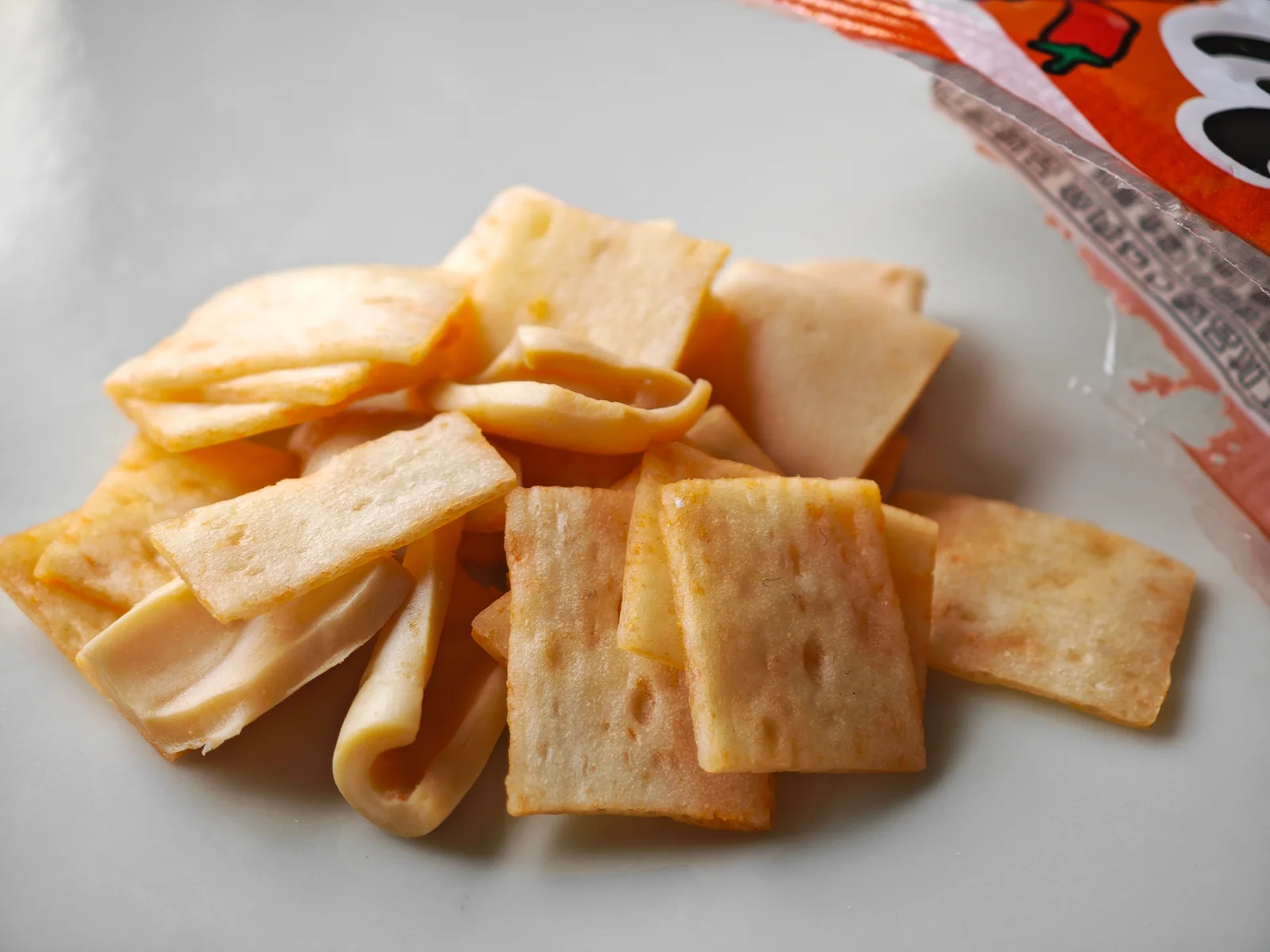
チリトマト風味 (chili tomato) may split the table. The seasoning is sharply spicy, with a Tabasco-like acidity and spice aroma. I liked it. The fish-surimi sheet soaks the flavor deeply, then bursts juicily on the tongue—a Mexican-leaning seasoning mood on a Japanese dagashi chassis.
If you already know classic red and want a tourist-friendly twist with clear love-it-or-leave-it energy, this is the pack.
Bigger packs, longer geso, and kaméba kamuhodo
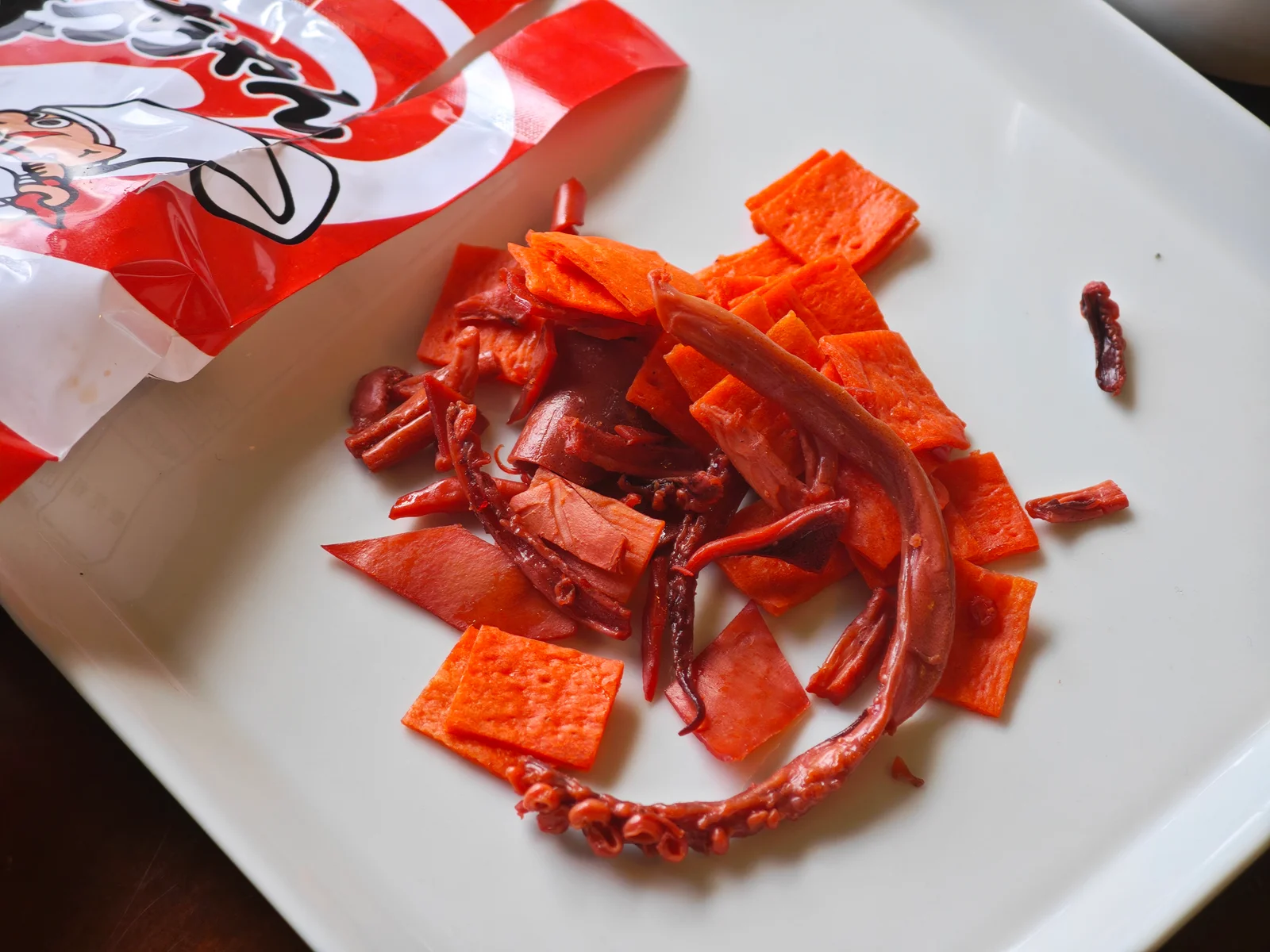
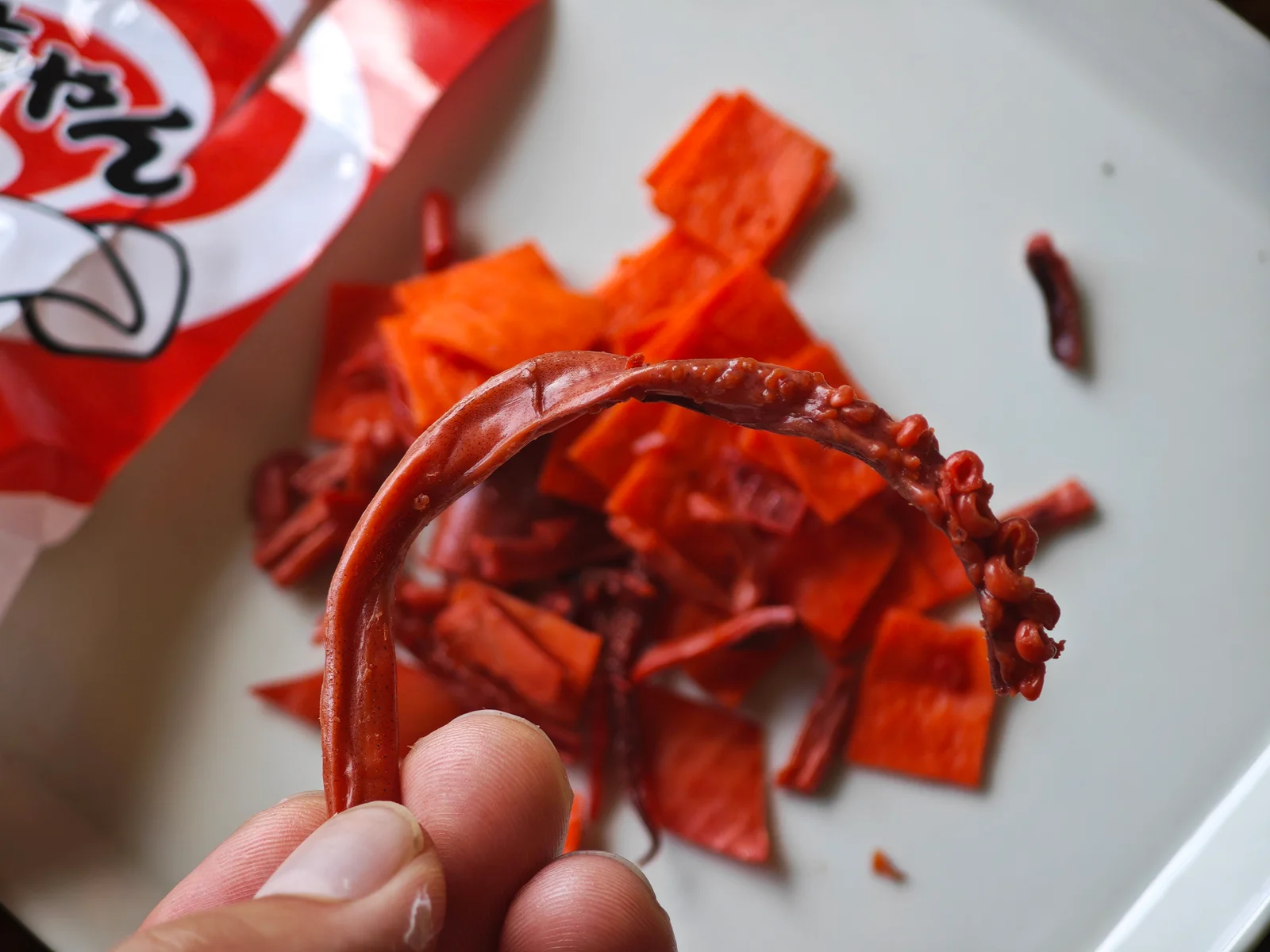
Cut Yocchan is not only a 10g story. 20g packs appear in sweet-spicy and sweet-vinegar (amasu) directions as well. In one photographed 20g sweet-vinegar pack, a long geso (squid-leg) piece showed up—the kind of part that usually does not fit the tiny 10g bag. It is not guaranteed in every pack, but when it appears it is one of the pleasures of the larger format.
That deep piece is also the best place to meet a Japanese snack phrase worth stealing:
噛めば噛むほど — kaméba kamuhodo (also written kameba kamuhodo)
Literally: “the more you chew, the more…” Practically: the seasoning keeps rewarding you. Japanese speakers use the phrase for squid snacks and other dried, sauce-soaked treats where slow chewing unlocks more flavor. Seeing the Japanese characters beside the romanization is part of the fun—language as packaging.
Beyond the four packs: Stick Somen and a squid-dagashi house
Yotchan Food Industry keeps expanding squid and seafood snack formats. One related product travelers sometimes spot beside Cut Yocchan is カットよっちゃんスティックそうめん (Cut Yocchan Stick Somen)—a somen-style squid snack in a longer pack, separate from the four 10g flavors on the hero plate.
That matters for brand curiosity. Yocchan Ika is not a one-hit novelty; it is the friendly front door to a maker that treats squid texture as a playground—cut sheets, sticks, larger packs, and rotating seasonings.
Where to buy Yocchan Ika
In Japan, start with dagashi corners and convenience-store snack shelves for single 10g packs. 100-yen shops sometimes carry individual flavors. For a wider hunt near major or regional stations, check Don Quijote (Donki) snack aisles—useful when you want several flavors in one stop, though stock changes by branch.
If you want volume of one flavor—or you are shopping from outside Japan via Amazon Japan or a forwarding service—multipacks are usually more efficient than hunting thirty identical singles.
- Amazon Japan: Cut Yocchan classic 10g × 20
- Amazon Japan: Cut Yocchan white (shiro) 10g × 20
- Official: Yotchan Food Industry
Confirm the flavor name, net weight, and allergen line on the pack you receive. Formulations and package art can change.
Affiliate disclosure: links above may be affiliate links. If you buy through them, I may earn a commission at no extra cost to you.
Frequently Asked Questions
Is Yocchan Ika real squid?
Yes—the packs combine processed squid pieces with fish-surimi sheets. Read the ingredient panel on your bag for the exact wording and allergens (commonly including squid, wheat, soy, and gelatin on classic labels).
Which flavor should I try first?
Start with classic red for the orthodox fluffy-juicy / springy harmony. Choose white for gentler vinegar or if you prefer an uncolored pack, amakara if you love net-grill-style squid otsumami, or chili tomato if you want spicy, Tabasco-like acid (knowing it may be polarizing).
Why do some pieces look pale and others red?
In the classic line, color can mark the seasoning path and material. White packs are positioned as an uncolored vinegar finish; red packs carry the familiar colored look of orthodox Yocchan Ika.
What is Cut Yocchan Stick Somen?
It is a related Yocchan squid snack shaped more like thick squid somen sticks, sold separately from the four small Cut Yocchan flavor packs featured here.
How should I eat classic red?
Taste squid and surimi once each, then eat both together. The fluffy-juicy sheet and elastic squid are meant as a pair, and the pack works especially well as a drinking snack.