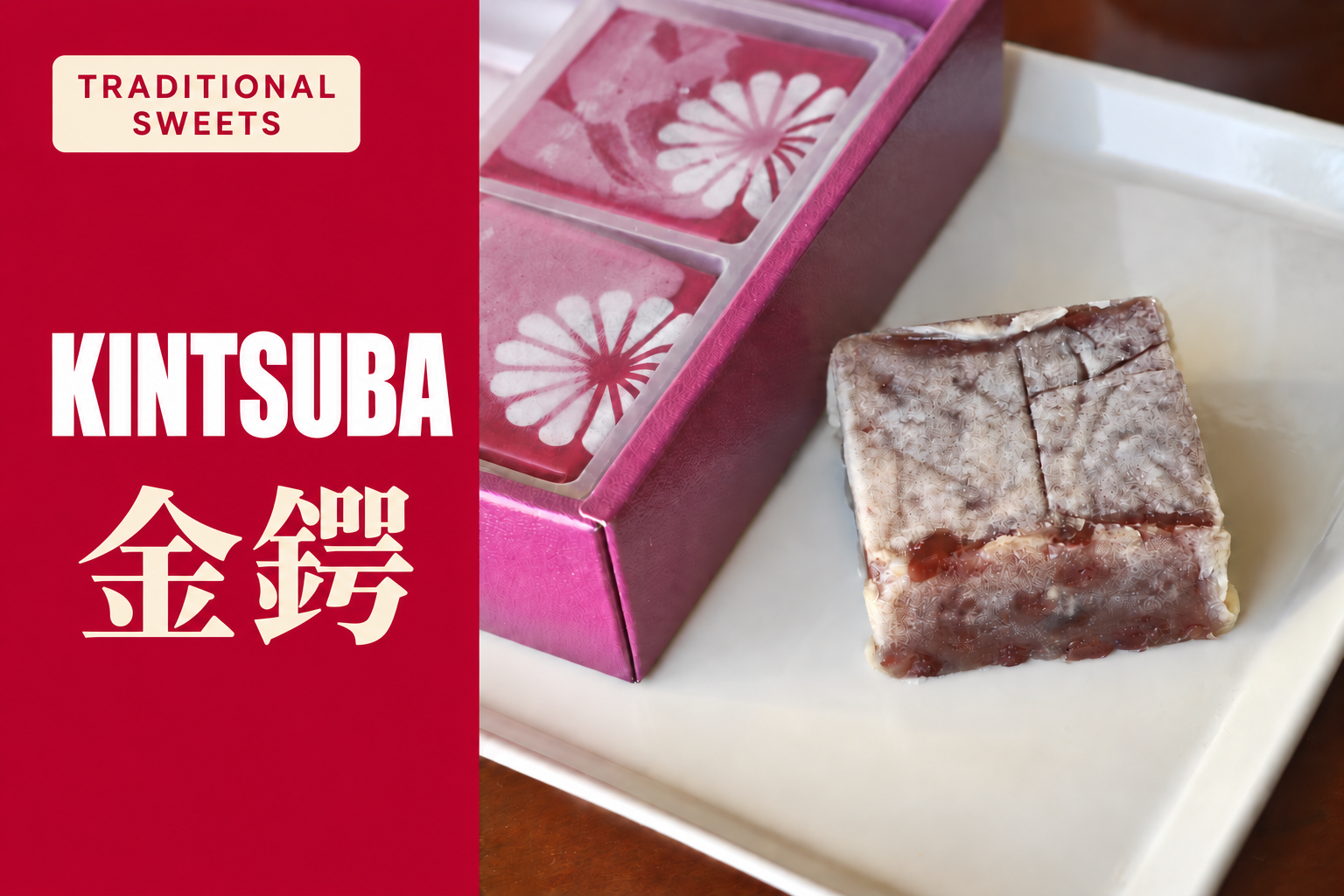
Kintsuba (金鍔) is a traditional Japanese sweet made with chunky sweet red bean paste and a thin, lightly cooked coating. In the familiar square version, agar helps the filling hold its shape. Its simple ingredients let the flavor and texture of azuki beans stand out.
That plain little square has more to tell than its appearance suggests: a name borrowed from a sword, a past in the streets of Edo, and a useful introduction to the many kinds of Japanese bean paste. The Kokyo Gaien Kintsuba photographed here, bought at an airport, gives us one starting point. Its palace-related name adds another story—but a different one from the history of kintsuba itself.
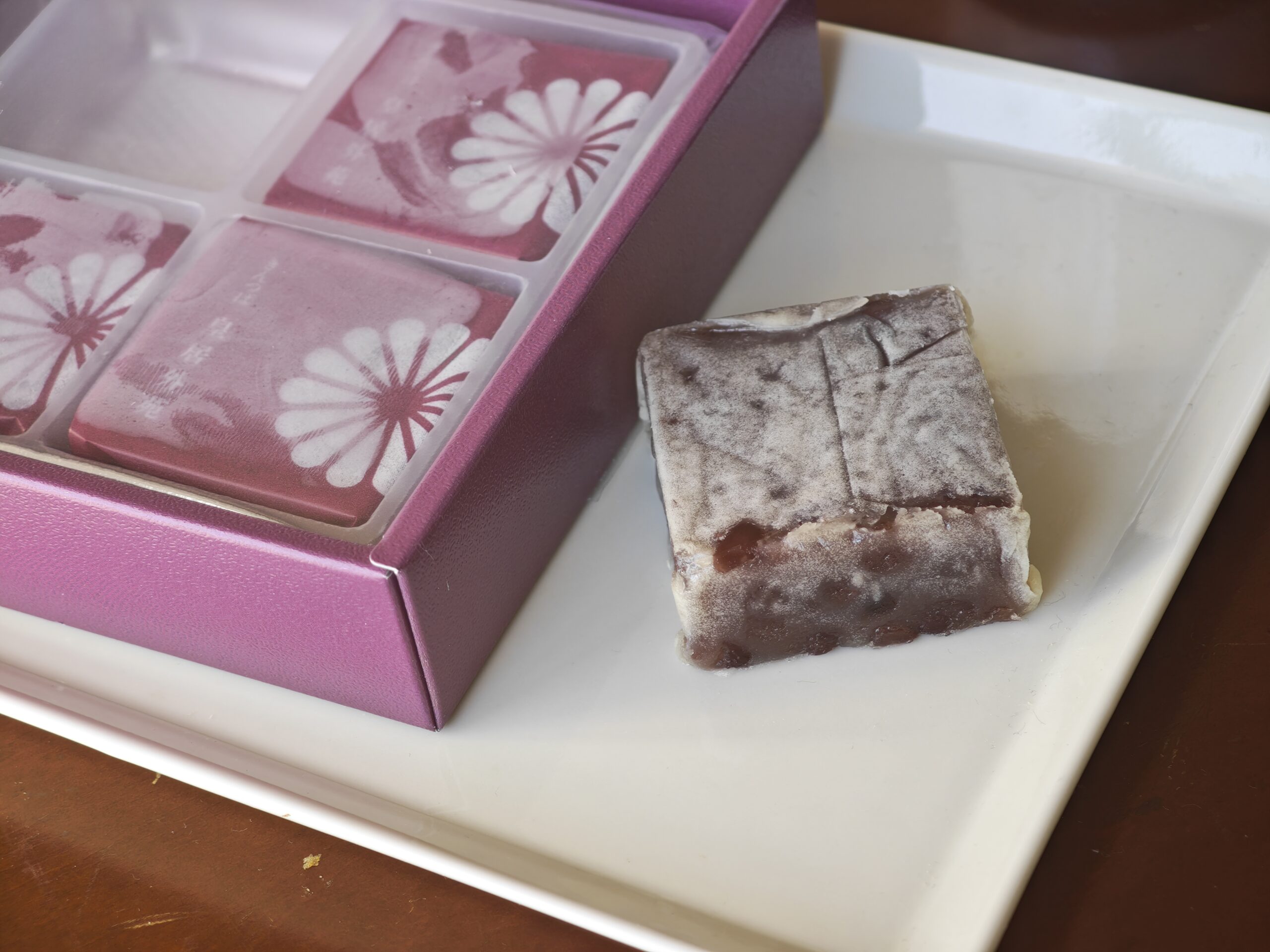
Why is a sweet named after a sword?
Split the name into two parts: kin (金) means gold, and tsuba (鍔) is the guard between a sword’s blade and its handle. A square of bean paste may not immediately bring a sword to mind. The clue is that older kintsuba were round.
Tokyo Seika confectionery school describes a round sweet with an indentation that suggested a sword guard. Its account traces a pale, rice-coated predecessor called gintsuba—“silver sword guard”—from Kyoto to Edo, today’s Tokyo. In this telling, the name became gold because gold sounded preferable to silver.
The details vary between accounts. Eitaro Sohonpo’s version associates the change with a wheat coating and its golden cooked color, while acknowledging multiple origin stories. It is better to remember the shared thread—a round sweet, a sword guard, and a journey from Kyoto to Edo—than to insist on one certain naming moment.
The confectionery school also recounts the nickname mimeyori for square kintsuba: roughly, “better than it looks.” That is an appealing detail to pass on when sharing this modest-looking sweet. It comes from a confectionery history account, rather than a slogan printed on this box.
A street sweet before it became a souvenir
A palace-themed gift box can make kintsuba seem especially formal. One of the most vivid stories about it belongs to a much more everyday setting.
Eitaro Sohonpo preserves an anecdote about its young founder selling kintsuba near Nihonbashi. After the Ansei earthquake, his friend Morimura Ichizaemon sold salvaged goods alongside him. Eitaro cooked sweets over charcoal on a cart; when work ended, the friends pulled the cart home and ate the kintsuba left unsold. The maker recounts this from a later biography of Morimura. It offers a memorable glimpse of the sweet as street food and daily livelihood, rather than court confectionery. Read the maker’s historical account.
Look for the shape when you encounter kintsuba today. A round one gives the sword-guard name a visible connection that a square souvenir cannot supply on its own.
Anko is a whole vocabulary, not one flavor
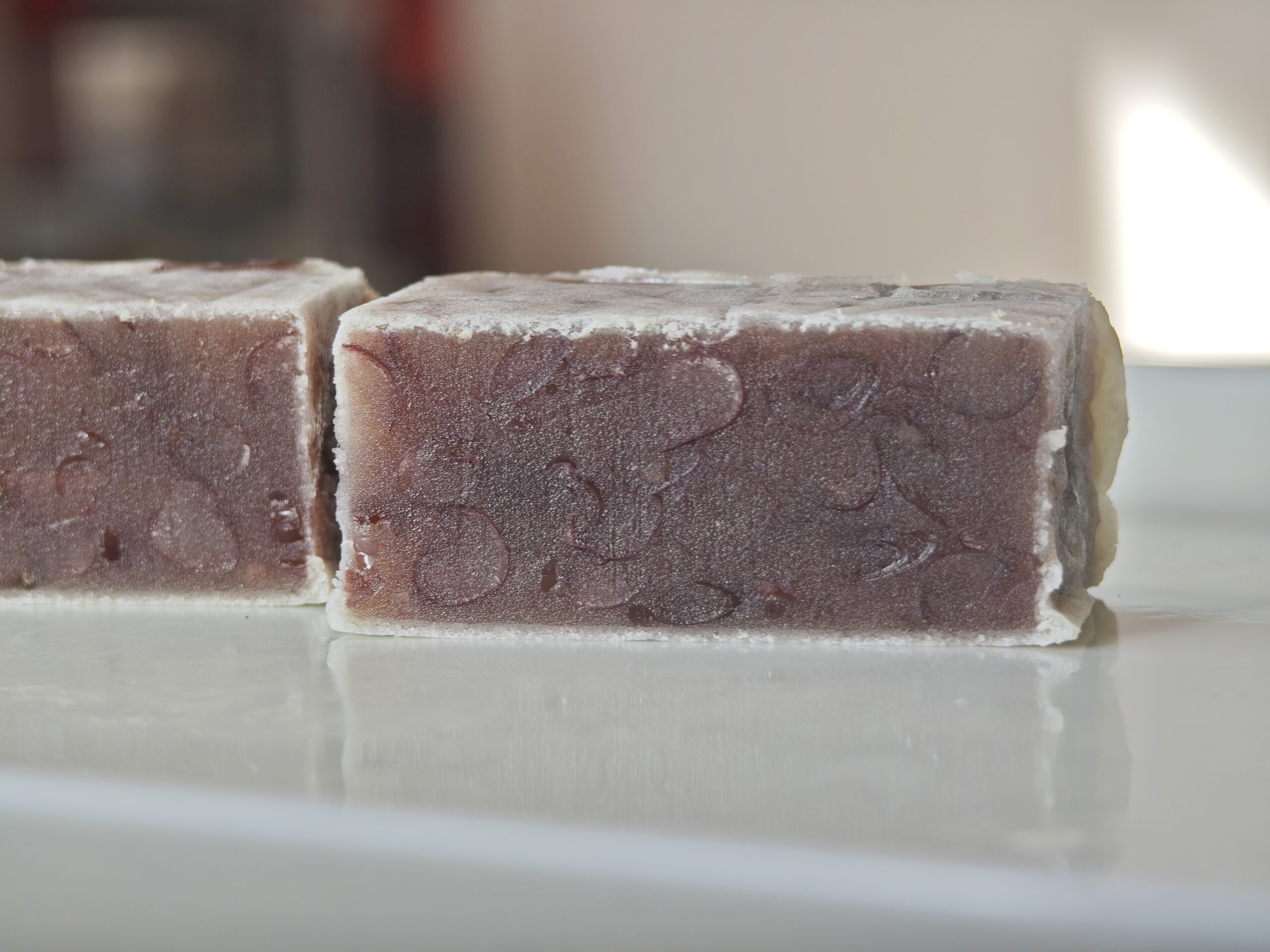
When a menu says “red bean paste,” it can hide the very difference that determines whether you enjoy the sweet. Two separate questions help: what is the filling made from, and what has happened to its texture?
First, learn the texture words
The Ministry of Agriculture’s guide to azuki distinguishes four preparations:
| Name | What it means | Why it matters when choosing |
|---|---|---|
| Tsubuan (粒あん) | Sweetened beans with their shape and skins retained. | Choose it when the beans themselves are part of the pleasure. |
| Koshian (こしあん) | Smooth, strained bean paste. | A useful starting point if bean skins are what you dislike. |
| Tsubushian (つぶしあん) | Crushed bean paste that retains the skins. | Crushed does not mean skin-free. |
| Ogura-an (小倉あん) | Smooth paste mixed with whole, syrup-cooked Dainagon azuki. | Smooth paste and distinct beans can appear together. |
These are useful distinctions, rather than a promise that every shop’s filling will feel identical. For a first comparison, ask for one smooth filling and one with visible beans. You are comparing preparation as well as sweetness.
Then, look beyond red beans
Anko is a broader idea than red bean paste. The same ministry feature includes fillings made from edamame, chestnuts, and sweet potatoes. Its traditional confectionery guide also explains shiroan, commonly made with white kidney beans, and uguisuan, made with green peas.
This gives you two different ways to explore a sweet shop. Keep azuki and change the texture, or keep the sweet’s general form and change the filling. “I don’t like anko” may turn out to mean “I don’t like bean skins,” or simply “I haven’t found my favorite filling yet.”
How did beans become a dessert?
Sweet bean paste was not the inevitable starting point. The ministry’s historical overview traces an to Chinese savory fillings, links Japanese bean fillings to Buddhist dietary influence, and describes early versions as mainly salty. Tea culture helped their development; wider access to sugar in the Edo period brought sweetened anko to more ordinary people. MAFF’s history of anko.
That makes a helpful story to share with someone who finds sweet beans surprising: the ingredient did not change, but the way people prepared and served it did. With kintsuba, the thin coating leaves unusually little between you and that filling. The bean paste is the food you are there to explore.
What does Kokyo Gaien have to do with this box?
Kokyo Gaien (皇居外苑) means the Imperial Palace Outer Gardens. To understand the name on this souvenir, it helps to separate three things: the place, the association, and the manufacturer.
The place: from daimyo residences to a public garden
According to the Ministry of the Environment’s history of the palace-front plaza, this area held daimyo residences in the Edo period. Government offices and barracks followed in the Meiji era, before clearance and tree planting helped create the open landscape. The gardens opened to the public as a national garden in 1949.
For a visitor walking through the spacious grounds, that earlier, built-up landscape is an interesting thing to imagine. The park has its own history of changing uses. The date it opened to the public is not the birth date of the sweet.
The connection: a supervised souvenir that supports the gardens
There is a documented relationship behind the product name. JAL PLAZA identifies this kintsuba as supervised by the National Gardens Association, and the association includes it in its official souvenir range. The photographed box states that supervision fees are used by its Kokyo Gaien branch for environmental conservation and maintenance of the gardens.
This fits the association’s wider history: its institutional account describes supporting the national gardens through activities that include shops and visitor services, with income contributing to their upkeep. That is a concrete reason a souvenir sweet and a public landscape can share a name.
The sources establish a park-related supervised product. They do not establish an Imperial Family recipe, an origin inside the palace, or a claim that this brand invented kintsuba. The story worth telling is the link between an ordinary souvenir purchase and care for a historic public space.
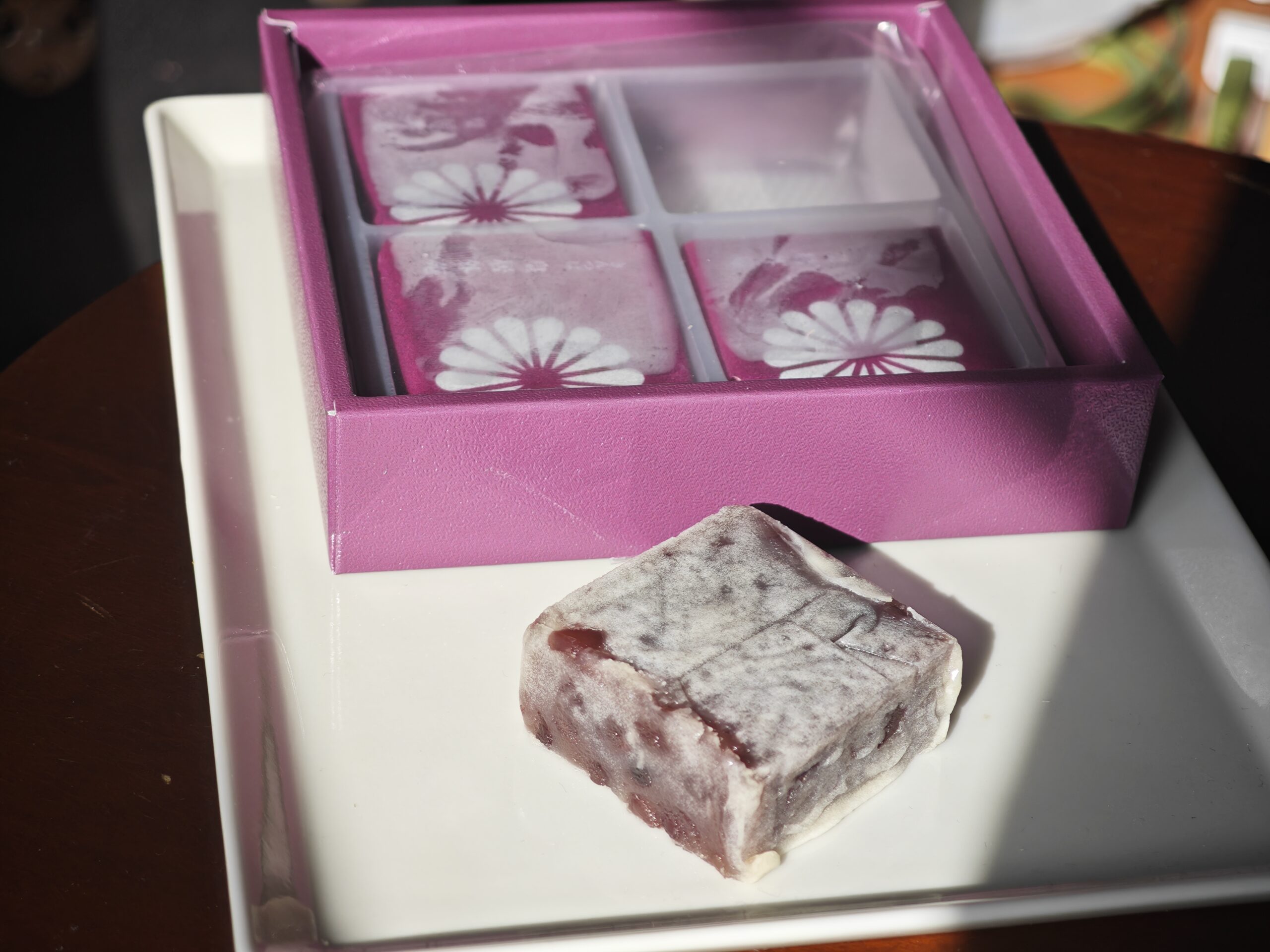
The maker: a Shizuoka confectioner
The box names Doi Seika (土井製菓株式会社) in Numazu, Shizuoka, as the manufacturer, and Tokyo-based Inet as the seller. Doi Seika’s company history starts with yokan production in 1965 and records a dedicated kintsuba production line in 1997. The latter is a factory milestone, not a verified launch date for this particular product.
So there are three geographical threads to remember: kintsuba’s wider history, this box’s Tokyo souvenir connection, and its Shizuoka manufacturing location. Keeping them separate lets you enjoy the local story without turning the whole sweet into a Tokyo specialty.
Turn the history into a small tasting route
These are comparison ideas drawn from the makers’ information. Only the Kokyo Gaien box has been tasted for this article.
| Example | A useful comparison |
|---|---|
| Kokyo Gaien Kintsuba | The square, packaged azuki version shown here: a starting point for noticing the coating, firm body, and bean skins. |
| Eitaro Sohonpo, Nihonbashi | A round kintsuba with a thin wheat coating, cooked with sesame oil. See how the sword-guard name fits its shape. Maker’s account. |
| Nakataya, Kanazawa | A square kintsuba made with Dainagon azuki, sugar, and agar, thinly coated and individually cooked. Keep the shape similar and compare how clearly the beans stand out. Official product. |
| Mangando’s Imokin, Asakusa | Sweet potato offers a different filling to explore within the kintsuba family. Official maker. |
| Kokyo Gaien Zunda Kintsuba | The same souvenir range also lists a zunda variation: a way to change the filling while staying with one brand. Official range. |
Start with just two. Round versus square makes the name’s history tangible; azuki versus sweet potato makes the filling the subject. With two azuki versions, notice the thickness of the coating, how the filling holds together, and the feel of the skins. Sharing small portions makes these differences easier to explore without committing to several whole sweets.
A short tasting note from the airport-bought box
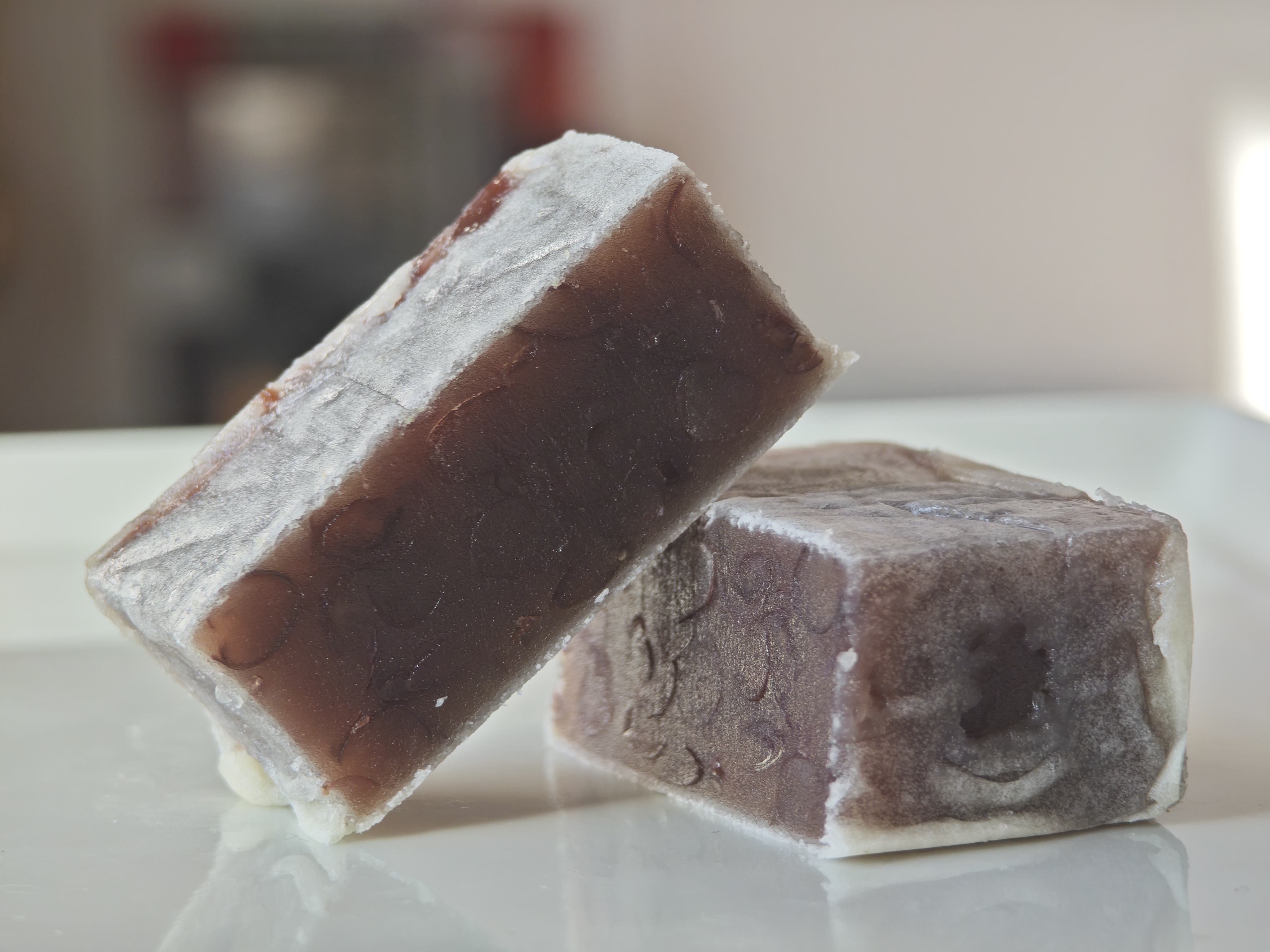
My impression was jelly-like bean richness: a moist, firm filling with distinct beans and skins. The coating is thin enough that the bean texture stays at the center of the bite.
I used to dislike chunky anko, particularly the skins. As I gradually came to enjoy that texture, kintsuba became more interesting to me. If skins are still difficult for you, try smoother koshian sweets first and return when you feel curious about whole beans.
One piece felt quite filling. If you are tasting several souvenirs, especially on a flight, sharing a piece leaves more room to compare.
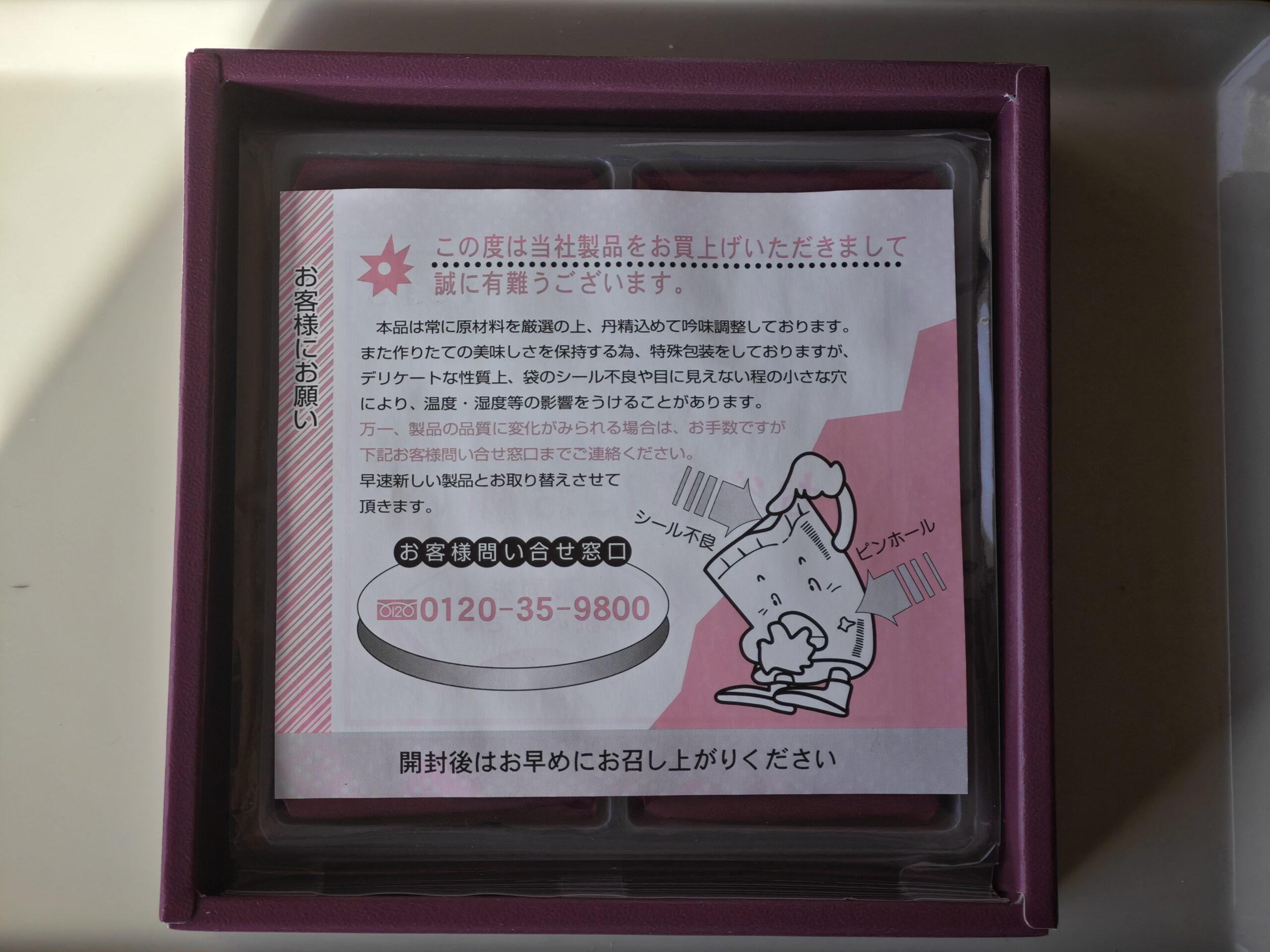
Finding the box and reading its label
JAL PLAZA lists Haneda Airport as a location carrying the four-piece box, with a reference price of ¥1,080 including tax when checked. The Chiyoda City Tourism Association also lists it at the Nanko shop in Kokyo Gaien. Check stock before a special trip; this does not mean every airport counter carries it.
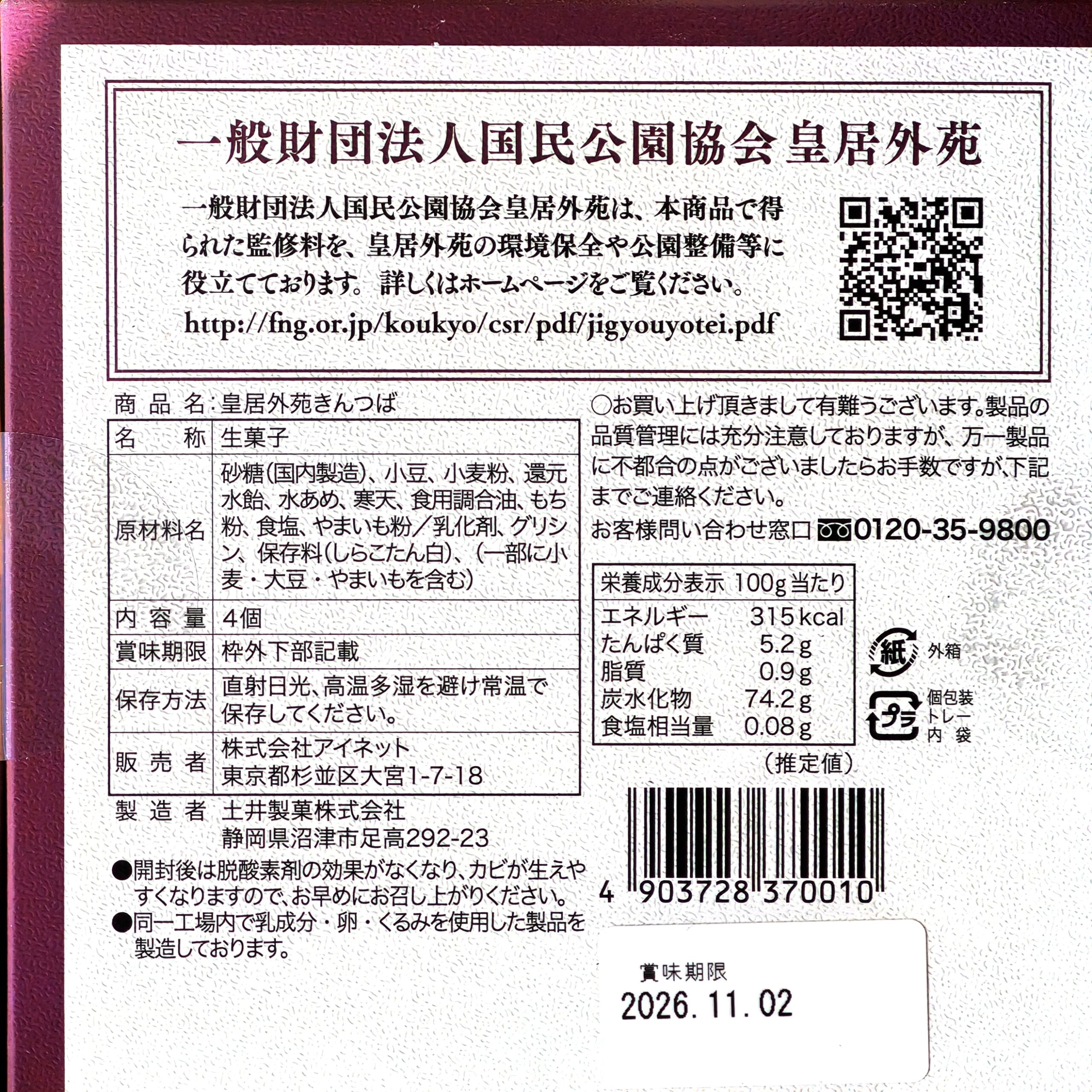
Ingredients and dietary details: the photographed label lists sugar, azuki, wheat flour, syrups, agar, oil, glutinous rice flour, salt, yam powder, and additives. Declared allergens include wheat, soy, and yam; products containing milk, egg, and walnut are made in the same factory. The preservative shirako protein is fish-derived, so this particular box should not be described as vegan or vegetarian. Check the package you buy, as recipes differ.
Nutrition per 100 g, not per piece: 315 kcal; protein 5.2 g; fat 0.9 g; carbohydrate 74.2 g; salt equivalent 0.08 g. No per-piece weight is given on the photographed label.
Storage: keep at room temperature away from direct sunlight, heat, and humidity. Follow the printed best-before date and eat promptly after opening.
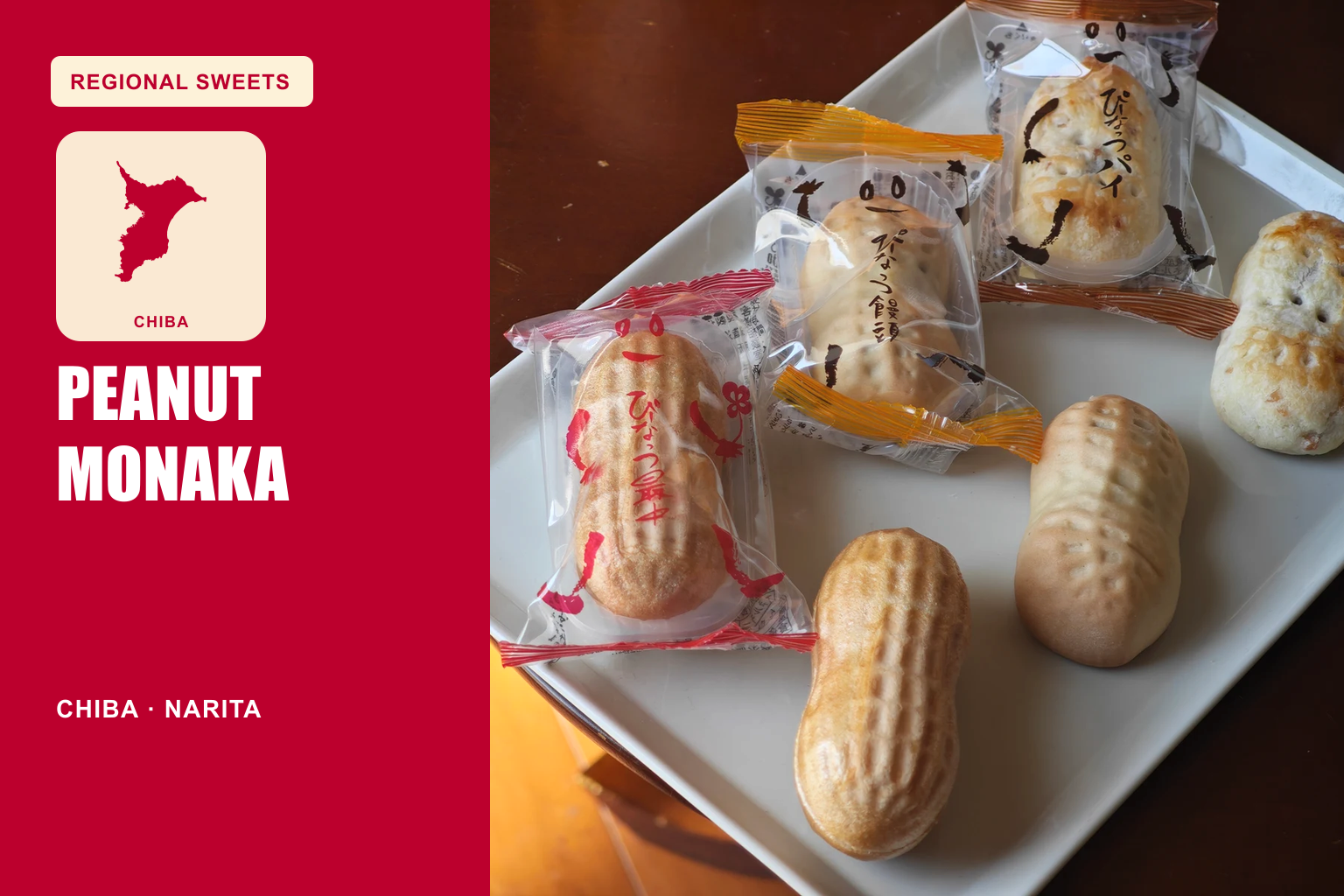
For another example of how a filling and its wrapper work together, explore our Peanut Monaka guide. Use the Local Snack Map when you want to look for regional specialties.
Research checked October 6, 2026. Historical accounts are attributed above; origin stories are presented as accounts, not a single settled chronology. Photographs and the short tasting note are the author’s own.