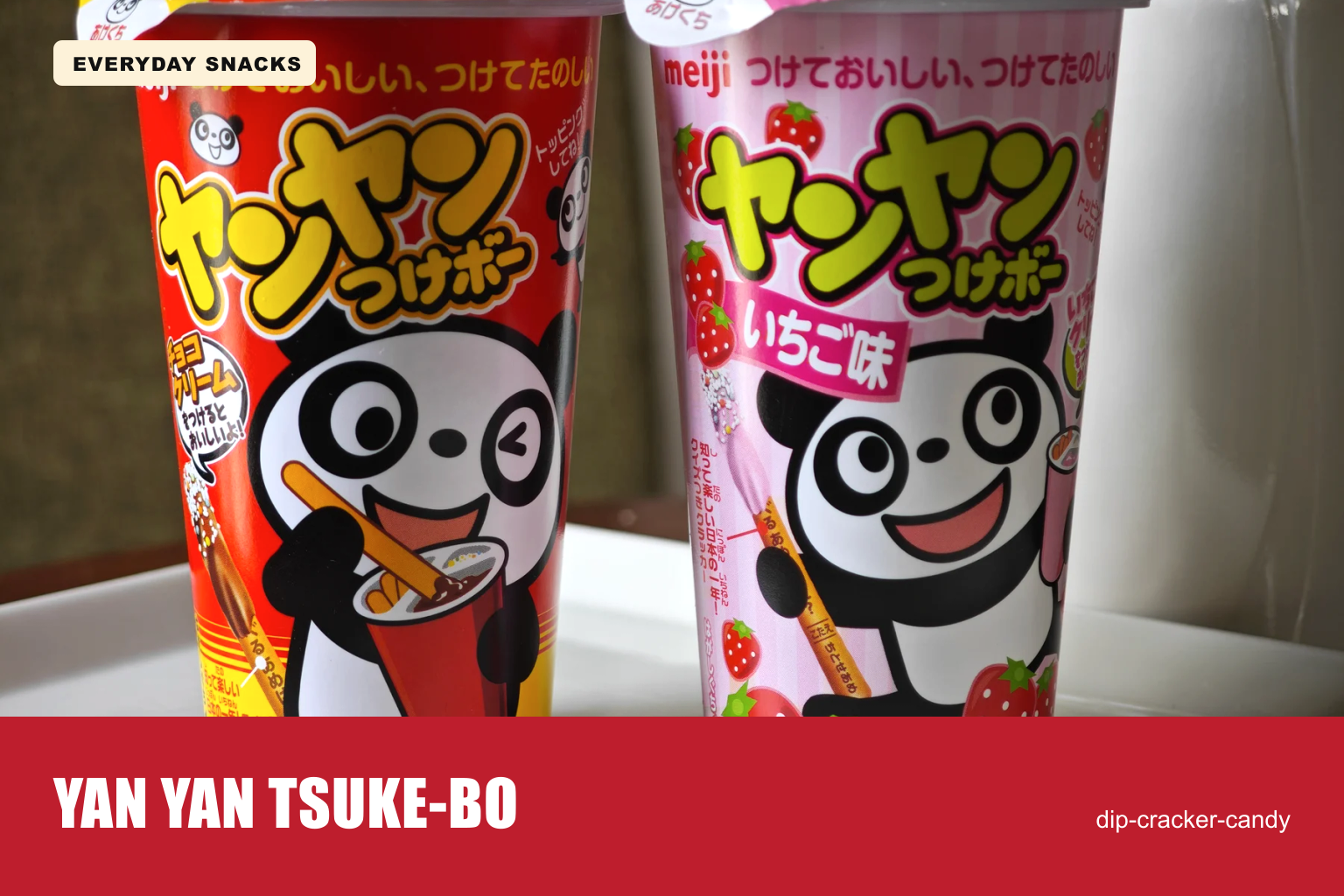
Some Japanese snacks are complete when you open them. Yan Yan Tsuke-bo (ヤンヤンつけボー) waits for you to finish the design.
One cup holds long crackers, a thick dip, and a pocket of tiny sugar toppings. Chocolate is the standard; strawberry is the gentler pink alternative. Dip lightly, coat extravagantly, skip the topping, or eat one cracker plain to reset your palate. There is no single correct ratio.
That freedom is also why this snack has a small learning curve. A careless crossing from cream to topping can make the tray sticky, strand half the topping in a clump, and leave the final cracker tragically naked. This guide covers the culture and the technique—without turning a 48 g snack into military training.
Quick choice: Start with chocolate for the classic sweet harmony and strawberry for a creamy, low-acid fruit flavor. If you have a plate or can use the foil lid as a tray, sprinkle from above instead of drilling the cream-covered stick into the topping pocket.
Yan Yan Tsuke-bo in 30 seconds
- Maker: Meiji
- Launch: 1979
- What is it? Crackers, dip cream, and crunchy topping in one divided cup
- Current Japanese flavors: Chocolate and strawberry
- Content: 48 g per cup
- Cultural extra: Questions on crackers and package designs about Japan’s year
- Best technique: Dip, rim-roll, then sprinkle over the lid
- Unexpected label detail: The photographed cups are made in Singapore and imported by Meiji
The panda is famous—and officially unnamed
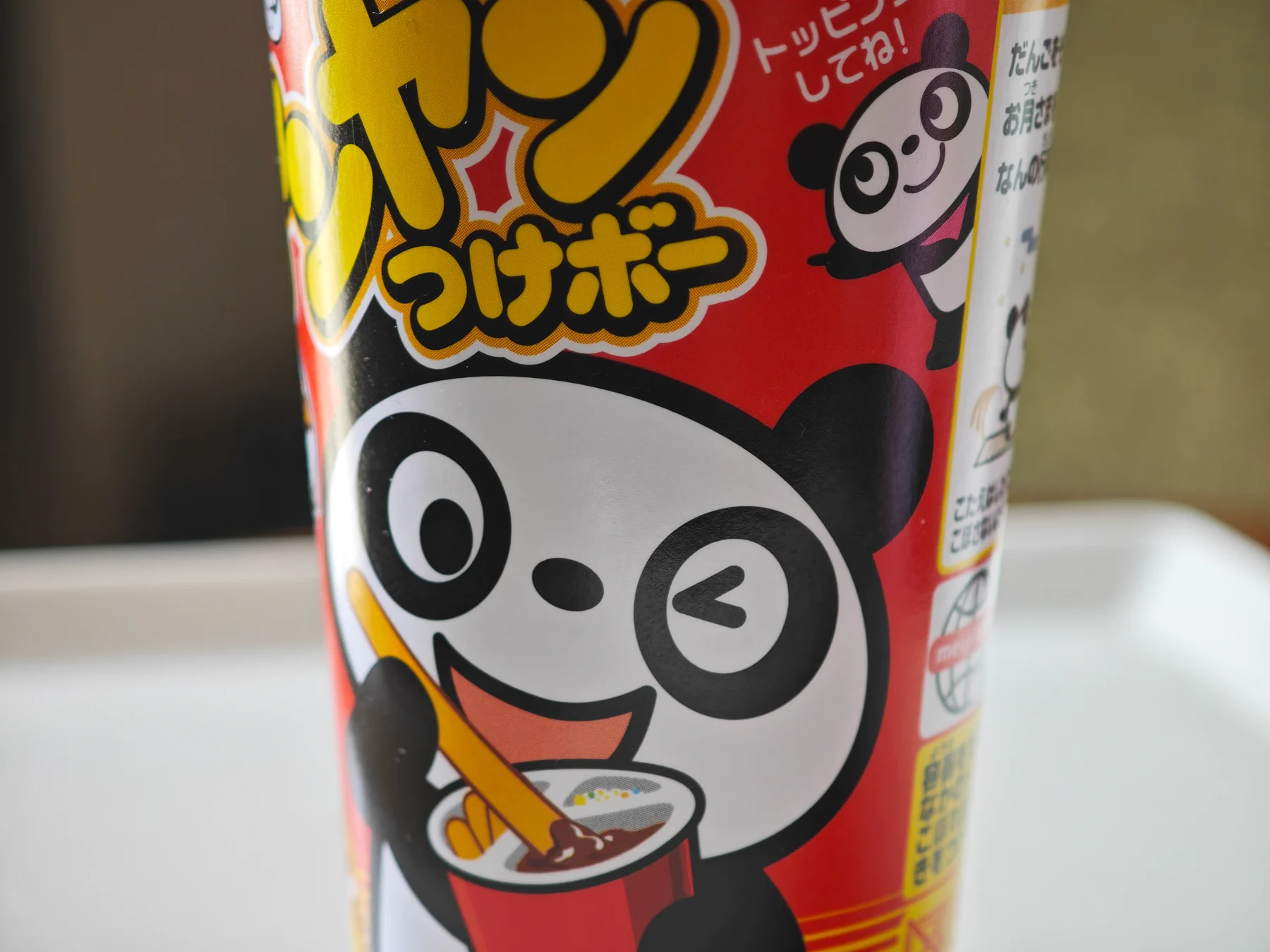
The round-eyed panda is almost as recognizable as the yellow-and-black logo. It winks, holds a cracker, and demonstrates the product before you have read a word of Japanese.
One useful correction: the panda is not officially introduced with a personal name on Meiji’s product materials. Calling it “Yan Yan” feels natural, but that is the brand, not a confirmed character name. The anonymity has its own charm. It is less a story character than a permanently enthusiastic dipping coach.
The package itself does more than advertise. In Japan, character design often carries instructions, jokes, and tiny reasons to rotate a cup in your hand. Yan Yan Tsuke-bo turns that surface into part of the snack.
A 1979 snack that still asks you to participate
Meiji launched Yan Yan Tsuke-bo in 1979. Its core idea has lasted because the eater supplies the final motion: the company makes the components, but you decide the bite.
The cracker shape later created its own commemorative date. Four straight sticks resemble four numeral ones, so November 11 was recognized as Yan Yan Tsuke-bo Day in 2021. It is a very Japanese piece of snack branding: shape becomes wordplay, wordplay becomes a calendar day, and the calendar day becomes another reason to eat the product.
Strawberry cream returned nationwide on May 17, 2022. Meiji released 12 package designs, one for each month, carrying questions about Japan’s seasonal year. Current official Japanese pages show chocolate and strawberry as the two regular choices. Other Yan Yan products seen overseas can have different flavors and layouts, so check whether you are buying the Japanese three-part Tsuke-bo cup or another market’s Yan Yan.
The cup is the production idea you can see
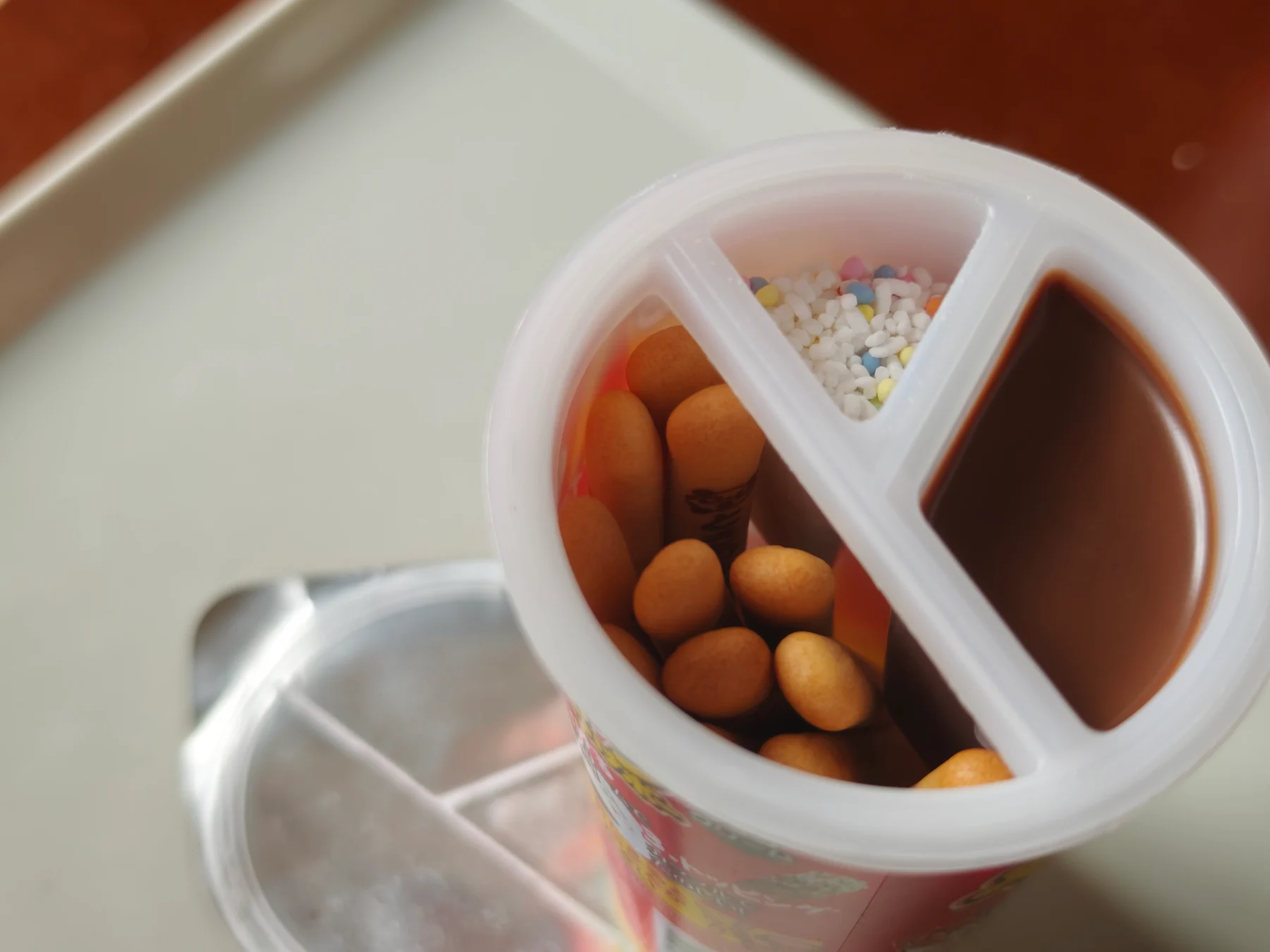
The cleverest “making secret” is not hidden behind a factory door. It is molded into the top of the cup.
The largest well protects the long crackers. A deep side well holds cream. A smaller triangle isolates the dry topping. Nothing has to stay crisp after touching sauce because the three parts do not meet until you choose to combine them.
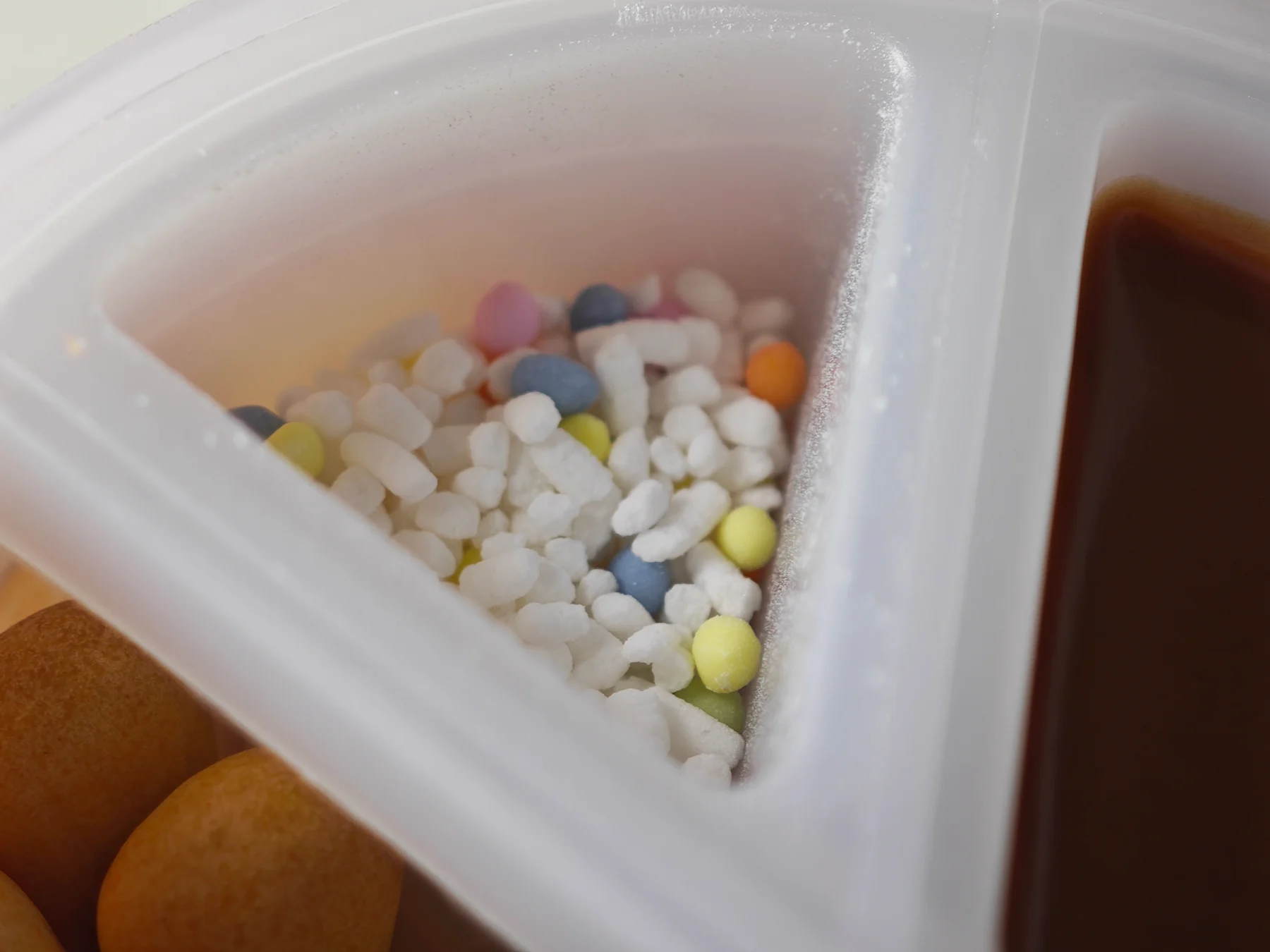
The topping looks mostly white from a distance, but colored round pieces hide among the irregular sugar bits. Their popping crunch matters. Without them, this would be a cracker and cream. With them, every bite has small texture events.
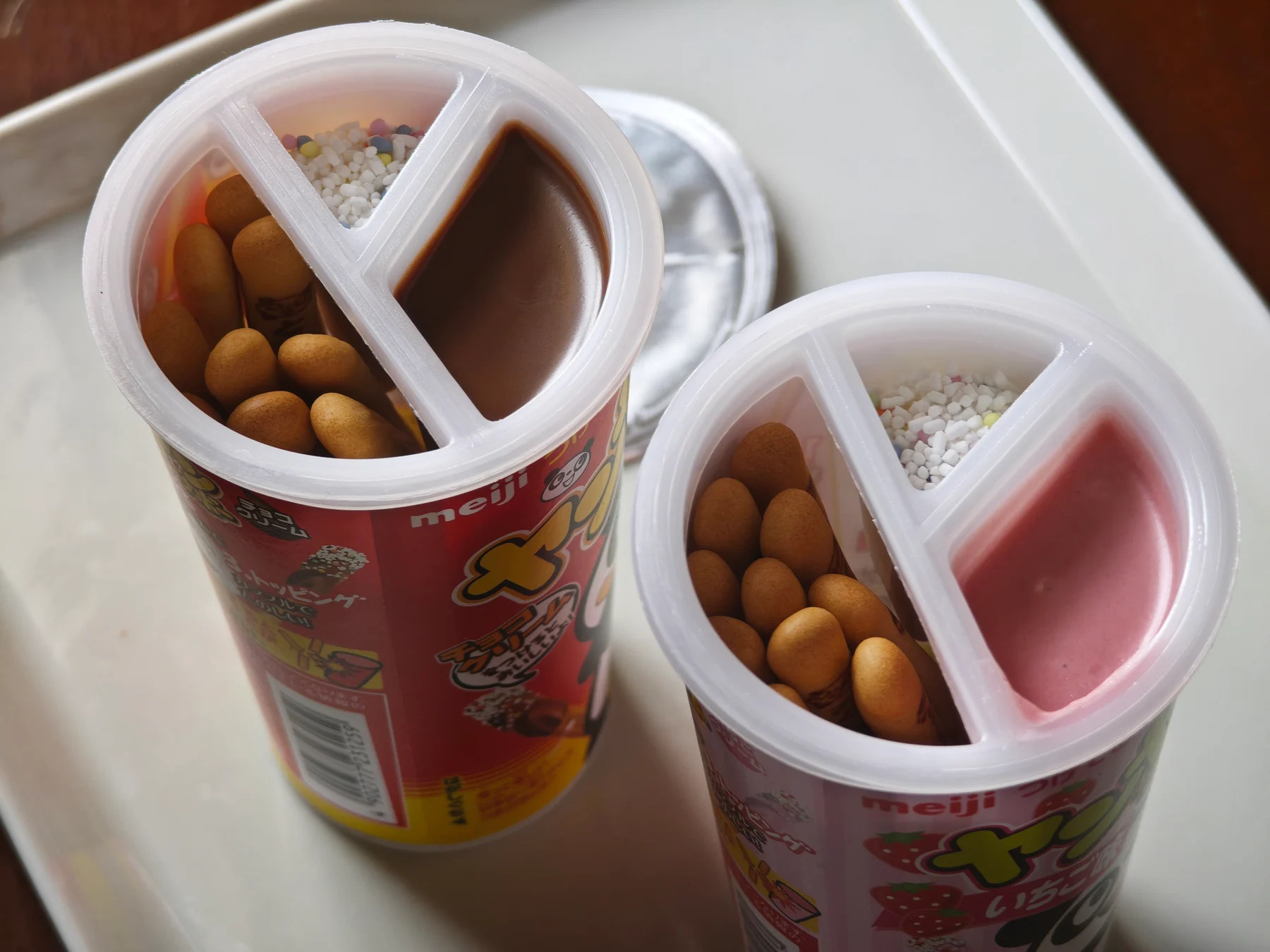
Open both cups and the architecture is identical. Only the dip changes from cocoa brown to strawberry pink. That consistency makes a two-cup tasting efficient: compare cream against cream while the cracker, topping, and eating ritual stay almost fixed.
The crackers carry tiny Japanese quizzes
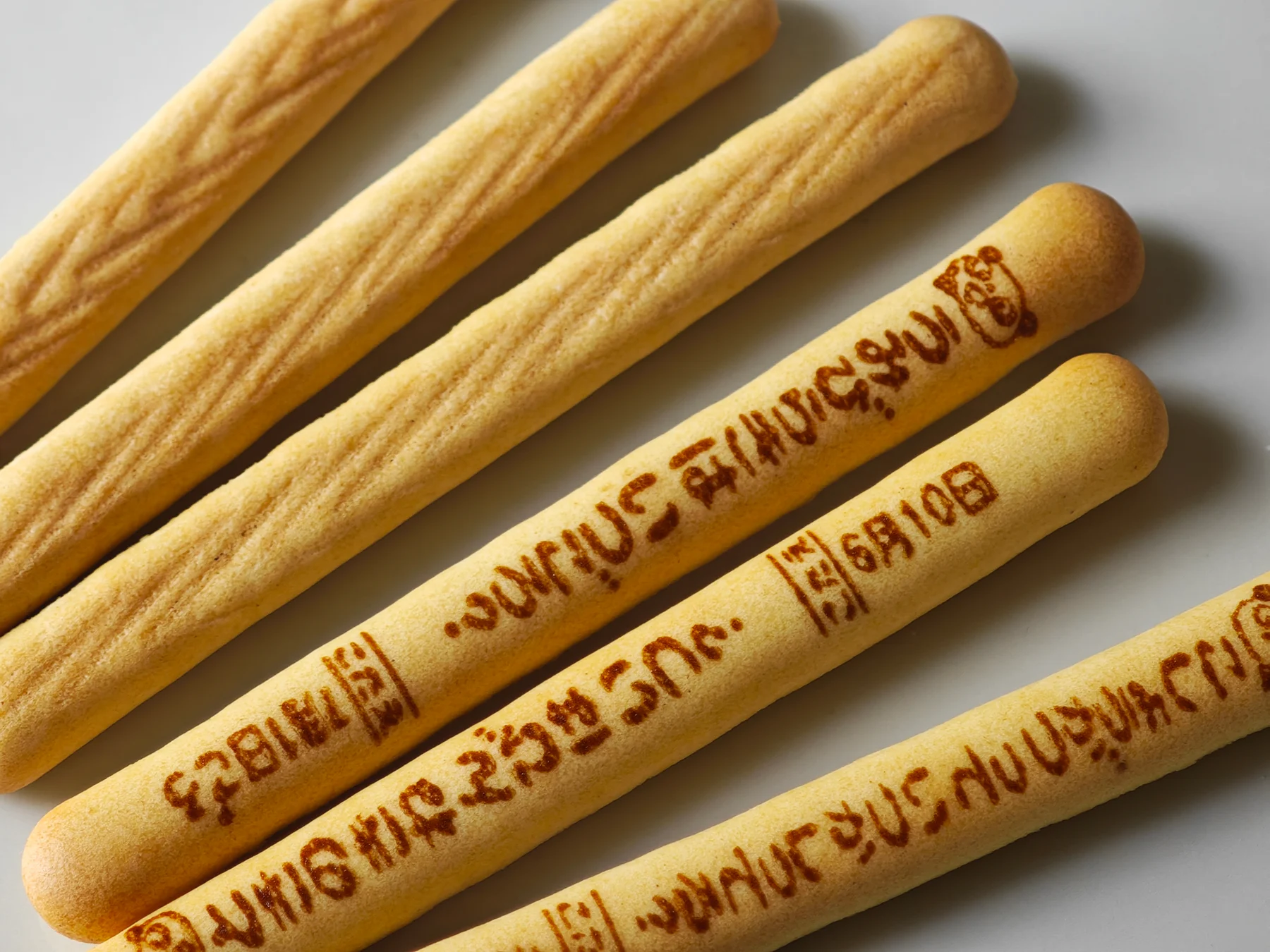
Some sticks are plain and grooved; others carry short questions in brown print. Packaging also features “Shitte tanoshii Nihon no ichinen!”—roughly, “Know it and enjoy Japan’s year!” The 12 designs connect months with Japanese annual events.
For a visitor, this is not a test of whether you know enough. It is a compact window into how Japan organizes the year: New Year customs, spring events, summer traditions, and other seasonal markers. Photograph a question, try reading it, then check the package or look it up. The snack becomes a tiny cultural prompt.
There is also a good comic rhythm in eating the evidence. Read first. Dip second.
Chocolate: the classic sweet harmony
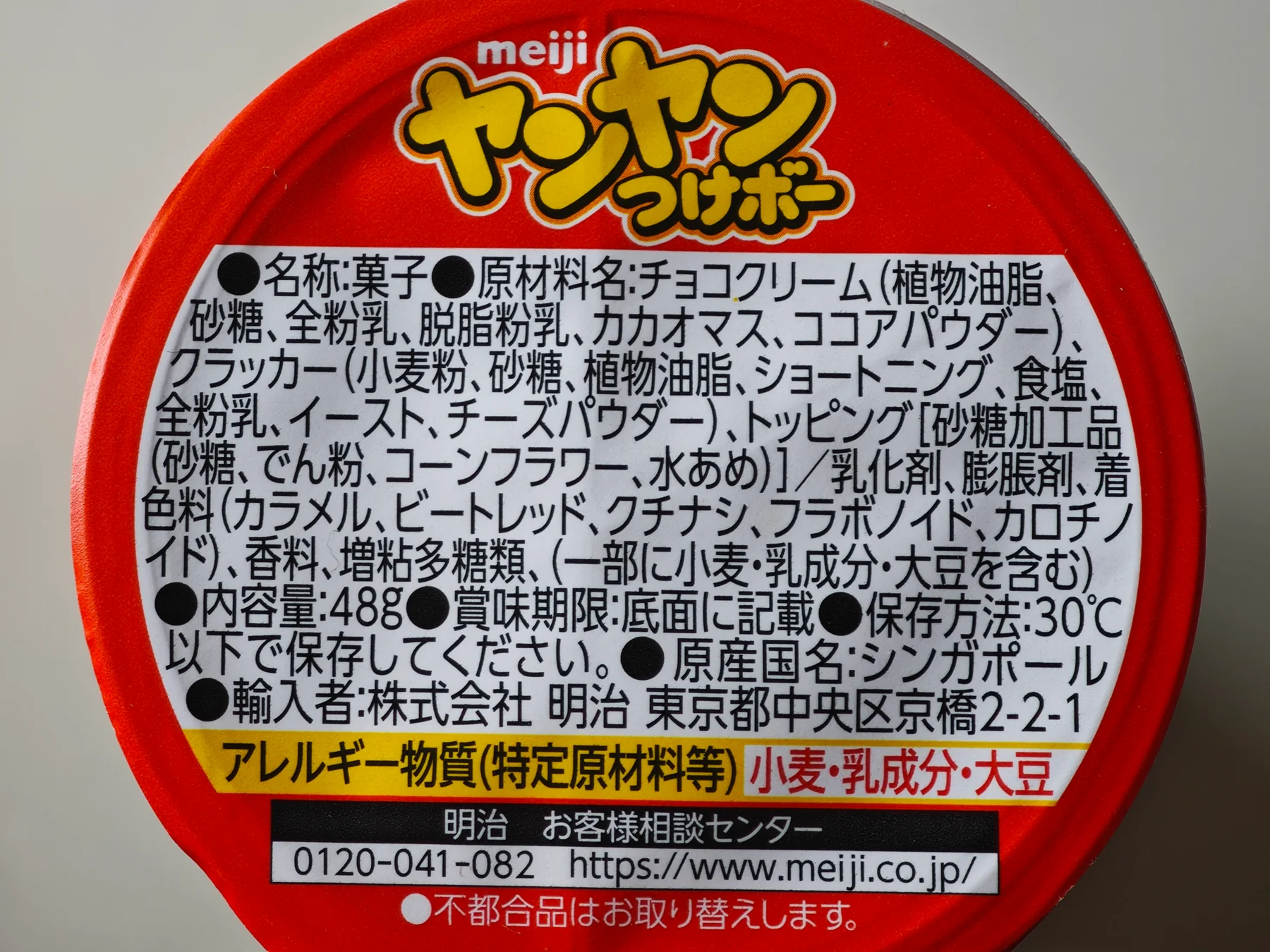
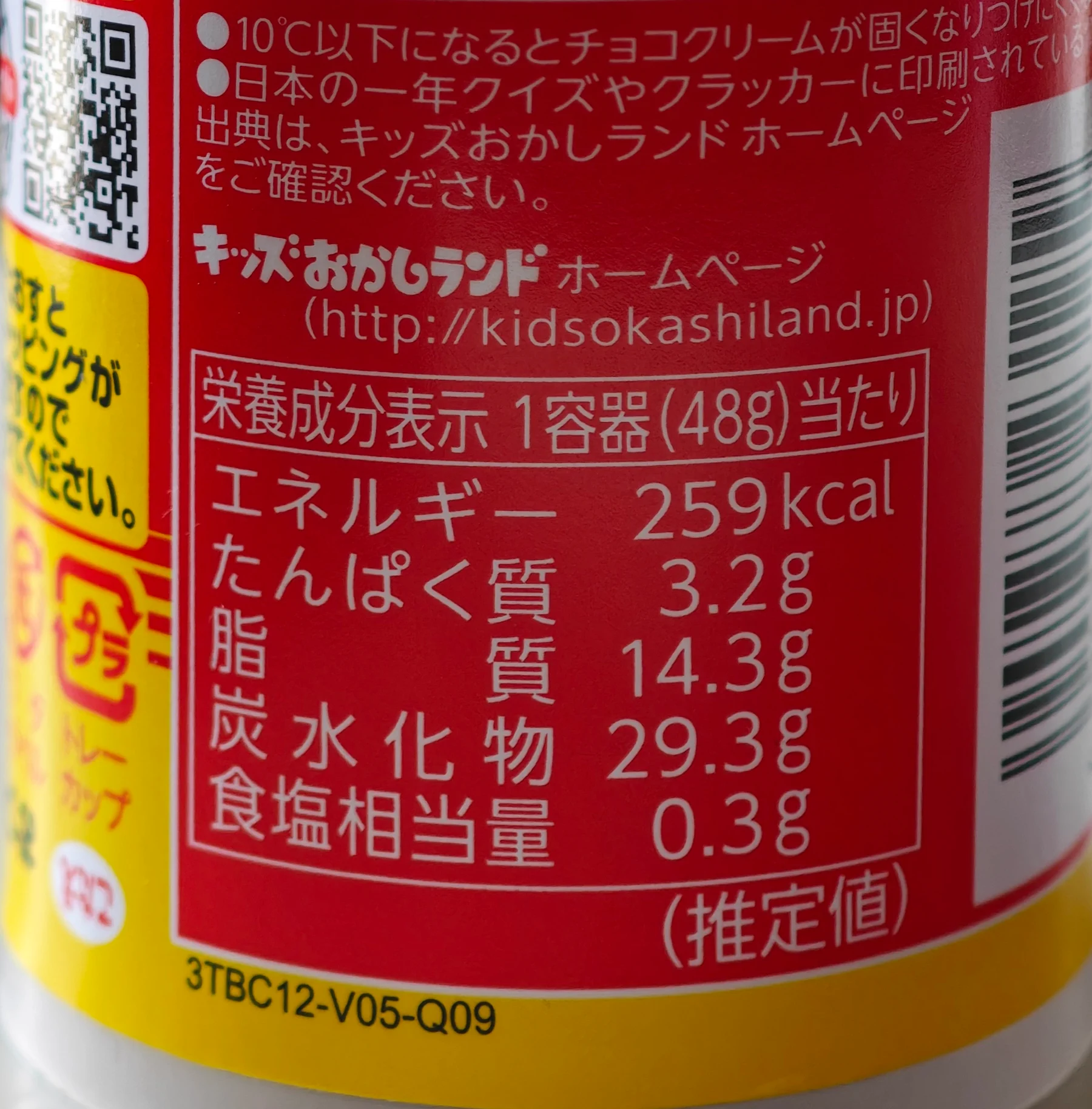
The current Japanese chocolate cup is 48 g and 259 kcal. Meiji lists chocolate cream made with cacao mass and cocoa powder, crackers containing wheat and dairy ingredients, and a sugar-based topping. The declared allergens are wheat, milk, and soy.
The taste works because the cracker does not compete. It is gently sweet, crisp, and substantial enough to carry thick cream. Chocolate joins it quickly in the mouth, creating a familiar biscuit-and-cocoa harmony.
The topping is the surprise. Its little pieces pop rather than merely crunch, breaking up the smooth cream. Change the amount of chocolate and the same cup moves from dry cracker to full dessert. That controllable variation is why it stays interesting beyond the first stick.
Strawberry: creamy, mellow, and not sharply tart
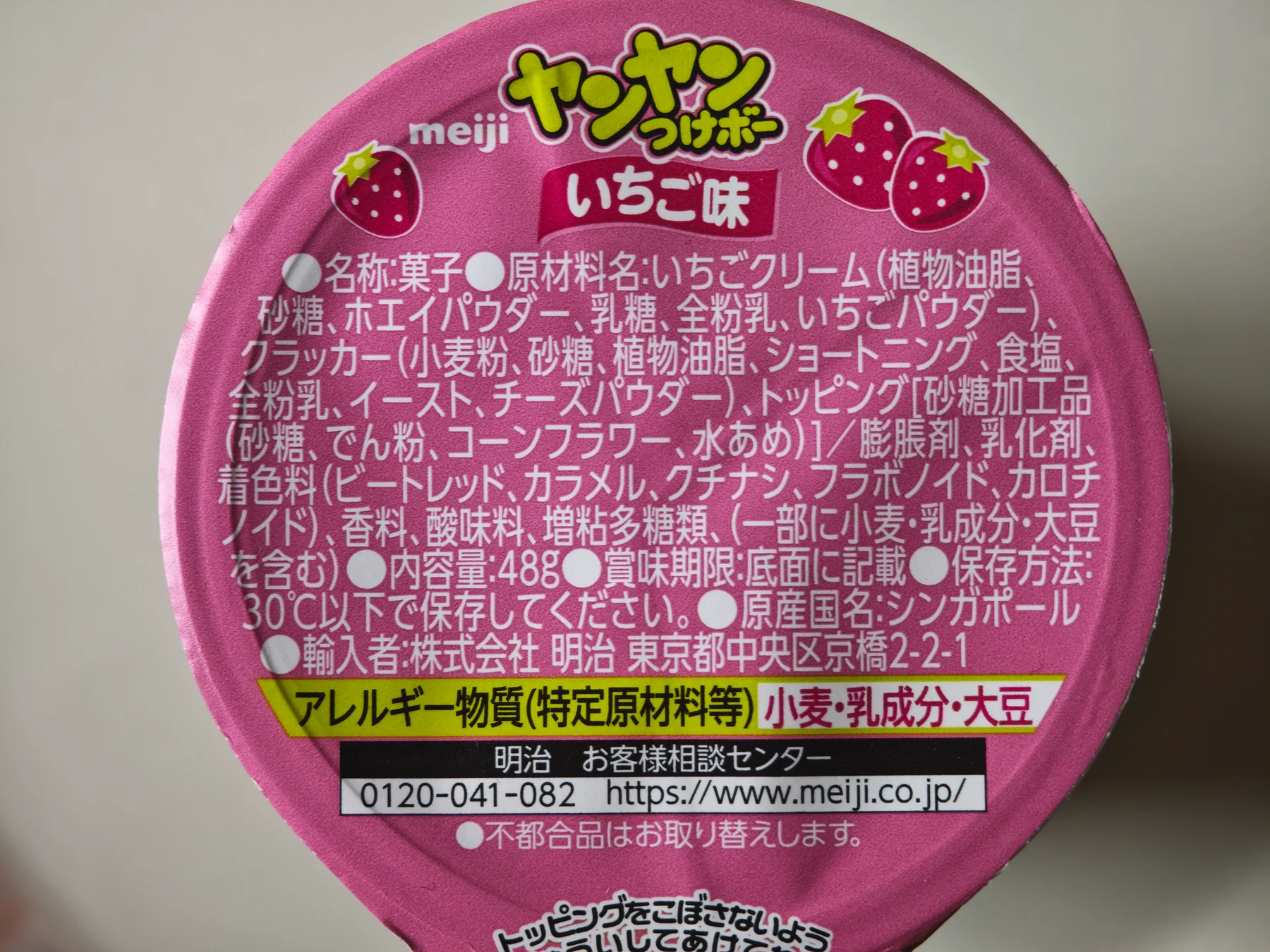
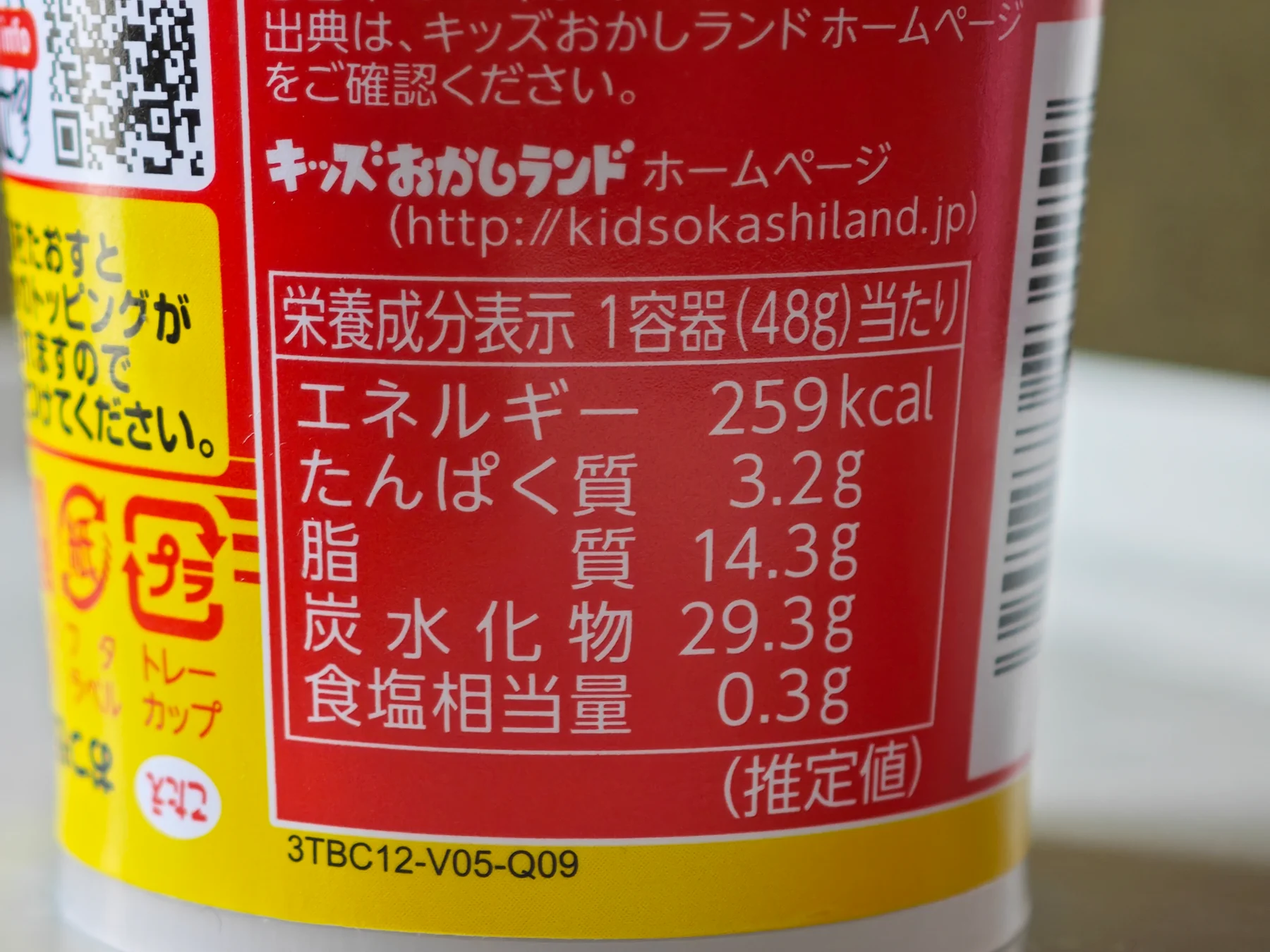
Meiji’s current page lists the strawberry cup at 48 g and 260 kcal, with strawberry powder in a milk-based cream and the same declared allergens: wheat, milk, and soy.
The photographed side panel reads 259 kcal, one calorie lower than the current official specification. This is why the package in your hand should win over an old photo: formulas and printed panels can change.
Strawberry is more cream than jam. The acidity stays low, and the flavor feels soft and rounded beside the cracker. It still likes the colorful topping, but the result is different from chocolate: lighter in impression, milkier in shape, and distinctly pink without becoming sharply fruity.
Yan Yan Tsuke-bo pro tips
The “pro” qualification requires no certificate—only enough failed dips to respect the geometry. Three short lessons prevent most mess: control the cream, keep wet chocolate out of the topping well, and save one structurally sound cracker for the finish.
1. Dip first; inspect the coverage
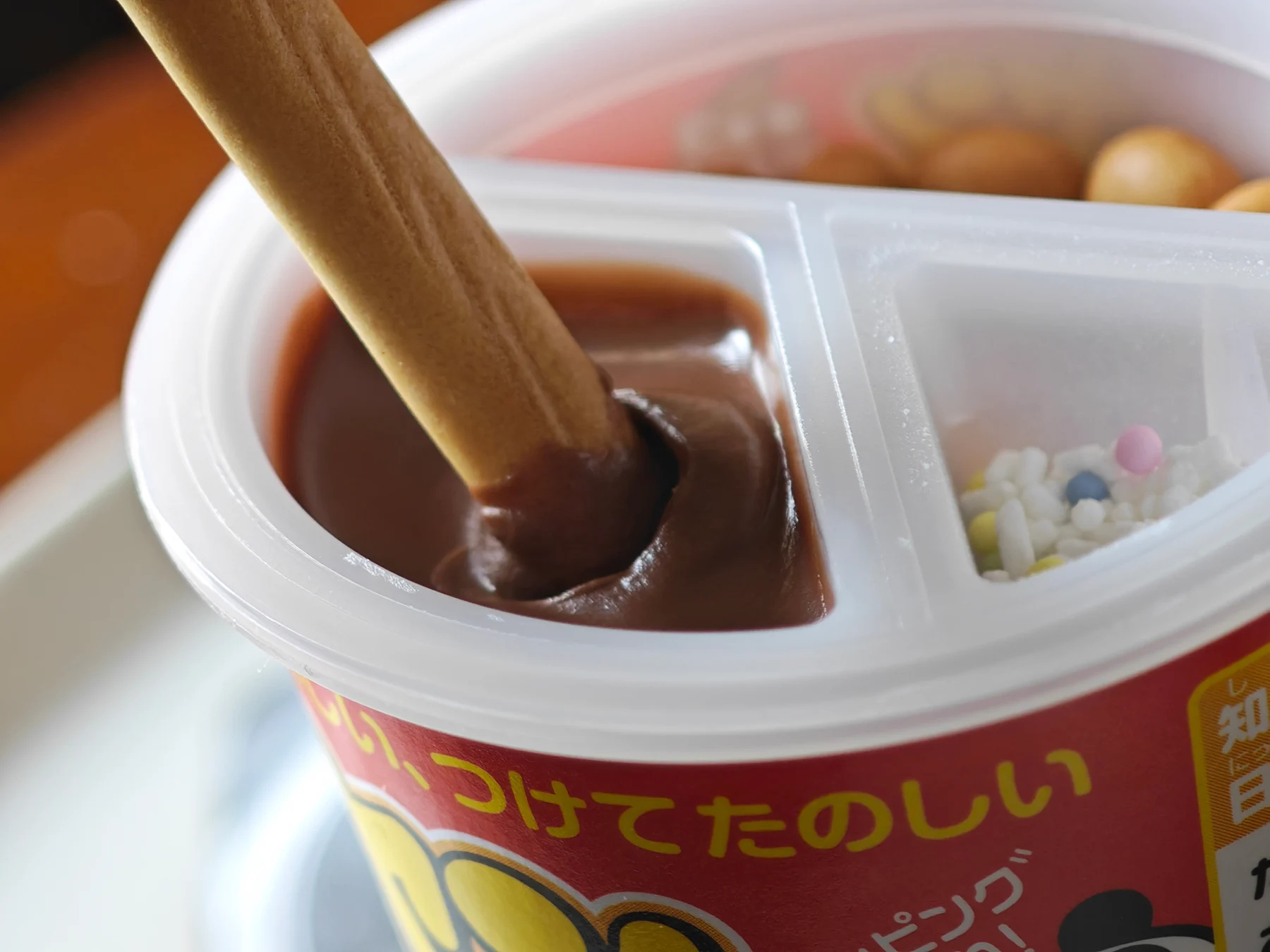
Push the stick straight into the cream and turn it gently. The cream is thick enough to hold ridges made by the cracker.
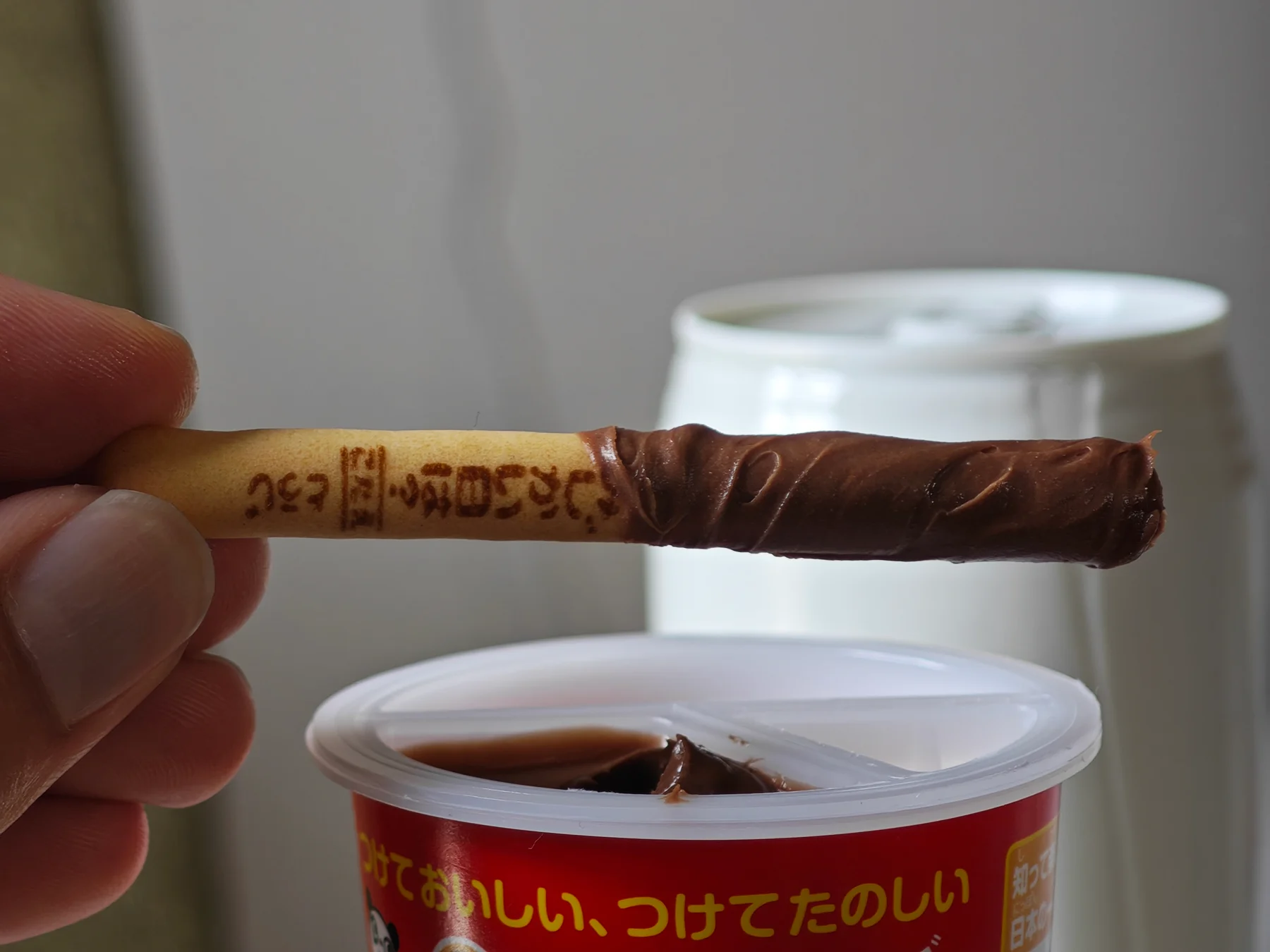
A basic vertical dip gives a clean coat up to the cream’s natural level. This is the safest everyday bite and the easiest way to control how much remains for later sticks.
2. Do not bury the wet stick in the topping
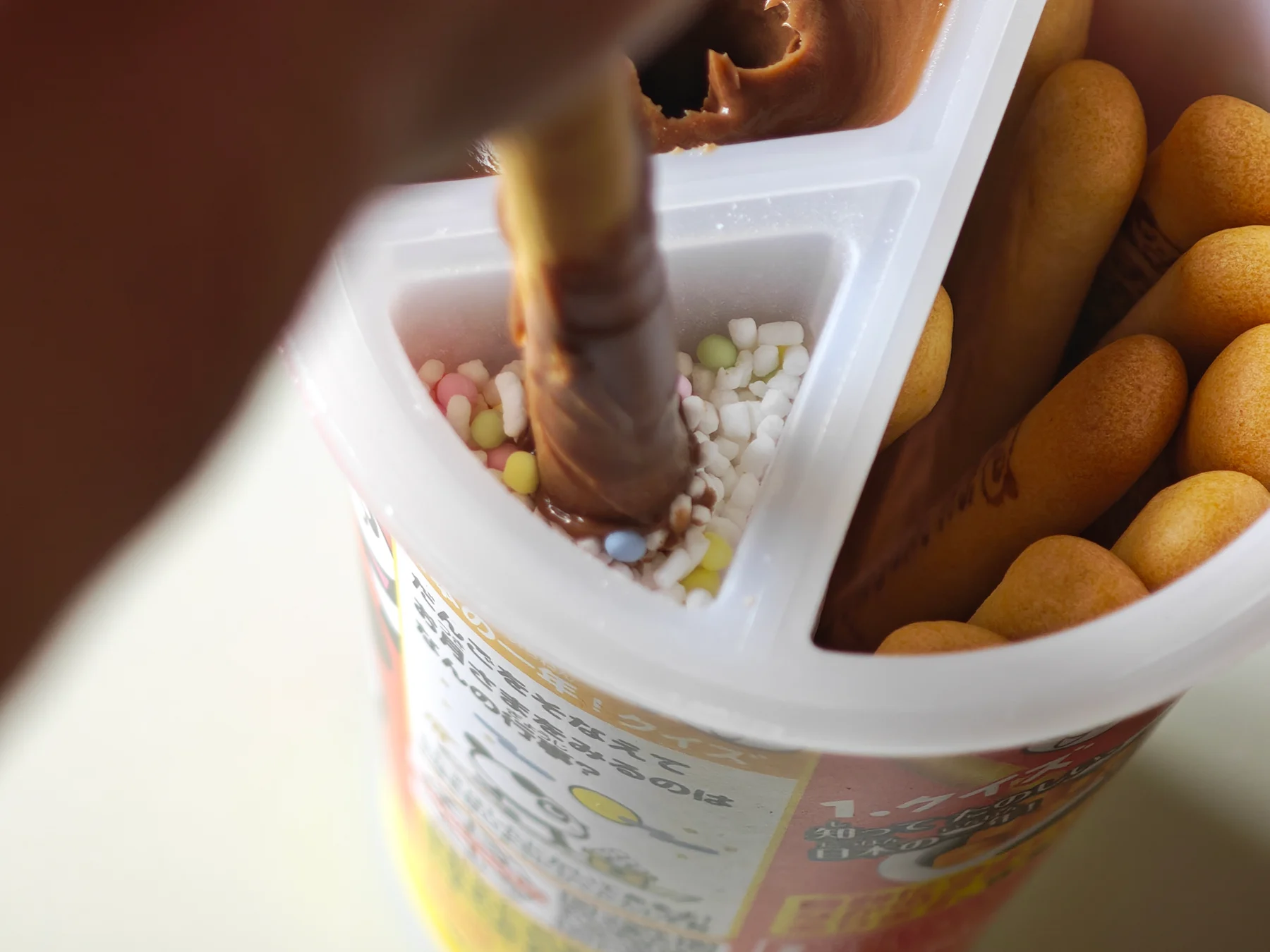
Direct dipping works, but often only the tip reaches loose topping. Pushing deeper transfers chocolate into the dry well, where pieces begin to clump.
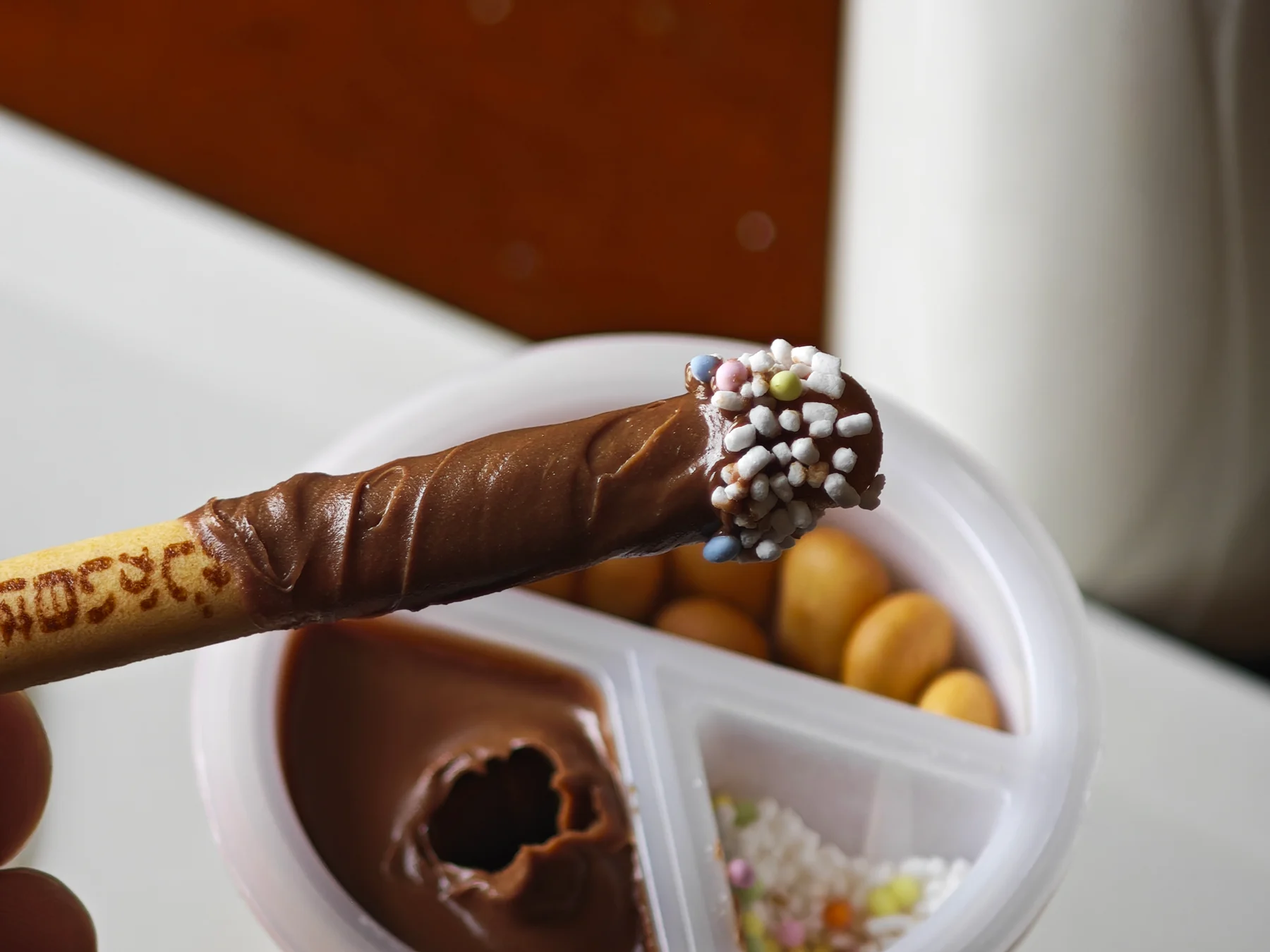
The result can still taste good, yet most of the cream remains bare. More importantly, the topping compartment becomes harder to use cleanly on later sticks.
3. Sprinkle over the lid or a plate
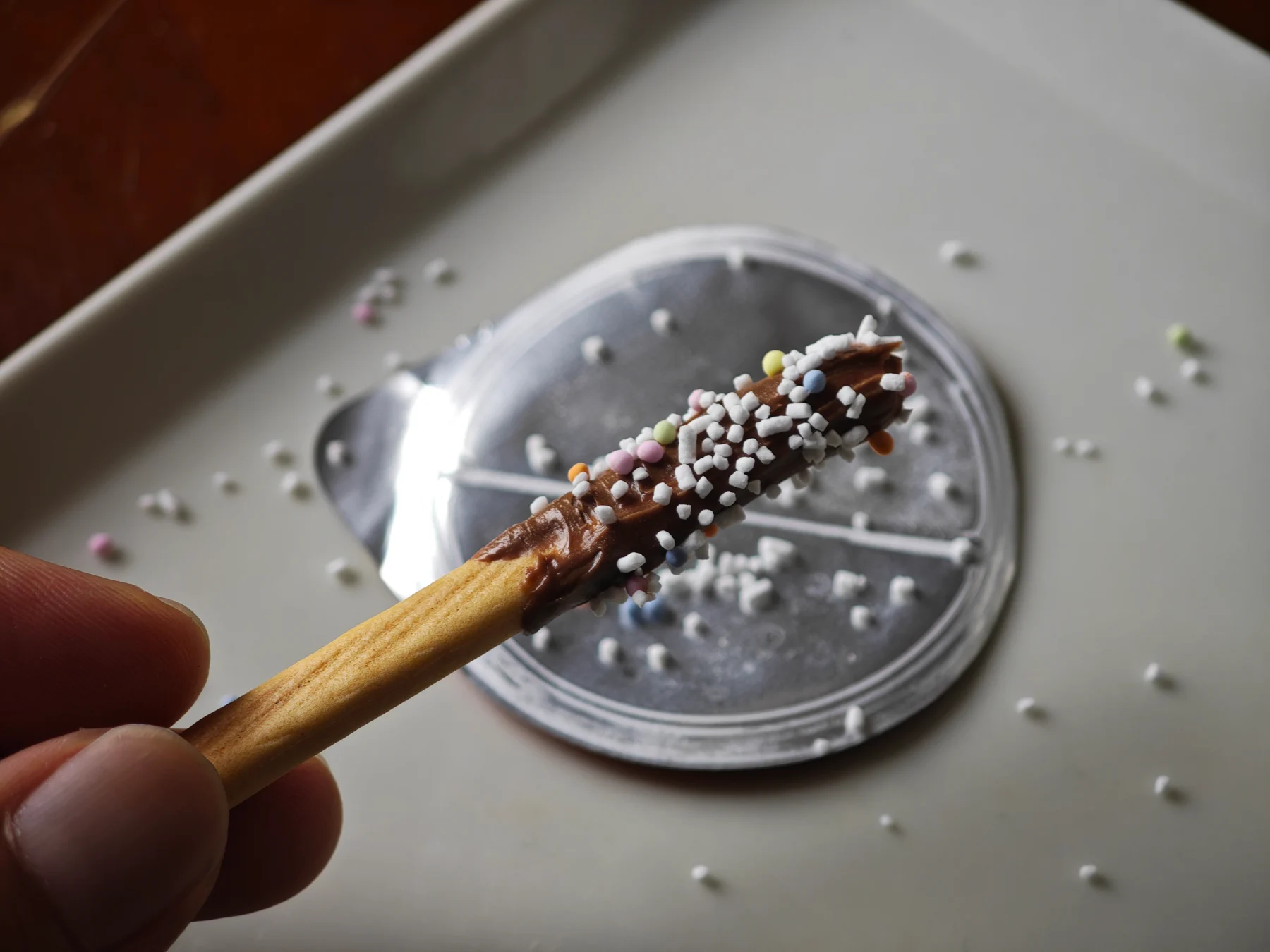
If you can spare one small plate, or simply flatten the peeled foil lid, hold the coated cracker over it and sprinkle from above. Coverage reaches the sides, the topping well stays dry, and fallen pieces remain recoverable.
Tap the stick onto the loose pieces afterward. It is one extra motion, but it turns scattered topping back into food instead of decoration.
The rim-roll: how to raise the chocolate line
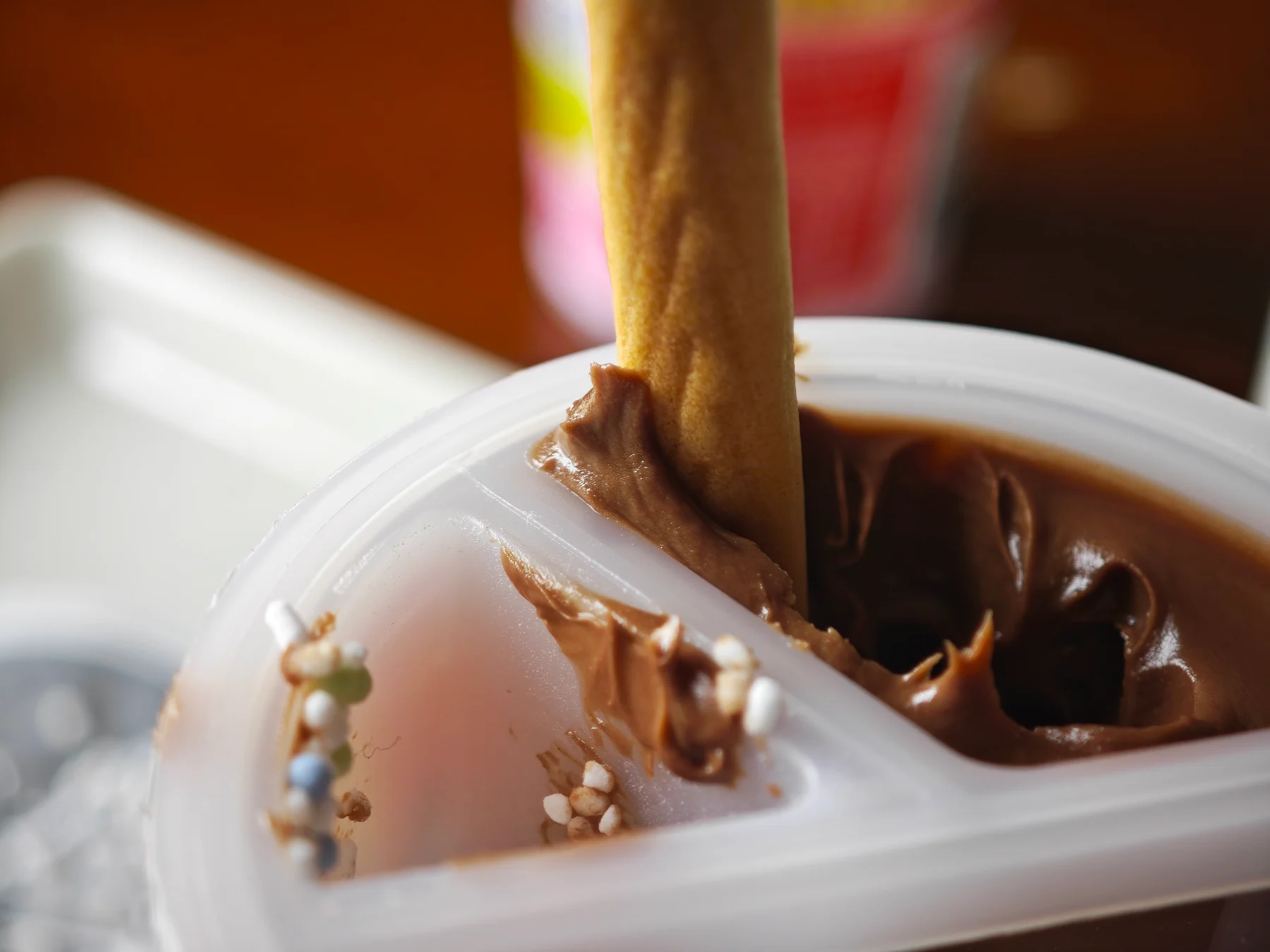
A vertical dip cannot coat higher than the cream level. To extend the coat, lean the cracker gently against the inside rim and roll it while drawing cream upward. The rim works like a small spreading edge.
Do not press hard. The aim is to move cream, not use the cracker as a lever.
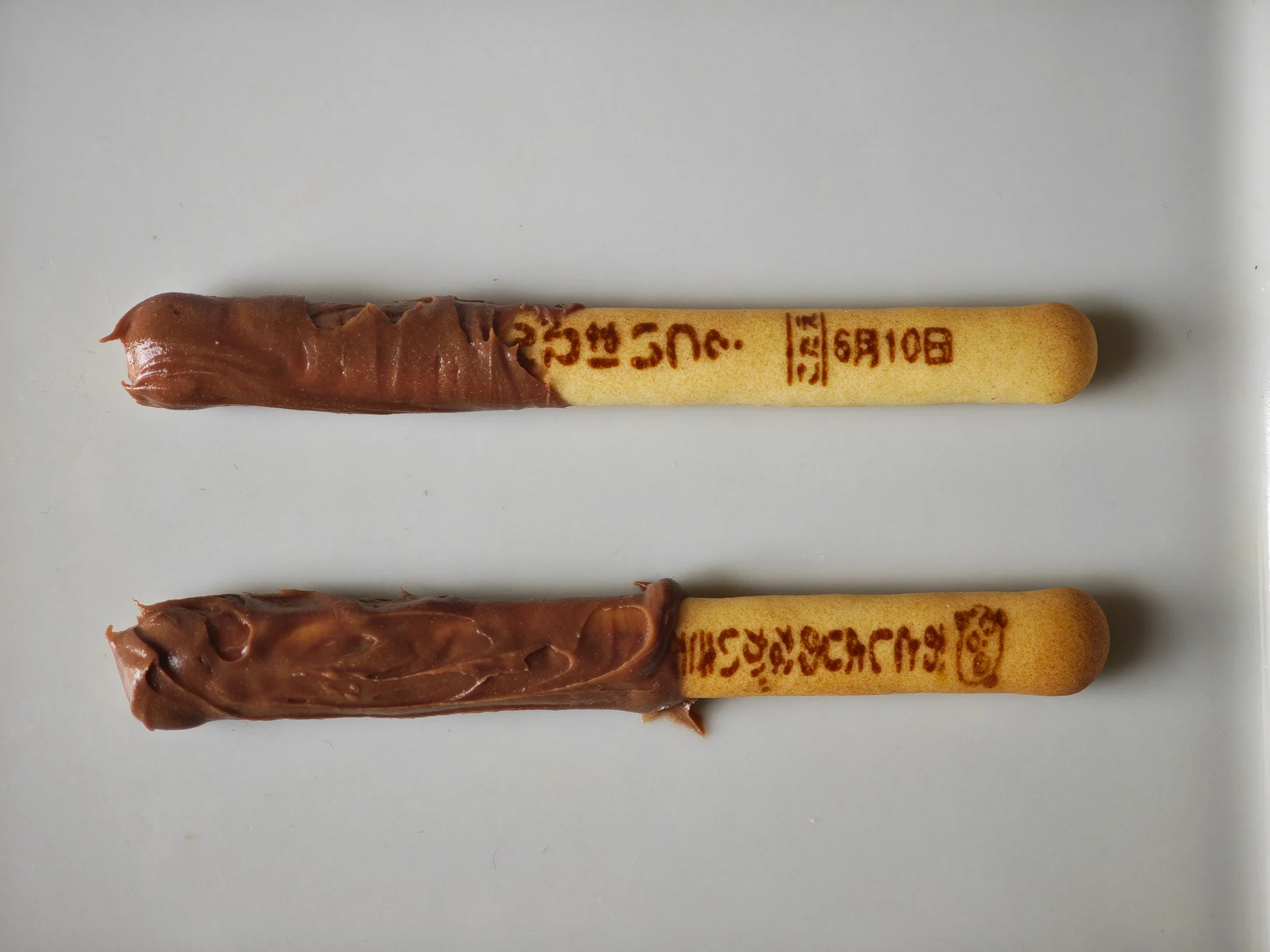
The difference is visible: the upper stick has the shorter vertical coat; the lower stick carries a wider, heavier layer made with the rim. Use this when you want one rich bite, not automatically on every cracker. Cream accounting is part of the game.
Strawberry follows the same technique
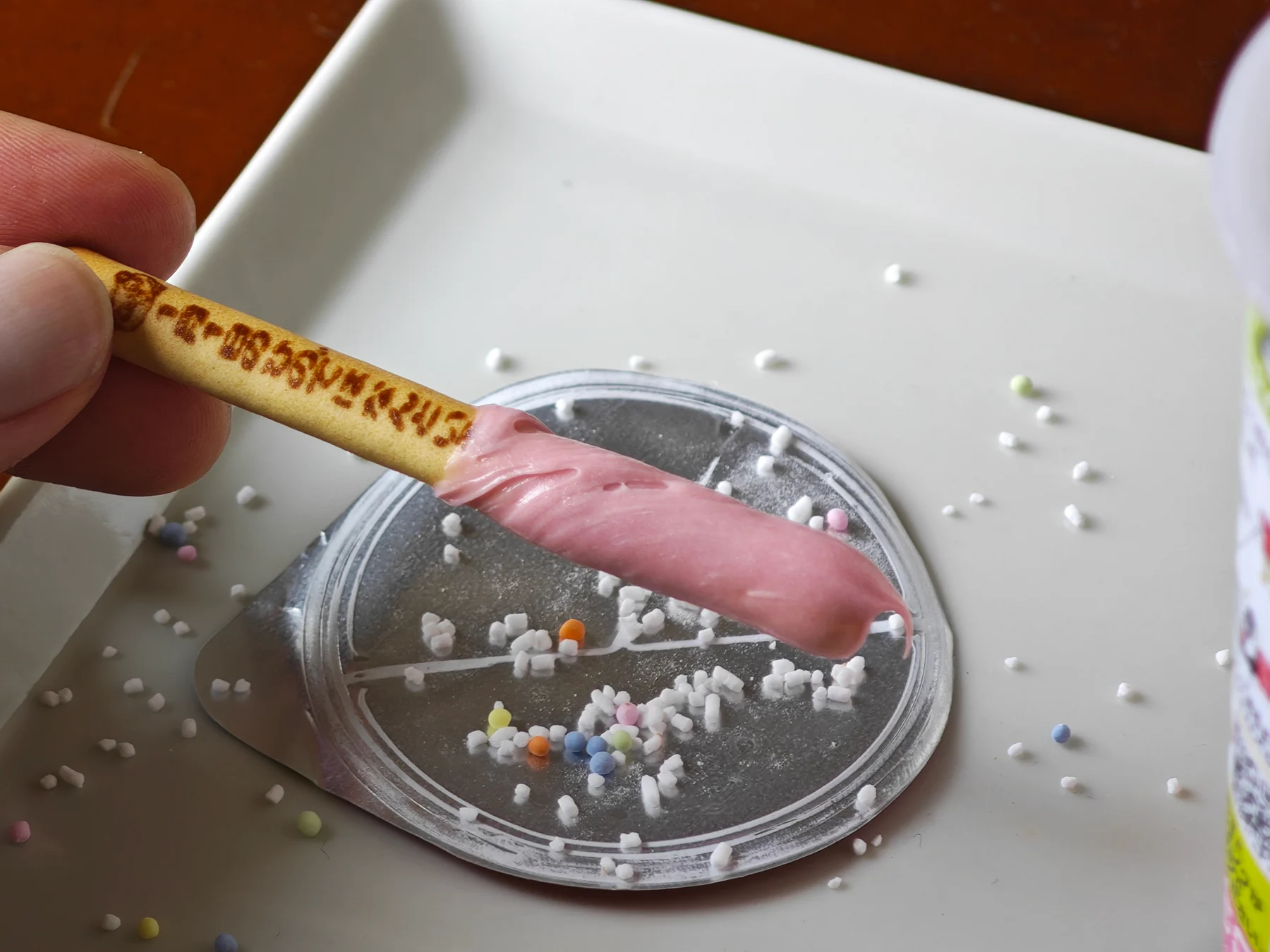
Strawberry cream holds the cracker’s grooves just as clearly as chocolate. Its pale color also makes the topping easier to see.
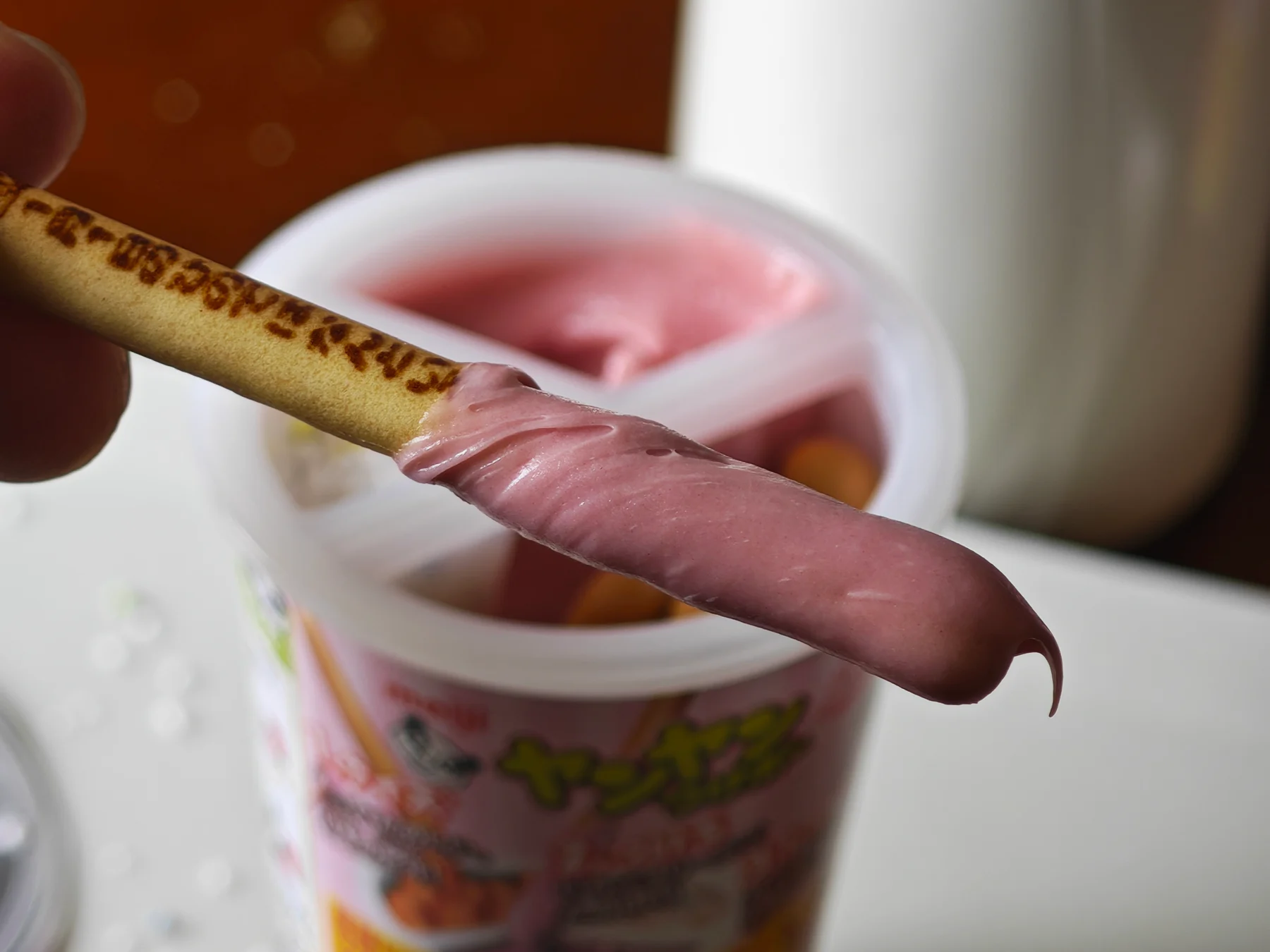
Start with the plain cream if you want to understand the flavor. The mild strawberry note is easiest to read before the sugar pieces begin popping.
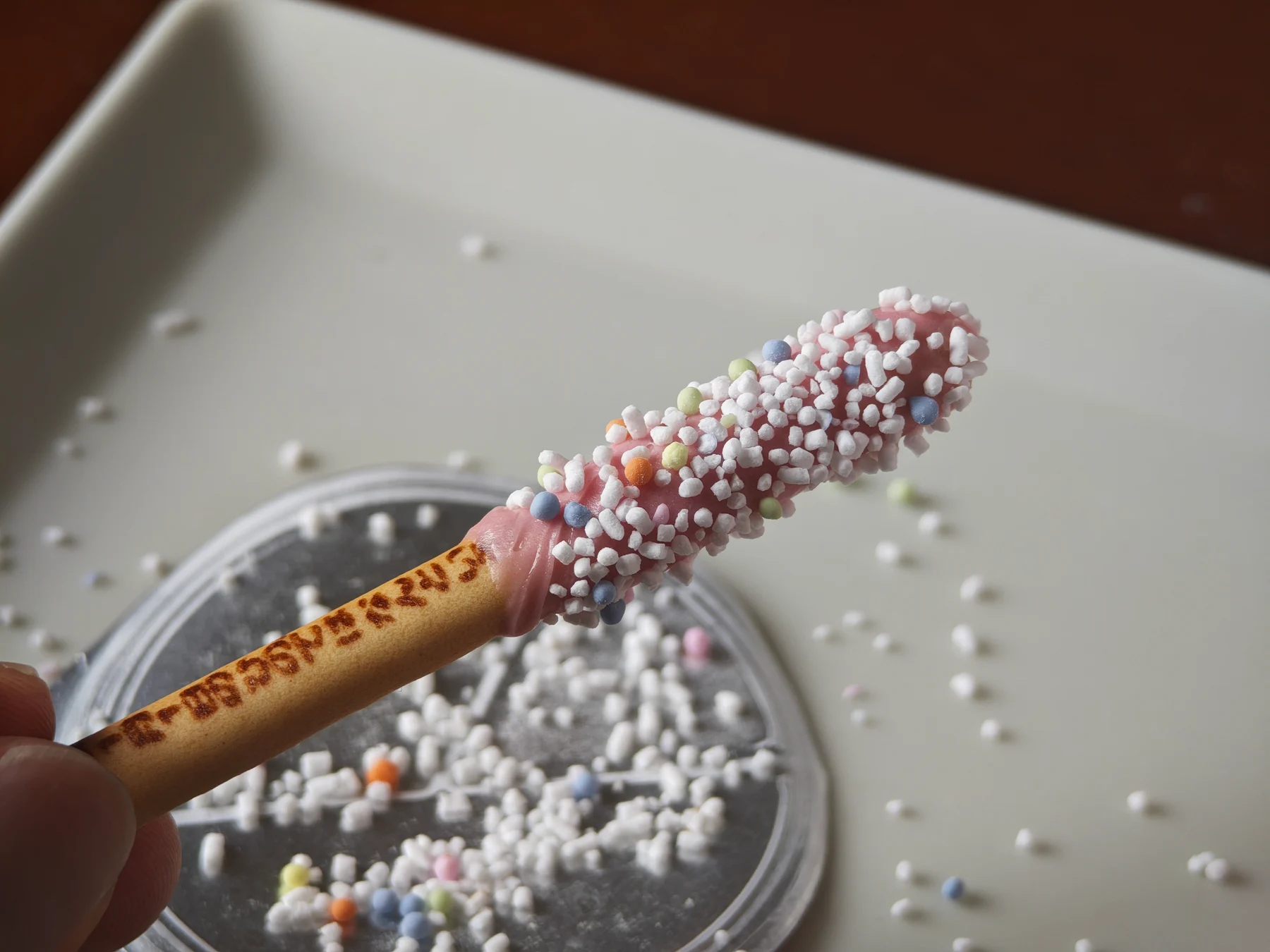
Then make the full version. Sprinkling over the lid coats more than the tip and creates a dense, irregular shell.
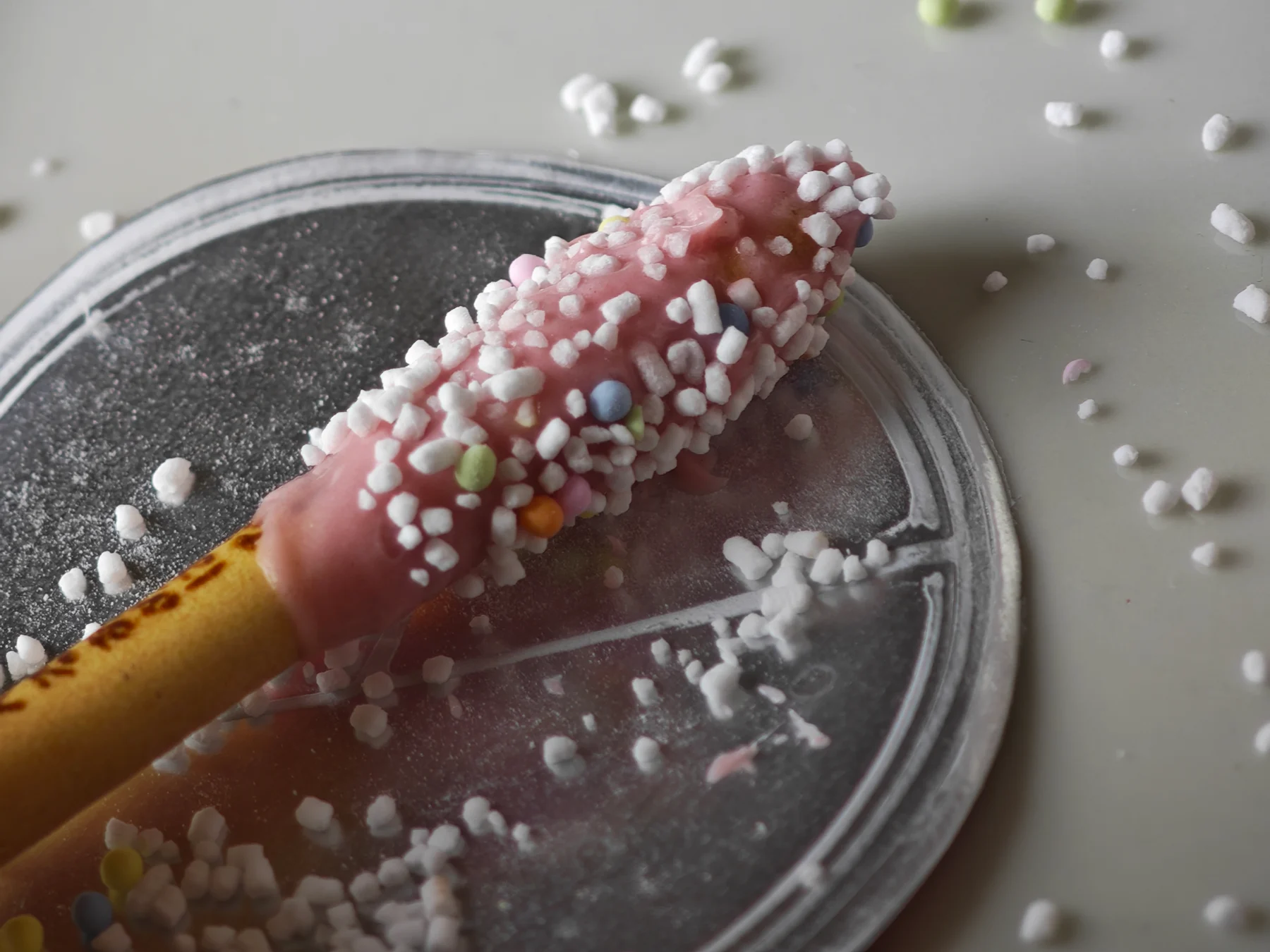
Loose pieces on the lid are not lost. Gently ton-ton—tap the sticky surface against them—and pick them back up. This is the practical side of mottainai: use what is still perfectly edible.
The final-stick luxury—and its structural limit
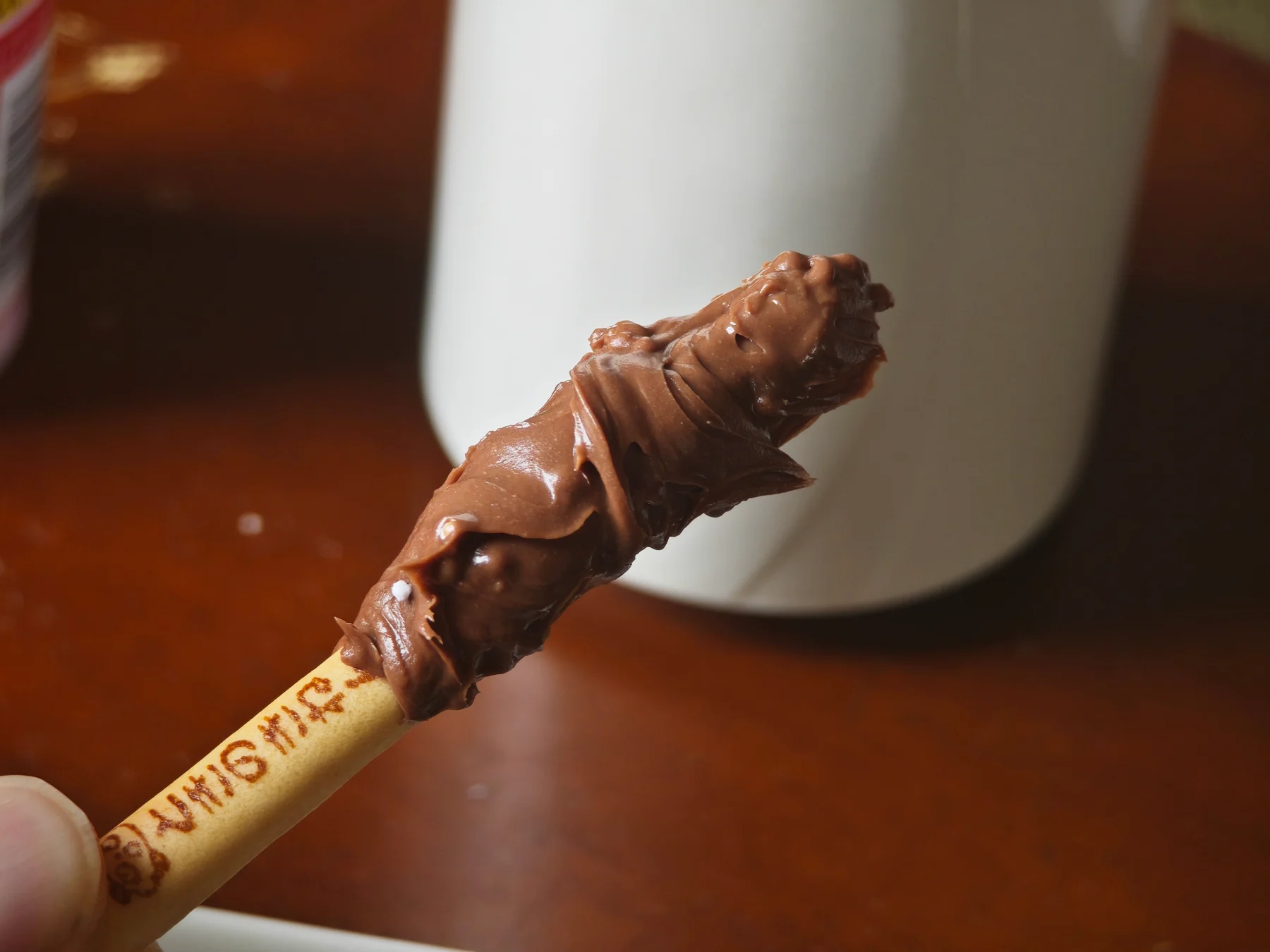
If careful rationing leaves a large amount of chocolate for the final cracker, you have earned the luxury bite. Roll slowly, build a thick coat, and enjoy the absurdity.
But cream has weight and crackers have limits.
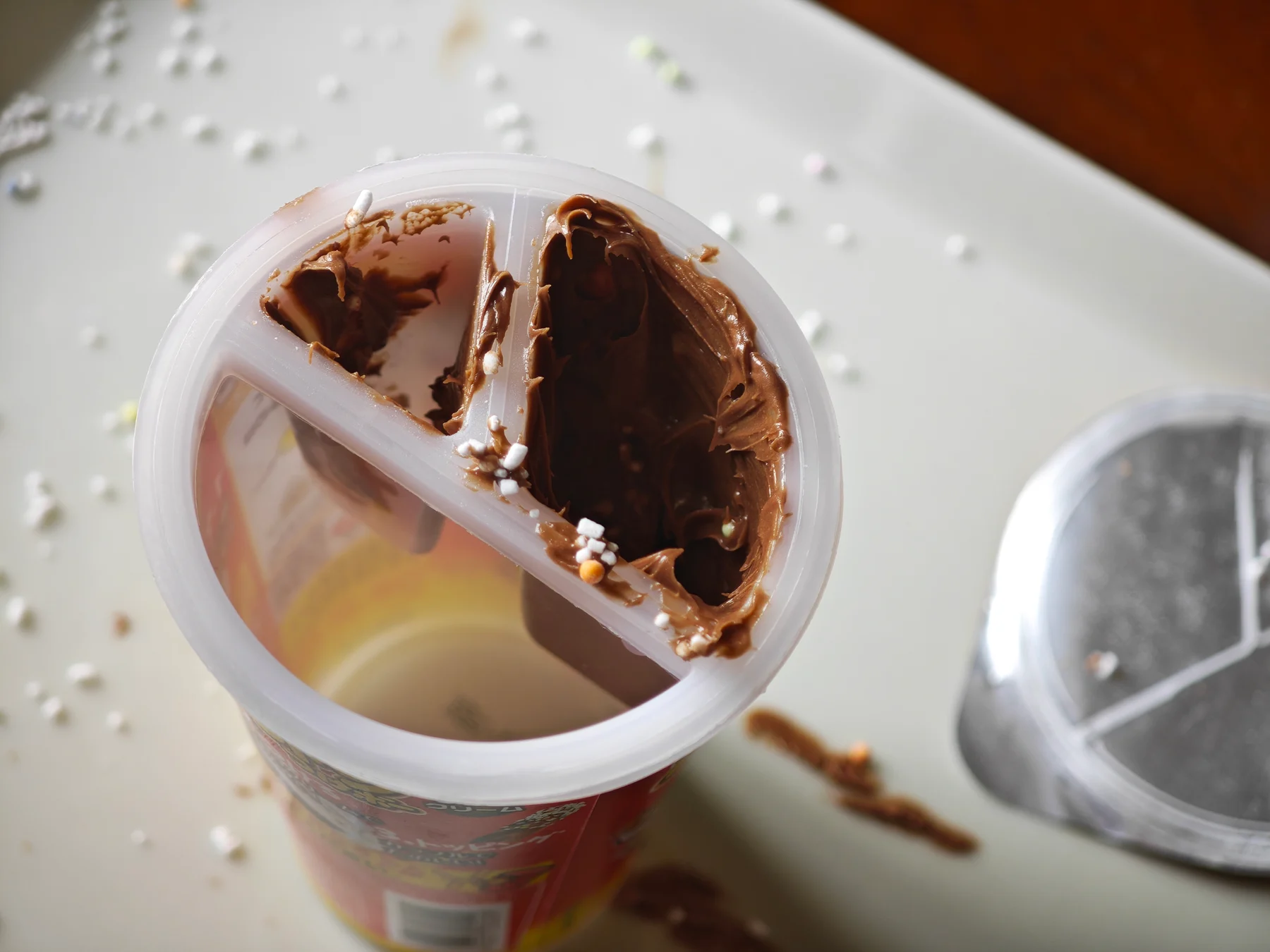
Push too greedily and the stick can break inside the well. Now the cracker is gone, the chocolate remains, and topping is scattered around the cup: a small but vivid case of mottainai—something edible has not been used well.
This is not a moral failure. It is technique feedback. Like eating a whole grilled fish neatly, the next attempt becomes a little cleaner. That sense of improving at a snack is one reason I love Yan Yan Tsuke-bo.
And if clean hands, privacy, and personal dignity permit: the final cream can be traced from the grooves with a finger. Besides recovering dessert, you learn where the cup hides it. Consider it research for the next cracker.
Where to buy Yan Yan Tsuke-bo
In Japan, check supermarket biscuit aisles, convenience stores, Don Quijote, and drugstores. The red cup is chocolate; the pink cup is strawberry. Single cups are best for an immediate travel snack, while online listings commonly bundle ten.
- Chocolate 48 g × 10: check price and availability on Amazon Japan
- Strawberry 48 g × 10: check price and availability on Amazon Japan
- Official Meiji lineup: see current Yan Yan Tsuke-bo products
Check the seller, count, best-before date, and the actual allergen label. Japanese and overseas Yan Yan packages are not always the same product configuration.
Affiliate disclosure: links above may be affiliate links. If you buy through them, I may earn a commission at no extra cost to you.
Final verdict: a snack with player input
Chocolate gives the classic answer: mellow cocoa cream, a lightly sweet cracker, and topping that pops between the teeth. Strawberry keeps the structure but softens the flavor into a creamy, low-acid fruit version.
What makes Yan Yan Tsuke-bo memorable is not only either taste. It is the player input. Read a Japanese question. Choose a ratio. Roll against the rim. Rescue fallen topping. Learn from the stick that snapped.
Since 1979, the cup has offered a small promise: Japanese snack culture can be something you do, not only something you consume.
Frequently Asked Questions
Is Yan Yan Tsuke-bo the same as Pocky?
No. Pocky arrives pre-coated. Yan Yan Tsuke-bo gives you plain crackers, cream, and topping in separate compartments so you build each bite yourself.
Which flavor is less intense?
Strawberry feels softer and creamier, with little sharp acidity. Chocolate has the deeper cocoa flavor. Neither cream is bitter.
Can I eat the crackers without cream?
Yes. Plain crackers are useful between heavily coated bites, and adjusting the ratio is part of the product.
Why are there questions on the crackers and cup?
They add play and reading to the snack. The Japanese package series connects questions to the months and annual events, offering a small introduction to seasonal culture.
Is the panda called Yan Yan?
Not according to the official product information available for this article. The panda is the brand mascot, but Meiji does not present “Yan Yan” as its confirmed personal name.
How do I keep the topping compartment clean?
Use the foil lid or a plate as a catch tray. Sprinkle topping over the cream-coated cracker, then dab the sticky surface onto fallen pieces.
Why does the strawberry calorie photo differ from the official page?
The photographed panel shows 259 kcal, while Meiji’s current strawberry page lists 260 kcal. Package versions and formulas can change; use the label on the cup you are actually eating.