There is a small moment that explains Toppo better than any comparison can.
You bite through the firm pretzel wall. It breaks with a dry, branch-like kari—a clean Japanese-style crispness—and a soft column of chocolate immediately follows. Look at the broken end and the chocolate is still there. Turn over the final tip and it is there too.
That is Toppo: a beautifully simple idea made technically difficult, then made so reliable that generations of Japanese snackers stopped thinking about how clever it was.
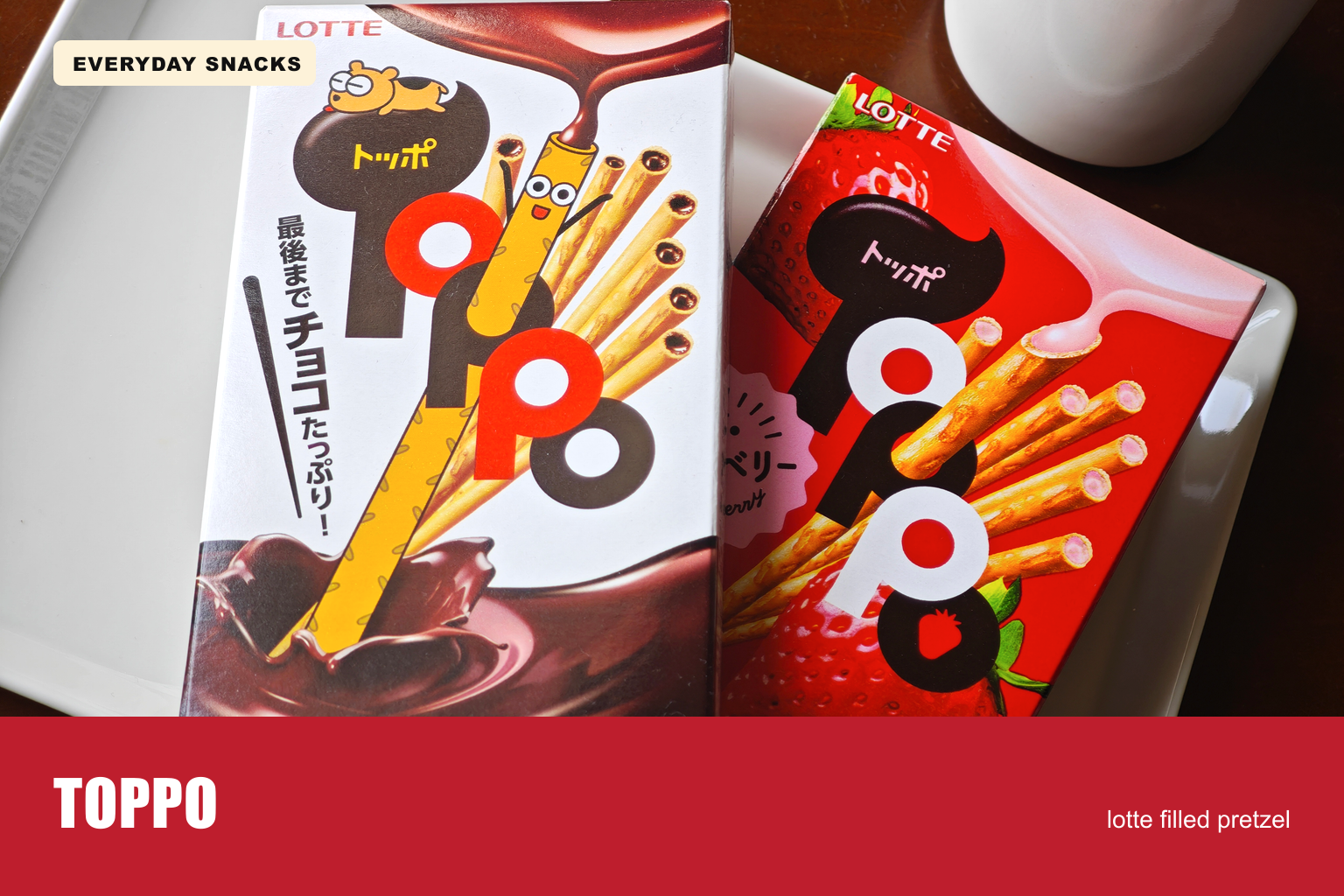
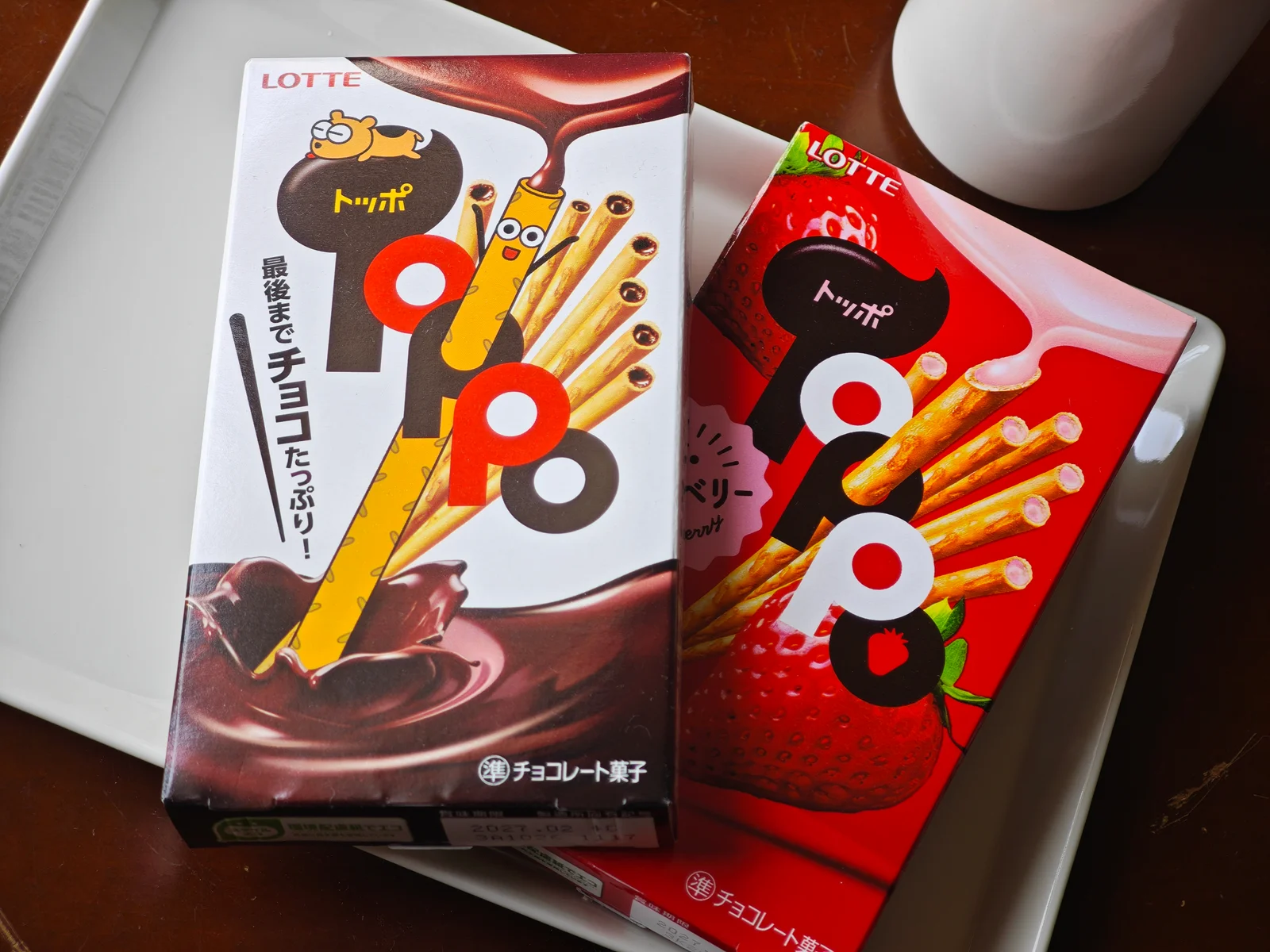
The two boxes here show the idea in two moods. Classic Toppo carries mild chocolate inside a fragrant golden pretzel. The Strawberry replaces it with a pink, sweet-tart filling. Both deliver Lotte’s famous promise—最後までチョコたっぷり (“plenty of chocolate until the end”).
Quick guide: Open the carton → two bags → pinch and pull the sides. Bite for a crisp, branch-fiber pretzel snap and a chocolate core that runs to the end. Hunt flavors (strawberry, The Chocolat, matcha rotations). Optional move: dunk two or three sticks in iced coffee.
What is Toppo?
Toppo (トッポ) is Lotte’s chocolate-filled hollow pretzel. The baked shell is the handle, the protective case, and half the flavor. Chocolate runs through its center instead of sitting exposed in your fingers.
In Japan, Toppo is loved as an everyday constant rather than a product that needs a special occasion. It fits a school break, an office drawer, a family snack cupboard, a train ride, or a late cup of coffee. The familiar carton opens into two smaller bags, so one can be shared now and the other saved. Its hands-stay-clean design sounds practical, but the reason people return is sensory: toasted pretzel aroma, a decisive snap, and chocolate in every bite.
Official brand home: Lotte Toppo.
The reverse idea that became a Japanese standard
Lotte launched Toppo in 1994. The starting question was wonderfully direct: what if the chocolate went inside the baked snack?
The answer created more than a novelty. The pretzel protects the chocolate from fingers, gives the snack its roasted aroma, and produces a clear contrast between hard shell and soft center. It also creates a difficult manufacturing problem: filling a long, narrow, easily broken tube evenly from one end to the other. Lotte’s development account says solving that problem took several years. “Chocolate to the end” is therefore not just cheerful advertising; it is the visible result of the technology that made Toppo possible.
The shape also matched a pleasure Japanese snackers already understood: eating a slender baked snack one piece at a time. But Toppo built its own identity through the filled tube, the two-bag carton, playful package printing, and the dependable final chocolate bite. It became a national convenience-store and supermarket staple because the invention improved ordinary snacking rather than demanding a new ritual.
Lotte marks October 10 as Toppo Day: seen from the side, one stick resembles “1”; viewed from the end, its round opening resembles “0.” It is exactly the kind of light joke that suits the brand. Since launch, Toppo has expanded through fruit fillings, cocoa doughs, bitter chocolate, and seasonal flavors while keeping the diagonal TOPPO logo recognizable.
Only after Toppo is understood on its own does a wider shelf map become useful. Japan also has famous stick snacks such as Pretz and chocolate-coated Pocky. They share the one-by-one rhythm of stick-shaped snacking, but Toppo’s pleasure is distinct: the pretzel surrounds the chocolate, the outside stays crisp and clean, and the center remains hidden until the bite.
Package play: Toppo Challenge and two bags
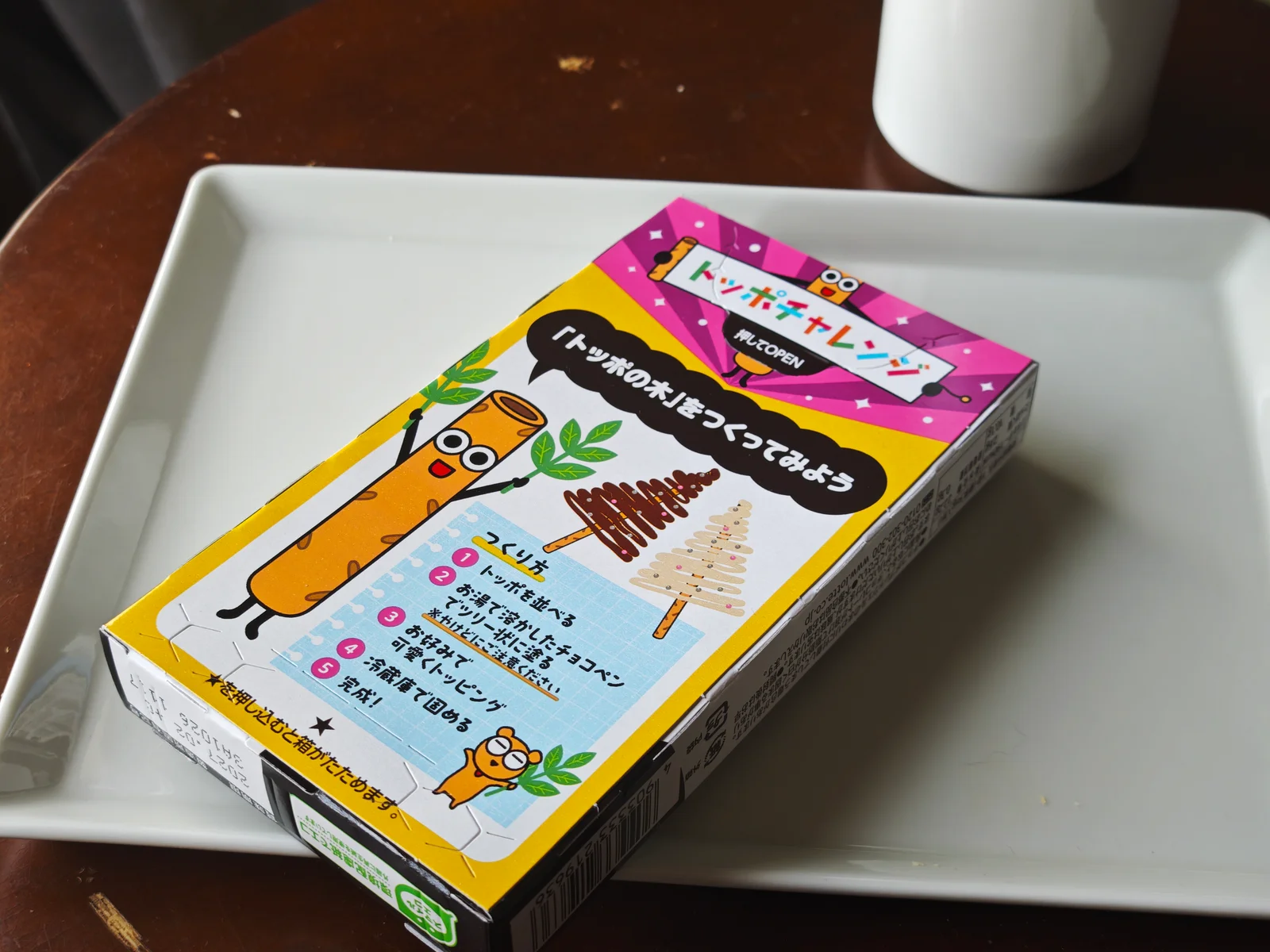
Flip a classic box and you may find トッポチャレンジ (Toppo Challenge)—a printed game on the carton itself. It is a small but telling Lotte habit: the package is not only a container. It is a toy, a dare, a reason to look twice. Overseas readers often miss this layer; Japanese snack culture frequently treats the box as part of the entertainment.
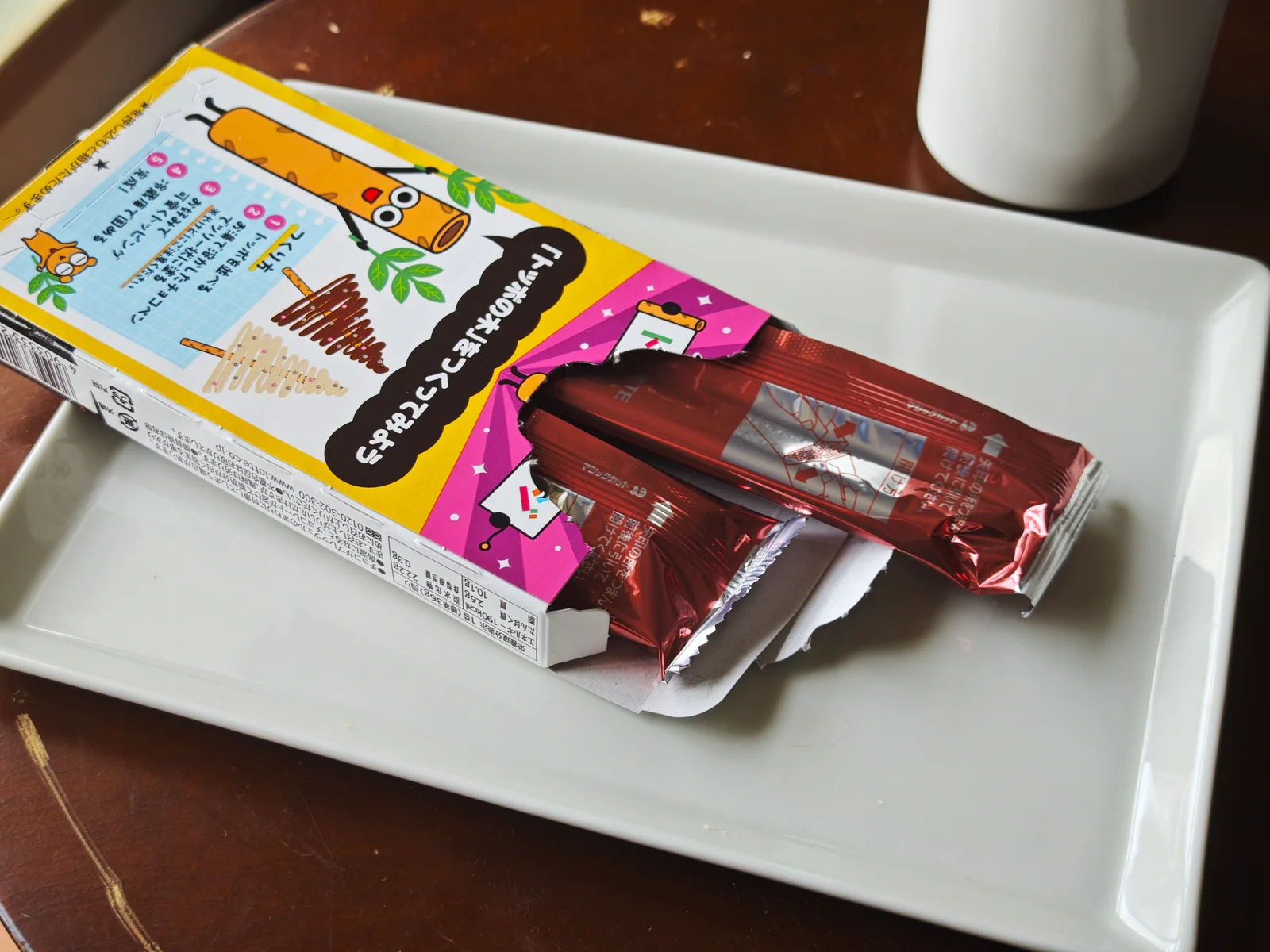
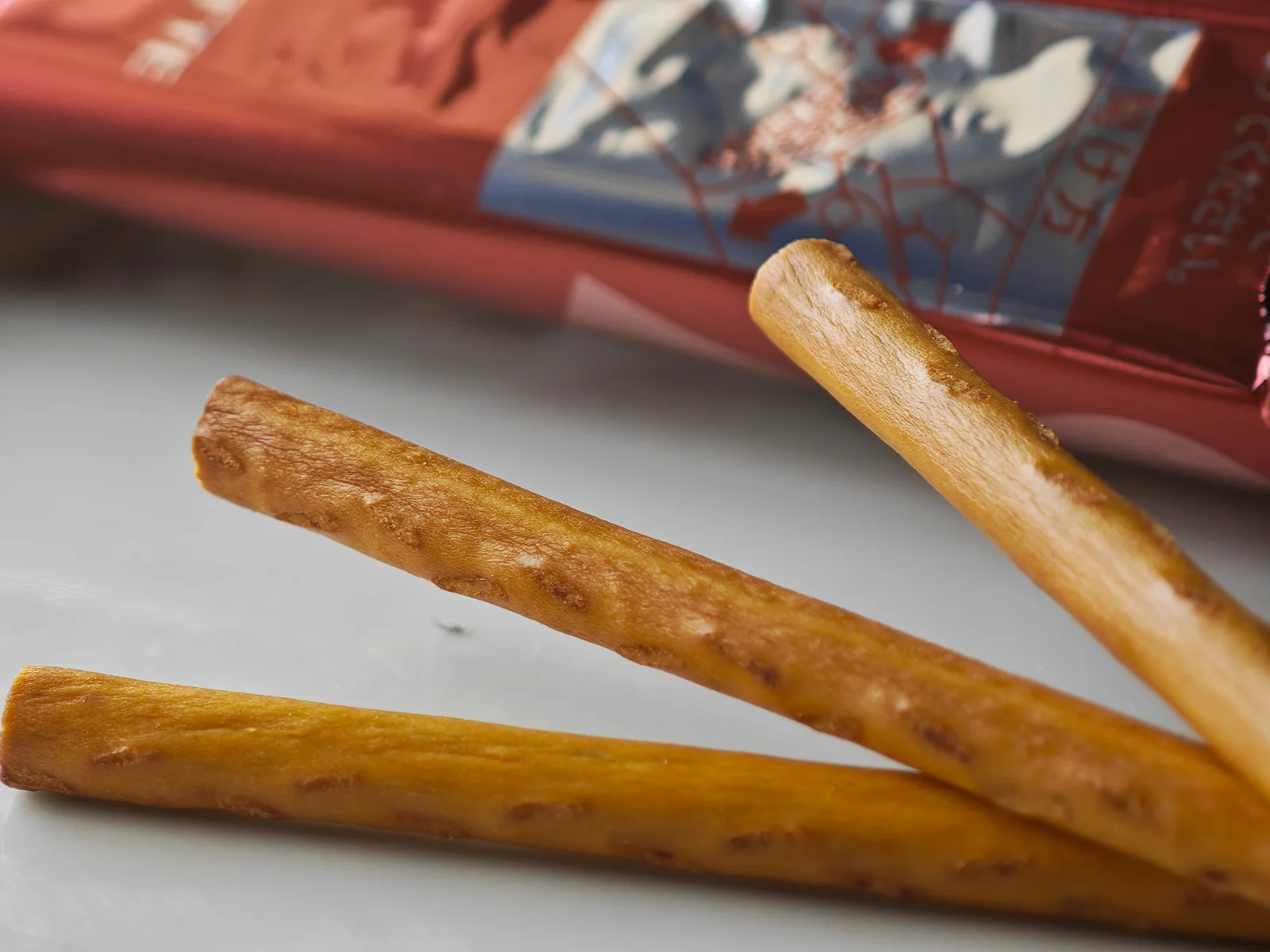
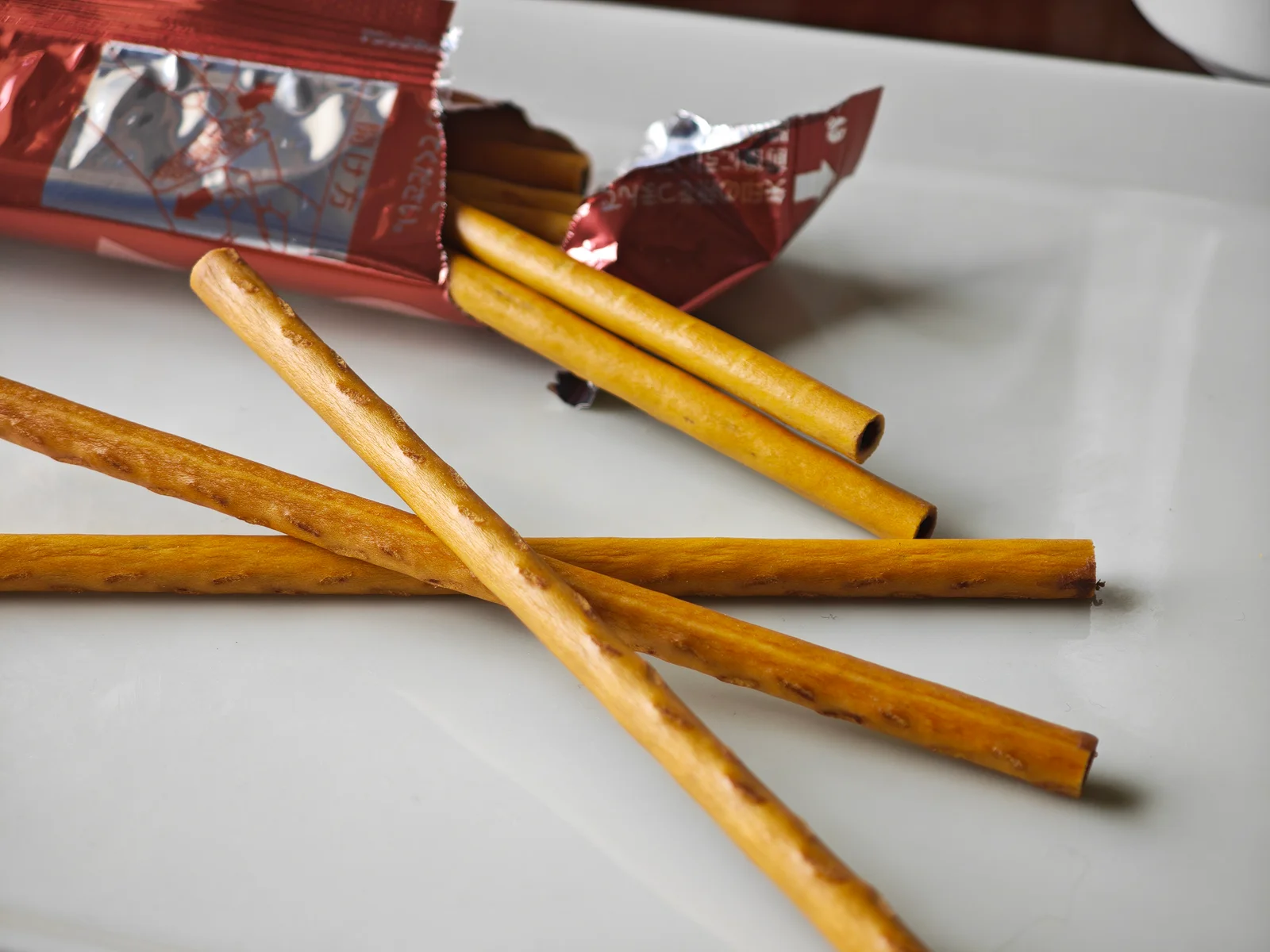
A standard carton is a two-bag system. Open the outer sleeve and you get two sealed inner packs—useful for sharing or saving half for later. On the inner bag, Lotte prints the open method: pinch the tip and pull both sides. Follow that print and the bag opens cleanly without shredding the sticks.
Texture: hard branch fibers, chocolate to the tip
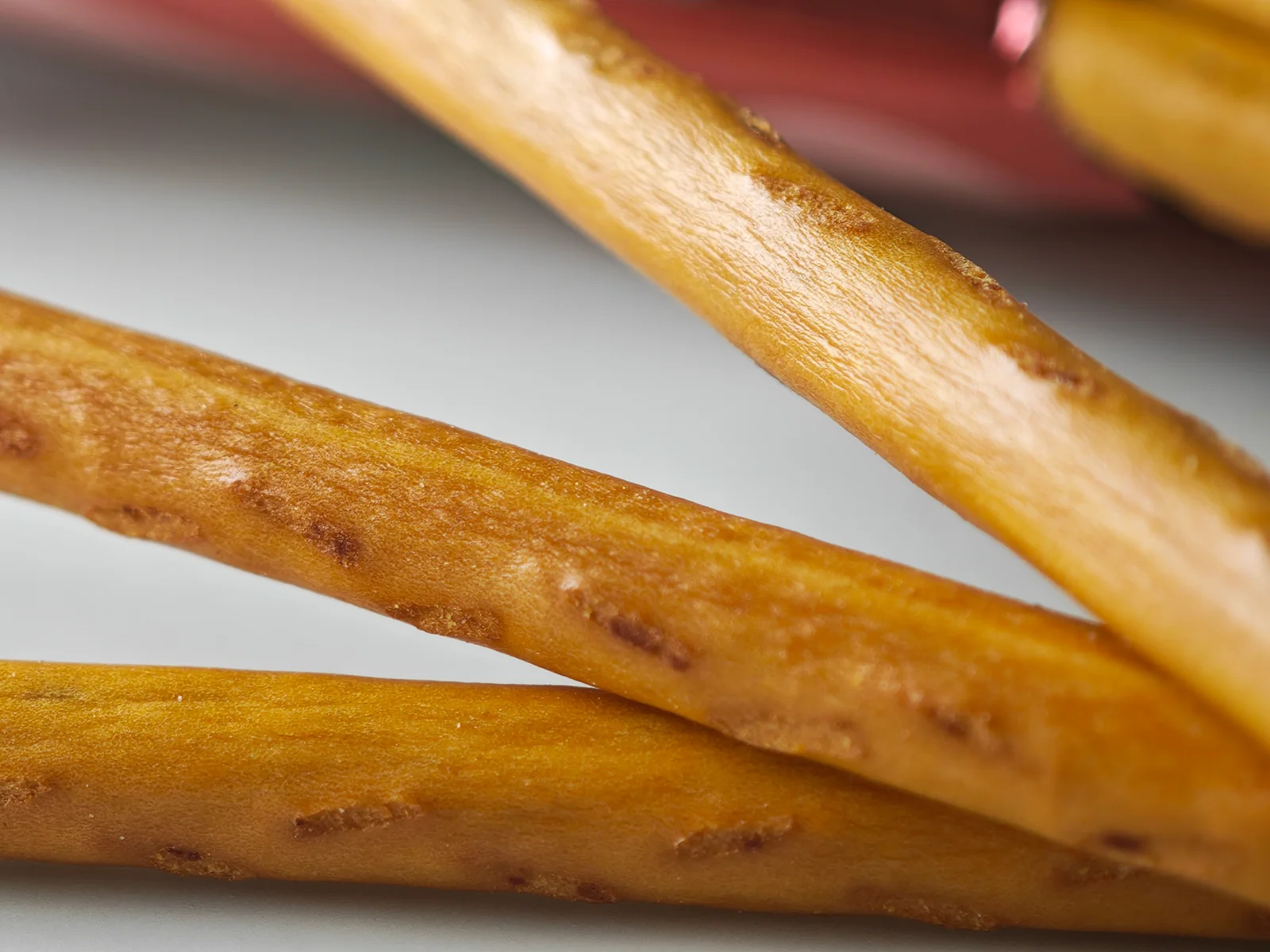
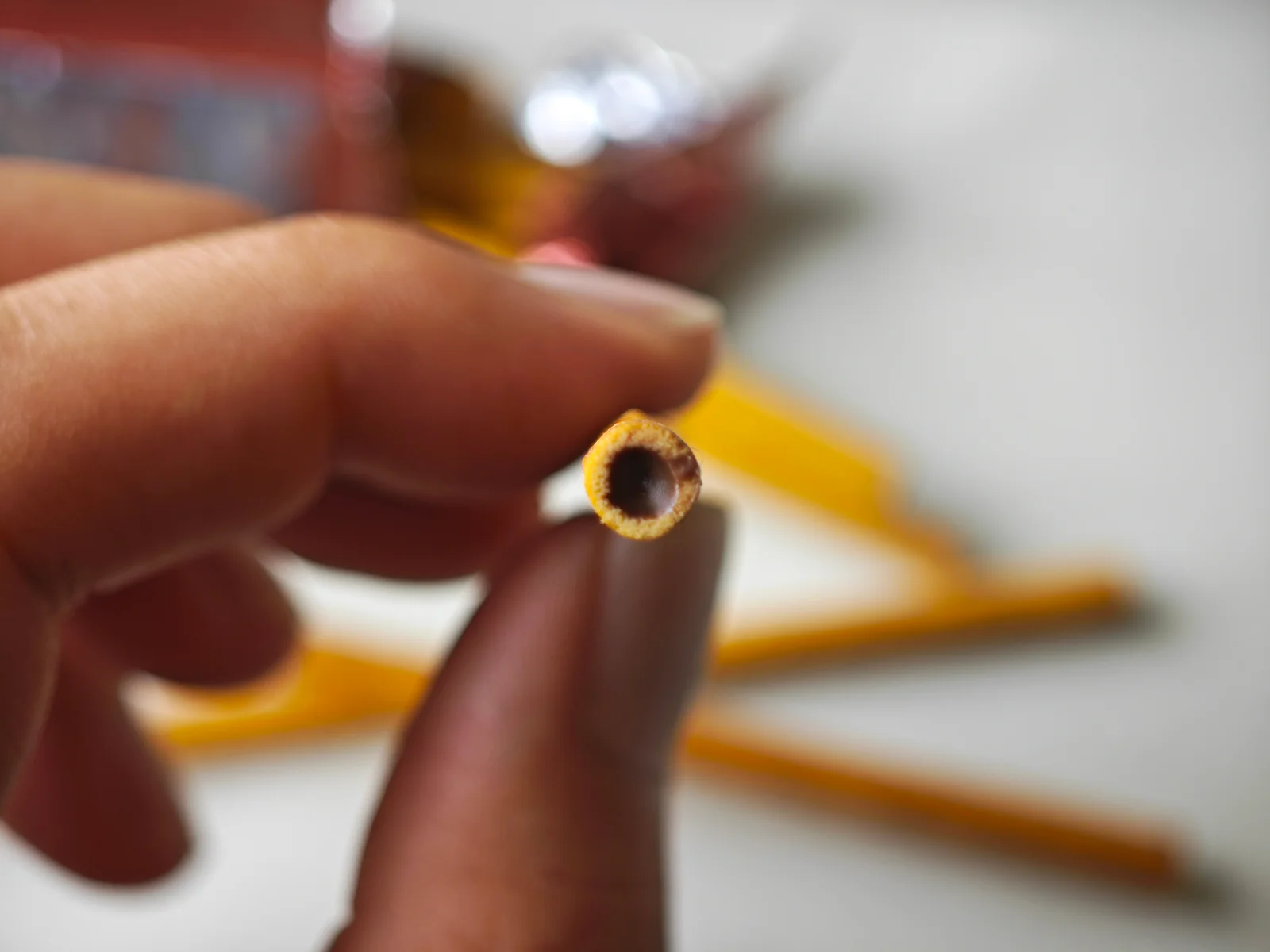
Zoom the pretzel wall and the dough looks almost like a hard, dry branch—fibrous, tight, not soft bread. That fiber is what creates the sharp crisp snap when you bite. When it breaks, it feels like snapping that same hard branch—dry, decisive, satisfying.
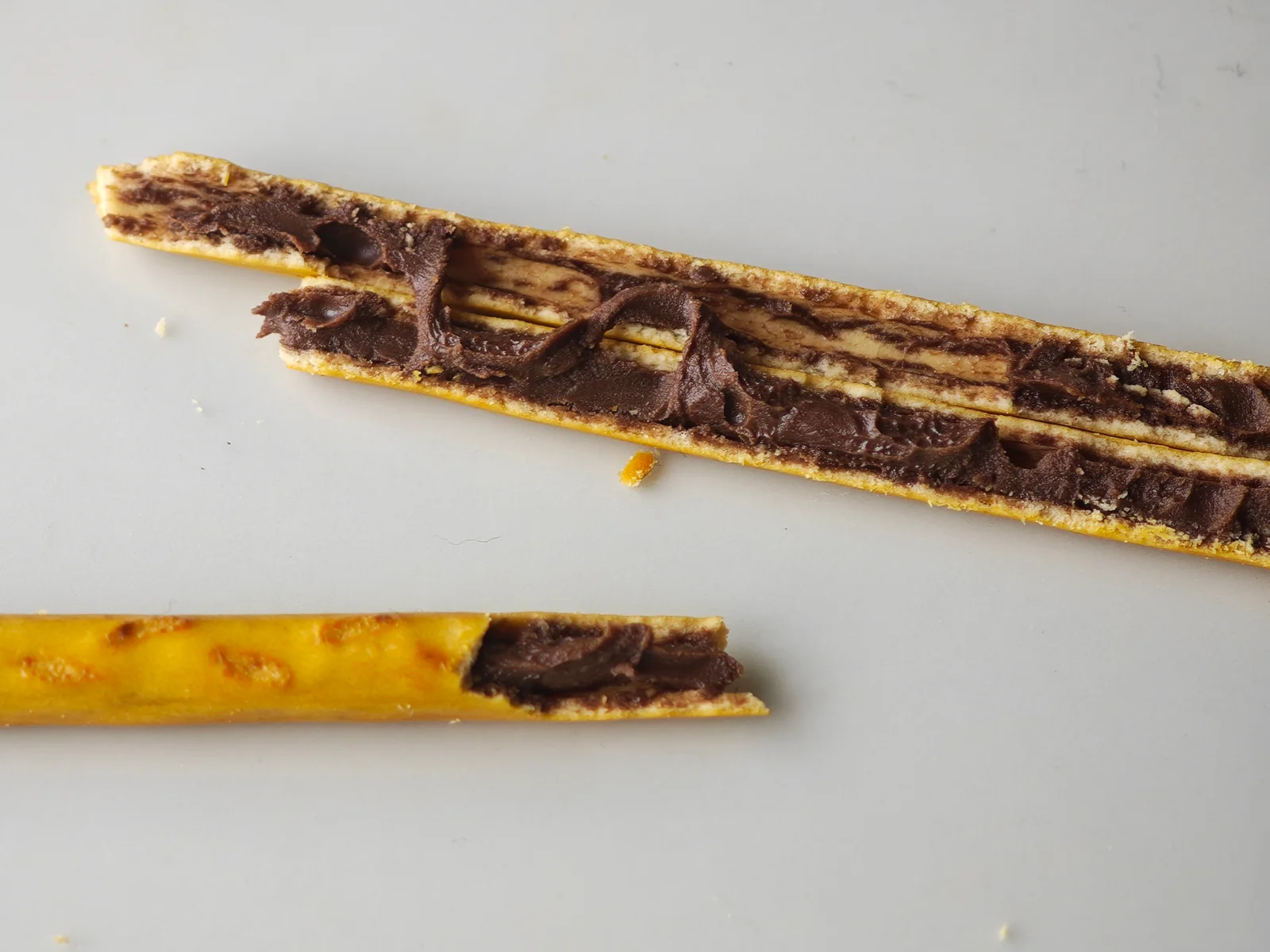
The tip shot already matches the slogan. But I am a suspicious eater. 最後までチョコたっぷり—plenty of chocolate until the end—sounds too perfect. So I chose one stick, warmed the chocolate just enough to cut cleanly, and split it lengthwise with a knife.
The result: chocolate really does run the full length. No empty tip. No short plug near the entrance. The photograph is a little messy because warm chocolate smears—please forgive the look. This is not a beauty shot. It is evidence. A slightly sticky courtroom exhibit for Lotte’s claim.
Classic chocolate Toppo


The orthodox stick is the clearest expression of Toppo’s design: mild chocolate inside a toasted golden pretzel. First comes the roasted wheat aroma and firm snap; then the chocolate softens the broken shell in the mouth. Neither side needs to overpower the other. The pleasure is their timing.
This is the flavor many Japanese shoppers recognize instantly from childhood shelves and later rediscover beside coffee at work. It is gentle enough to keep eating, sturdy enough to carry, and satisfying precisely because the last bite fulfills the same promise as the first. Labels on the photographed pack confirm the usual wheat / milk / soy allergen family—always recheck your box.
Strawberry Toppo and the curved “atari”


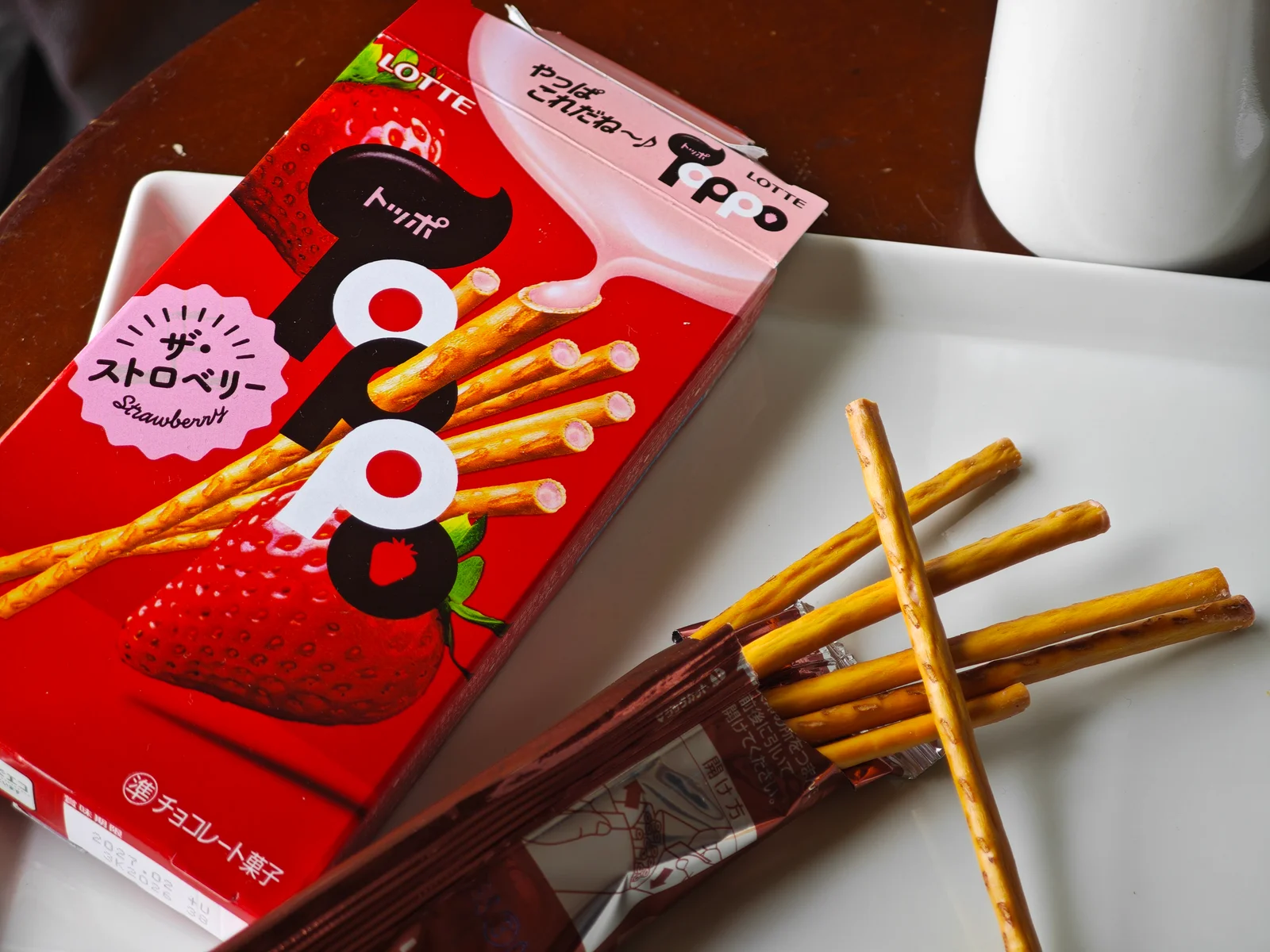
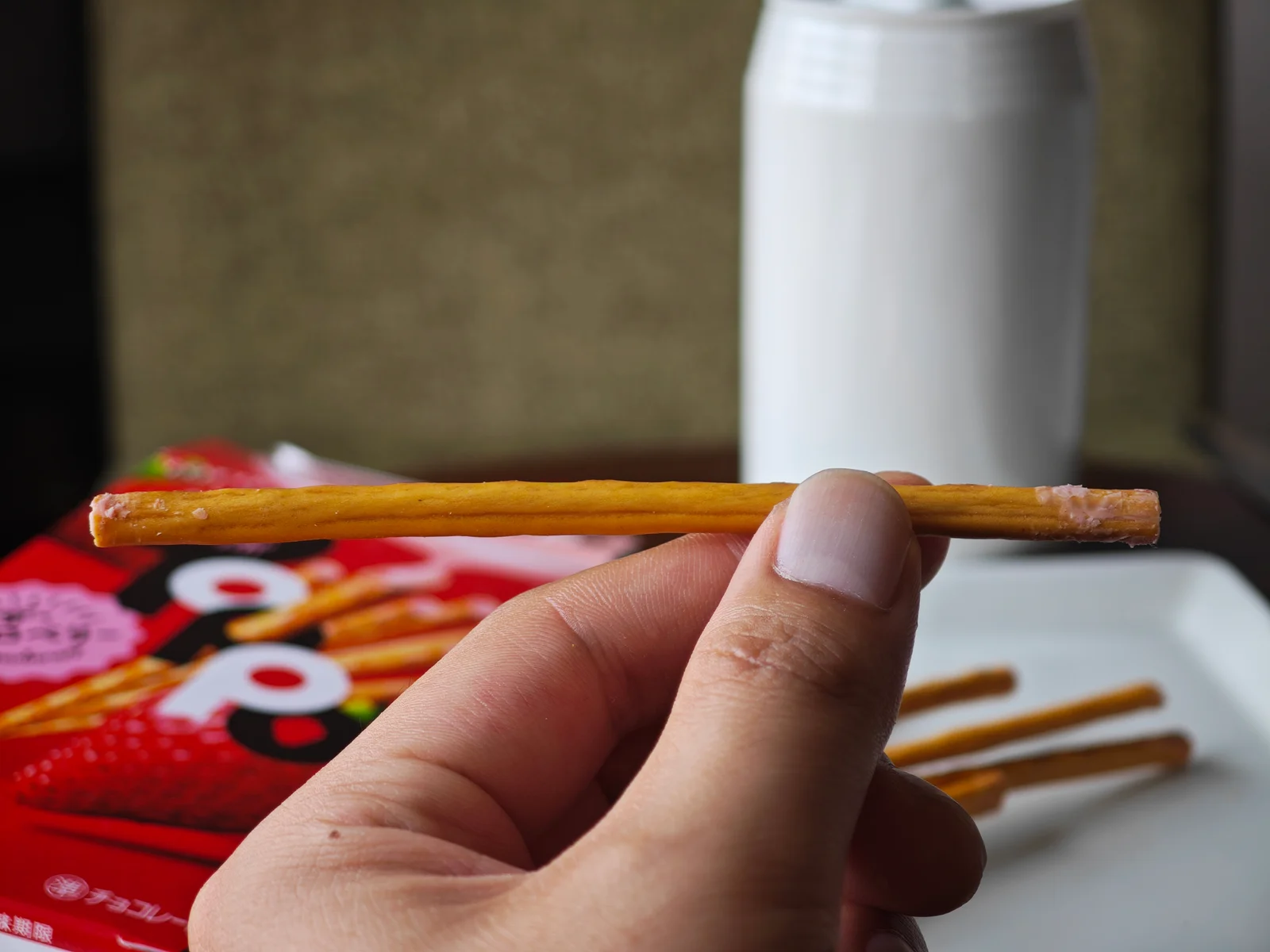
トッポ<ザ・ストロベリー> fills the same pretzel architecture with sweet-tart strawberry chocolate. From above, the pink column reads immediately.
Sometimes a stick comes out bent—a long, elegant curve that looks, to me, like a miniature Japanese sword. I privately call those 当たり (atari, a “hit” / lucky pull). Does that mean anything nutritionally? No. Is the logic airtight? Also no. I call them atari because they look beautiful, and that is enough reason for a snack ritual.
The Chocolat — proof the lineup goes darker
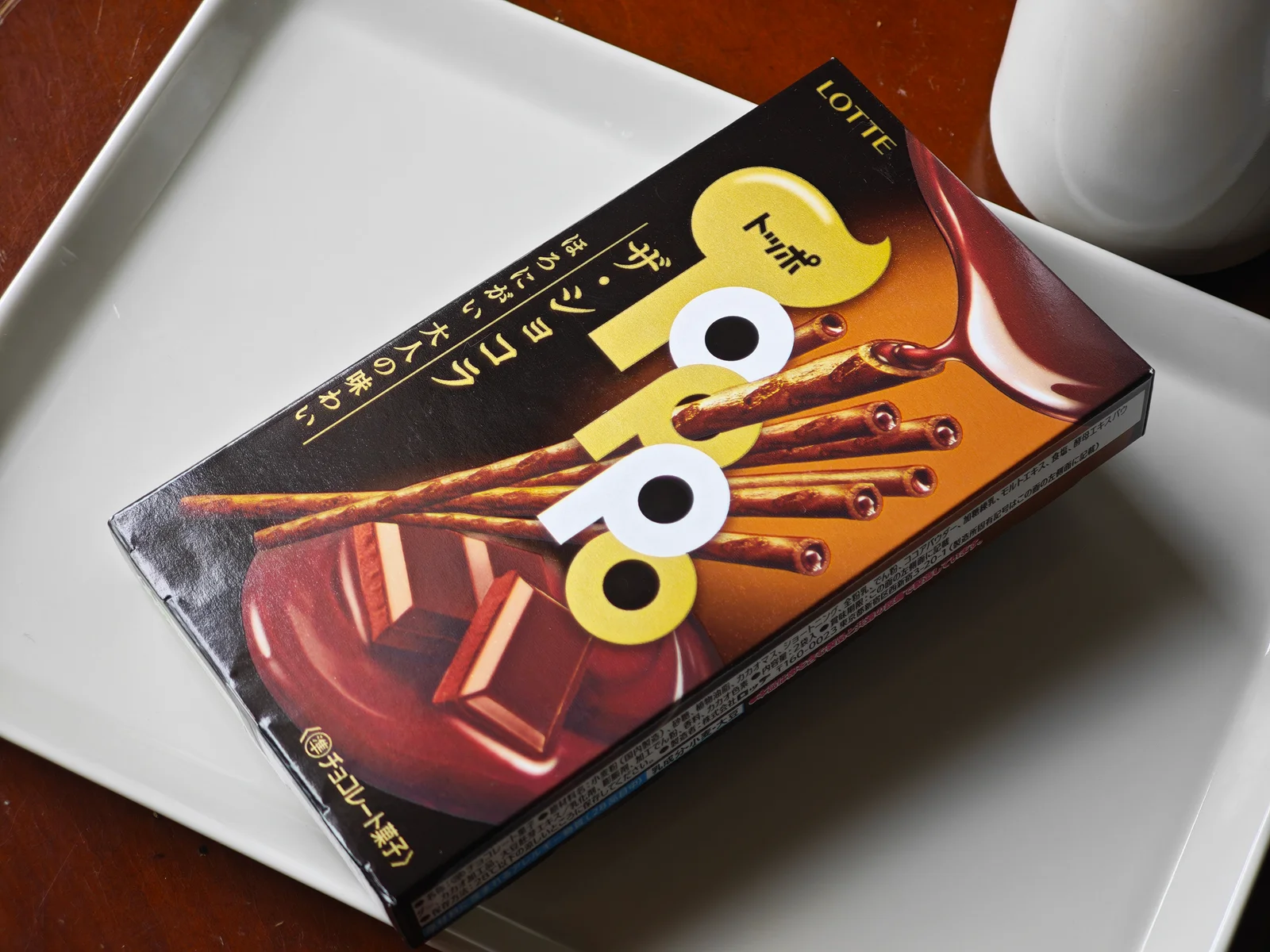


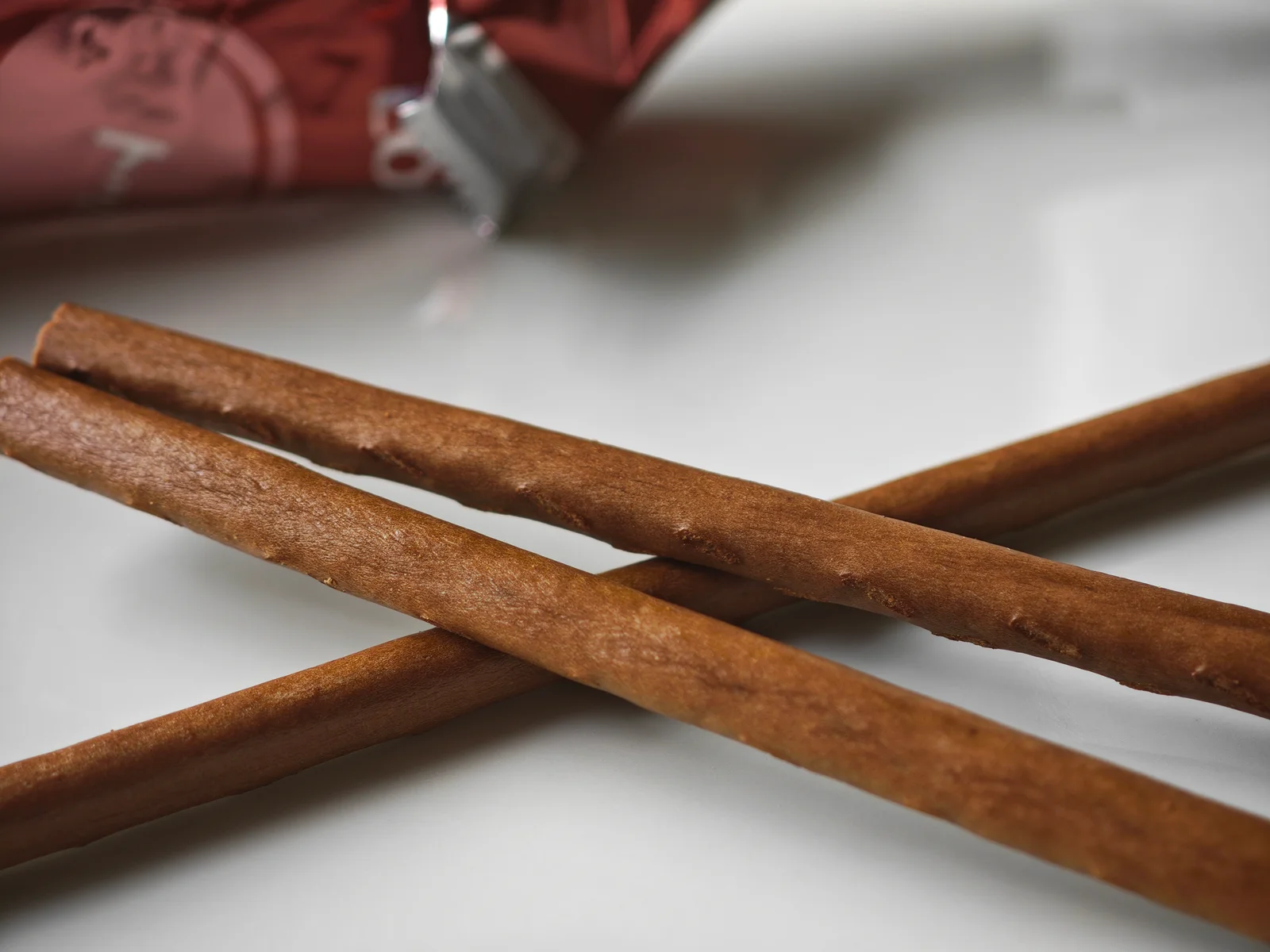
Classic and strawberry are only the doorway. トッポ<ザ・ショコラ> (The Chocolat) is Lotte’s bitter “second standard”: cocoa-leaning pretzel and darker chocolate fill. Official copy highlights cocoa powder in the pretzel; in the hand, the dough itself looks bitterly darker, as if chocolate were kneaded into the shell—not only poured into the hollow. Matcha and other rotations also appear on Lotte’s catalogue; treat the shelf as a moving target.
Café tip: dunk Toppo in iced coffee
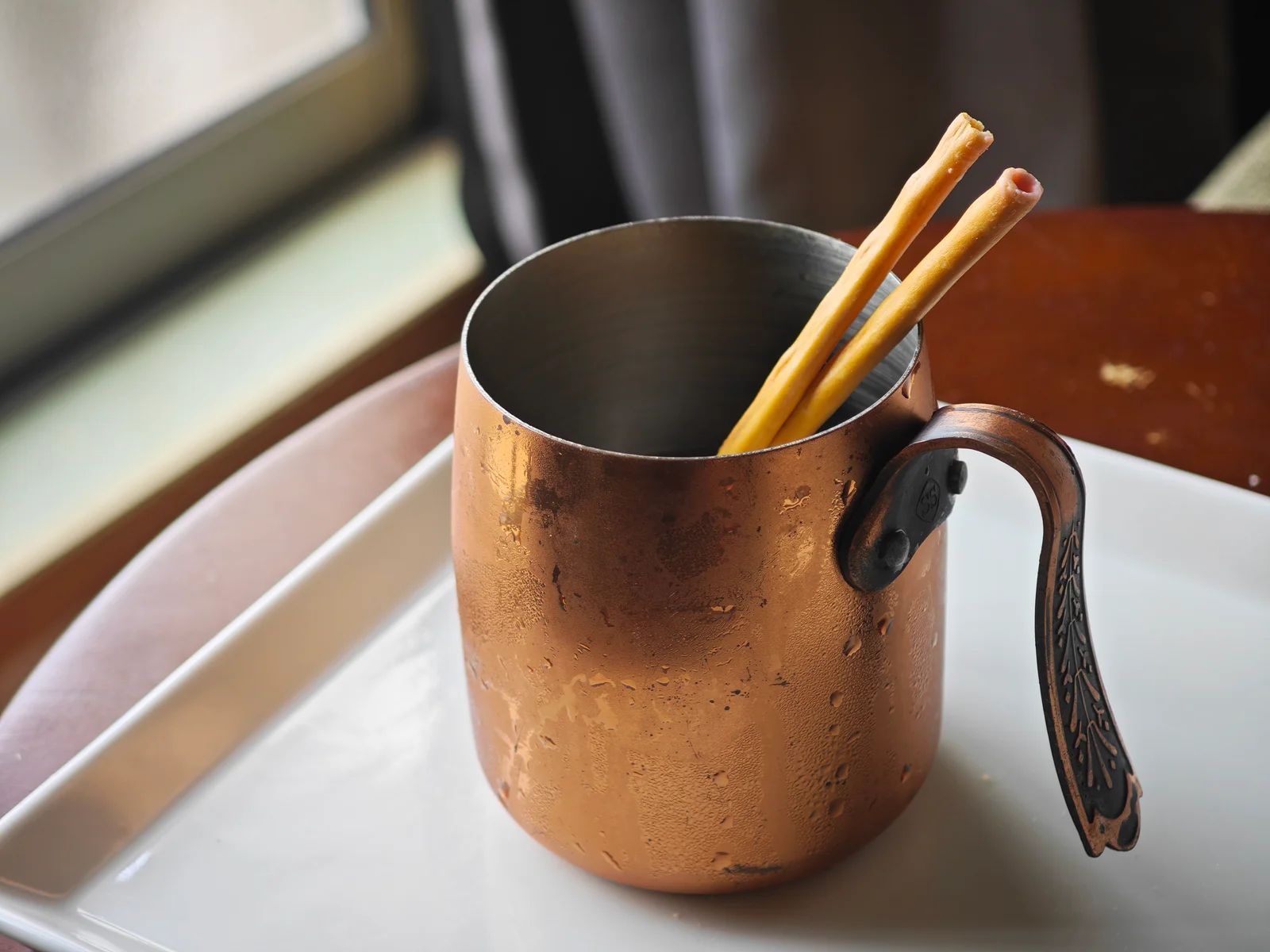
This is not my invention. A coffee-shop friend taught it: drop two or three Toppo sticks into iced coffee, let the pretzel soften, then eat them with the drink. Coffee soaks the shell; chocolate melts into the brew; the softened pretzel becomes a coffee-and-chocolate hybrid bite. He said it can even play well with customers when offered as a small serve-along—so try it yourself first, then decide if it belongs in your own ritual.
Classic mild chocolate is the safest dunk; The Chocolat pushes the cup more bitter; strawberry turns the coffee into a dessert experiment.
Where to buy Toppo
In Japan, Toppo is easy: convenience stores, supermarkets, drugstores, and often Don Quijote (Donki) for multi-flavor hunting. Assortment rotates—strawberry and The Chocolat are not guaranteed every branch every week.
- Amazon Japan: Toppo classic 2 bags × 10 boxes
- Amazon Japan: Toppo single box (2 bags)
- Official: Lotte Toppo brand page
Confirm flavor name, allergens, and net weight on the pack you receive.
Affiliate disclosure: links above may be affiliate links. If you buy through them, I may earn a commission at no extra cost to you.
Frequently Asked Questions
Why put chocolate inside a pretzel?
Because one hollow pretzel can provide a clean grip, toasted aroma, a sharp baked snap, and a protected chocolate center. The difficult part was filling that narrow tube reliably all the way through—an engineering achievement hidden inside an easy snack.
Why does my stick look curved?
Baking and handling can leave gentle arcs. I treat the most sword-like curves as personal atari—a beauty prize, not a defect code.
How do I open the inner bag?
Pinch the printed tip and pull both sides, as shown on the bag itself.
Does chocolate really go to the end?
Yes. I warmed one stick and split it lengthwise with a knife to check. The chocolate ran the full length. The photo looks a little messy because warm chocolate smears—that is the price of proof.
Should I freeze Toppo or dunk it?
Room temperature is the default. The iced-coffee dunk is an optional café-style experiment: soften, then eat with the drink.