It is smaller than lunch, warmer than candy, and somehow belongs in the same shop as gummy cola bottles and ten-yen snacks.
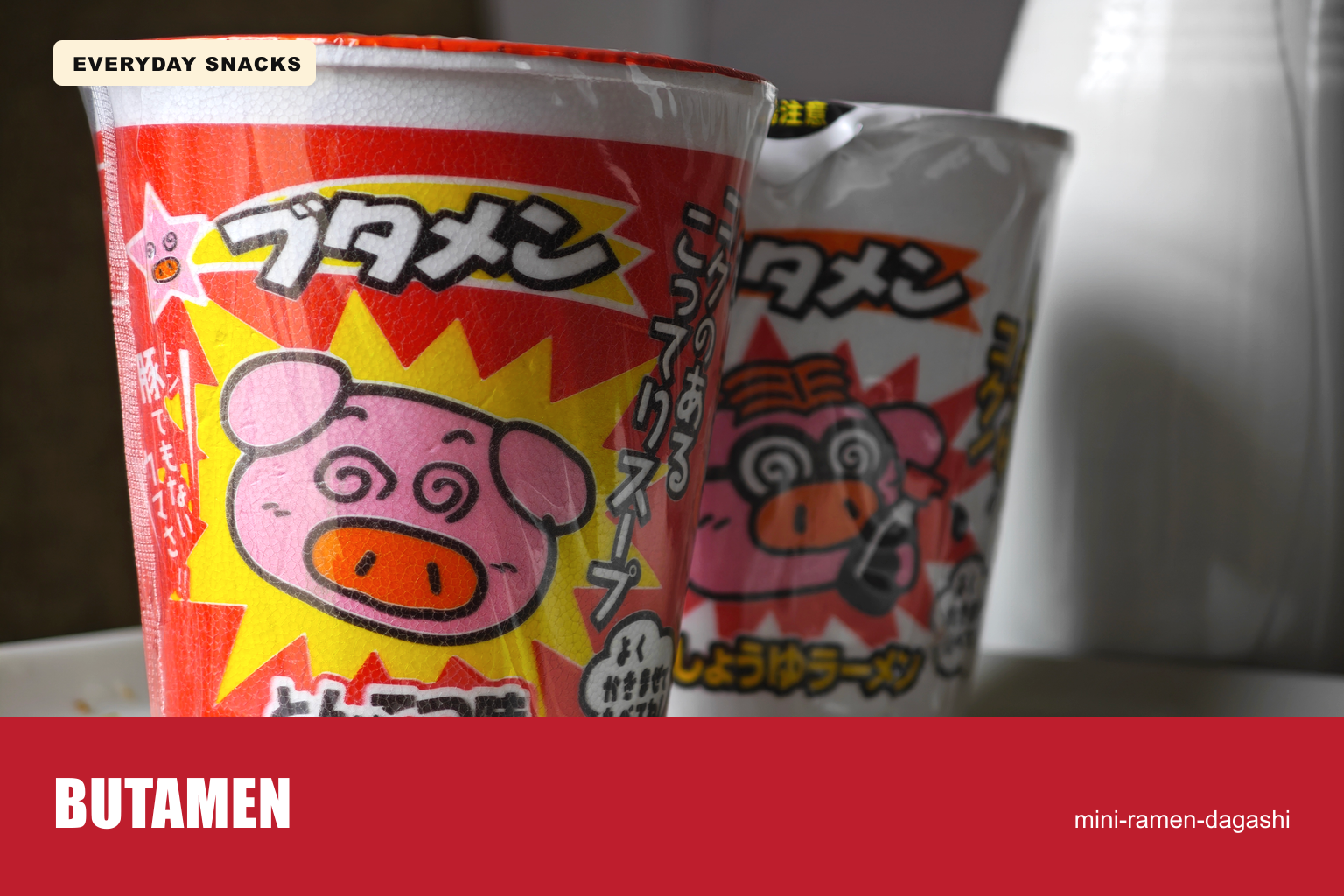
Butamen (ブタメン) is a miniature cup ramen that helped Japanese children turn the local dagashiya—a neighborhood penny-candy shop—into a tiny restaurant. You bought the cup with coins, found hot water, waited three minutes, and suddenly your snack had steam, noodles, and a soup worth saving until the end.
Quick answer: Choose tonkotsu for Butamen’s original 1993 identity, creamy pork flavor, and maximum nostalgia. Choose shoyu for a clearer chicken-and-soy broth with a consommé-like edge. Whichever you buy, add about 180 ml of boiling water, wait three minutes, and stir more thoroughly than you think.
Butamen in 30 seconds
- What is it? A small instant cup ramen sold in the cultural world of Japanese dagashi.
- Who makes it? OYATSU COMPANY, the maker best known internationally for Baby Star ramen snacks.
- When did it begin? The tonkotsu version launched in 1993.
- Why the pig? Tonkotsu means pork-bone broth; buta means pig and men means noodles.
- What is unusual? It behaves like real cup ramen but occupies the size, price range, and playful spirit of a snack.
- Best first tasting? One tonkotsu and one shoyu, preferably shared.
- Important safety note: Boiling water is involved. Prepare and eat it on a stable surface.
What do you find when you open the cup?
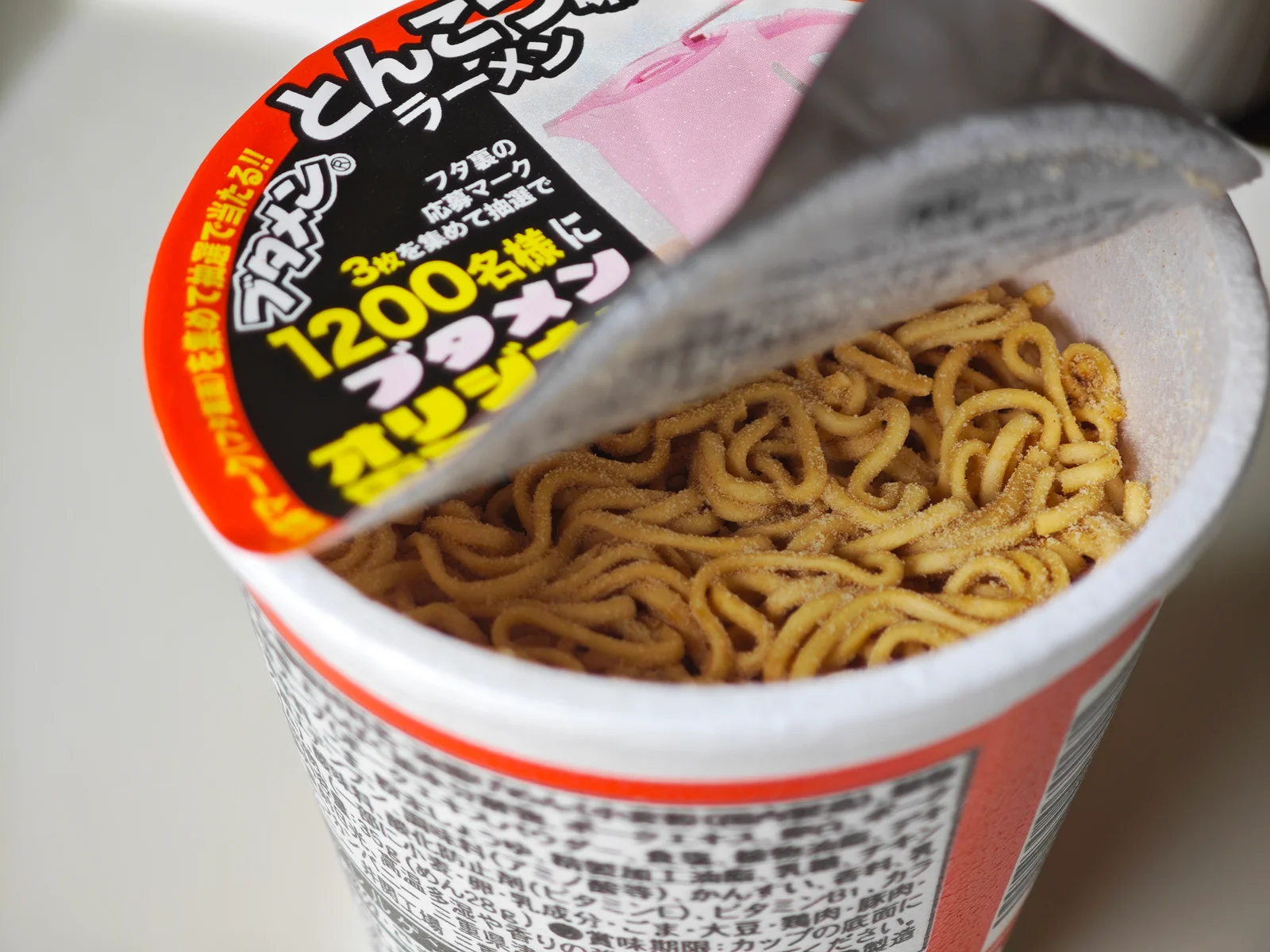
No miniature pork slice. No egg. No green onion forest. The open cup is almost comically direct: a compact nest of noodles and seasoning.
That absence is useful, not unfinished. Butamen’s simplicity keeps the price and cup small, lets the broth define each flavor, and gives children—and adults with childlike curiosity—space to invent additions. It can be an afternoon snack, a warm companion to a rice ball, a small late-night bowl, or a tasting cup when full-size ramen would be too much.
The photographed tonkotsu cup contains 35 g total, including 28 g of noodles. Its lid lists 174 kcal, 180 ml of water, and a three-minute wait.
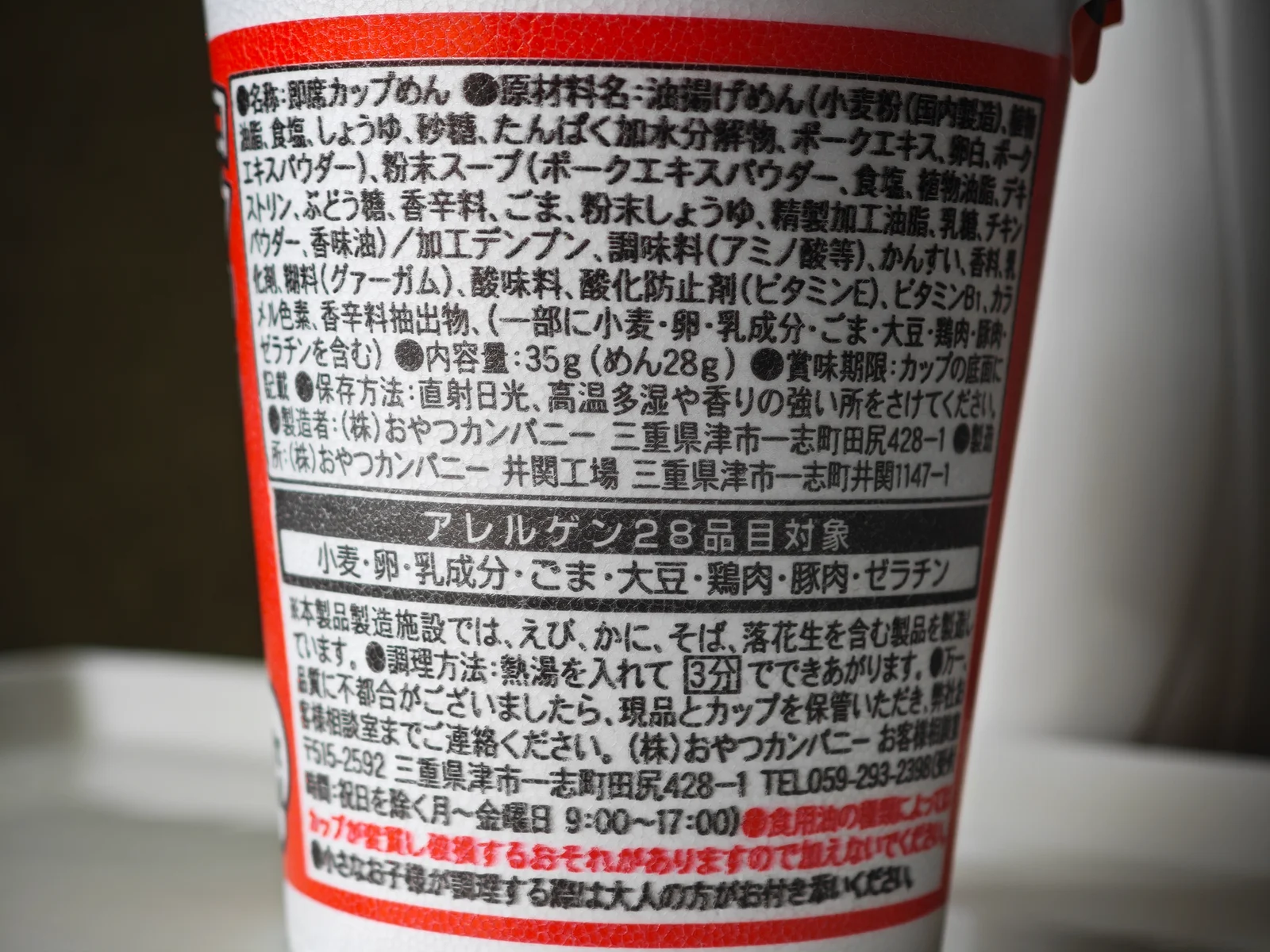
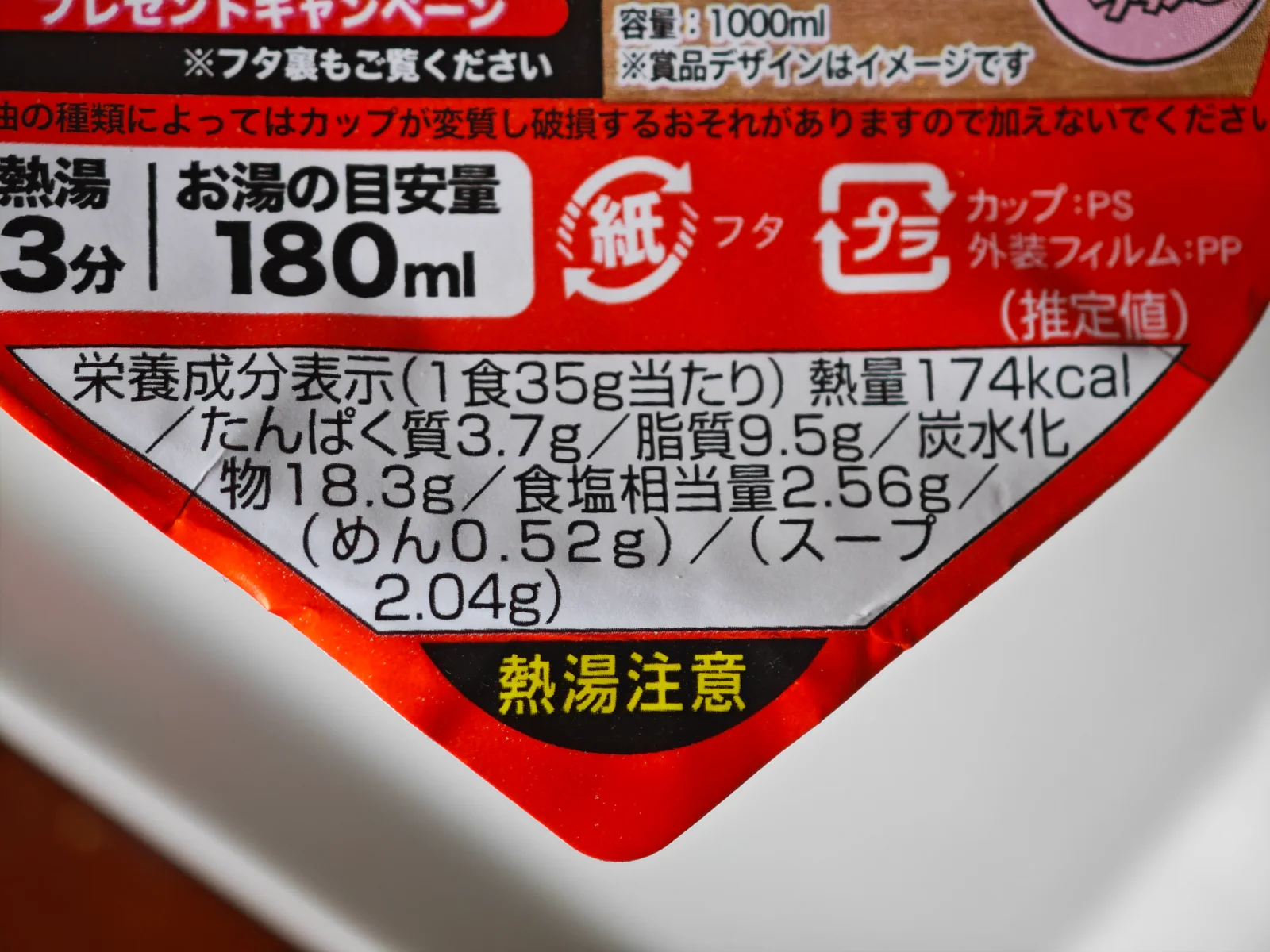
The small cup is still proper instant food, not ready-to-eat candy. Use freshly boiled water, respect the fill line, and supervise children.
How a third flavor became the whole brand
Butamen did not begin as a standalone empire.
OYATSU COMPANY had sold miniature cup noodles before it, including Baby-Star Atariramen (ベビースター当りら~めん). That line offered shoyu and curry; in 1993, the company added tonkotsu as its third flavor. Tonkotsu ramen had grown fashionable beyond Kyushu, and the development team reportedly traveled there and ate widely to understand the real style.
The result was not an aggressively funky pork broth. They reduced the difficult animal edge and kept a creamy, approachable character that children could enjoy. The flavor became the most popular of the mini-cup line and grew into Butamen as its own series.
That origin explains why this product matters. It is not simply “a cup noodle made smaller.” It is Japanese snack culture absorbing a national ramen trend, shrinking it into pocket-money scale, and then building play around it.
Meet Butamen-kun, the pig with spiral eyes
The package character arrived with the product in 1993. His name did not.
For 28 years, the pig was recognizable without an official public name. In 2021, OYATSU COMPANY held a vote among four candidates. Butamen-kun won with 40 percent, ahead of Boosuke, Butanosuke, and Butappy.
The spiral eyes are not dizziness from hot water. According to the company story, the ramen is so delicious that his head is spinning. It is a perfect piece of dagashi branding: one face explains flavor, comedy, and appetite before a child reads the ingredients.
April 12—the naming announcement date—is now promoted as Butamen Day. The current brand world also gives different visual personalities to flavors, while the core lineup checked in 2025 included tonkotsu, shoyu, curry, and tan-shio.
How to make Butamen properly
1. Add boiling water to the line
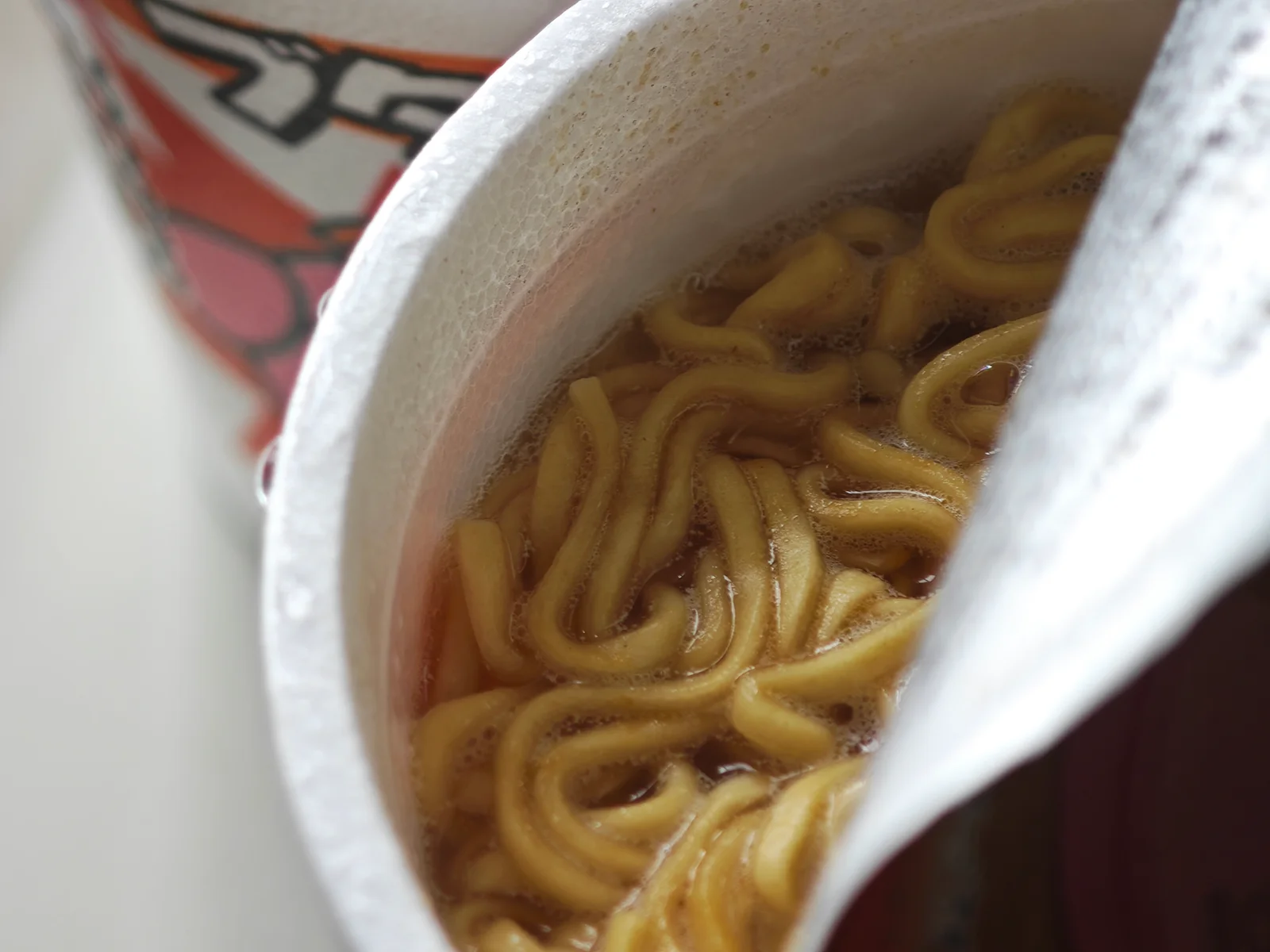
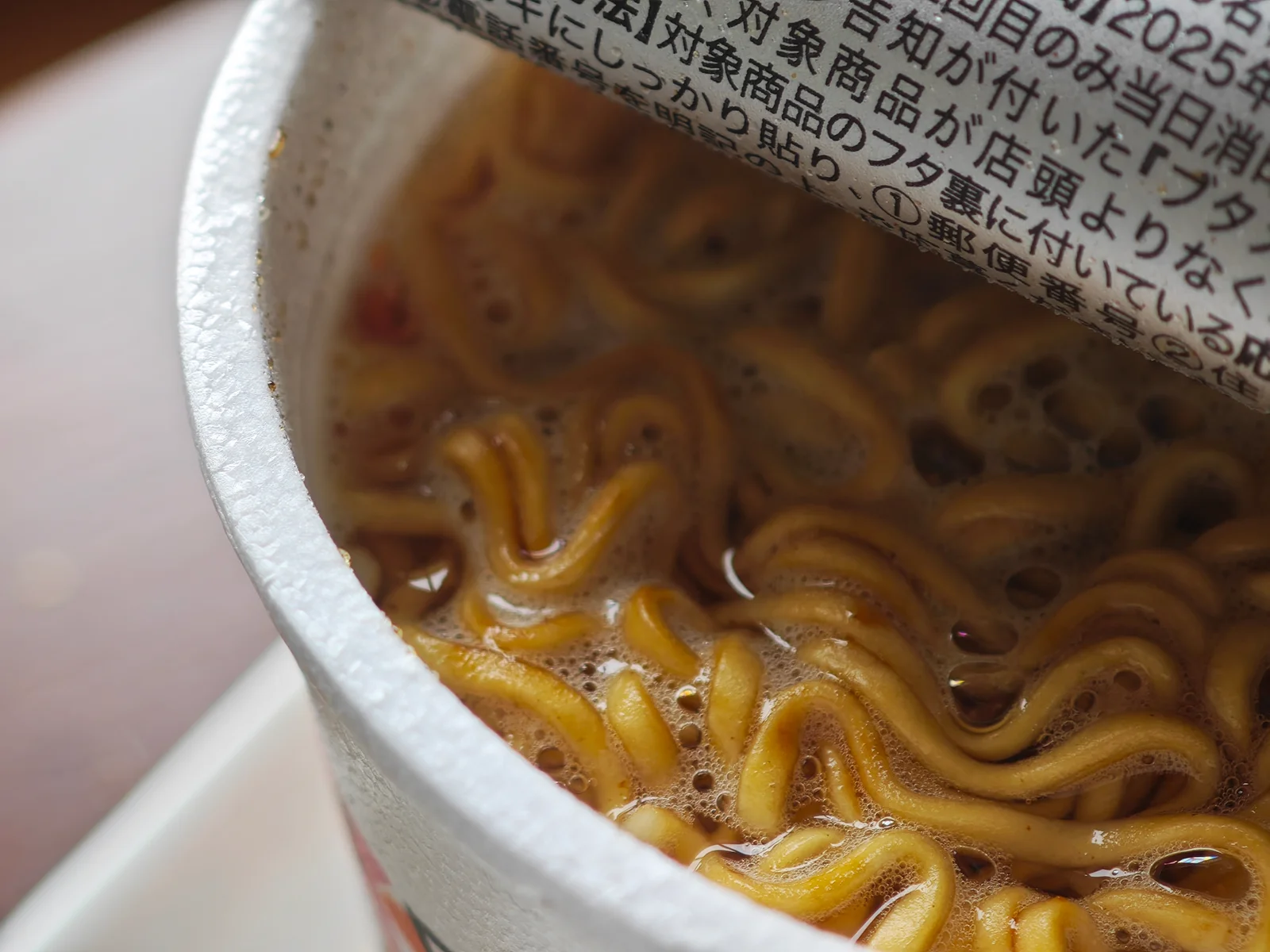
Both cups photographed for this article call for about 180 ml. Do not guess from the cup’s outside size; use the internal line.
2. Close the lid and wait three minutes
Keep the cup on a level, heat-resistant surface. The foam cup and lid become hot enough to deserve the same care as larger instant noodles.
3. Stir from the bottom—really stir
Some soup seasoning stays wrapped around the noodles as they hydrate. Loosen the block, lift and turn the strands, then sweep the fork around the bottom. This lets the seasoning that has been hugging the noodle return to the liquid. The broth becomes more even, and the noodle stops carrying isolated salty pockets.
Tonkotsu review: creamy pork flavor and childhood memory
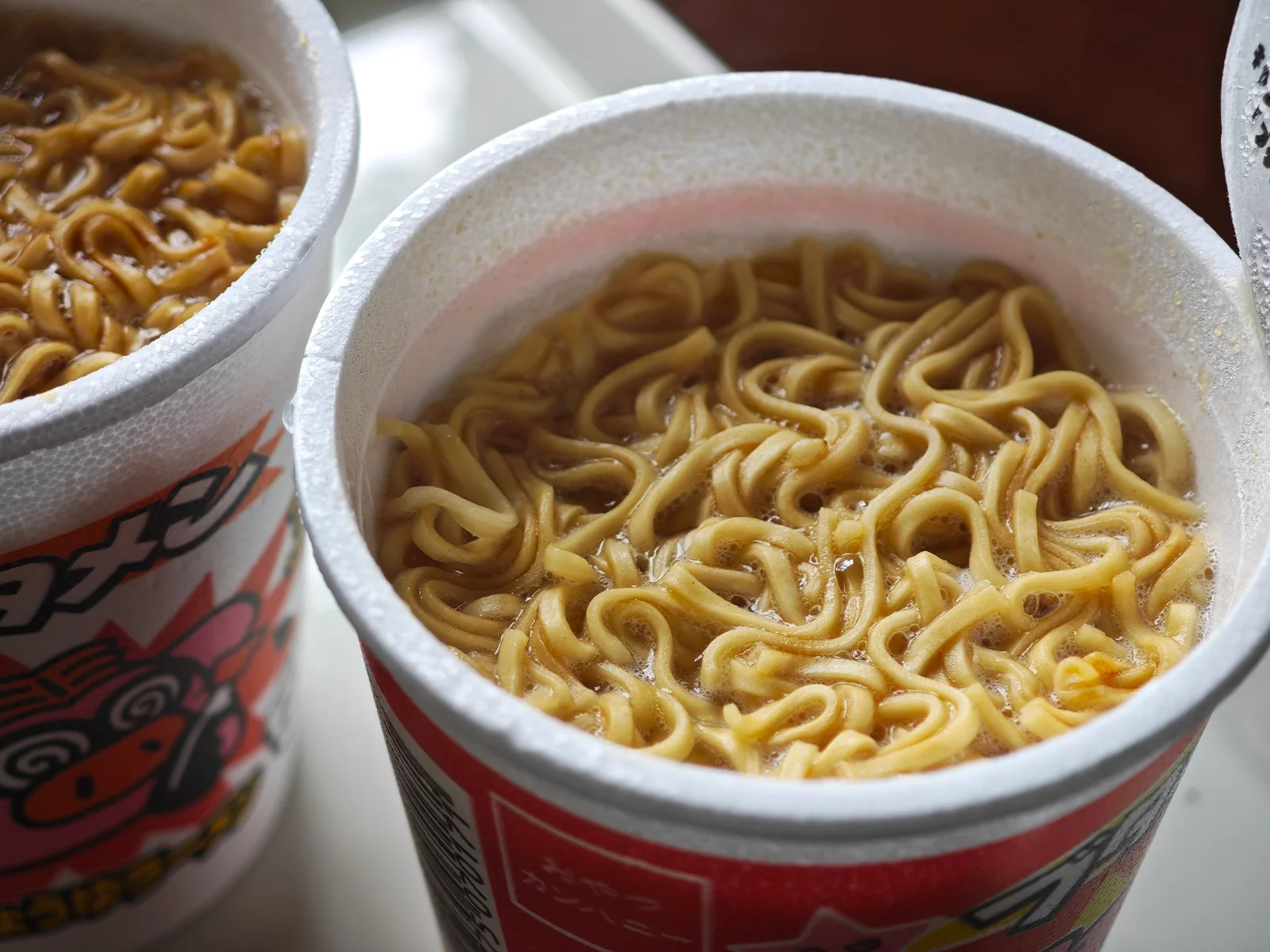
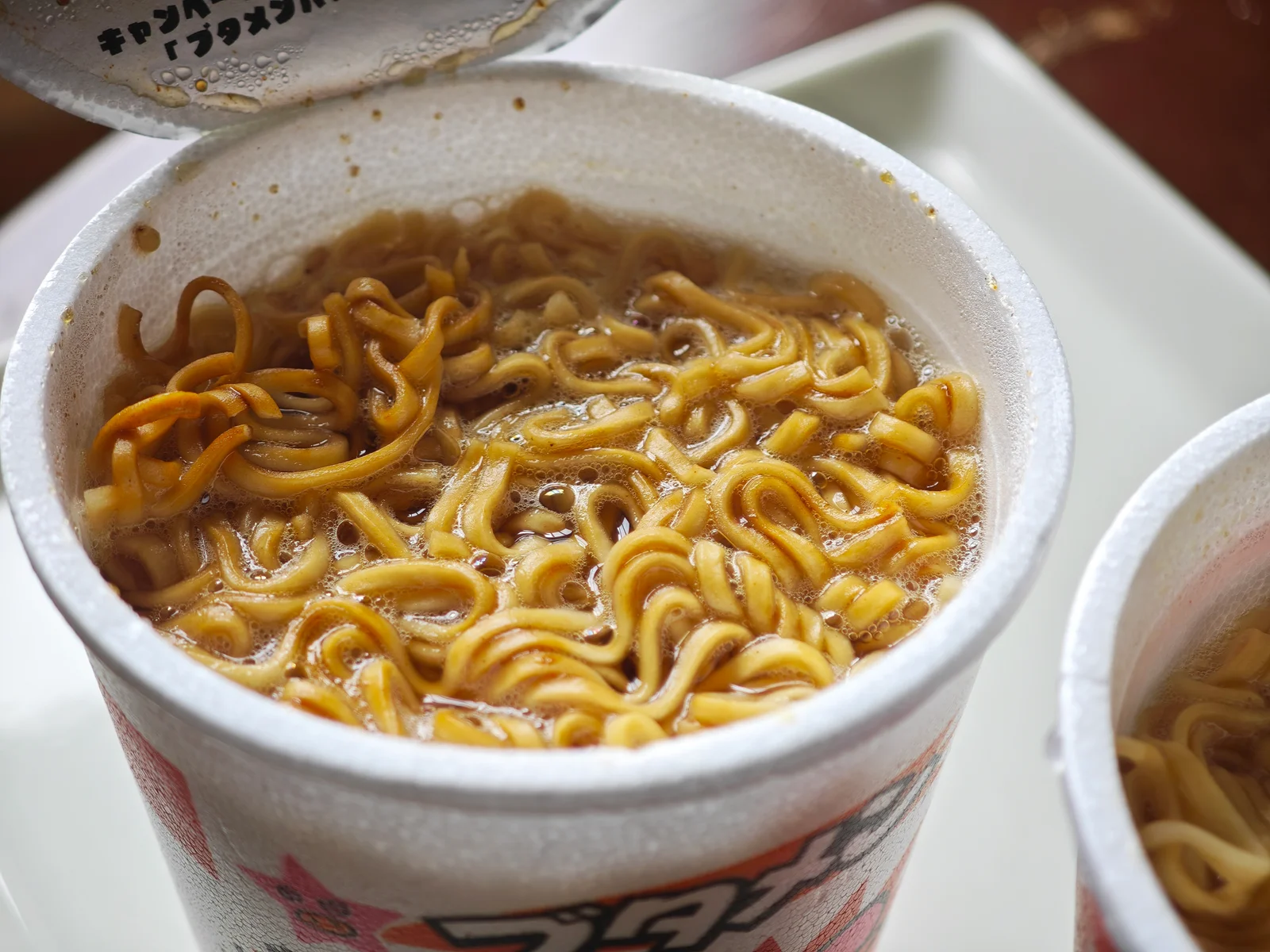
Butamen tonkotsu combines pork-extract savoriness with the plain, seasoned flavor of its noodles. The soup is creamy but not crushingly heavy. It gives you the idea of tonkotsu quickly: warmth, salt, pork, a round milky impression, and soft noodles—all before a full restaurant bowl would have reached the table.
I ate it often as a child, so my tasting cannot be separated from nostalgia. The aroma does not only say “pork broth” to me. It says coins in a pocket, waiting three minutes with friends, and trying not to spill anything before reaching the park.
Even without that memory, it works. The humble noodle and pork extract support each other: the noodle supplies a simple wheat-and-seasoning base; the broth supplies the richer finish. What I especially like is its position as dagashi. A child could choose a warm tonkotsu experience from the same shelves that held candy and fish-sheet snacks. That is a more interesting cultural achievement than miniaturization alone.
Shoyu review: chicken, consommé, and clear soy aroma
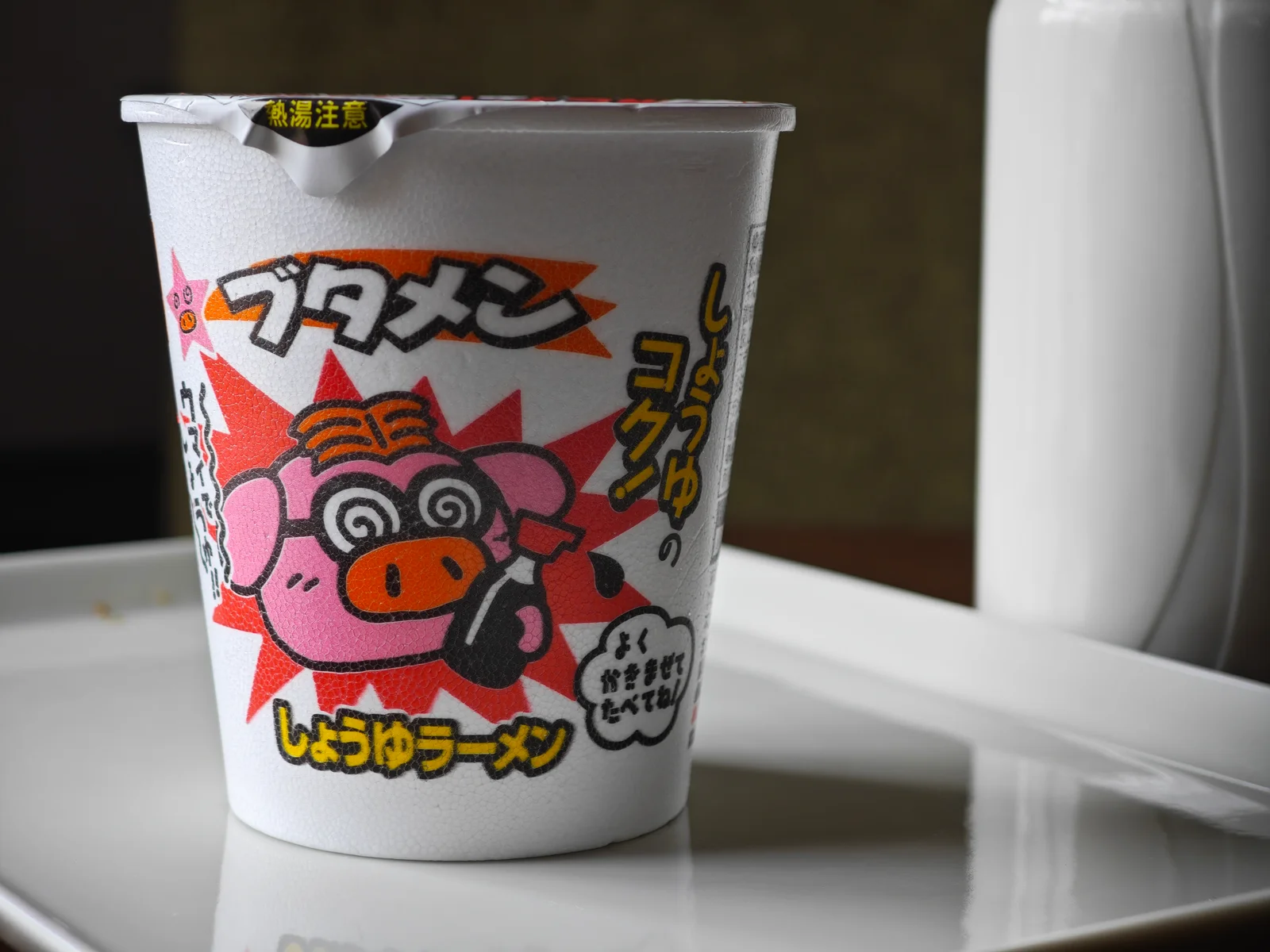
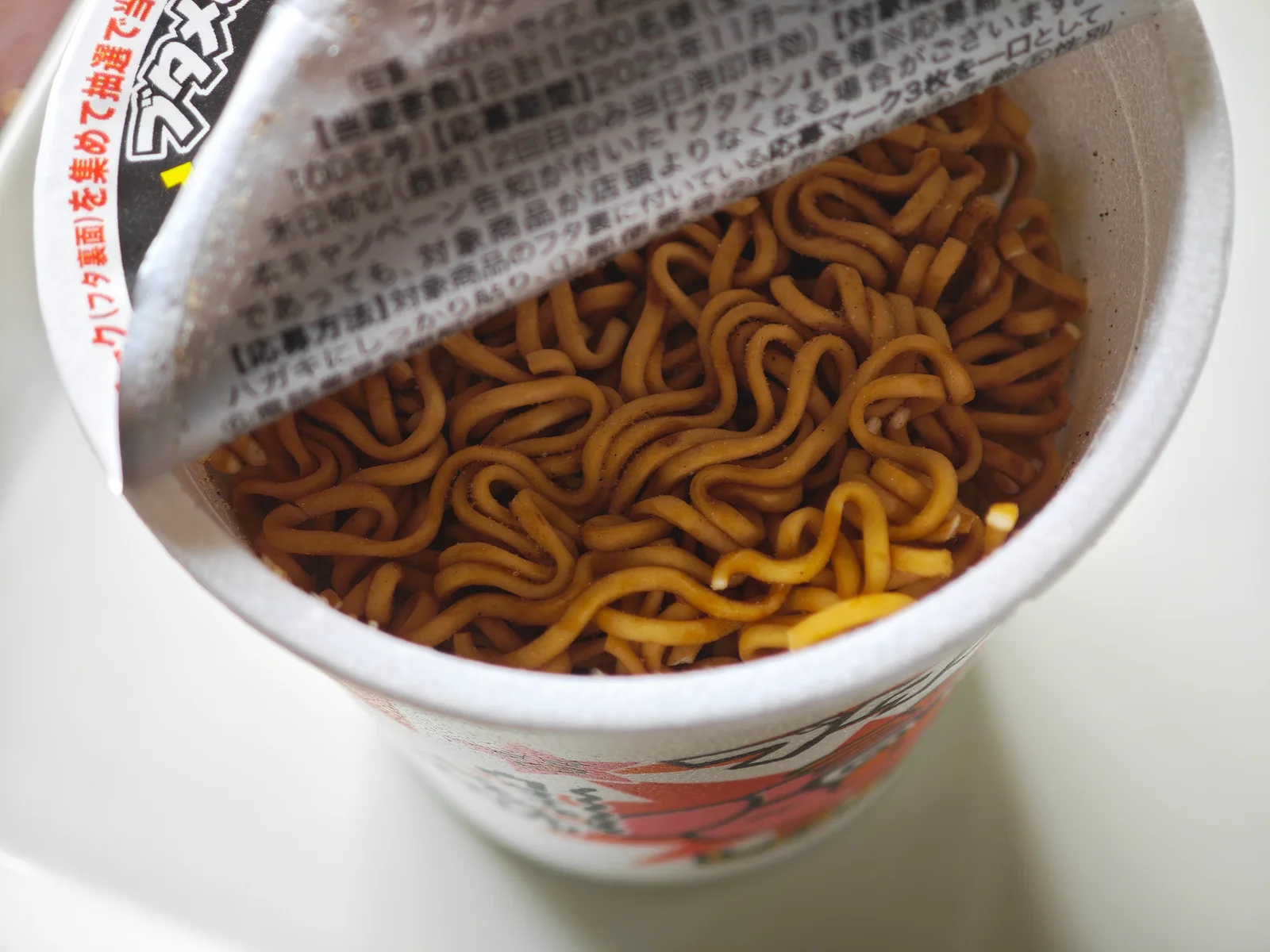
Shoyu Butamen changes the center of gravity. Chicken extract leads, giving the soup a mild consommé-like body, while soy sauce contributes a direct toasted-salty aroma. It tastes clearer and less creamy than tonkotsu, but not thin.
The seasoned noodle carries a faint familiarity that may remind some Japanese snack eaters of Chikin Ramen. That is a sensory reference, not a claim that the products are interchangeable. Butamen is proportioned around its own 180 ml broth, and the chicken-rich soup is meant to be drunk with these noodles.
The photographed shoyu cup contains 30 g total, including 29 g of noodles, and lists 130 kcal. Its ingredients begin with fried noodles and include soy sauce and chicken extract; the label also lists 3.3 g protein, 5.1 g fat, 17.7 g carbohydrate, and 2.16 g salt equivalent for the photographed cup.
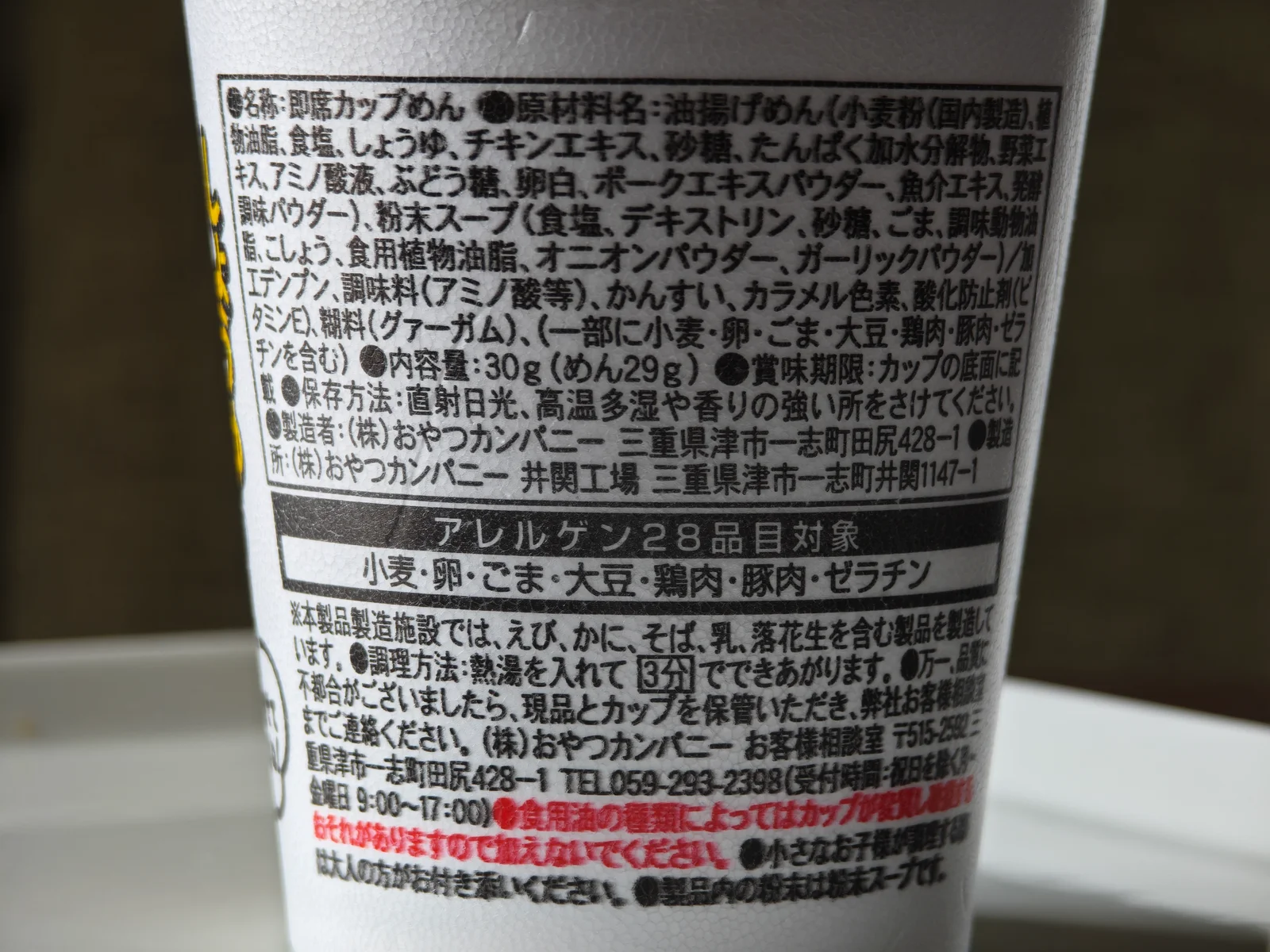
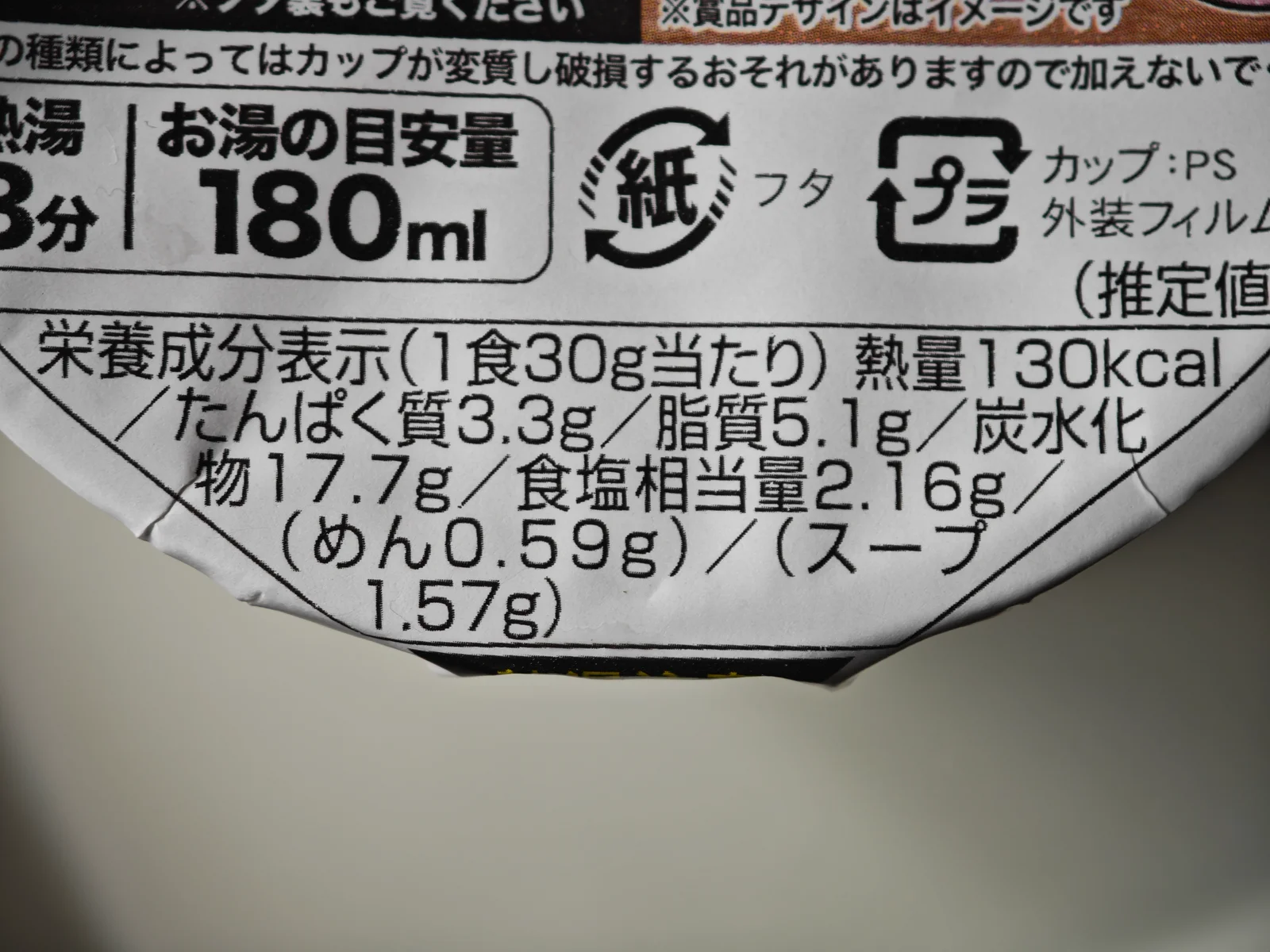
Packages and recipes change. Use these numbers to understand the photographed product, then check the cup you actually buy—especially for allergens.
Tonkotsu or shoyu: which should you buy?
Choose tonkotsu when you want:
- the flavor that created the Butamen name in 1993;
- creamy pork-extract roundness;
- the author’s most nostalgic version;
- a broth that accepts milk powder or dry creamer particularly well.
Choose shoyu when you want:
- a chicken-forward, consommé-like soup;
- stronger soy-sauce aroma;
- a clearer broth with a lighter visual impression;
- a flavor that becomes more aromatic with black pepper.
Buy both when you want the most efficient cultural introduction. The contrast teaches you what the same tiny noodles can do when one soup builds creaminess and the other builds clarity.
Tip: pin the lid with a fork
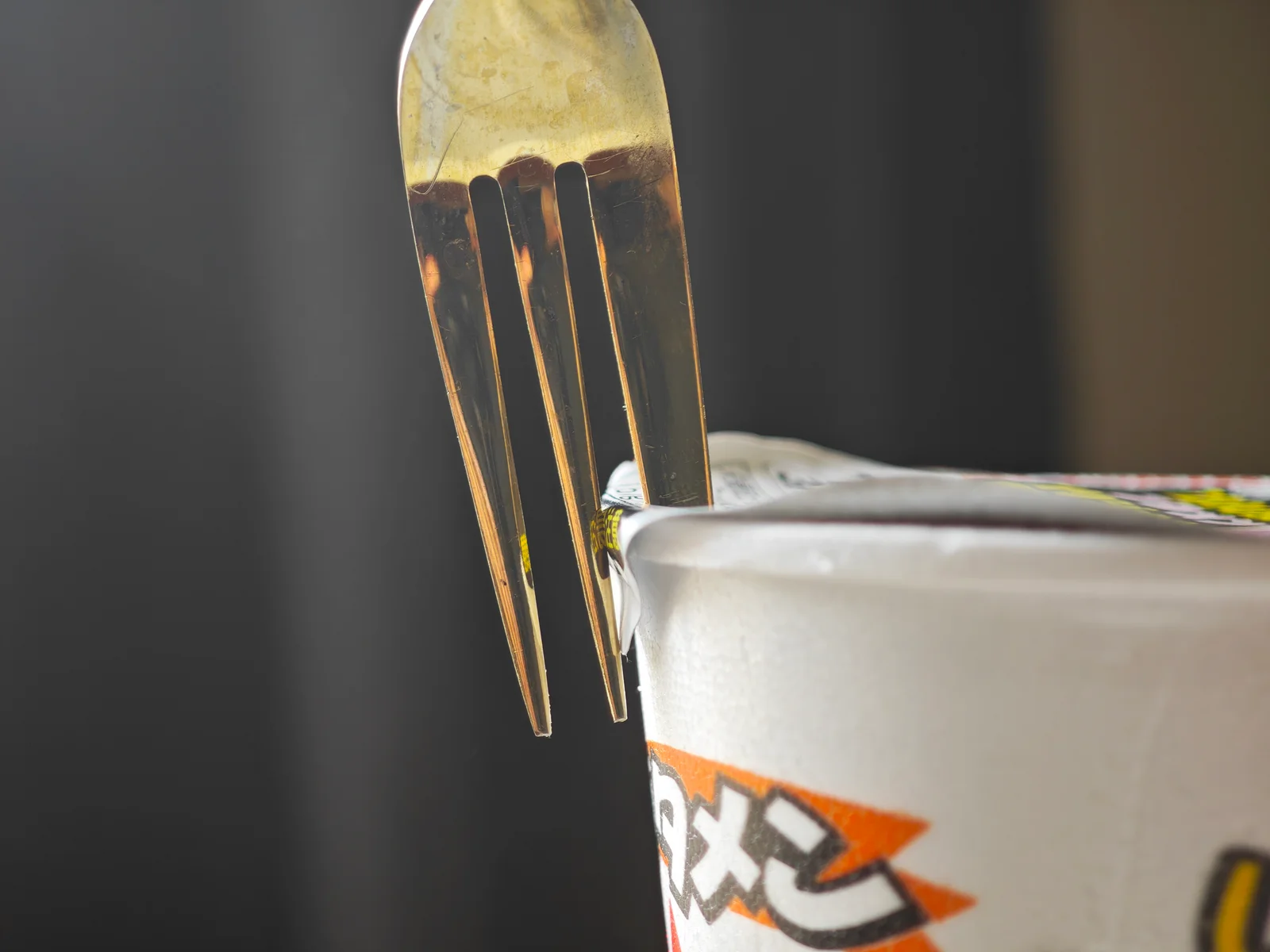
A senior gaki-daisho (ガキ大将—the neighborhood kid boss) once taught me this: after you pour the hot water, push a plastic fork through the lid tab into the cup rim. It holds the lid shut and helps stop spills while the noodles wait. The photo says the rest.
Upgrade 1: milk powder for extra-creamy tonkotsu
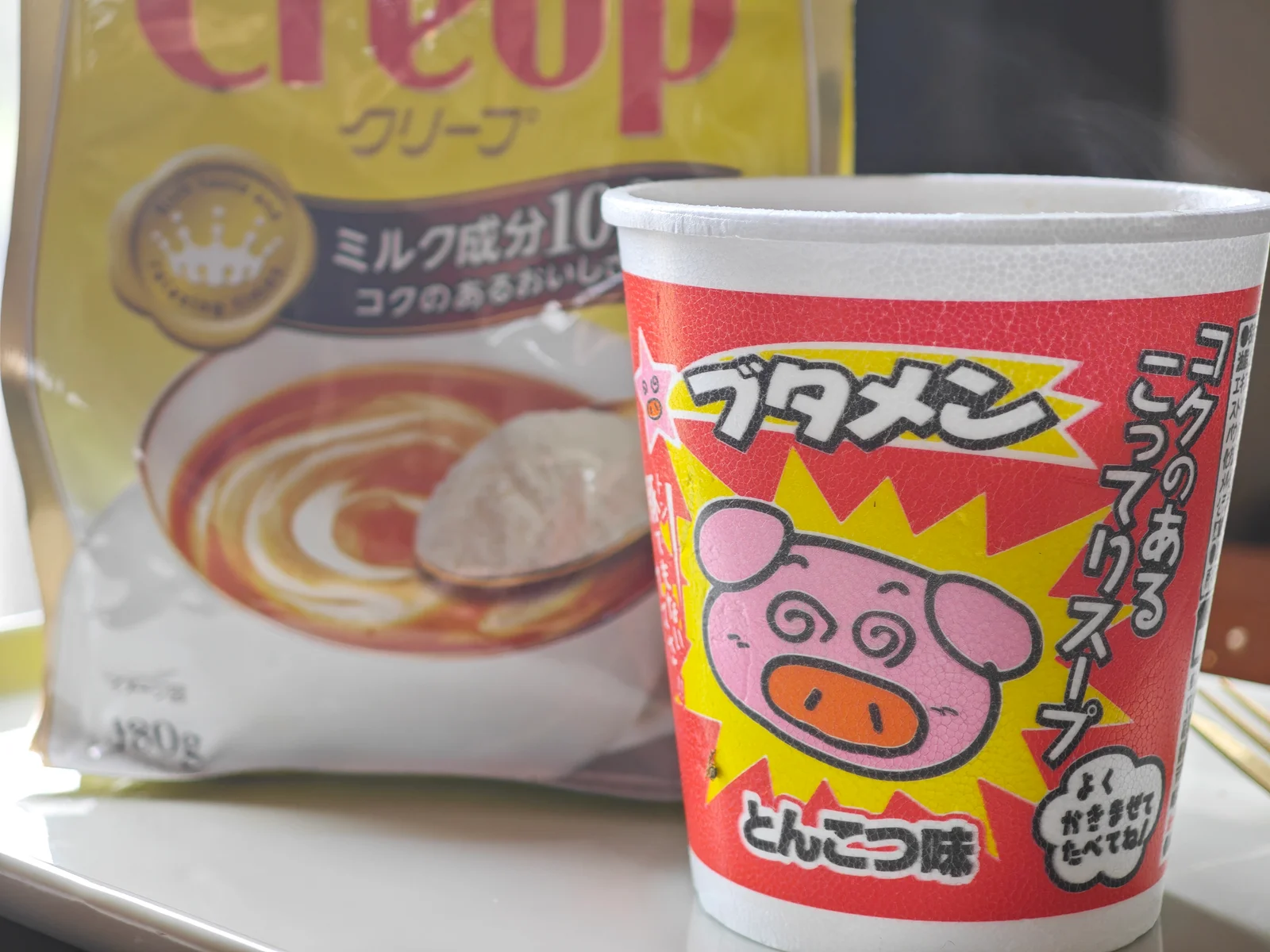
Another shop-side memory was a richer option: for a little extra money, the dagashiya would add the kind of dry milk powder or creamer used for coffee. It was a child-scale version of ordering a richer broth.
You can reproduce the idea carefully:
- Prepare tonkotsu Butamen normally.
- Stir the original soup completely first.
- Add a small spoonful of plain dry milk-based creamer.
- Stir until no pale clumps remain.
- Taste before adding more.
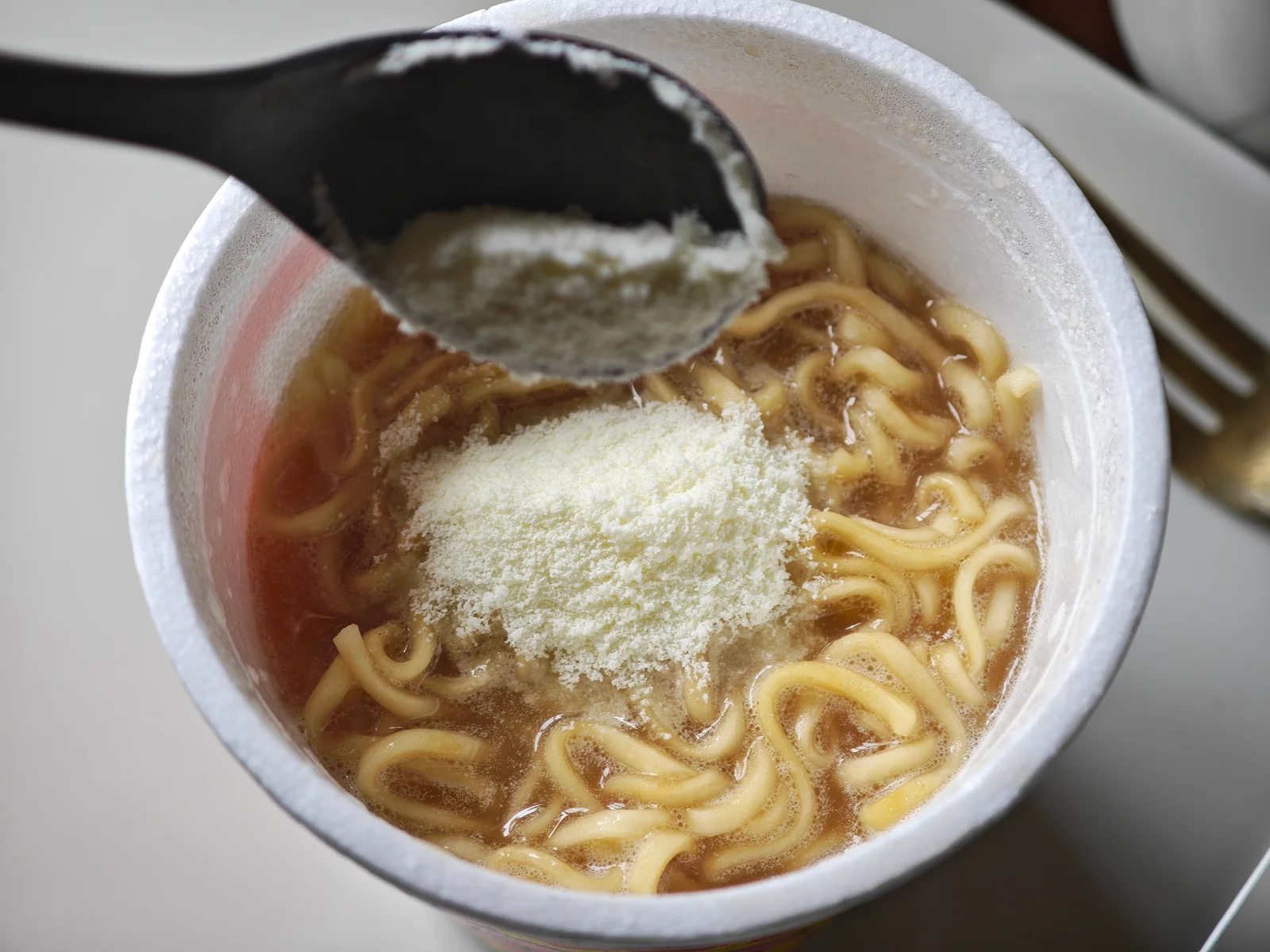
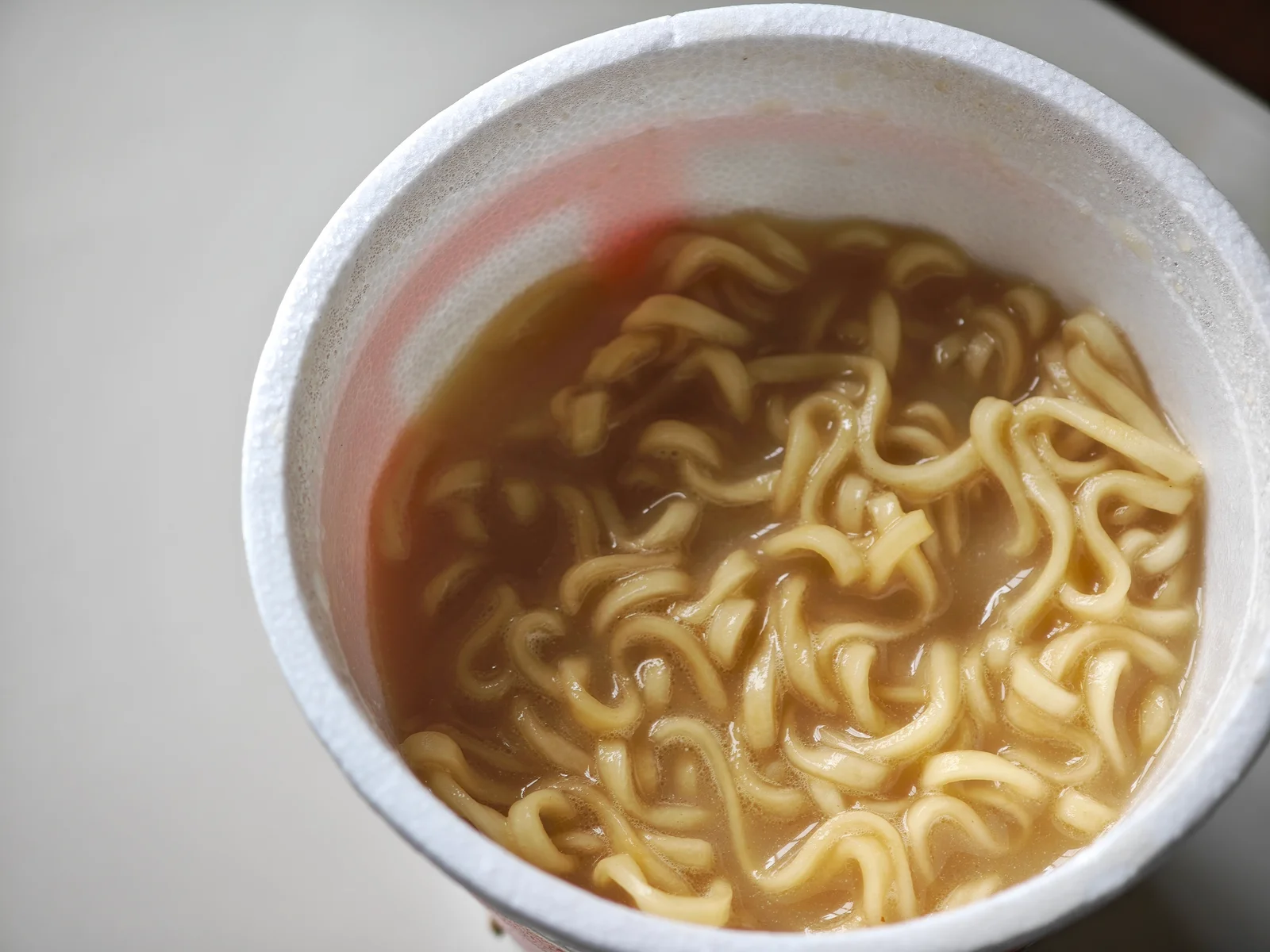
The powder rounds the pork note, thickens the visual color, and makes the broth feel more concentrated. Too much can bury the designed balance and raise salt, fat, or sweetness depending on the product. Use an unsweetened product, check dairy allergens, and treat this as an optional variation—not the “correct” recipe.
Upgrade 2: black pepper for shoyu
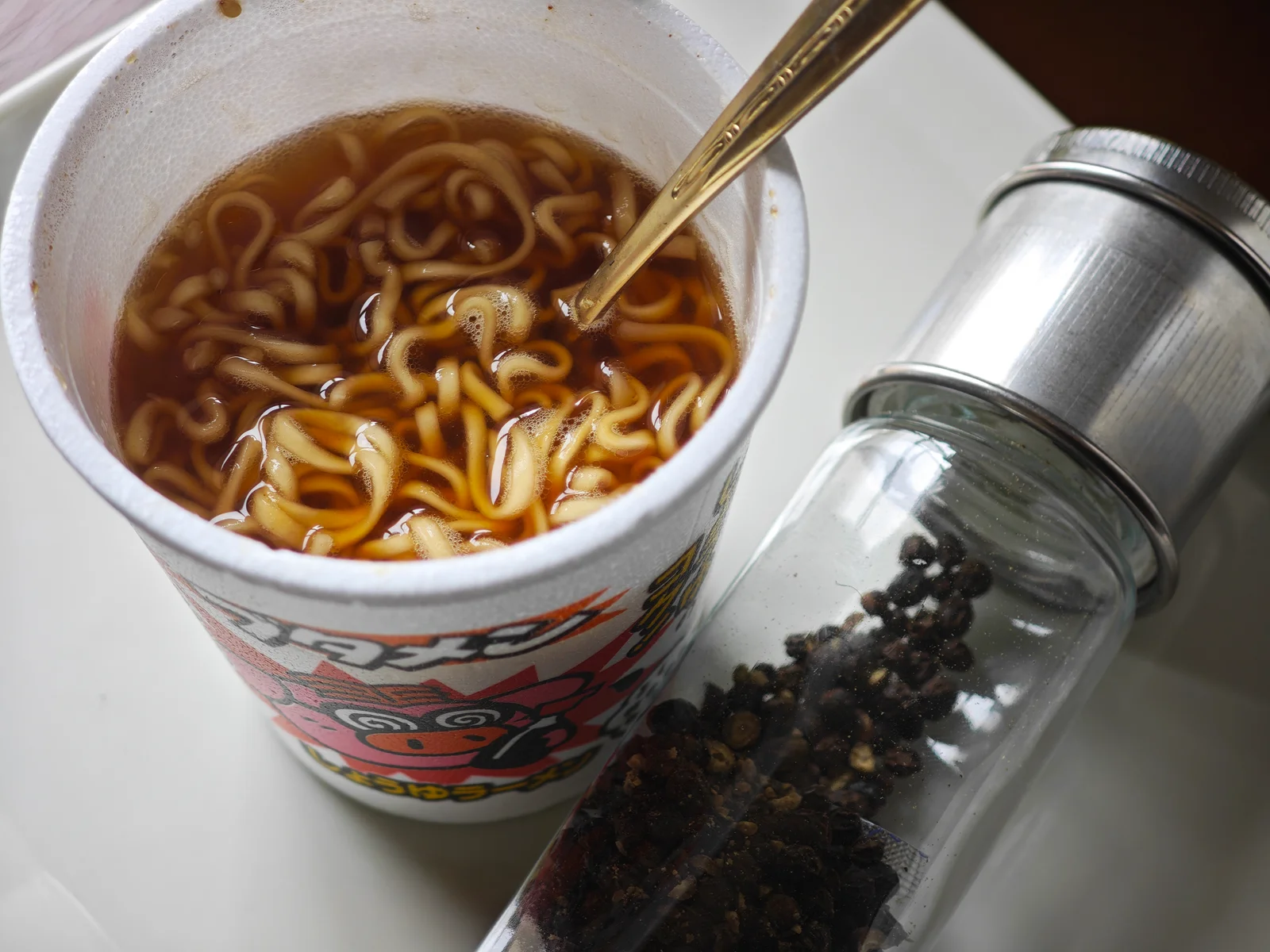
If the particular aroma of seasoned instant noodles is difficult for you, black pepper gives it somewhere useful to go. I would not say the spice simply hides the noodle. It harmonizes with it: pepper’s dry aroma joins the chicken, soy sauce, onion, and garlic direction already present in the cup.
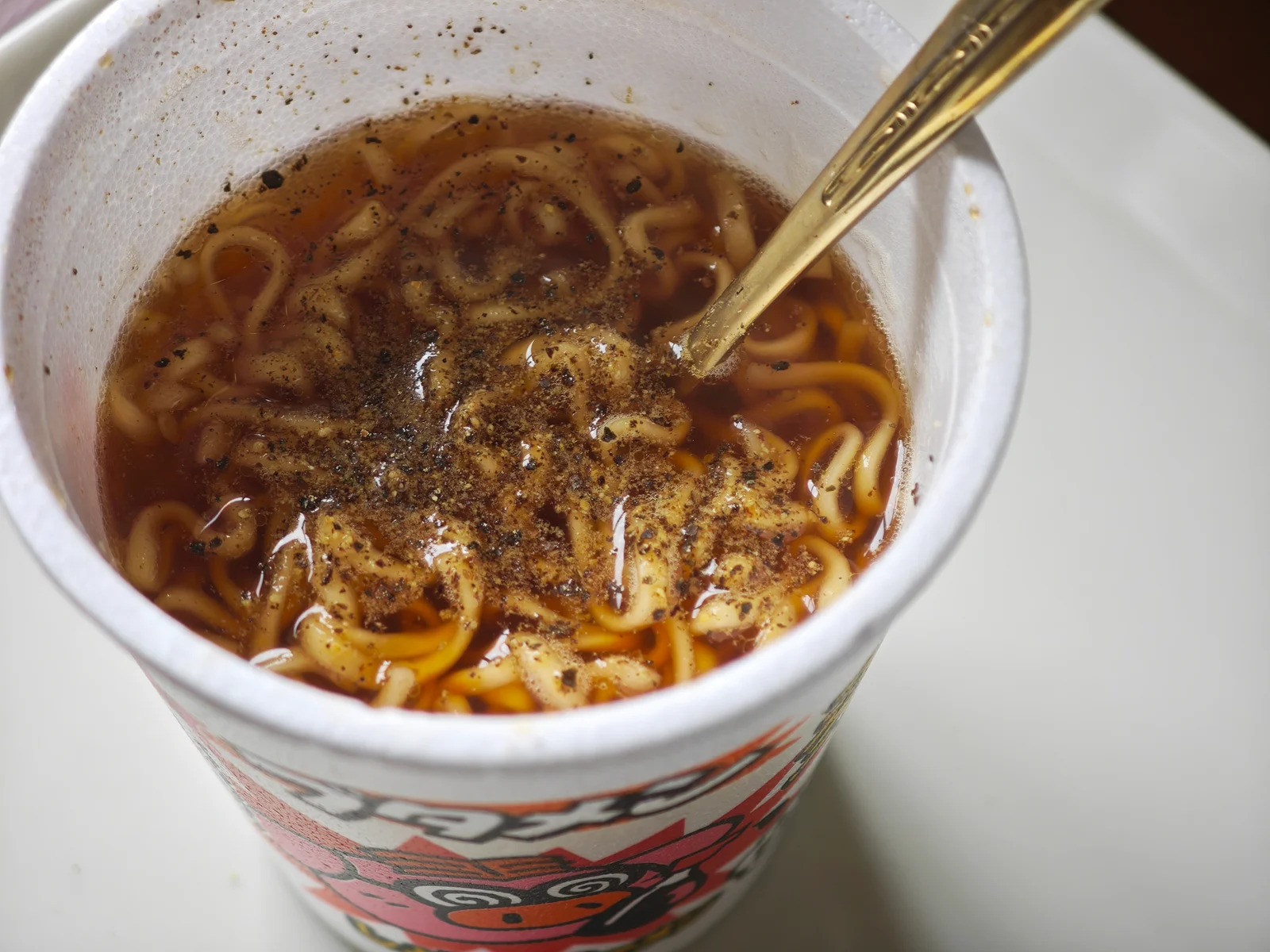
Start with two or three turns, stir, and taste. The goal is not to convert a children’s cup into a pepper challenge. It is to sharpen the broth’s outline while preserving the friendly consommé-like center.
Where to buy Butamen
In Japan, look in:
- traditional dagashiya;
- supermarket and convenience-store snack sections;
- Don Quijote;
- discount stores and variety shops;
- Japanese snack retailers online.
The important search clue is category. Butamen may sit with dagashi, not with full-size instant noodles. Individual cups are ideal for travelers; online listings commonly sell large trays.
Best first online purchase
- Amazon Japan — Butamen tonkotsu, 15 cups: check price and availability
- Amazon Japan — Butamen shoyu, 15 cups: check price and availability
- Official brand world — Butamen Paradise
Multipacks are easiest to justify as a shared tasting, party snack, lunch-side soup, or compact pantry stock. Confirm seller, count, flavor, expiration date, import rules, and current ingredients before ordering.
Affiliate disclosure: links above may be affiliate links. If you buy through them, I may earn a commission at no extra cost to you.
The last sip is the point
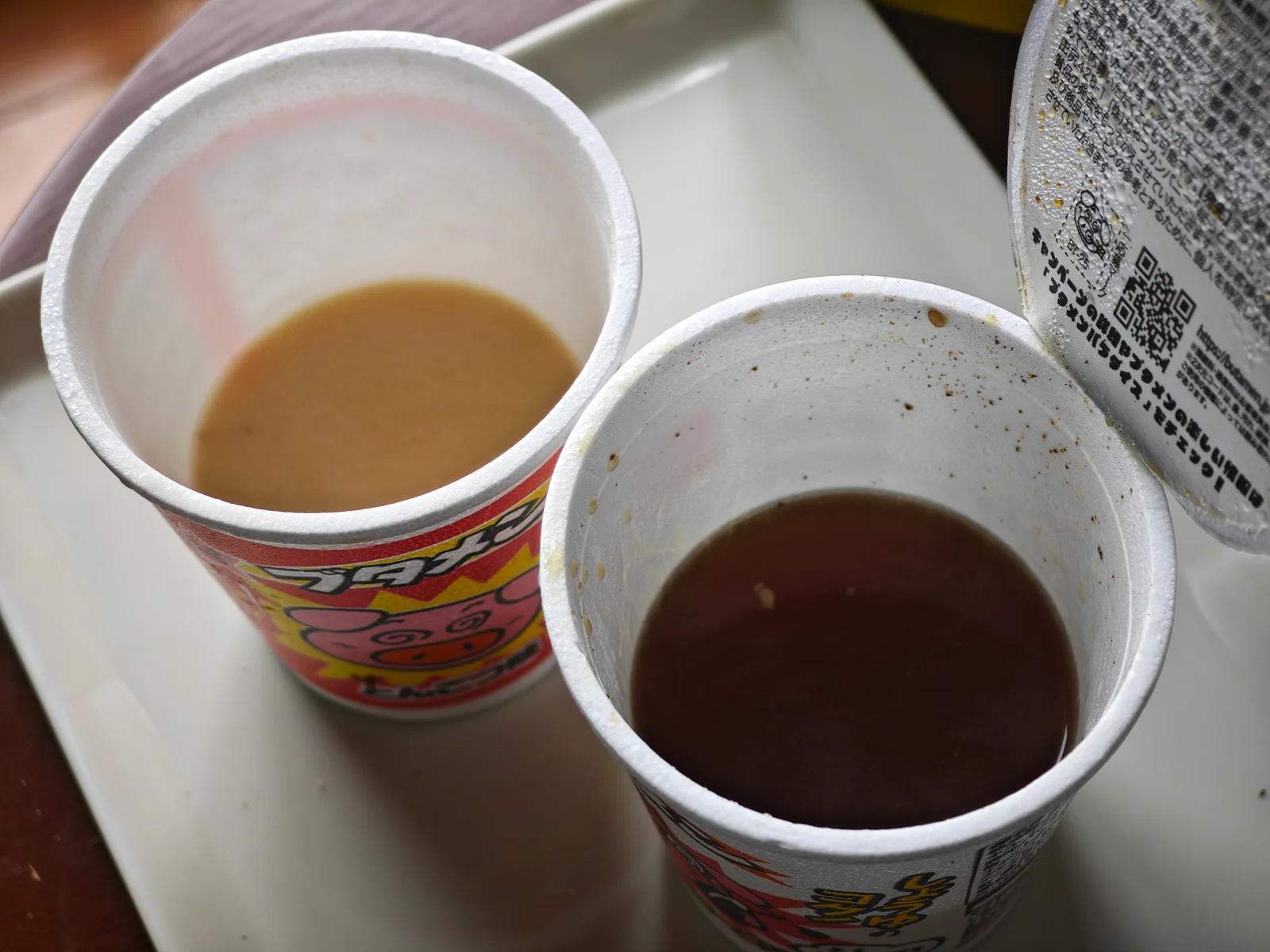
After the noodles disappear, two tiny cups still hold two different conclusions: pale, rounded tonkotsu and dark, aromatic shoyu.
Most dagashi ends with a wrapper, crumbs, or sugar left on the fingers. Butamen leaves broth. You can pause, compare the aftertaste, and take one final warm sip. Few snacks sold from a candy-shop shelf give you that kind of ending.
That is why Butamen has lasted. It is not pretending to be a giant restaurant bowl. It offers something stranger and more specifically Japanese: three minutes of ramen ritual, mascot comedy, childhood invention, and soup-sized nostalgia inside a cup small enough to remain a snack.
Frequently Asked Questions
Is Butamen a snack or instant ramen?
It is instant ramen prepared with boiling water, but its miniature size, playful branding, and history in dagashiya place it inside Japanese snack culture.
Which Butamen flavor came first?
Tonkotsu Butamen launched in 1993 as the third flavor of the earlier Baby-Star Atariramen mini-cup line. Its popularity helped create the independent Butamen series.
How do I cook Butamen?
For the photographed cups, add about 180 ml of boiling water to the line, close the lid, wait three minutes, then stir thoroughly. Follow your current package.
Why are there no toppings?
The simplicity suits a low-cost miniature snack and makes the flavors easy to distinguish. It also leaves room for optional additions.
Why put a fork in the lid?
It is a small tip for keeping the lid closed after you add hot water, so the soup is less likely to spill while the noodles soften. Keep the cup on a stable surface.
Can I make tonkotsu Butamen creamier?
Yes. After normal preparation and stirring, add a small amount of unsweetened dry milk-based coffee creamer, dissolve it completely, and taste. Check allergens first.
Why add black pepper to shoyu Butamen?
Black pepper links the noodle aroma with the chicken, soy, onion, and garlic notes. Add only a little so it supports rather than overwhelms the broth.
Who is the mascot?
Butamen-kun is the spiral-eyed pig on the cup. He appeared in 1993, remained officially unnamed for 28 years, and received his name through a 2021 public vote.